Staining Baltic Birch Plywood: 9 Pro Tricks for Zero Blotch
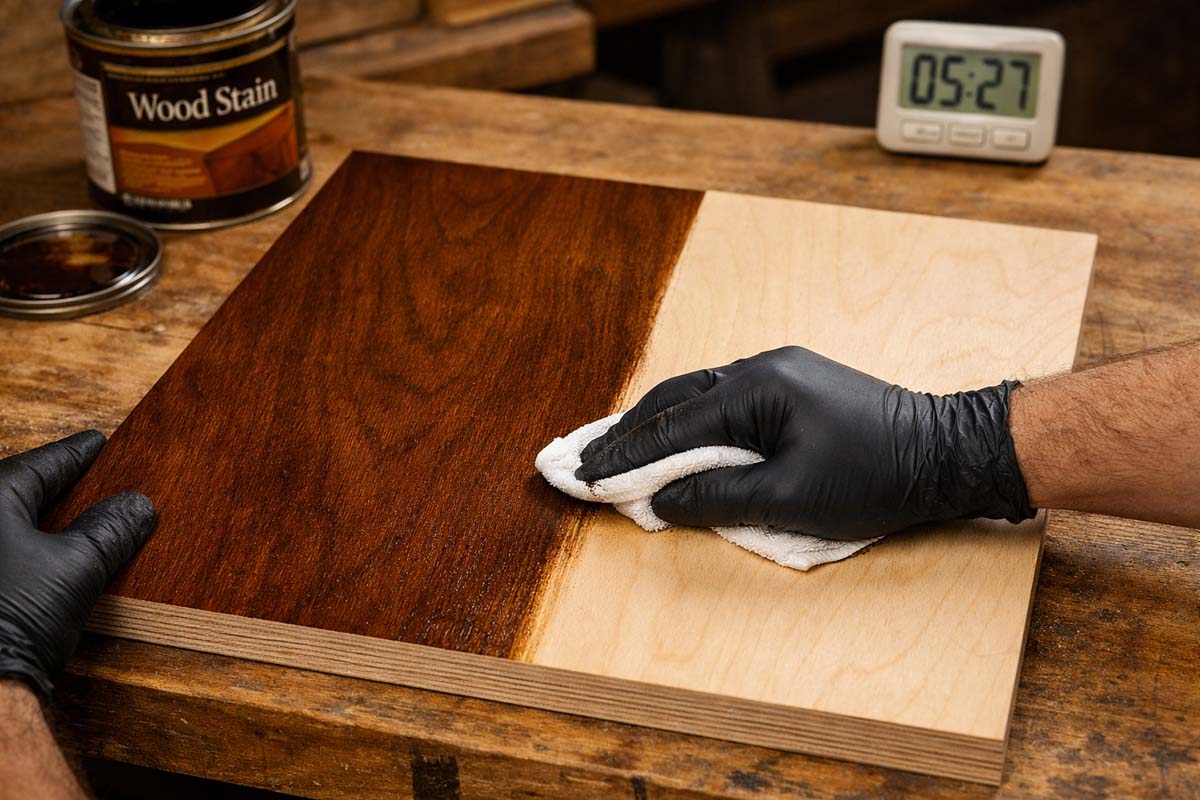
Staining Baltic birch plywood works, but it needs a controlled prep and a stain method that limits blotching. Baltic birch uses thin face veneers and tight-grain birch that absorb pigment unevenly, so “wipe on and hope” usually creates dark patches and pale areas. A clean sanded surface, a conditioner or washcoat, and the right stain type produce predictable color. This guide walks through sanding, conditioning, staining birch plywood, and topcoating so the finished panel looks like a planned finish instead of a rescue job.
Contents Here
- 1 What makes Baltic birch plywood stain tricky?
- 2 What stain looks best on birch plywood?
- 3 Tools and materials that keep birch stain predictable
- 4 How do you prep Baltic birch plywood for stain?
- 5 Can you stain Baltic birch plywood?
- 6 How to stain Baltic birch plywood step by step
- 7 What is the best conditioner or washcoat for staining birch plywood?
- 8 How do you stain birch dark without blotching?
- 9 What color should you stain Baltic birch plywood?
- 10 How do you avoid lap marks on large plywood panels?
- 11 What topcoat works best over stained birch plywood?
- 12 Common problems when staining birch plywood and how to fix them
- 13 FAQs about Staining Baltic Birch Plywood
What makes Baltic birch plywood stain tricky?
Baltic birch plywood stains unevenly because birch has dense earlywood and less-dense latewood that absorb pigment at different rates. The plywood face veneer also runs thin, so aggressive sanding cuts through to the core. Glue squeeze-out and factory handling oils create “stain resist” spots that show up after the first wipe.
If you fight blotching often, my guide on guide to prevent pine from blotching explains the same absorption problem and how sealers control it.
Learn more on: Thin Birch Plywood: How to Cut, Join, and Finish 1/8 Baltic Birch
What stain looks best on birch plywood?
The best-looking plywood stain on birch depends on your goal:
- Most even color: gel stain (sits closer to the surface)
- Most depth and clarity: dye stain (colors the wood fibers with less muddy grain)
- Most “traditional” look: oil-based wiping stain (needs conditioner/washcoat on birch)
For small projects where the panel also needs protection, match your stain choice to your topcoat plan. If the piece is a serving tray or gets frequent wiping, start by reading guide to seal a wooden serving tray so your stain and clear coat work together.
Tools and materials that keep birch stain predictable
These are the shop basics that reduce surprises on birch wood stained projects:
- Random-orbit sander and sanding block
- Sandpaper: 150, 180, 220 grit (use light pressure)
- Vacuum and tack cloth or clean microfiber
- Painter’s tape (for masking edges)
- Pre-stain conditioner or dewaxed shellac for a washcoat
- Stain: gel, dye, or oil-based wiping stain
- Clean rags or foam brushes
- Topcoat: water-based poly, oil-based poly, wiping varnish, or lacquer (project-dependent)
If your sandpaper loads fast or your sander feels rough, basic upkeep improves results. See tool maintenance for woodworking newbies for simple maintenance habits that prevent swirl marks.
How do you prep Baltic birch plywood for stain?
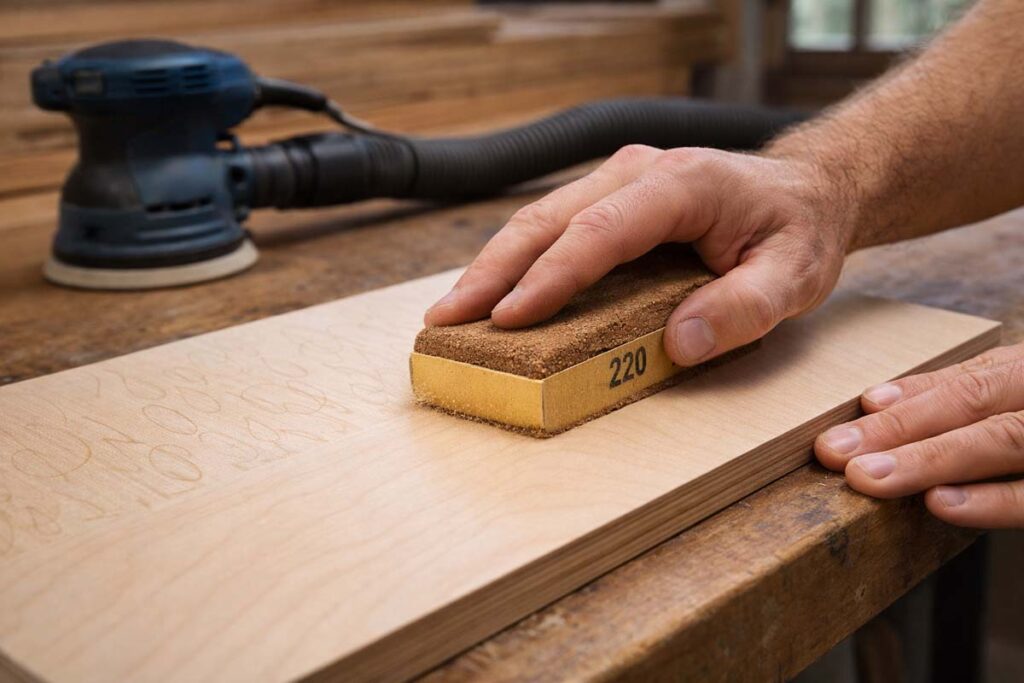
Prep determines whether staining birch looks even or patchy.
- Inspect the face veneer before sanding. Baltic birch veneer sands through faster than solid wood.
- Sand the face lightly to 180 grit. Use a light touch and keep the sander moving.
- Hand sand to 220 grit with the grain. A sanding block levels swirl marks without digging.
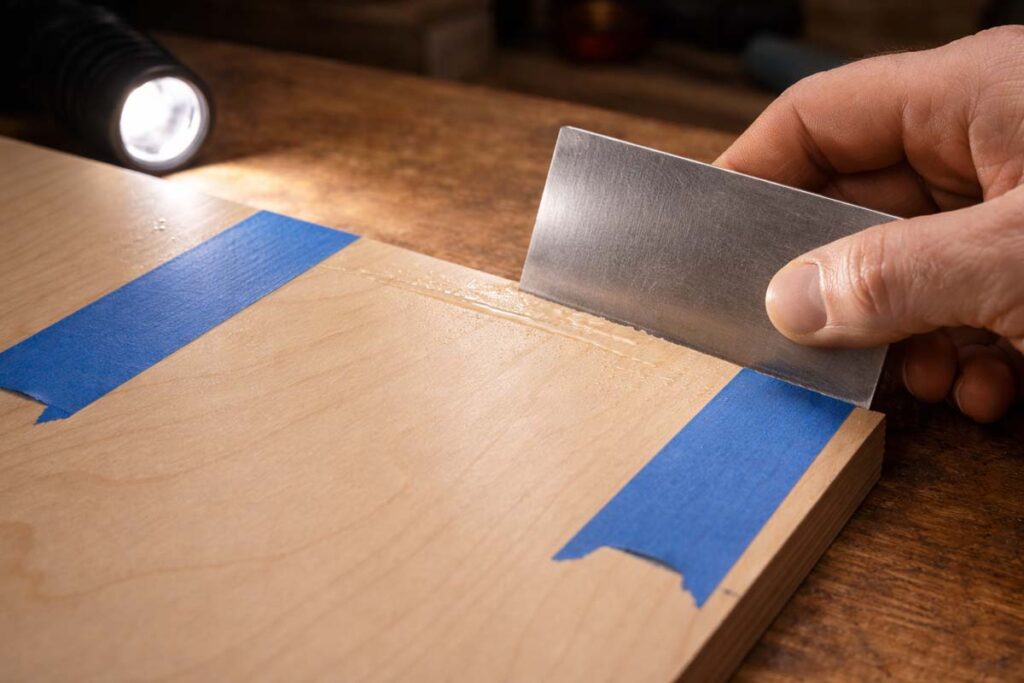
- Clean glue squeeze-out completely. Dried glue blocks stain and turns into pale “shadows.”
- Vacuum and wipe the surface clean. Dust left in the grain turns into grit under stain.
If you need help with tricky edges or exposed end grain on a plywood part, guide to sand end grain smooth covers a clean, repeatable approach.
Can you stain Baltic birch plywood?
Yes, you can stain Baltic birch plywood, and it takes stain well when you control absorption first. A pre-stain conditioner or a thin washcoat reduces blotching, and gel stain or dye stain produces more even color than heavy pigment wiping stains on raw birch.
How to stain Baltic birch plywood step by step
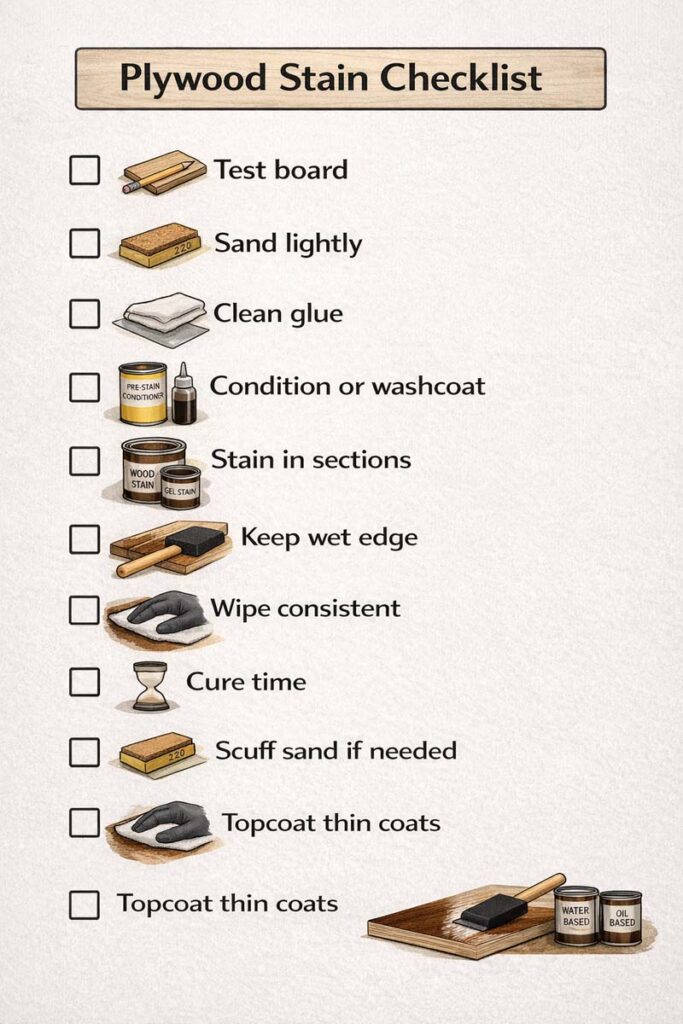
This sequence fits most furniture panels, trays, and shop-built organizers.
- Make a test board. Use an offcut from the same sheet and sand it the same way.
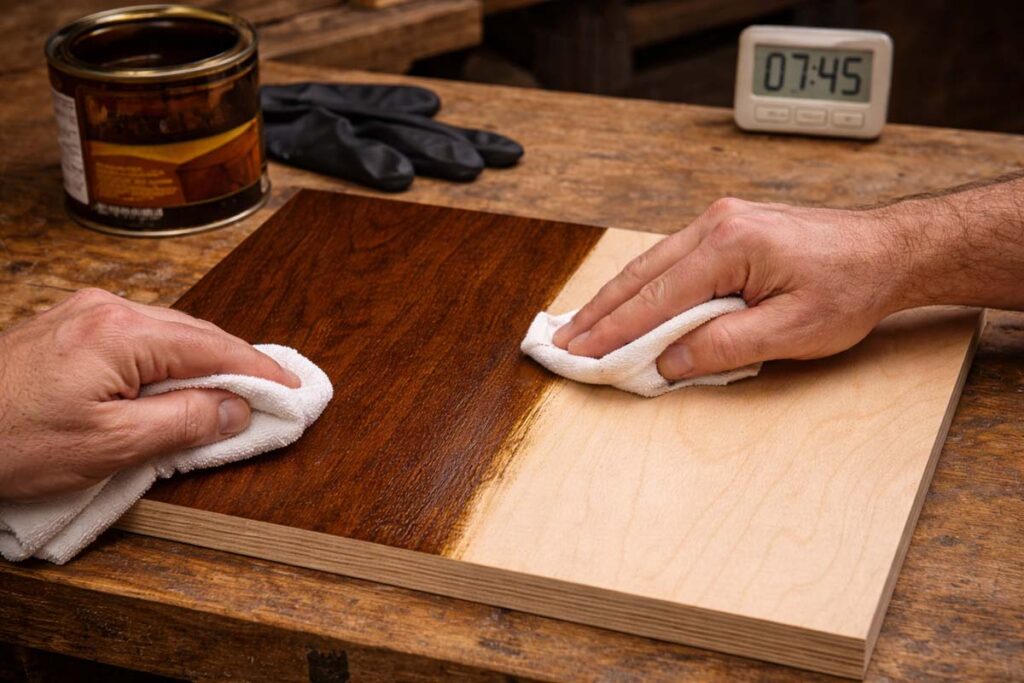
- Apply a conditioner or washcoat. Follow the product label for soak time and wipe-off.
- Stain in manageable sections. Keep a wet edge so lap marks do not form.
- Wipe evenly with clean rags. Pressure changes color, so keep your wipe consistent.
- Let the stain cure fully. Dry-to-touch is not the same as ready-to-topcoat.
- Seal with your clear coat. Apply thin, even coats and sand lightly between coats if the finish calls for it.
If your clear coat turns milky or hazy, details of why clear coats get cloudy walks through the common causes and fixes.
What is the best conditioner or washcoat for staining birch plywood?
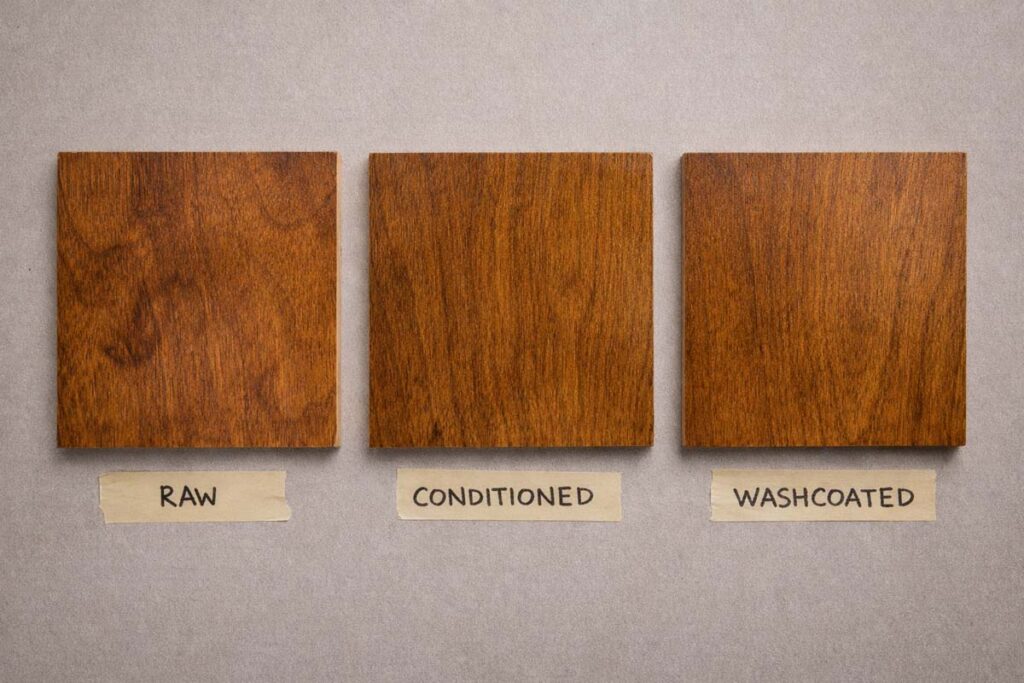
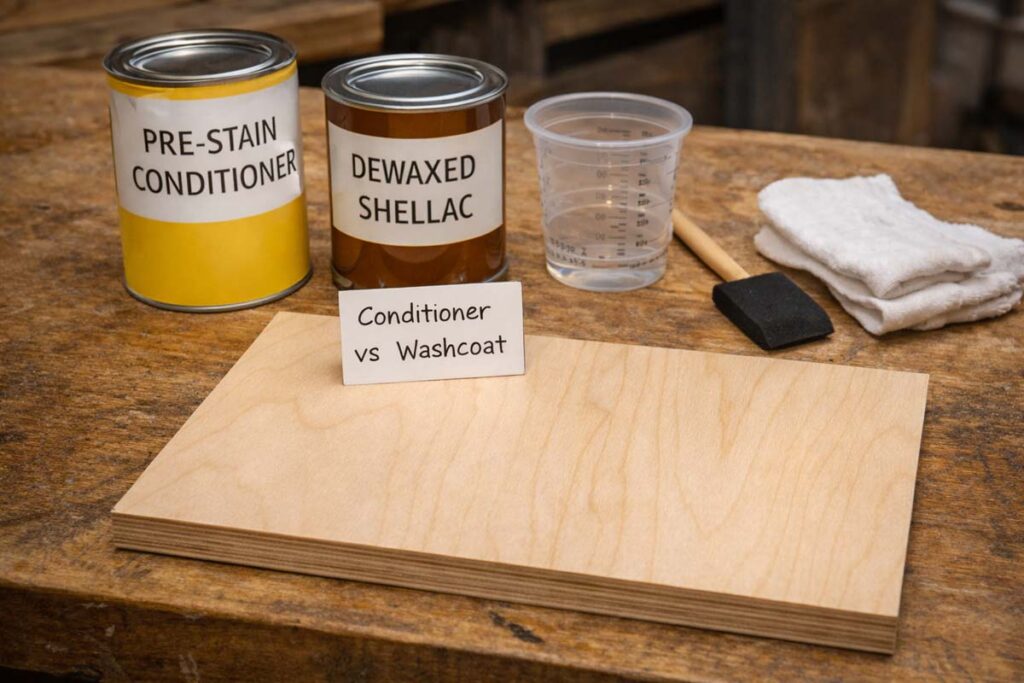
A pre-stain conditioner works well for pigment stains because it partially fills the wood surface and slows absorption. A thin washcoat of dewaxed shellac gives tighter control because you can adjust the cut and build. Birch responds well to “less sealer than you think,” because too much sealer prevents stain from adding color.
How do you stain birch dark without blotching?
Staining birch dark works best when you avoid heavy pigment loading on raw wood.
- Use a dye first for base color. Dye darkens evenly without muddy patches.
- Seal lightly, then use gel stain for tone. Gel stain adds depth while staying controlled.
- Build darkness in layers. Two lighter passes look cleaner than one heavy pass.
- Avoid over-sanding between coats. Sand-through on veneer shows up as light streaks.
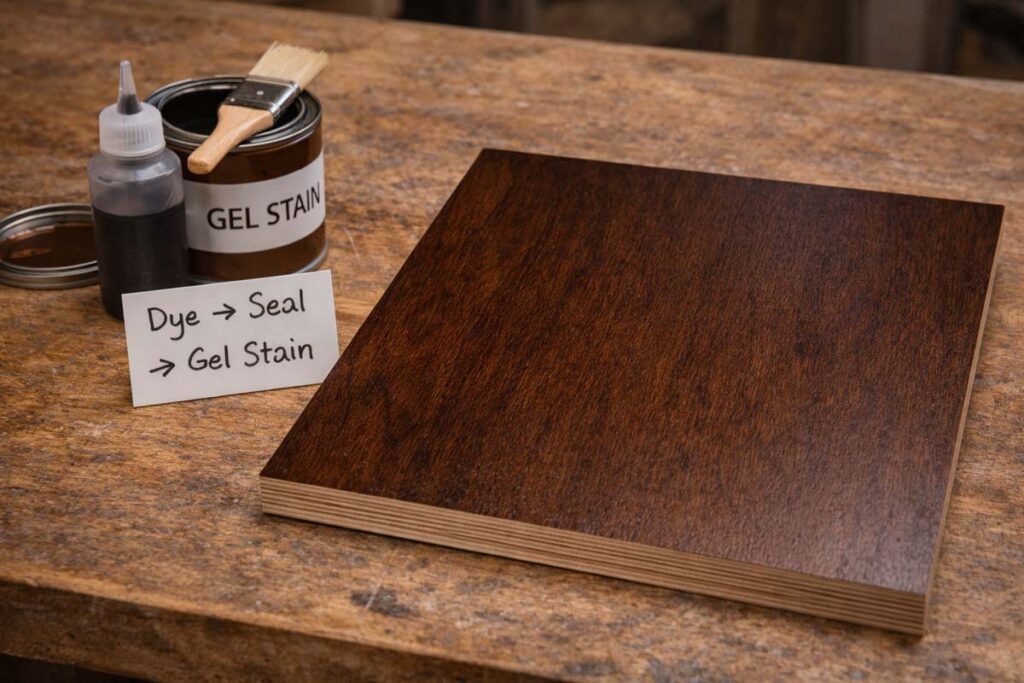
When people search “staining birch dark,” the problem is usually uneven pigment, not the lack of stain strength. Controlled layers solve that problem.
What color should you stain Baltic birch plywood?
Baltic birch has a pale, slightly warm base, so colors land differently than on oak or walnut.
- Natural / light amber: clear coat only, or a light dye for warmth
- Warm brown: light walnut or early American tones, built slowly
- Modern gray-brown: a neutral dye base, then a thin toner coat
- Deep espresso: dye + seal + gel stain layering
If you want a naturally dark look without fighting birch’s absorption, consider using a darker species instead of forcing birch. My guide to walnut wood details explains what walnut gives you in color and grain before finish.
How do you avoid lap marks on large plywood panels?
Lap marks happen when stain starts drying before you wipe the whole surface.
- Work in strips you can wipe within the open time.
- Keep your applicator wet and your stroke direction consistent.
- Use two rags: one for spreading, one for final wiping.
- Control airflow so the surface does not flash dry.
What topcoat works best over stained birch plywood?
The best topcoat depends on use, cleaning, and sheen goals.
- Water-based polyurethane: clear, low ambering, good for light stains
- Oil-based polyurethane or wiping varnish: warmer tone, strong protection
- Lacquer: fast build, smooth feel, best with good ventilation and practice
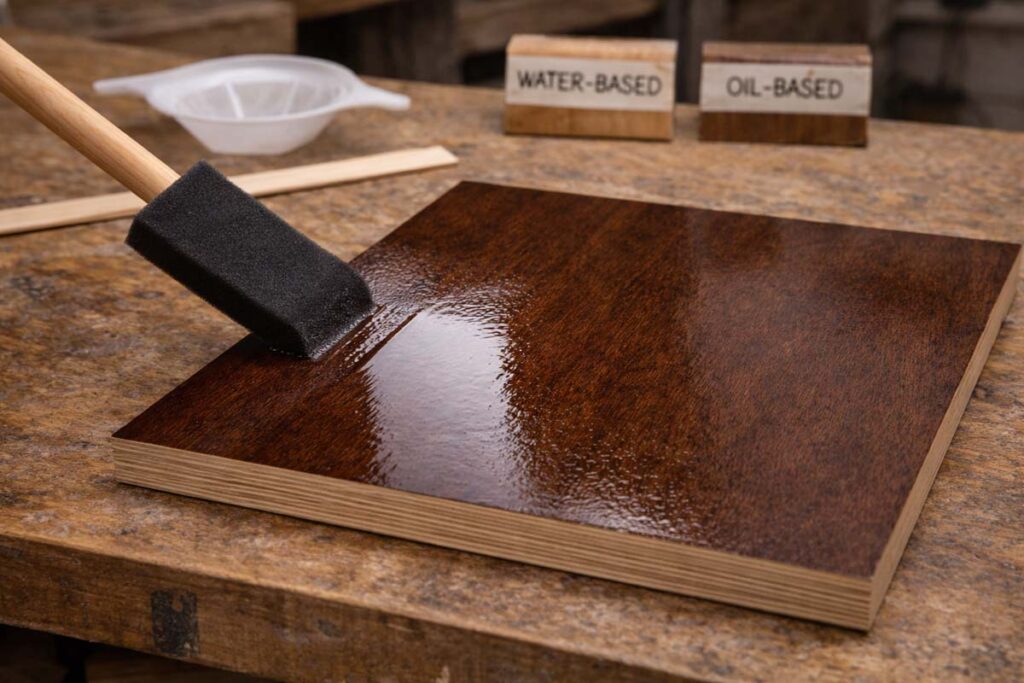
If the project touches food during normal use, check polyurethane food safe when cured before you choose your final finish.
Common problems when staining birch plywood and how to fix them
Blotchy patches usually come from raw birch absorbing pigment unevenly. Sand lightly, seal/condition, and switch to gel stain or a dye-first schedule.
Pale spots often come from glue squeeze-out. Scrape or sand the glue back to bare wood, then recondition and re-stain.
Too-dark edges come from end grain or veneer edge absorbency. Seal edges first, then stain.
Rough feel after staining comes from raised grain on water-based dye or cleaning. Lightly scuff sand after the color step, then topcoat.
FAQs about Staining Baltic Birch Plywood

Can you stain Baltic birch plywood?
Yes. Baltic birch plywood takes stain well when you control absorption with conditioner or a light washcoat, then apply stain evenly and wipe consistently.
How to stain Baltic birch plywood?
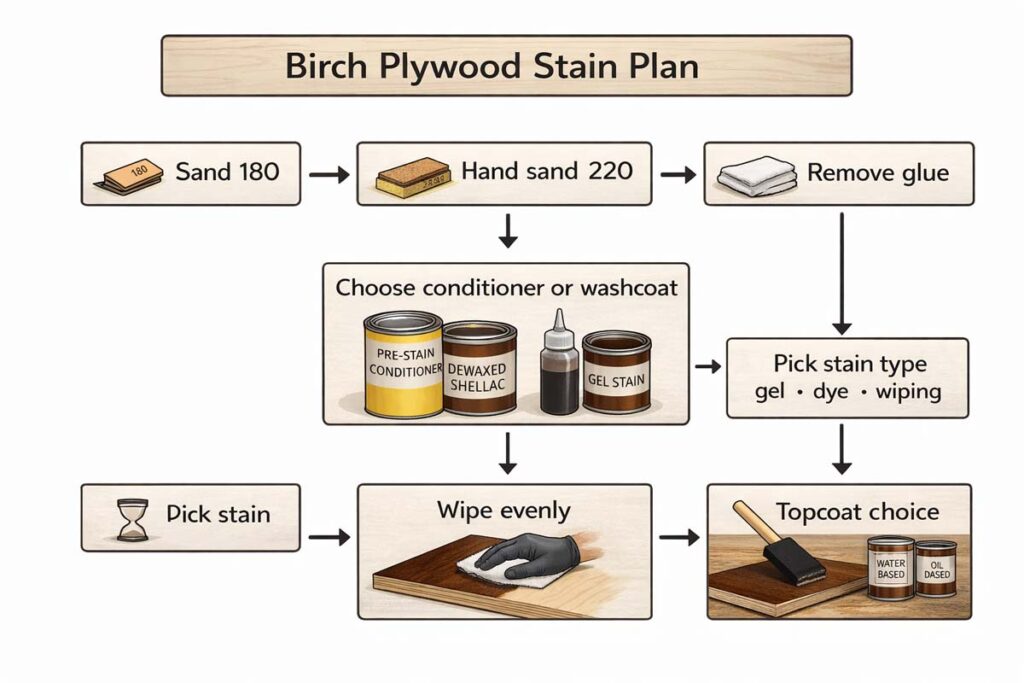
Sand lightly to 180, hand sand to 220, clean glue and dust, apply conditioner or washcoat, stain in sections, wipe evenly, let it cure, then topcoat.
What color to stain Baltic birch plywood?
Light ambers and warm browns look natural on birch. Deep browns and espresso look cleanest with a dye base plus gel stain layers.
What is the best stain for birch plywood?
Gel stain gives the most even “plywood stain” results on birch because it sits closer to the surface. Dye stain gives the cleanest darkening with less blotch.
How do you stain birch dark without blotching?
Use dye for the base color, seal lightly, then add depth with gel stain in thin layers. Heavy pigment on raw birch creates the blotches you are trying to avoid.