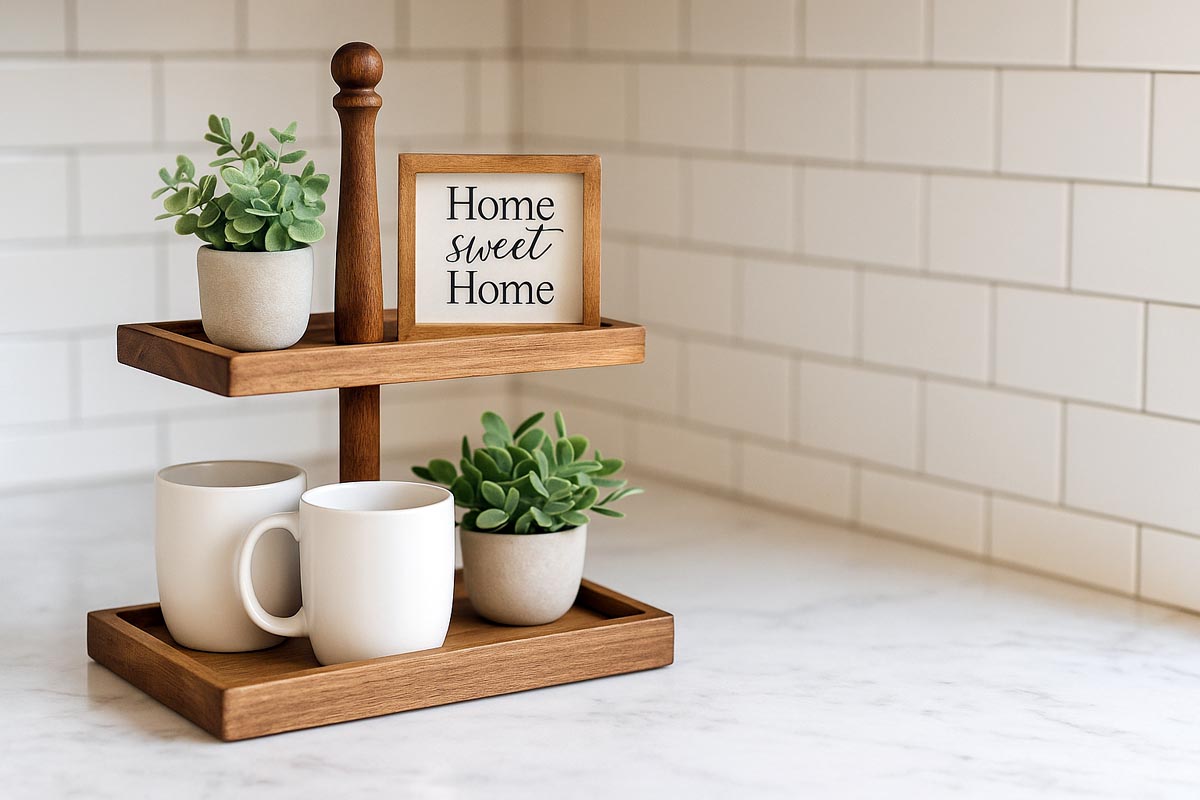

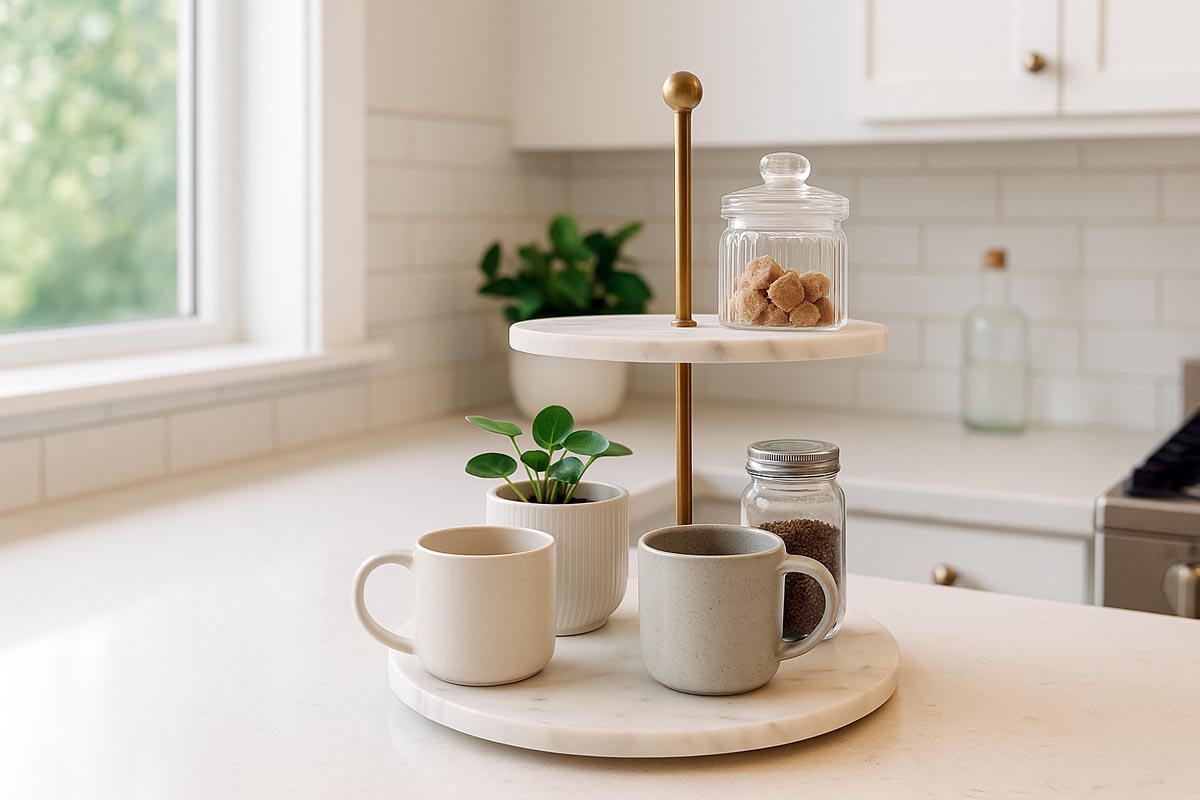
2 tier marble tray setups solve two problems at once: clutter and boring, flat countertops. Instead of bottles, mugs, and jars spreading everywhere, everything stacks up neatly on two levels in one small footprint. Used right, a marble stand works as a mini station for coffee, skincare, or entryway essentials, and it also makes the space look more intentional. This guide walks through what a two tier tray actually does, where it makes sense to use one, how to choose a solid piece that lasts, and simple styling and care steps so it doesn’t just become another heavy dust collector.
What is a 2 tier marble tray?
A 2 tier marble tray is basically a vertical stand made from two marble plates stacked at different heights, usually held together with a metal or wood post in the center.
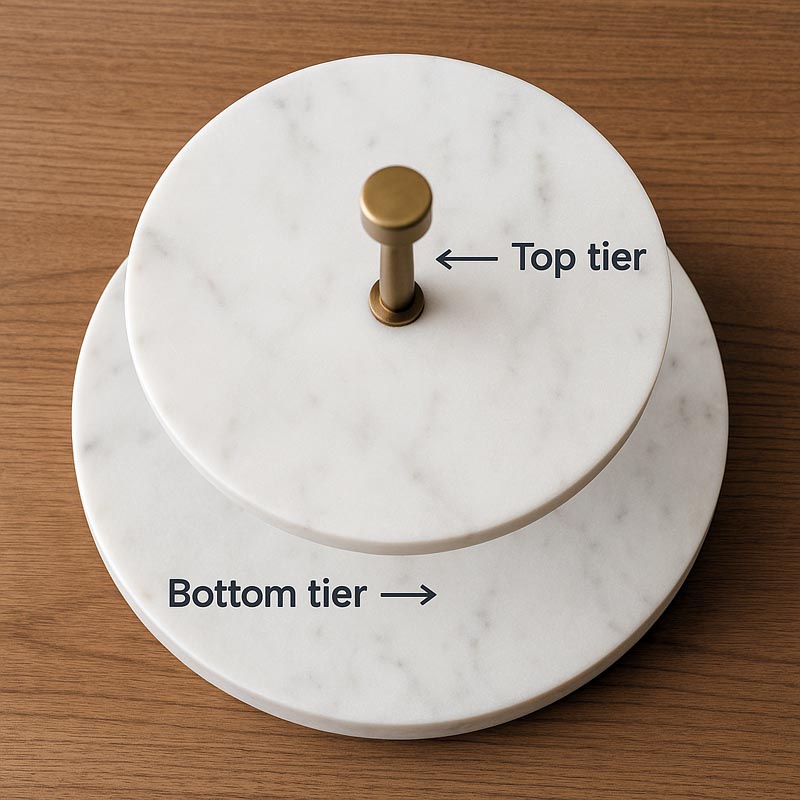
Think of it as a small “tower” for organizing or serving:
- Bottom tier – wider, for bigger items
- Top tier – smaller, for lighter or decorative items
- Center post – often metal (brass, black steel, stainless, etc.) or wood
You’ll see two main styles:
1. Serving style
- Round tiers
- Often used for desserts, snacks, cheese, or small serving pieces
2. Organizer / decor style
- Round or rectangular tiers
- Lives permanently on a counter, vanity, or table
- Holds bottles, jars, candles, cups, or accessories
The key idea: you gain vertical storage instead of spreading everything flat across the surface.
See more at: 2 Tier Tray Decor Ideas
Why choose a 2 tier marble tray (and not another material)?
What marble actually does for you
Marble trays aren’t just about looks. Marble gives you:
- Weight – the stand doesn’t slide easily when bumped
- Stability – bottles or glass items feel secure
- Heat resistance – useful around hot mugs or near the stove
- Visual “upgrade” – even simple items look more intentional
A two tier design also gives you:
- More storage in the same footprint
- A visual “anchor” on busy surfaces
- Easy zones for different categories (e.g., coffee stuff, skincare, spices)
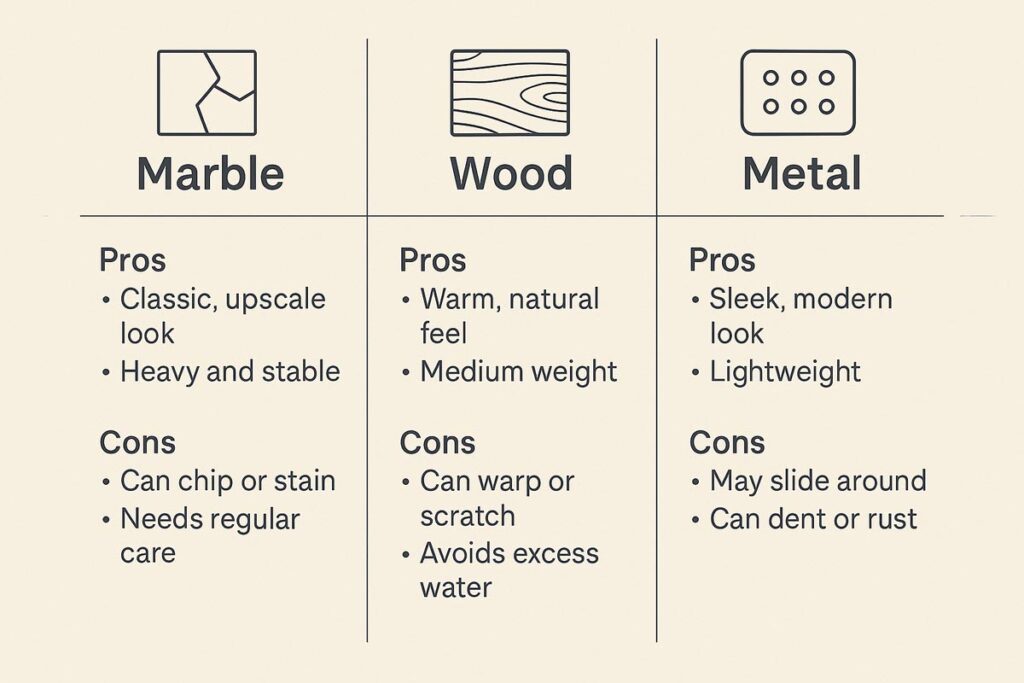
Benefits vs wood and metal trays
Here’s a quick comparison so you can see where marble stands:
| Material | Look & Feel | Weight / Stability | Maintenance | Best Use Cases |
|---|---|---|---|---|
| Marble | Classic, upscale, solid | Heavy, very stable | Wipe, avoid acids | Bathrooms, vanities, coffee bars, display |
| Wood | Warm, casual, natural | Medium weight, can wobble | Needs oil, avoids water | Rustic kitchens, dining, farmhouse styles |
| Metal | Sleek, modern, light | Can be light, may slide | Easy wipe, no sealing | Serving snacks, casual parties, small spaces |
When marble makes the most sense
Marble is usually a good fit when:
- The tray will sit in one place most of the time
- You care about appearance as much as function
- You want something that still looks clean and solid after years of use
- You’re dealing with glass bottles, ceramic mugs, or skincare jars
If the tray needs to move constantly from room to room, the weight of marble can become annoying. That leads into the next part.
Drawbacks of a 2 tier marble tray
No material is perfect. Marble has some clear downsides.
1. It’s heavy
Moving a loaded tray with one hand is risky. If someone lives in a small space and needs to move it daily, the weight quickly becomes a problem.
2. Marble can chip or crack
If the tray is dropped or knocked against a hard edge, the corners or rim can chip. That’s especially true with thin tiers.
3. Marble stains and etches
Acidic liquids (lemon juice, vinegar, some cleaners, some skincare) can dull the finish or leave marks if they sit too long.
4. Two tiers need more clearance
On some shelves or under low cabinets, a tall stand won’t fit. A single flat tray might be better in tight spots.
So a 2 tier marble tray works best in a stable, semi-permanent spot where it can stay put and be wiped regularly.
How to choose a 2 tier marble tray that actually works
1. Decide the main job first
Ask a simple question:
“What will live on this tray every day?”
Some common use cases:
- Coffee station (mugs, sugar, syrups)
- Bathroom vanity (skincare, perfumes, cotton jars)
- Kitchen counter (oils, salt, pepper, small bowls)
- Entry table (keys, wallets, sunglasses, mail)
Deciding this up front keeps you from buying something that looks nice but doesn’t fit your real items.
2. Check size and height
Measure the space where the tray will sit.
Look at:
- Tray diameter/length – Will it crowd the area?
- Overall height – Will it hit upper cabinets or mirrors?
- Tier spacing – Is there enough vertical clearance for bottles?
Good rule:
- Bottom tier should fit your tallest item on the bottom without touching the upper tier.
- Top tier should fit the shorter items you grab often.
3. Look at thickness and weight
A quality marble tray:
- Has consistent thickness across both tiers
- Doesn’t feel flimsy or bend when you press near the edges
- Doesn’t wobble when you tap the top tier lightly
Too thin = more risk of cracks.
Too thick = unnecessarily heavy for the space.
4. Pay attention to the center post and connections
This is where many trays fail.
Check for:
- Solid hardware – metal or hardwood, not flimsy plastic
- Tight joints – no wobble where the post meets each tier
- Hidden screws or clean finish – no sharp edges underneath
- A stable base – wide enough footprint so it doesn’t tip easily
If the post can loosen, make sure it’s a design you can tighten with a regular screwdriver or hex key.
5. Surface finish and edge profile
For everyday use:
- A satin or honed finish hides small scratches better than a high-gloss polish.
- Slightly rounded edges chip less than sharp square corners.
Look closely at:
- Any fill or patch areas in the stone
- Consistency of veining between tiers (if that matters for your style)
Where and how to use a 2 tier marble tray
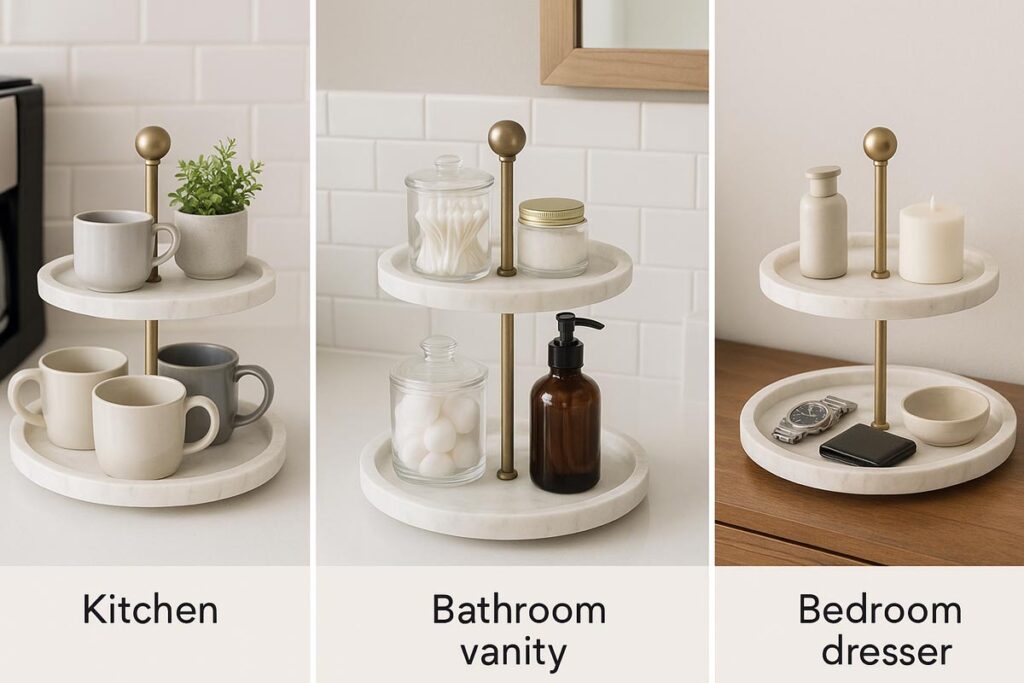
1. Kitchen counter
Typical uses:
- Oils, vinegars, salt, pepper, small bowls
- Small jars of spices or seasoning blends
- Honey pot, sugar jar, or tea tins
Simple setup idea:
- Bottom tier: two oil bottles, pepper mill, salt cellar
- Top tier: small bowl for garlic, tiny jar of flaky salt, maybe a small plant or decorative object
Keep anything very acidic wiped up quickly to avoid etching.
2. Coffee or tea station
This is where two tiers really earn their keep.
Bottom tier:
- Stack of mugs or two favorite mugs
- Canister of coffee beans or pods
- Sugar jar
Top tier:
- Syrup bottles (if short enough)
- Spoon rest
- Small jar with teaspoons
- Cinnamon shaker or cocoa powder
The tray keeps everything contained, so the station looks like a deliberate setup instead of random clutter.
3. Bathroom vanity
Place the tray near the sink or beside the mirror.
Bottom tier:
- Daily skincare bottles
- Perfume or cologne
- Toothbrush holder or small cup
Top tier:
- Cotton pads or cotton swabs
- Small jar with hair ties or clips
- One decorative item (candle, tiny plant, or glass bottle)
This keeps bottles off the direct countertop, which can help with water spots.
4. Bedroom dresser or nightstand
Use it as a catch-all without letting the surface get messy.
Bottom tier:
- Watch, wallet, small tray for coins
- Small dish for rings
- Reading glasses
Top tier:
- Nighttime lotion or hand cream
- Small clock or simple decor piece
The height also breaks up the flat look of a dresser.
5. Entryway or console table
Bottom tier:
- Key bowl
- Sunglasses
- Small mail stack or notepad
Top tier:
- Small plant or vase
- Pen cup or tiny tray for spare change
This gives anyone a “landing zone” as soon as he walks in the door, which cuts down on random piles around the house.
Step-by-step: Setting up your 2 tier marble tray
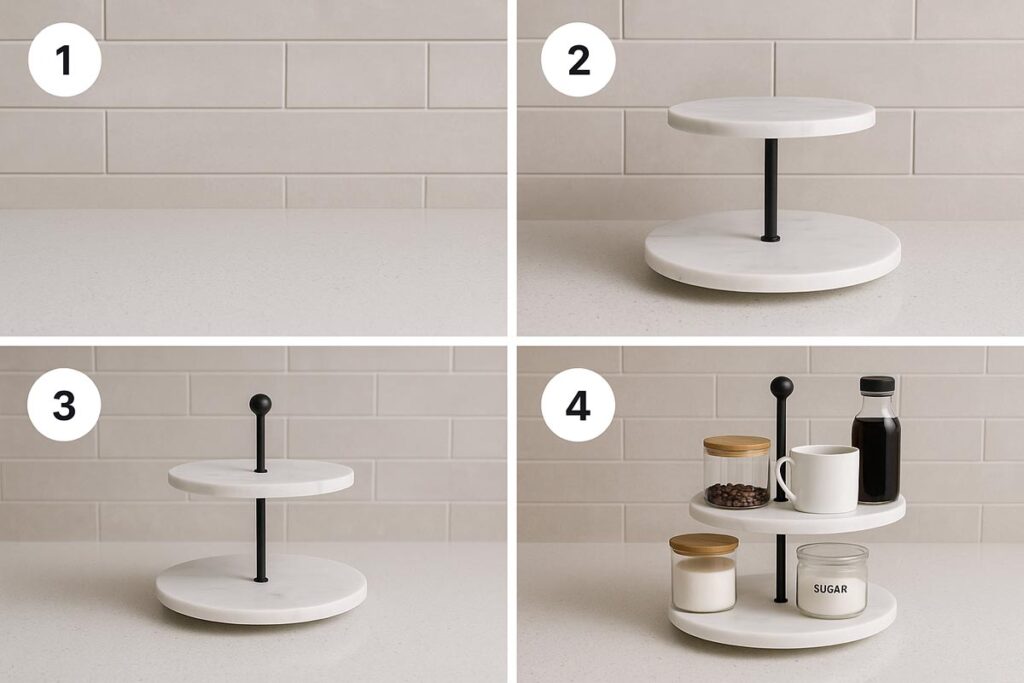
Use this simple process the first time.
- Empty the whole area: Clear everything off the section of counter, vanity, or table where the tray will live.
- Assemble the tray and test stability: Tighten the post, press gently on the top tier, and check for wobble. Adjust if needed.
- Sort your items into must-have and nice-to-have: Only daily use items should stay on the tray. Extras can move to a drawer or cabinet.
- Load the bottom tier first: Place the tallest and heaviest items here, spaced so you can grab them without knocking anything over.
- Add smaller items to the top tier: Use this space for frequently used but lighter or shorter items. Leave some breathing room.
- Step back and check the silhouette: You want a rough “pyramid” shape: heavier and taller at the bottom, lighter and shorter at the top.
- Adjust for comfort: Make sure nothing important is blocked and that you can clean around the tray easily.
Caring for a marble tray so it lasts
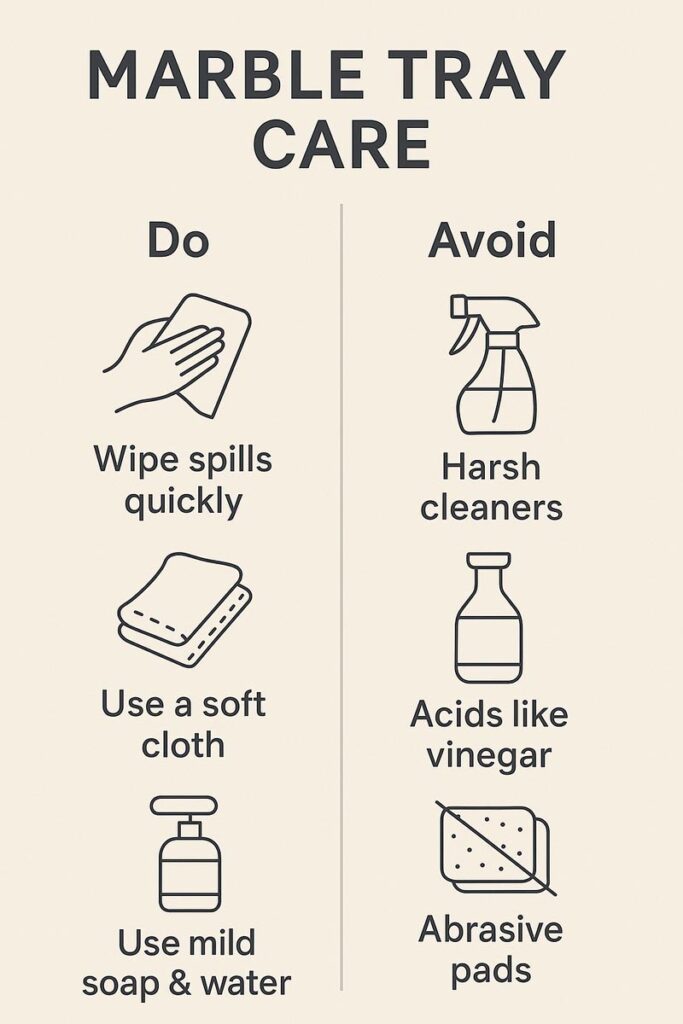
Daily and weekly care
- Wipe spills quickly: Especially oils, acids, and colored liquids (coffee, tea, wine, cosmetics).
- Use a soft cloth or sponge: Mild dish soap and warm water are usually enough.
- Avoid harsh cleaners: Skip bleach, vinegar, and strong acidic or abrasive sprays. They can dull or etch marble.
Dealing with stains and etching
- Light stains can sometimes be reduced with a gentle stone-safe cleaner.
- Etching (dull spots) is damage to the surface, not a normal stain. On a tray, small etched spots are often just something you learn to ignore, or you cover them with items.
If the tray is expensive and damage is serious, a local stone pro may be able to resurface it, but that’s rarely needed for everyday home trays.
Protecting the underside and surface beneath
- Add soft pads under the bottom tier if they’re not already there.
- This prevents scratching countertops or wood furniture.
- Don’t drag the loaded tray; lift and move carefully when absolutely necessary.
Safety tips (important but often ignored)
- Don’t stack the tray so high that the top tier becomes top-heavy.
- Keep glass bottles away from the very edge.
- If there are kids or pets that like to jump up, avoid placing the tray near the edge of a counter.
- Don’t carry a fully loaded marble tray one-handed across the room. Unload heavy items first.
A little caution goes a long way with heavy stone pieces.
Final thoughts
A 2 tier marble tray isn’t just a decorative stand. It’s a practical way to turn clutter into a small, organized station while also upgrading how a space feels. The vertical design gives more storage in a small footprint, and the weight of marble keeps everything steady.
However, it’s not ideal in every situation. The weight, risk of chipping, and sensitivity to acids mean it works best in a stable, semi-permanent spot where it can stay put and be wiped regularly. Choosing the right size, thickness, hardware, and finish makes the difference between a wobbly showpiece and a solid tool that quietly does its job for years.
If you’re thinking about buying a 2 tier marble tray, treat it like a long-term piece, not a quick impulse purchase. Measure your space, decide its main job, and be honest about how you actually live.
When used with intention, a marble tray becomes a small “command center” for daily routines: coffee, skincare, cooking, or entryway catch-all. That’s where the real value comes from. The tray looks nice, yes, but more importantly it keeps everyday life smoother, cleaner, and less scattered.