Walnut Wood: 8 Essential Facts Every Buyer and DIYer Must Know
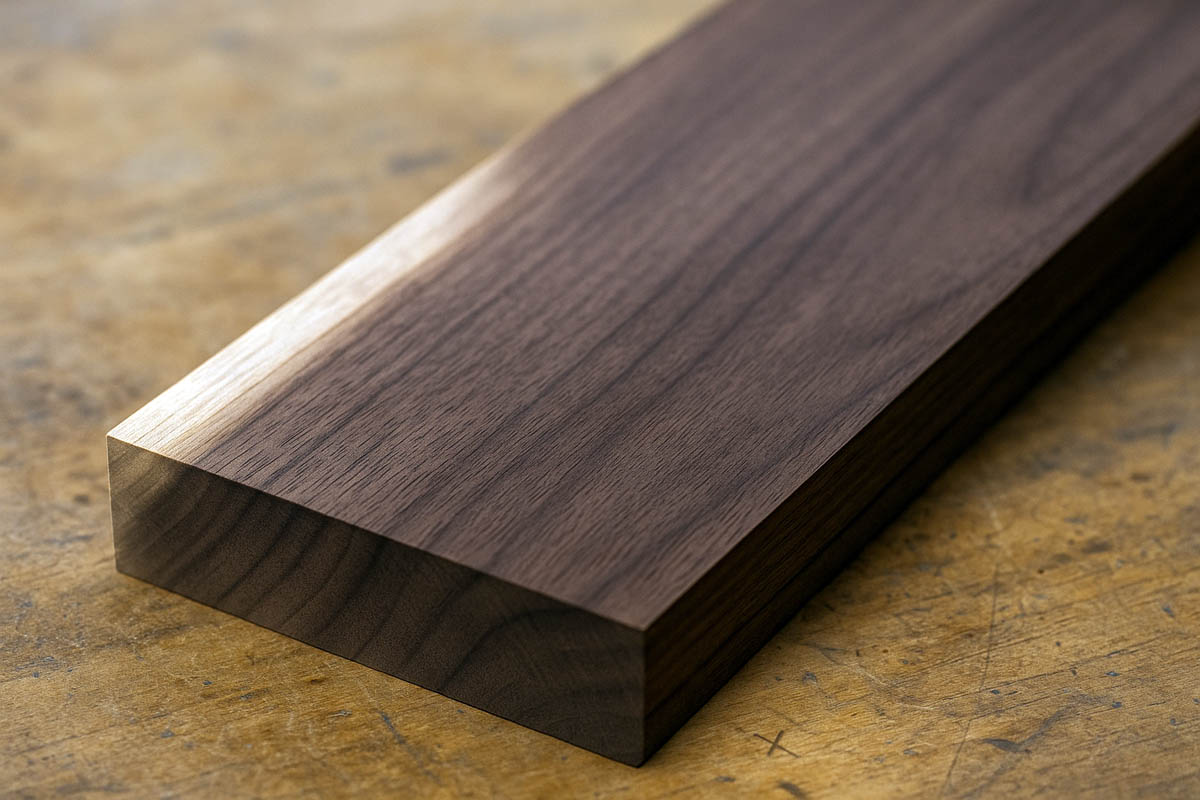
Walnut wood is one of the most requested species I see from homeowners and new woodworkers. It’s dark, it looks expensive, and every store seems to offer a different “walnut” option. You’ll see solid black walnut, veneers, Claro slabs, and even laminate printed with a walnut pattern. Prices jump all over the place, and the color in real boards rarely matches the small store sample.
In this guide I’ll break down what walnut wood actually is, how it behaves, where it shines, where it fails, and how to pick the right type for your next project. I’ll keep it practical, based on real shop experience, so you avoid expensive mistakes with walnut today.
What exactly is walnut wood?
Walnut wood comes from trees in the Juglans family and is a medium-density hardwood with rich brown heartwood and lighter sapwood. I like it because it machines cleanly, stays stable, and finishes with a deep, warm look.
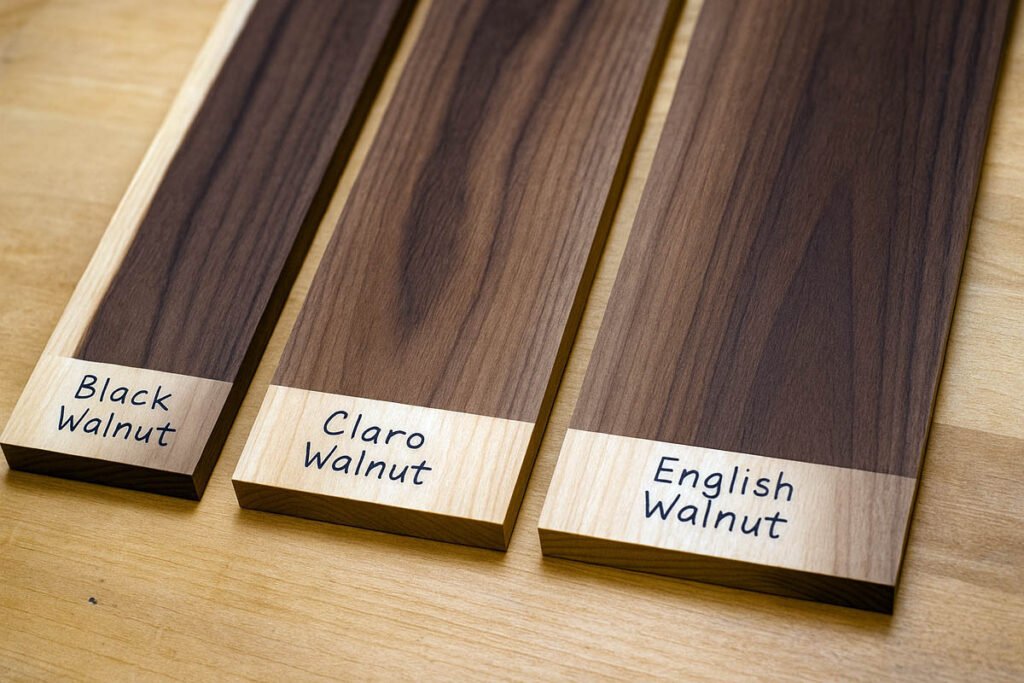
When people say “walnut” in woodworking, they usually mean black walnut, the hardwood that grows across much of the United States (Juglans nigra). It’s a medium-density hardwood with a Janka hardness around 1010 lbf, so it’s tough enough for furniture but not as hard as oak.
A few basic points so we’re on the same page:
- Heartwood color: brown to deep chocolate, sometimes with purple, gray, or reddish tones.
- Sapwood color: pale cream to almost white. Often steamed or stained to blend with the heartwood.
- Grain: usually straight, medium texture, with occasional curls, crotch figure, and burls that look wild and dramatic.
- Stability: moves less than many other hardwoods, so it behaves nicely once it’s dry.
On top of black walnut, there are other walnuts in the mix:
- English / European walnut (Juglans regia) – lighter, more subtle color, historically used for fine furniture and gunstocks.
- Claro walnut (Juglans hindsii) – often from California and Oregon, with dramatic streaks and figure; sometimes called California black walnut or Oregon black walnut.
When a lumberyard lists “American walnut” or “black walnut,” they’re usually talking about that same Juglans nigra we all love.
Learn more: 6 Best Wood Types for Sturdy Tiered Tray Stands
Why woodworkers (and homeowners) like walnut
Let me run through the upside first, because that’s why you and I are even considering this wood.
1. The color and grain
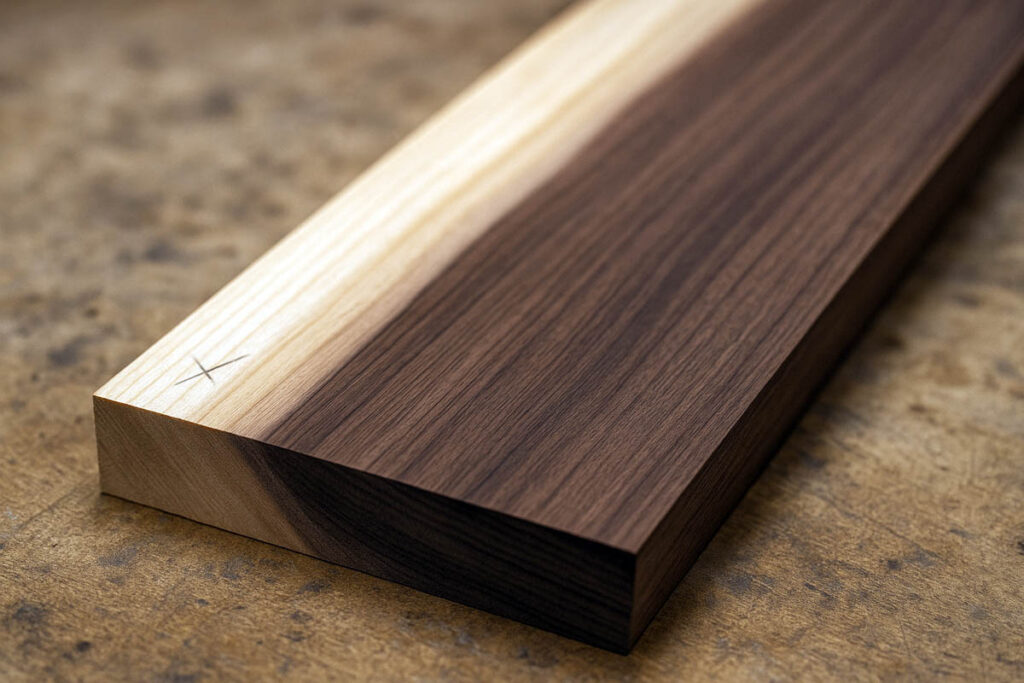
The obvious one. Walnut’s natural heartwood runs from warm brown to dark chocolate, often with subtle purple or gray tones. The sapwood gives a light edge that you can either hide or feature.
You can:
- Leave it natural with a clear finish if you want that honest walnut look.
- Darken it a bit with oil or shellac if you want more depth.
- Pair it with lighter woods (maple, ash) for contrast.
You don’t have to fight the grain. Even plain-sawn boards often look good without stain.
2. Workability
In the shop, walnut machines and hand-planes nicely. It cuts cleaner than some ring-porous woods, and it doesn’t load sandpaper as badly as oily exotics.
Pros from testing:
- It saws, sands, and glues without drama.
- It takes both film finishes (lacquer, poly) and oil finishes well.
- The pores are open but not as huge as oak, so you can get a smooth finish without aggressive pore filling.
3. Dimensional stability and durability
Once it’s properly dried, walnut tends to stay where you put it. That’s why it’s popular for fine furniture, gunstocks, and architectural millwork.
It also:
- Has decent shock resistance, so it’s fine for tabletops, chairs, and even flooring in normal homes.
- Has some natural rot resistance compared to lighter hardwoods, especially black walnut.
4. Versatile uses
You’ll see walnut used for:
- Furniture and cabinets
- Flooring and stair parts
- Veneer panels and architectural trim
- Gunstocks, turned bowls, and decorative boxes
From a commercial angle, that means there’s no shortage of walnut furniture, doors, and flooring in the market. That’s why you see so many “walnut” color samples at flooring stores, even when the core is laminate or engineered.
Know more: Pine, Oak & Maple
Where walnut falls short
It’s not magic wood. It has trade-offs you should understand before you spend money.
1. Cost
Black walnut is usually more expensive than many common hardwoods because of limited supply and high demand for its dark, attractive lumber.
So if you’re doing:
- A big kitchen in solid walnut
- A whole house of solid walnut flooring
…be ready for a serious bill, or look at walnut veneer or walnut-effect laminate instead.
2. Only medium hardness
Walnut sits around 1010 on the Janka scale, while oak is higher.
What that means for real life:
- It will dent if a kid drops a metal toy on the floor.
- Chair legs can leave marks over time on soft subfloors.
- Heavy traffic homes might see wear sooner than with something like white oak.
It still lasts a long time with normal use, but it’s not bulletproof.
3. Color change over time
Most woods darken as they age. Walnut is the opposite: the heartwood actually lightens a bit over time, especially in strong sunlight.
That’s important if you’re trying to match new pieces to old walnut furniture. The new piece will look darker at first and then slowly creep closer to the old color.
Walnut wood color: what you really get
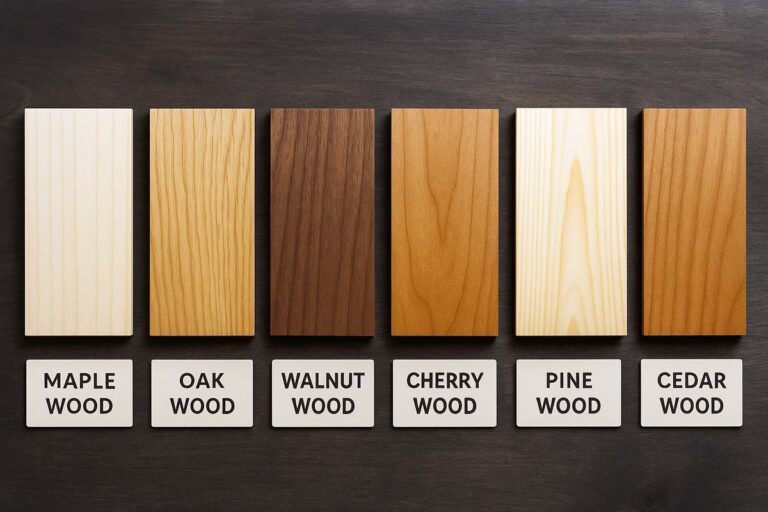
A lot of people look at a tiny color chip labeled “walnut” and expect real boards to match that exactly. That’s not how this works.
Natural walnut (solid or veneer)
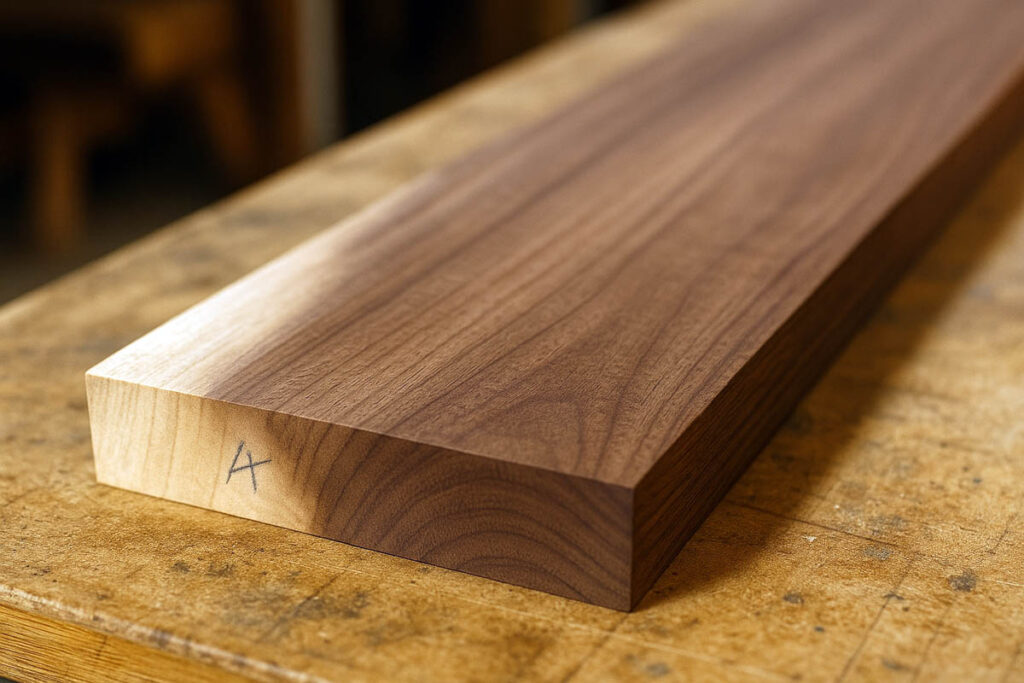
With real walnut, the color can vary even in one board:
- Sapwood – pale cream, sometimes a little yellow.
- Heartwood – light brown, rich brown, or almost black.
If you use a clear finish (oil, lacquer, water-based poly), you get whatever the wood gives you. That’s what people usually mean by “natural walnut” in solid lumber or veneer: walnut with no stain, just a clear protective finish.
Stained walnut
Sometimes walnut is stained to even out color or push it darker. For example:
- A light amber stain to warm up steam-treated sapwood.
- A dark brown or espresso stain for a nearly black look in modern interiors.
Stain hides some natural variation but can also flatten the character if you go too heavy.
Walnut-effect laminate and engineered products
When you see walnut color codes in catalogs (laminate floors, doors, cabinets), you’re often dealing with:
- A printed walnut pattern on a laminate surface.
- Or a thin walnut veneer over a core, like some interior doors and panels.
These products are trying to mimic the dark, warm tones of real black walnut without the cost and maintenance of solid wood. Some even call out American black walnut veneer specifically, like the Iseo B4514 doors that use real black walnut veneer on an engineered core.
Types of walnut you’re likely to run into
Let me break the main ones down in plain terms. There are a lot of walnut names floating around, but let me break down the ones that matter for most projects.
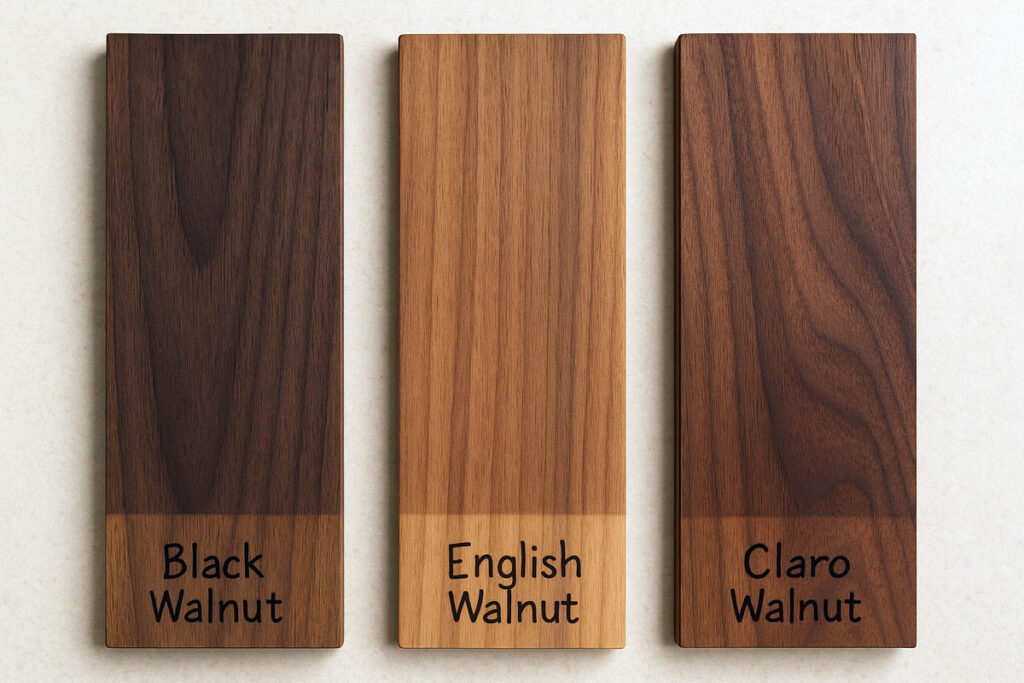
American black walnut (the workhorse)
Species: Juglans nigra
Where it grows: Eastern and central North America
Color and grain
- Heartwood: pale brown to deep chocolate, often with a bit of purple tone
- Sapwood: creamy white to light brown
- Grain: usually straight, sometimes with mild curl or figure
Hardness and strength
Black walnut has a Janka hardness of about 1,010 lbf, which puts it in the medium hardness range for hardwoods: hard enough for furniture and many floors, but still easy on tools.
Pros
- Machines and hand-planes nicely
- Glues and finishes well
- Natural resistance to decay in the heartwood
Cons
- More expensive than species like oak or maple
- Sapwood contrast can be an issue if he wants a perfectly uniform dark look
- Not ideal for heavy-abuse outdoor use without serious protection
Good uses
- Furniture (tables, desks, dressers)
- Cabinet doors and face frames
- Decorative boxes and small projects
- Gun stocks, musical instruments, turned bowls
If you’re unsure which walnut to buy, black walnut is usually the default and the safest bet. See more here.
English / European walnut
Species: Juglans regia
Color and grain
- Generally lighter than black walnut, running light brown to medium brown
- Often more subtle and straight-grained, with a refined look
Density and hardness
English walnut is a little less dense, roughly 550–720 kg/m³, while black walnut is denser and a bit heavier.
How it feels in the shop
It cuts and planes easily, and it’s popular for high-end gun stocks and fine furniture in Europe.
When I’d pick English walnut
- When I want a lighter, more classic brown tone
- When the project is more about fine detail carving or turning
- When weight matters a bit (for example, chair parts or certain instruments)
See more English walnut woods.
Claro walnut
Species: Juglans hindsii
Claro walnut is common on the West Coast (so for me in Oregon, this shows up pretty regularly). It’s known for dramatic figure and color variation.
Color and hardness
- Color: light brown to darker brown, often with wild streaks and fiddleback figure
- Hardness: often a bit harder and sometimes more expensive than black walnut
Where I’d use it
- Live-edge slabs
- Statement dining tables
- Guitar bodies and special pieces where figure is the star
If you (plural) see a slab with insane swirling grain and the seller says “Claro walnut,” you’re in that category.
White walnut / butternut and others
There are other walnut relatives and hybrids:
- White walnut / butternut – much lighter color, softer, carves well, more subtle brown.
- Bastogne walnut – hybrid between English and Claro, often very dense and highly figured.
- Peruvian walnut – typically darker and somewhat softer than black walnut, often used for contrast in furniture and flooring.
I treat these as specialty options when I want a specific color or carving behavior.
Black walnut vs “regular” walnut: what’s the real difference?
Online, you’ll see comparisons like “black walnut vs walnut.” Usually, “walnut” there means generic walnut wood, sometimes including English or other species.
Key points from testing and industry data:
- Color: black walnut is darker and richer than many other walnut species.
- Hardness: black walnut around 1010 Janka, slightly denser and more durable than some lighter walnuts.
- Price: black walnut usually costs more because of limited supply and high demand for its appearance and performance.
So if someone asks “Is black walnut worth the money?” my honest answer is:
- For statement furniture, doors, and cabinets, the look and feel often justify the extra cost.
- For budget projects or big floor areas, consider a walnut veneer or walnut-effect laminate instead of solid black walnut.
How to choose the right type of walnut for your project
Let me walk through this like I would with a friend standing in my shop.
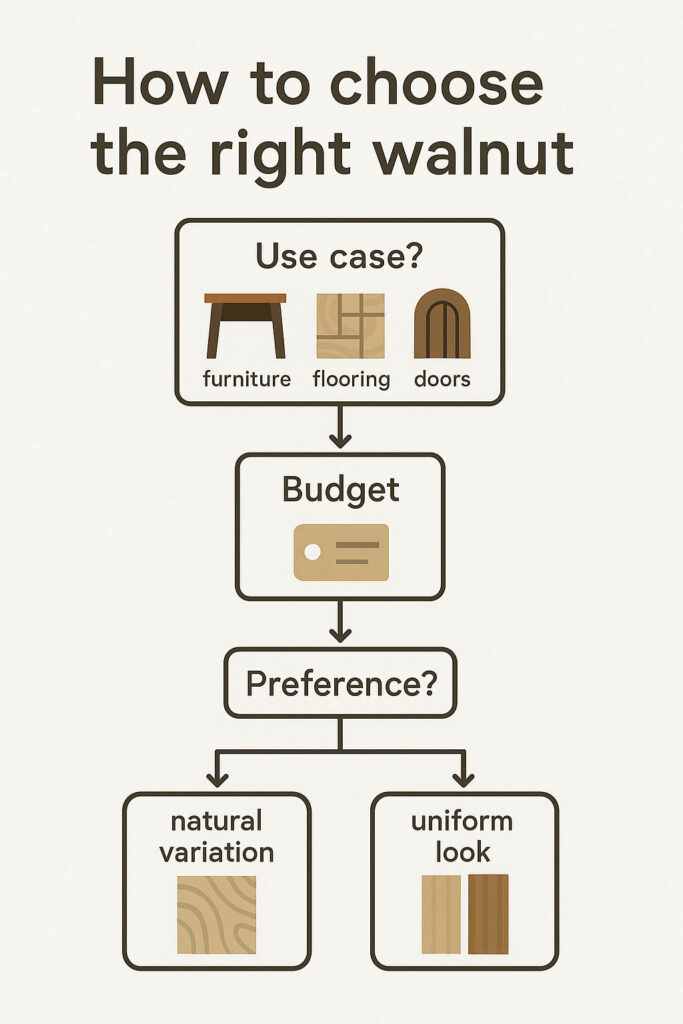
Step 1: Decide what the piece has to survive
Ask yourself:
- Is this a coffee table that takes daily abuse?
- A dining table where people drag plates and laptop edges?
- A cabinet door that only sees fingers and dust?
- A floor in a busy hallway?
For heavy traffic (floors, stairs), black walnut works, but you’ll see dents sooner than with oak. Some people handle that by embracing a “lived-in” look, or by choosing walnut-effect laminate for better scratch resistance.
For furniture and cabinets, I have zero hesitation recommending real black walnut if the budget allows.
Step 2: Set a realistic budget
Walnut isn’t bargain wood. Before you get attached to a design, figure out:
- Do you want solid walnut everywhere?
- Are you okay with walnut veneer on plywood, with solid walnut only on edges and doors?
- Would laminate or engineered walnut-look flooring make more sense underfoot?
Mixing approaches works well:
- Solid walnut for the table base and edge banding
- Veneered walnut plywood for the top and panels
- Walnut-effect laminate for big floor areas
Step 3: Choose color and look
Ask what you actually want to see every day.
- If you love variation and real-wood character, go with natural walnut and a clear finish. You’ll see sapwood streaks, knots, and all.
- If you want a very even, consistent color, you may prefer: Walnut veneers selected for uniform tone. Or walnut-color laminate, where every plank matches.
I always tell people: bring home sample boards and look at them in your own light. Walnut can look very different under cool LEDs versus warm bulbs.
Step 4: Solid walnut board selection (if you’re buying lumber)
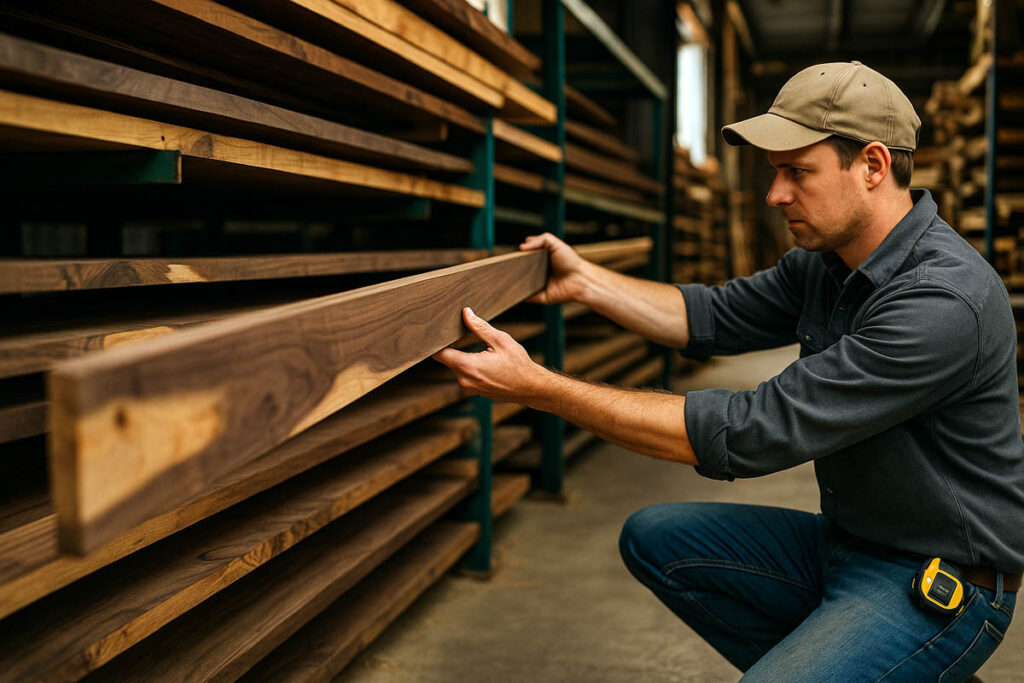
If you’re standing in front of a pile of walnut at the yard, here’s how I’d go through it.
- Check moisture and straightness: Look down the edge. Avoid badly twisted or deeply cupped boards.
- Look at the grain: For a calm, modern look, pick mostly straight grain. For dramatic tables, find boards with cathedral grain, curls, or crotch figure.
- Judge sapwood vs heartwood: If you hate light streaks, choose boards with more heartwood. If you like contrast, keep some sapwood and plan the layout to show it off.
- Plan your cuts: Lay out parts so the nicest sections land on tabletops, door fronts, and drawer fronts.
Working with walnut: practical shop notes
I’ll keep this short and focused on things that actually matter when tools hit wood.
Milling and machining
- Use sharp blades and knives. Walnut behaves nicely but fuzz can appear around knots if blades are dull.
- Joint and plane in small passes if there’s wild grain to avoid tear-out.
- When routing end grain, climb-cut lightly first to clean the edges, then take a normal pass.
Sanding
- Stop at 180 or 220 grit for most film finishes.
- If you sand too fine before an oil finish, it can reduce how much the wood soaks in.
Gluing
Walnut glues well with common wood glues.
Just be careful with squeeze-out stains:
- Wipe off the bulk with a damp rag.
- Scrape the rest after it gels.
- Don’t smear it thin all over the grain; that can block finish absorption.
Finishing
Simple finish schedule that works on most walnut:
- Sand to 180–220 grit.
- Wipe with mineral spirits to preview the color.
- Apply an oil or oil-varnish blend for depth.
- Topcoat with lacquer, polyurethane, or water-based poly, depending on the abuse level.
If you need extra surface hardness (kitchen table, desk), lean toward a harder film finish instead of just oil.
Walnut in commercial products: furniture, floors, doors
You’ll see walnut everywhere in catalogs now, even when the core isn’t solid wood. That’s not automatically bad; it just means you need to know what you’re buying.
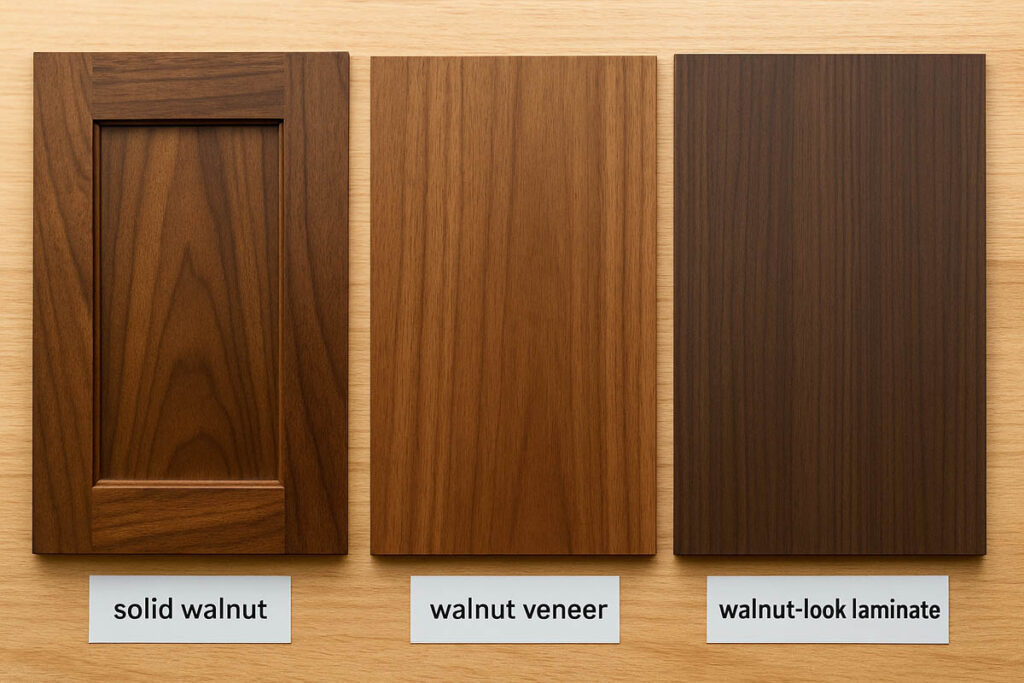
Walnut flooring options
1. Solid walnut flooring
- Warm, natural feel.
- Can be refinished multiple times.
- More prone to dents than some harder species.
2. Engineered walnut flooring
- Real walnut veneer over a stable core.
- Better resistance to humidity swings than solid.
- Veneer thickness matters for future refinishes.
3. Walnut-effect laminate flooring
- Printed walnut pattern, not real wood.
- Highly scratch-resistant and budget-friendly.
- Great when you want the look without worrying about pets and kids beating it up.
Walnut doors and cabinetry
A lot of interior doors and casework panels use:
- American black walnut veneer on engineered cores for stability.
- Factory-applied clear finishes for a consistent, ready-to-install look.
When you see model numbers like B4514 Walnut, that’s usually just the manufacturer’s way of labeling a style made with walnut veneer, not a special species.
Caring for walnut furniture and floors
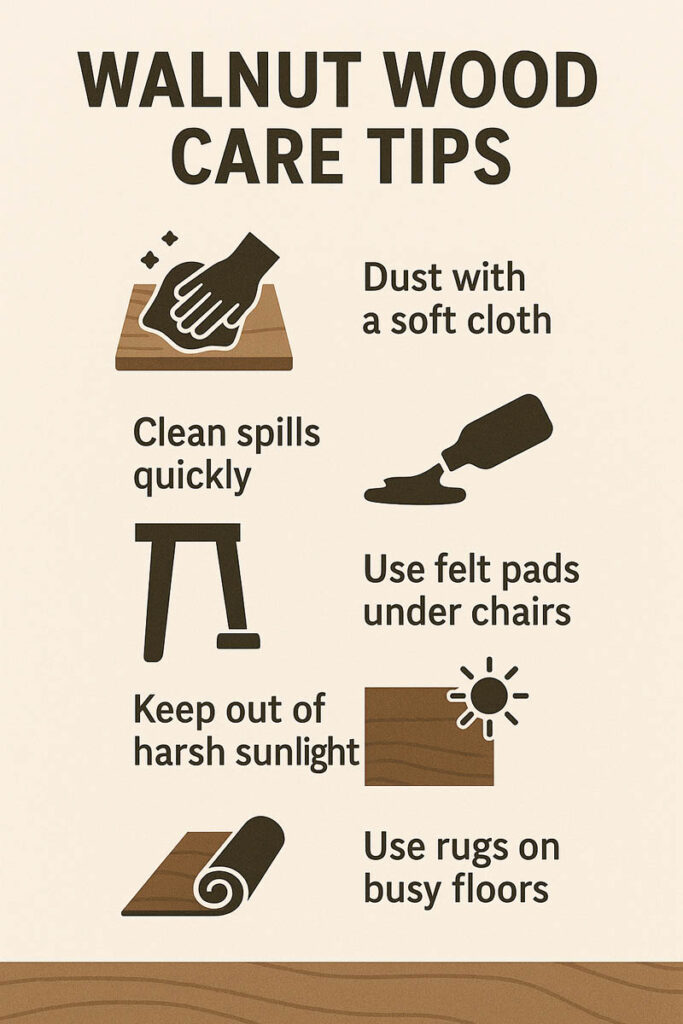
Once you’ve invested in walnut, keeping it looking good is pretty simple.
- Dust regularly with a soft cloth. Dust acts like sandpaper if you slide objects over it.
- Clean with mild products recommended for wood or for your specific floor finish. Don’t soak it with water.
- Use coasters and mats under glasses and hot dishes on tables.
- For floors, use felt pads under chair legs and avoid dragging heavy furniture.
- Protect from strong direct sunlight if you want to slow the lightening of the heartwood over time.
FAQs About Walnut Wood

Is Walnut the Darkest Scandinavian Wood?
No. Walnut isn’t even a traditional Scandinavian species; most native woods there are light (pine, spruce, birch). Walnut is darker than those, but stained or smoked oak and treated woods used in Scandinavia can appear just as dark or darker.
What Does Walnut Wood Look Like?
Walnut typically has medium-to-dark brown heartwood with subtle gray, purple, or reddish tones, plus pale creamy sapwood along the edges. The grain is usually straight with a smooth, even texture and occasional curls or figured areas.
What Color Is Walnut Wood?
Freshly worked walnut ranges from light chocolate brown to deep brown, sometimes with gray or purplish cast in the heartwood and off-white sapwood. Over time, the dark heartwood slowly lightens, especially in direct sunlight, so older walnut often looks softer and warmer.
Is Burning Black Walnut Wood Toxic?
Seasoned black walnut firewood is generally safe to burn in a stove or fireplace for humans, but the dust and shavings are dangerous for horses and should never be used as bedding. Like any wood smoke, it can irritate lungs, so good ventilation and a proper chimney are still important.
Is Walnut a Hard Wood?
Yes. Walnut is a true hardwood species with a Janka hardness around 1,010 lbf, which puts it in the medium range—hard enough for furniture, cabinets, trim, and normal residential flooring, but softer and more dent-prone than white oak or maple.
Where to Buy Walnut Wood?
You’ll usually find good walnut stock at hardwood lumberyards, woodworking specialty stores, local sawmills, and reputable online lumber dealers that list species and board-foot pricing. Big box home centers sometimes carry small project boards, but serious selection and better prices are typically at real hardwood suppliers.
How Much Is Black Walnut Wood Worth?
Right now (late 2024–2025 in the U.S.), kiln-dried black walnut lumber typically sells for about $8–$20 per board foot at retail, with common grades closer to $6–$10 and wide, clear or figured boards often $15–$25+ per board foot. Remember, price depends on region, grade, thickness, and whether it’s rough or surfaced.
What is the main difference between black walnut and natural walnut?
When people say black walnut, they mean the species Juglans nigra, known for dark heartwood and good stability. Natural walnut usually means that same wood finished clear, without stain, so you see the actual heartwood and sapwood colors.
Final thoughts
If you like warm, natural interiors with some depth and character, walnut is hard to ignore. It isn’t the toughest wood out there, and it isn’t the cheapest, but the balance of color, workability, and stability hits a sweet spot for a lot of projects.
My own rule of thumb is simple:
- Use real walnut where your hands and eyes interact with the surface every day.
- Use veneers and walnut-look products when square footage gets big and budgets get tight.
If you keep the pros and cons in mind and choose the right type for the job, walnut will treat you well for a long time.