How Long Does Wood Glue Take to Set? 5 Glue Types, Real Times
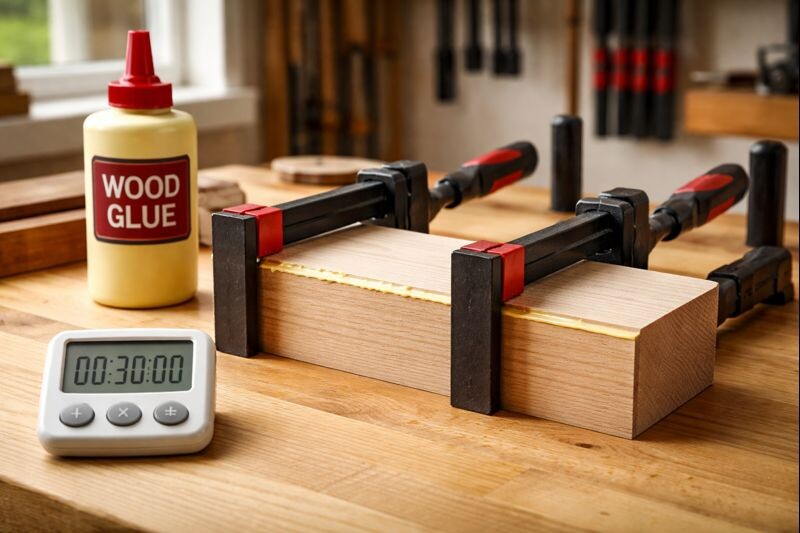
How long does wood glue take to set depends on the glue type, the joint, and your shop conditions. Most people get tripped up because “set,” “dry,” and “cure” aren’t the same thing. Once you separate those three stages, glue-ups stop feeling like guesswork and start feeling predictable.
Contents Here
- 1 Quick answer: Set times you can plan around
- 2 Set vs dry vs cure (the difference that saves joints)
- 3 What a glue-up timeline looks like in the real world
- 4 Wood glue set times by type (what to expect, and what to watch)
- 5 What affects how long wood glue takes to set
- 6 How long to clamp wood glue (and how tight to clamp)
- 7 When you can sand, stain, or finish after gluing
- 8 How to tell if the glue is truly set
- 9 How to make wood glue set faster without weakening the joint
- 10 Common mistakes that slow drying or cause joint failure
- 11 FAQs
- 12 Conclusion
Quick answer: Set times you can plan around
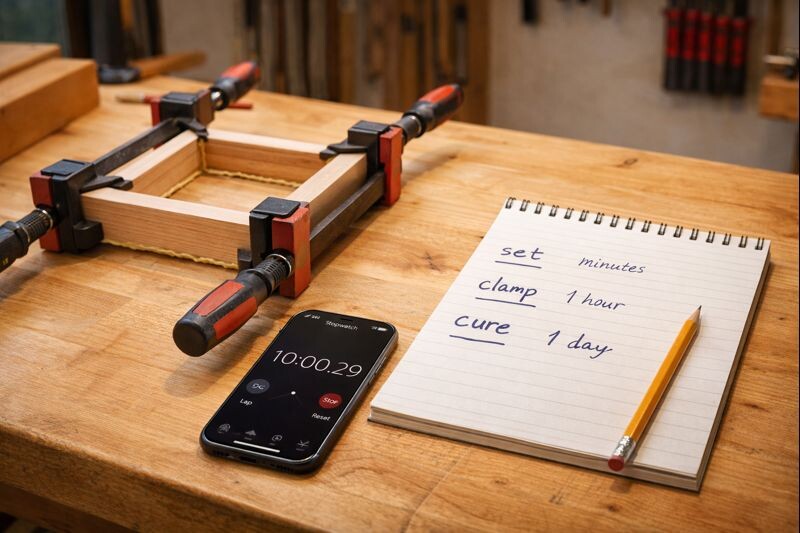
In a normal shop (around 70°F / 21°C, average humidity), most wood glues grab fast, but they need time to reach full strength. Think in three windows: minutes, an hour, and a day.
| Glue type (common use) | “Sets” enough to stop sliding | Typical clamp window (light handling) | Safer “don’t-stress-it” window |
|---|---|---|---|
| PVA / yellow wood glue (most furniture) | 5–15 min | 30–60 min | 24 hours |
| Waterproof PVA (outdoor/cutting boards) | 10–20 min | 30–60 min | 24 hours |
| Gorilla Wood Glue (PVA) | 5–15 min | 20–30 min | 24 hours |
| Polyurethane glue (foaming type) | 15–30 min | 1–2 hours | 24 hours |
| 5-minute epoxy (repairs, mixed materials) | 3–10 min | Usually no clamps needed | 24 hours+ |
| CA / super glue (tiny parts, quick fixes) | seconds | none | hours to overnight |
Titebond notes open/assembly times for their PVAs that show how quickly things start grabbing (Original: short open time; III: longer open time).
Titebond also says most unstressed joints should be clamped 30 minutes to an hour, and Rockler reinforces the “wait before stressing the joint” idea.
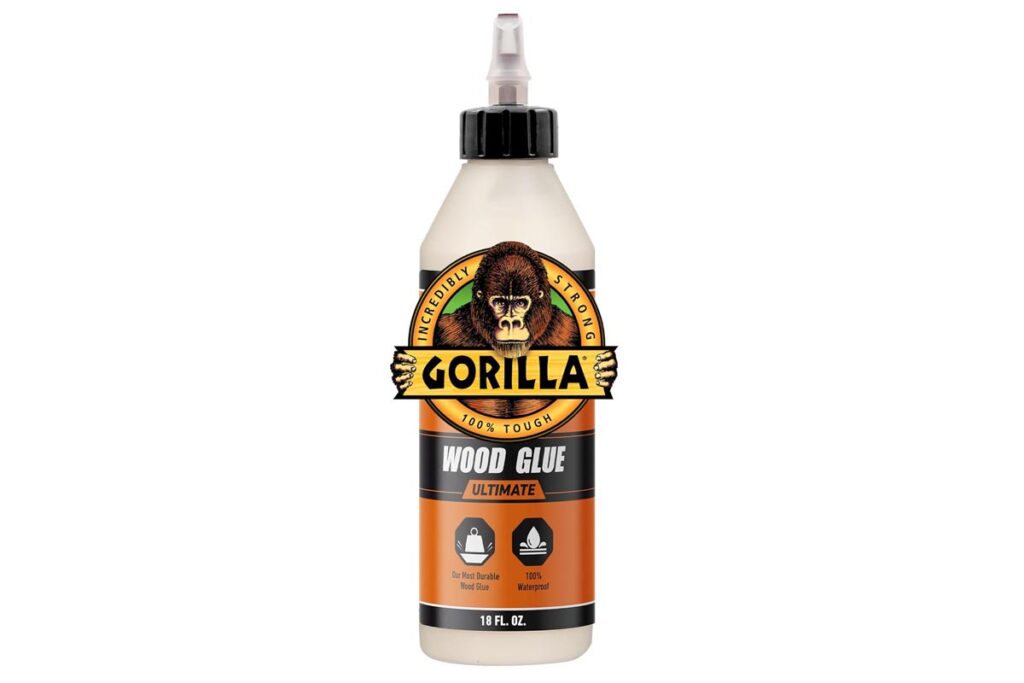
Gorilla’s own specs list 20–30 minutes clamp time and 24 hours cure for Gorilla Wood Glue.
Also know: How Long Does It Take for Wood Glue to Dry
Set vs dry vs cure (the difference that saves joints)
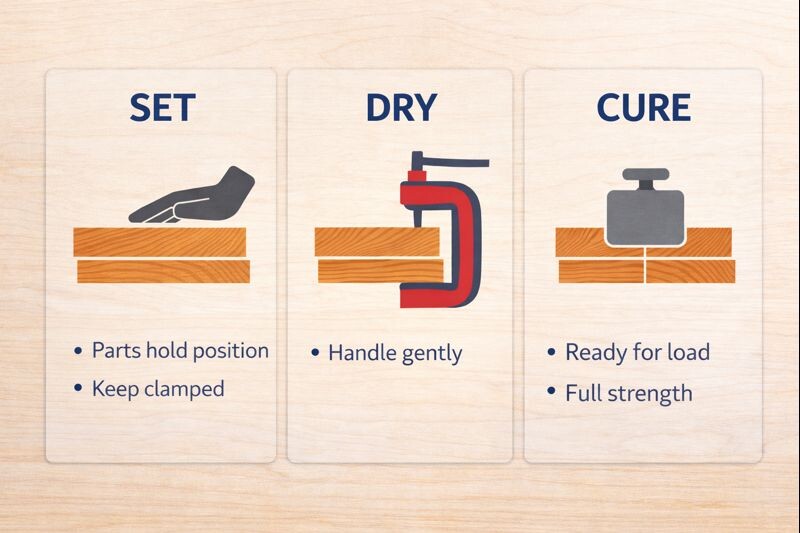
- Set is when the pieces stop skating around and the glue starts holding position.
- Dry is when the glue line is firm enough that the joint can be handled gently.
- Cure is when the glue has reached near-full strength, and you can trust it under load.
If you remove clamps at “dry” and then stress the joint like it’s “cured,” that’s when you get hairline failures that show up later.
What a glue-up timeline looks like in the real world
Here’s the rhythm I use at the bench:
- Open time (minutes): spread glue, assemble, and get clamps on. Titebond Original’s open time is short (4–6 minutes), so have clamps ready.
- Initial grab (next few minutes): parts stop shifting easily. Don’t bump the assembly now.
- Clamped set (30–60 minutes for many PVAs): safe to remove clamps for unstressed joints in many cases.
- Handling window (same day): light sanding/scraping can be okay once squeeze-out firms up.
- Full strength (often ~24 hours): this is when I’ll put a joint into service or load it.
Wood glue set times by type (what to expect, and what to watch)
PVA wood glue (white/yellow) set time
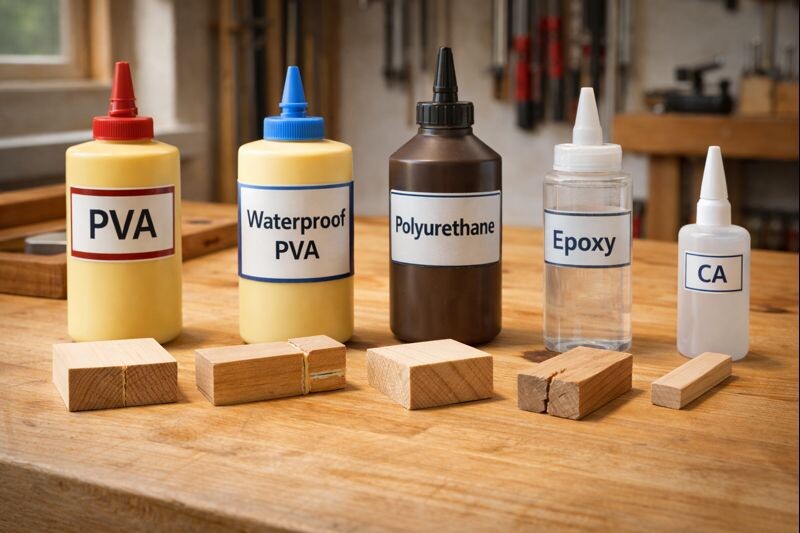
This is your everyday cabinet-and-furniture glue. It sets quickly, cleans up with water, and likes tight-fitting joints. Titebond’s application guidance shows how short the workable window can be for fast-setting PVAs, so dry-fit first and stage your clamps.
Shop tip: If you’re building something that’ll be handled and wiped often (serving trays, tray stands), you’ll get better results when the joinery is tight and the clamping is even.
Waterproof PVA (for outdoor work and boards)
These behave like PVA, but they’re built for moisture resistance. Titebond III, for example, has a longer open assembly time (8–10 minutes) which helps on fussy glue-ups.
If your project is food-adjacent, make sure your finish is chosen with the same patience you give your glue. I keep a separate note on finish safety once everything has cured in this post: polyurethane safety after full cure.
Gorilla Wood Glue (PVA) set time
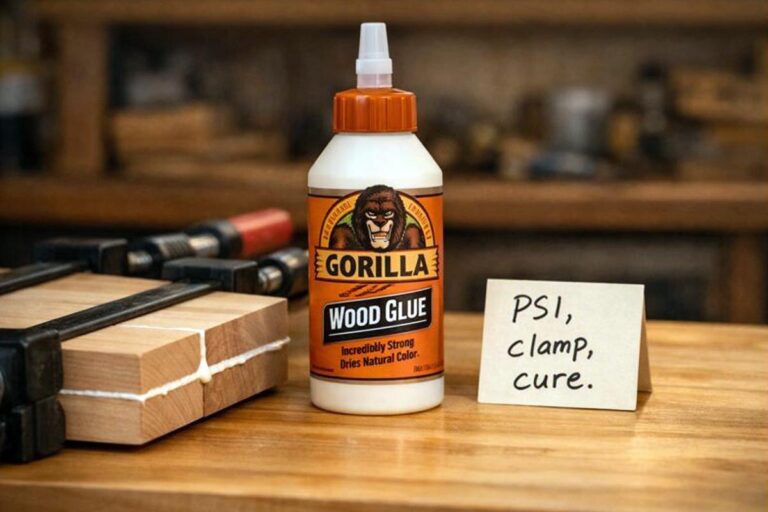
Gorilla Wood Glue is still a PVA-style wood glue. Their published directions call for 20–30 minutes of clamping and 24 hours to reach total bonding strength, with temperature playing a real role.
Polyurethane wood glue set time
Polyurethane glue is the foaming type that’s moisture-cured. It can help with imperfect fits, but that foam isn’t structural strength. Clamp it firmly, control squeeze-out, and don’t assume “foamed up” means “done.”
Epoxy set and cure time
Epoxy is great when wood glue isn’t the right tool—mixed materials, gaps, oily woods, repairs. “5-minute” usually means it sets fast, not that it’s ready for hard use. For anything load-bearing, treat epoxy like an overnight cure unless the product sheet says otherwise.
Hide glue setting time
Hide glue shines in instrument work, antique repairs, and anywhere reversibility matters. It’s also more sensitive to temperature and humidity. If you want a practical clamp-time trick, Titebond even suggests using a glued scrap as a “dryness indicator” for hide glue removal timing.
CA (cyanoacrylate) set time
CA glue grabs instantly, which makes it handy for tiny trim parts, quick chip repairs, and stop-gap holds. It’s not my first choice for joints that will flex or carry weight long-term.
What affects how long wood glue takes to set
If glue is acting slow, it’s usually one of these:
- Temperature: Most PVAs don’t like cold shops. For example, Titebond Original wants application temps above 50°F, and Titebond III above 47°F.
- Humidity and airflow: High humidity slows water-based glues. Still air does, too.
- Wood moisture content: Wet stock delays set and weakens bonds.
- Joint fit: A tight joint sets faster and ends stronger.
- Glue thickness: A thin, even film cures more predictably than a puddle.
- Wood species: Porous softwoods can “drink” glue; dense hardwoods can slow evaporation.
How long to clamp wood glue (and how tight to clamp)
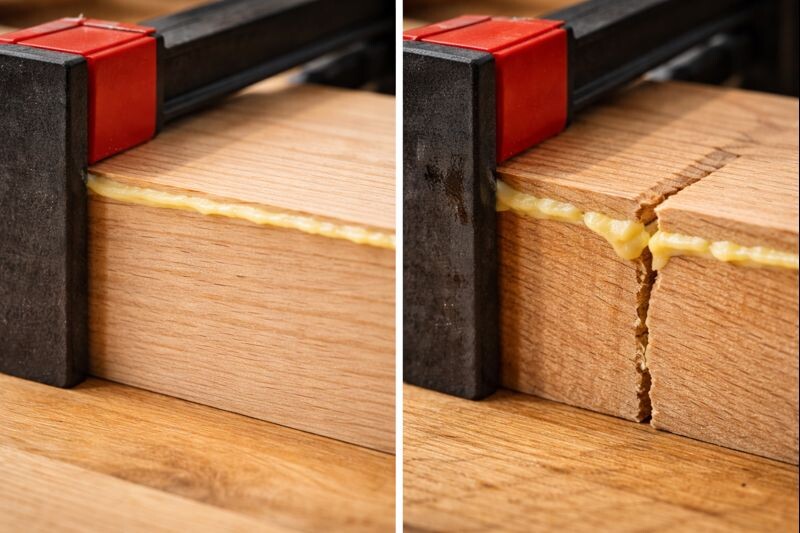
For many wood glues, clamping is about closing the joint, not crushing the fibers. Titebond’s guideline is simple: enough pressure to bring joints tightly together, and they even publish pressure ranges by wood type.
If you don’t speak in PSI (most of us don’t), use this rule:
- Clamp until the seam closes and you see a small, consistent bead of squeeze-out.
- Don’t reef down so hard you bow parts or squeeze the joint dry.
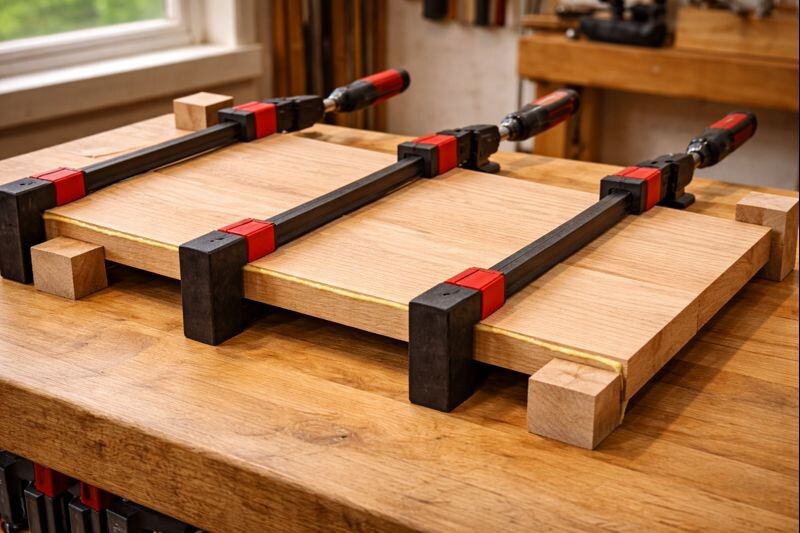
Titebond’s FAQ recommendation—30 minutes to an hour for unstressed joints—is a solid baseline when you don’t have label guidance handy.
After clamps come off, I still avoid stressing the joint until the next day.
Before you start cranking clamps, it’s worth checking your basics—eye protection, gloves where needed, and sensible workholding. This quick refresher on basic safety gear for messy builds keeps glue-ups calmer.
When you can sand, stain, or finish after gluing
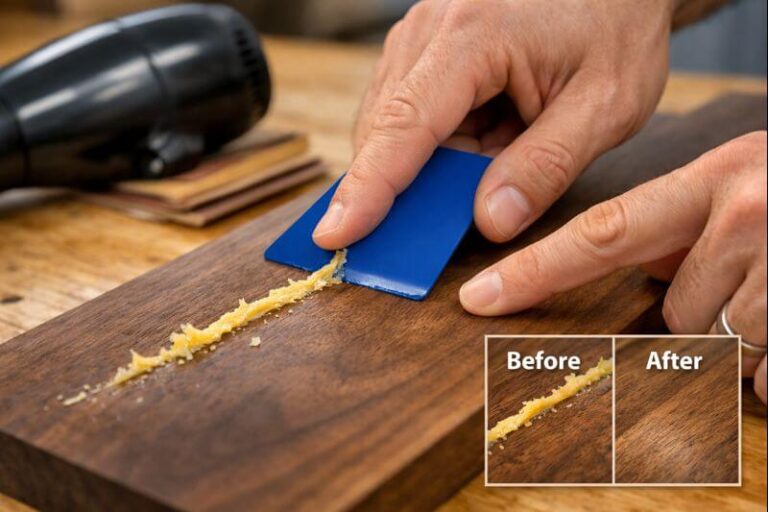
Sanding too early is how you get gummy paper, smeared glue, and blotchy stain.
- Scrape squeeze-out when it turns rubbery. That’s often easier than wiping.
- Sand when dried squeeze-out is brittle and powders, not smears.
- Stain only after you’re confident the surface is glue-free.
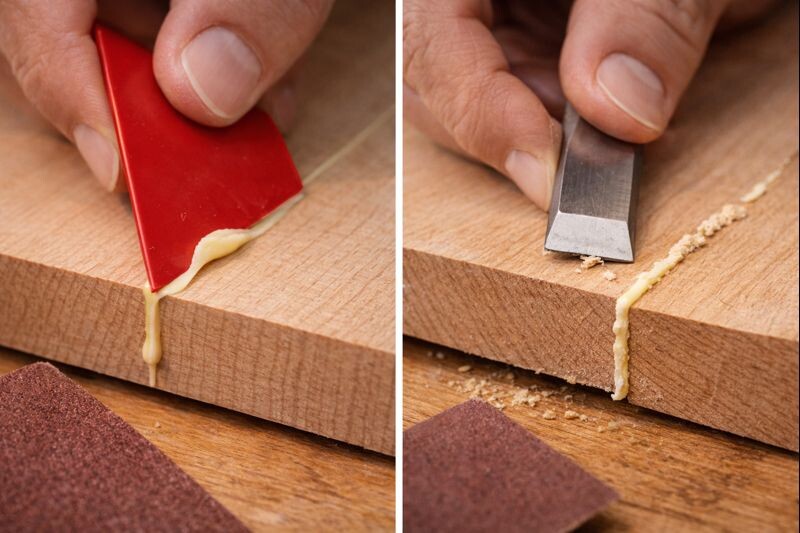
If you work with pine, glue residue can turn into pale “stain halos.” I’d rather prevent that than fix it later, so keep this handy: how to stop pine from turning blotchy under stain.
For serving trays or anything that’ll be wiped down, finishing timing matters as much as glue timing. Here’s my process for sealing a wooden tray for wipe-down durability.
How to tell if the glue is truly set
A few simple checks beat guessing:
- The joint stops creeping under light hand pressure.
- Squeeze-out is firm, not tacky.
- The assembly feels like one piece when lifted carefully.
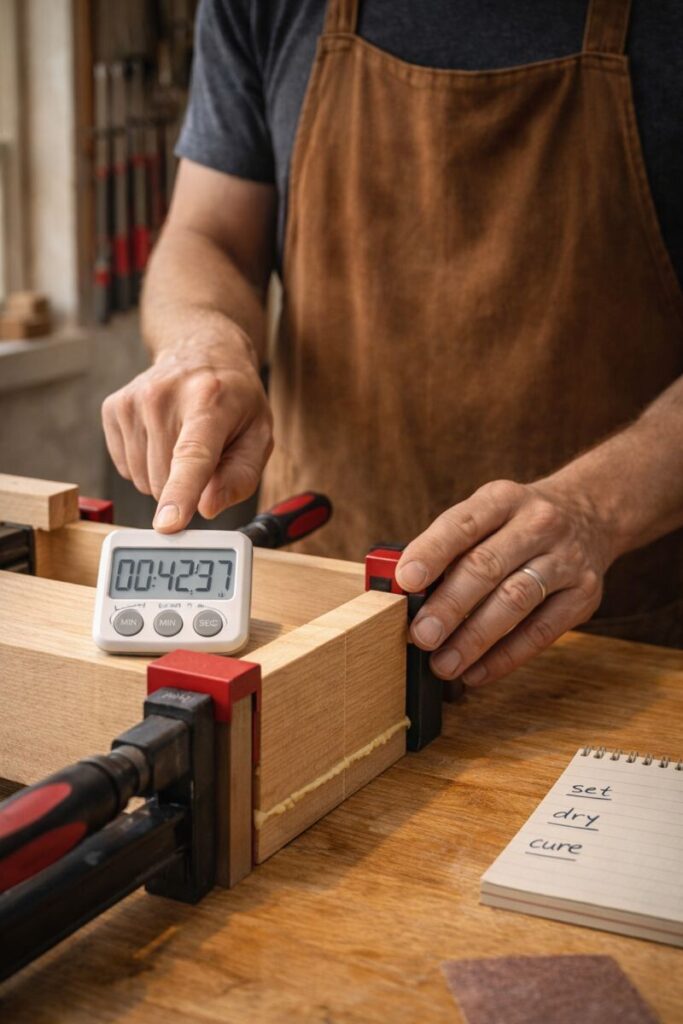
If you’re unsure, treat it as “not ready.” Waiting an extra hour is cheaper than remaking a panel.
How to make wood glue set faster without weakening the joint
You can speed things up safely, but don’t cheat the chemistry.
- Warm the space, not just the bottle. Cold wood stays cold.
- Lower humidity if you can (a dehumidifier helps in winter shops).
- Dry-fit first so clamping is quick and controlled.
- Use a thin, even spread instead of a thick layer.
- Choose the right glue for the task, instead of forcing speed.
And don’t forget the boring stuff: clean clamps and sharp scrapers make you faster than any “hack.” If your gear has been sticking or slipping, this little routine on simple tool upkeep for beginners pays off quickly.
Common mistakes that slow drying or cause joint failure
The failures I see most often come from habits, not bad glue.
- Too much glue: thick glue lines dry slower and can weaken the seam.
- Clamping unevenly: one side closes, the other stays gapped.
- Rushing assembly: you burn through open time and end up with a starved joint.
- Gluing finished surfaces: most wood glues want bare wood pores to bite into.
- Stressing too early: clamps off doesn’t mean “ready for load.”
If your glue-up also involves screws, be careful near edges. Splits create gaps that glue can’t rescue. This walkthrough on keeping edges from splitting when you drive screws pairs well with any glued-and-fastened build.
FAQs

How long does wood glue take to set enough to hold?
Most PVA glues grab within minutes, especially in warm conditions. That “grab” isn’t full strength, though, so keep the joint supported.
How long should I leave clamps on for wood glue?
For many wood glues, 30 minutes to an hour is a common baseline for an unstressed joint.
If the joint will be stressed, wait longer and avoid loading it early.
Is 12 hours enough for wood glue?
Often yes for handling, but I still treat 24 hours as the safer window for loading or stressing most joints.
How long does Gorilla Wood Glue take to set?
Gorilla’s published directions call for 20–30 minutes clamp time and 24 hours for total bonding strength.
an I remove clamps early if the glue feels dry?
You can sometimes, but “dry” and “cured” aren’t the same. If the joint will be under tension or racking forces, give it the full cure window.
Conclusion
How long does wood glue take to set is usually “pretty fast,” but full strength takes patience. Aim for clean fits, even clamping, and shop temperatures that keep the glue happy.
When in doubt, leave clamps longer and don’t stress the joint until the next day.