Wood Glue vs Super Glue: 5 Fast Tests to Choose the Right One
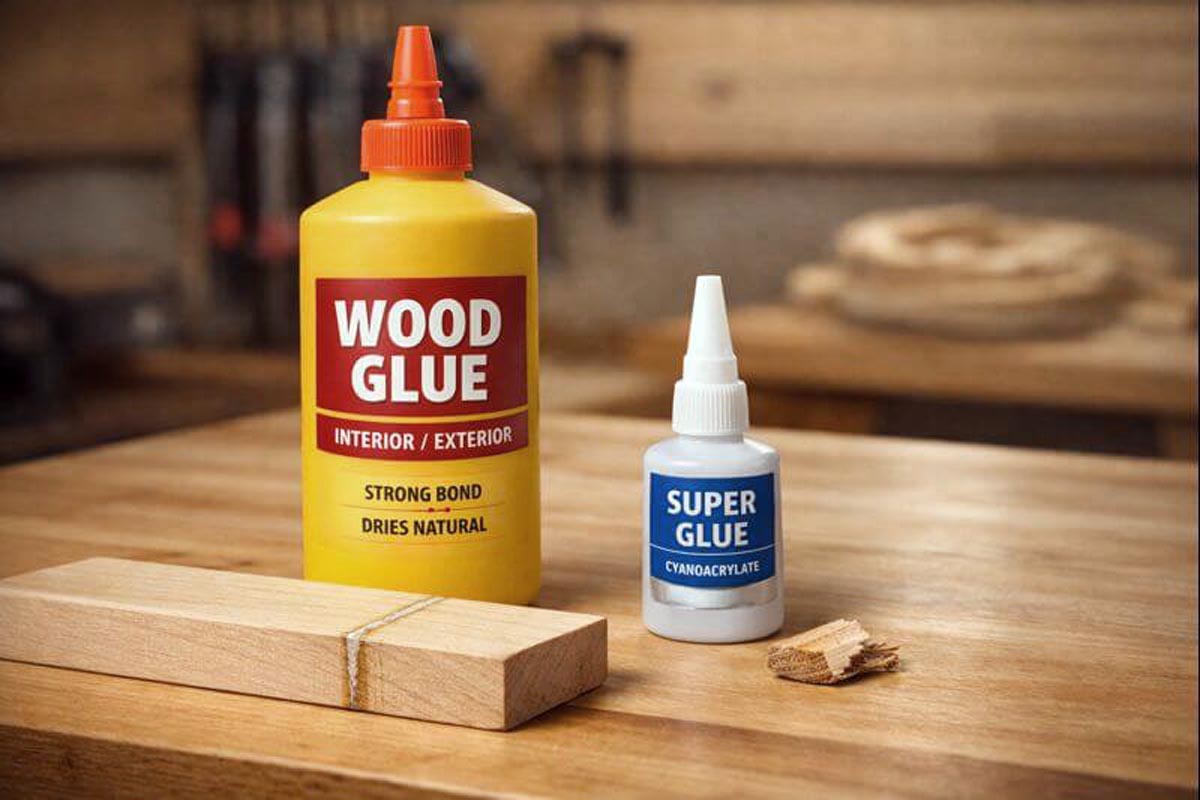
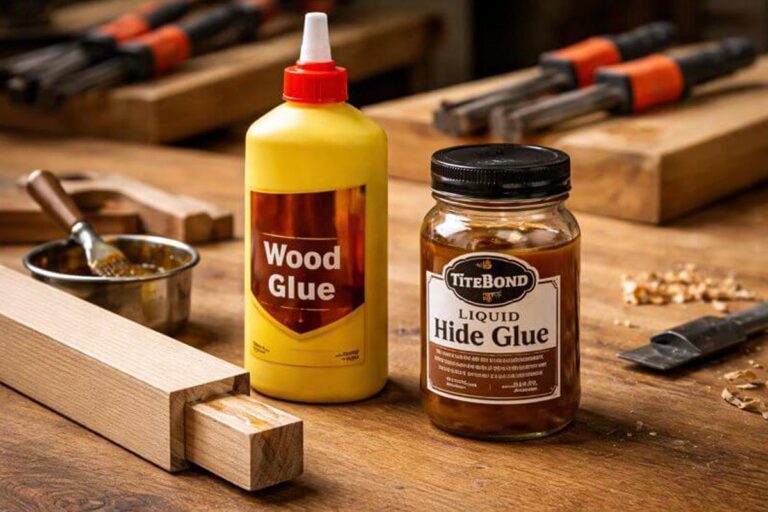
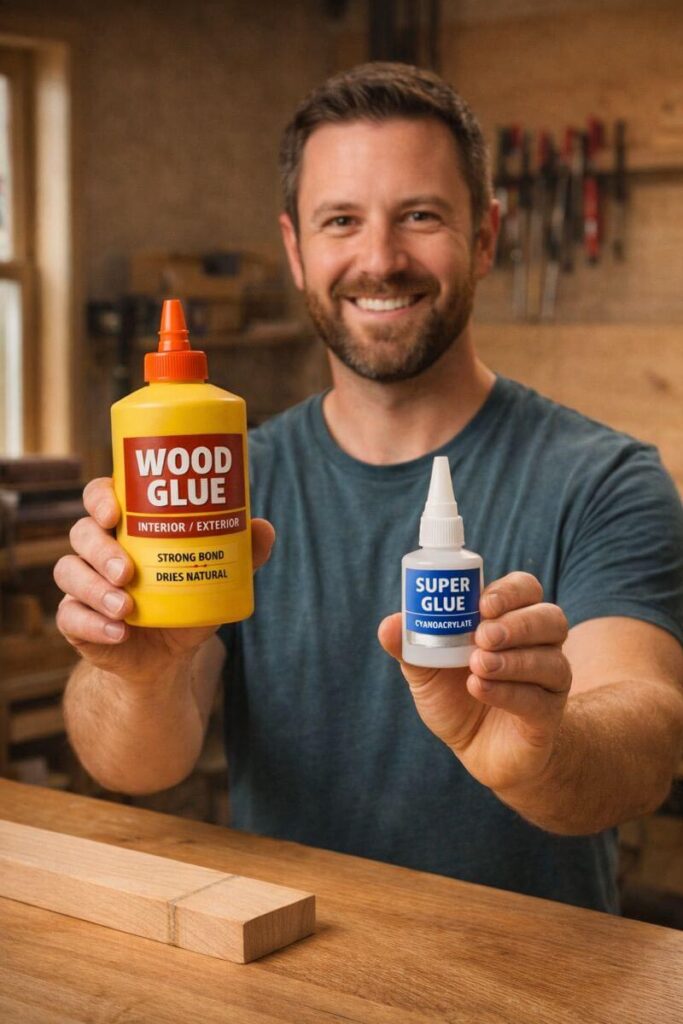
Wood glue vs super glue comes down to what your repair needs: strength, flexibility, or speed. Wood glue (PVA) soaks into the fibers and builds a joint that holds up to daily use. Super glue (CA/cyanoacrylate) grabs fast and shines on small parts, chips, and tight spots where clamps won’t fit.
In this article, I’ll help you choose the right adhesive in plain terms. You’ll see how each one handles load, drying and cure time, water exposure, and sanding and staining. I’ll also walk you through simple application habits that prevent weak bonds and ugly glue marks.
Contents Here
- 1 Quick decision guide (pick the right glue in 20 seconds)
- 2 What wood glue is (and why it’s the default in woodworking)
- 3 What super glue (CA) is (and what it’s actually good at)
- 4 Wood glue vs super glue: head-to-head comparison
- 5 Best uses by project (where most people get stuck)
- 6 How to apply each glue for the strongest bond
- 7 Safety, storage, and cleanup
- 8 FAQs on Wood Glue vs Super Glue
- 8.1 Which is stronger: wood glue or super glue?
- 8.2 Does super glue work on wood?
- 8.3 How long does super glue take to dry compared to wood glue?
- 8.4 What surfaces does super glue not stick to well?
- 8.5 Is wood glue waterproof?
- 8.6 Is super glue waterproof?
- 8.7 Are wood glue and super glue interchangeable?
- 9 Final Thoughts
Quick decision guide (pick the right glue in 20 seconds)
If you only read one section, read this.
- Use wood glue (PVA) when it’s wood-to-wood, load-bearing, or needs long-term strength.
- Use super glue (CA/cyanoacrylate) when it’s tiny, fast, hard to clamp, or a quick chip fix.
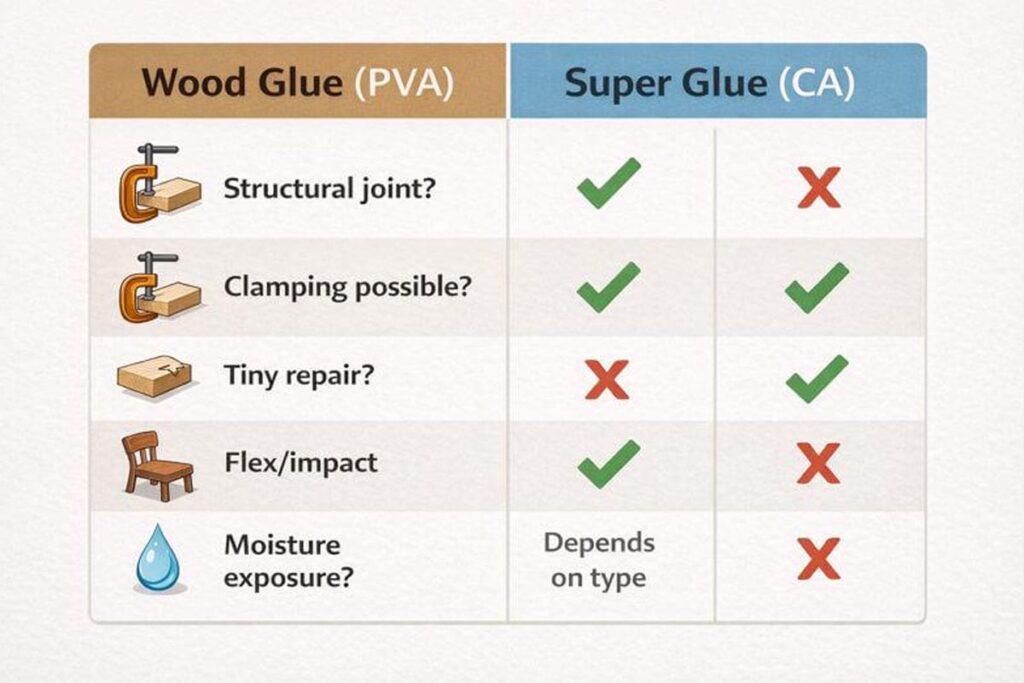
A simple checklist before you squeeze the bottle:
- Is the joint structural? If yes, lean wood glue.
- Can you clamp it? If yes, wood glue gets better results.
- Is it a hairline crack or small chip? CA glue is often easier.
- Will it flex or get bumped? Wood glue handles movement better.
- Will it see water or heat? Choose the right glue type, not luck.
When you need a refresher on what PVA actually is, this helps: what PVA wood glue really means in plain English.
Also know: Titebond Wood Glue vs Gorilla Wood Glue: 7 No-Regret Choices
What wood glue is (and why it’s the default in woodworking)
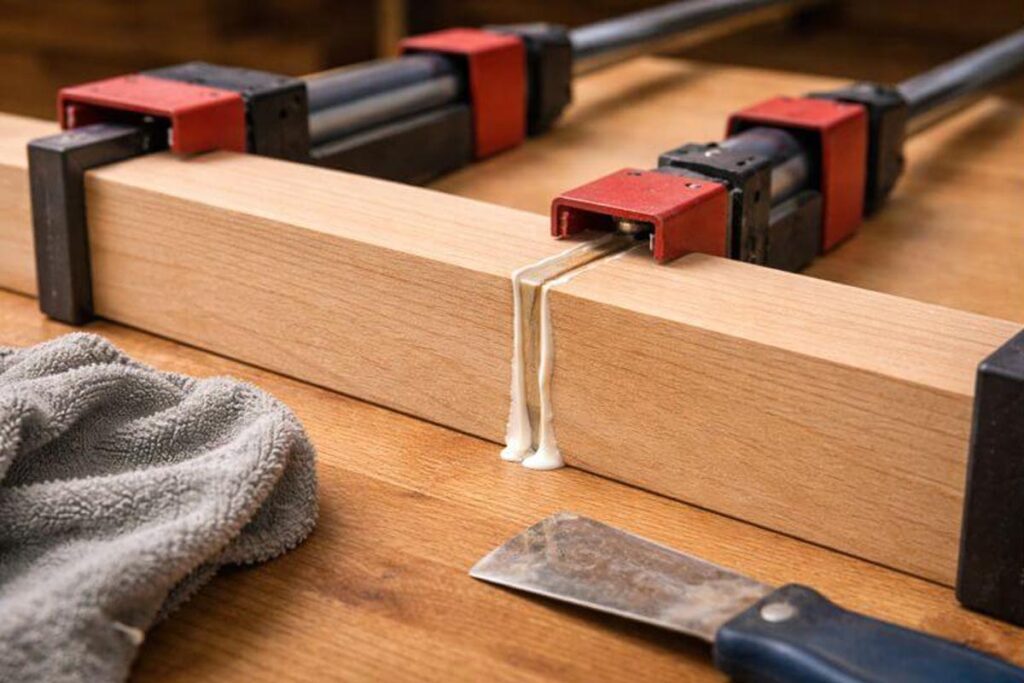
Wood glue usually means PVA (polyvinyl acetate) or “yellow carpenter’s glue.” It soaks into wood fibers, then cures into a bond that’s strong in the way wood joints need—especially across long grain. With good joint fit and clamping, wood glue is what keeps furniture together for years.
The big thing beginners miss is timing. Wood glue has a working window (open time), then it needs clamp time, and only later reaches full cure. If you want numbers and what they mean, I’ve got you covered here: how long wood glue needs before it’s truly cured and how long you should keep clamps on.
Types of wood glue worth knowing
Most people can stick with PVA, but it helps to know the other players.
- PVA (yellow/white carpenter’s glue): Great for most indoor wood joints.
- Type II / Type III PVA: Better water resistance for kitchens, baths, and outdoor-ish projects.
- Polyurethane glue: Bonds to mixed materials and fills gaps, but it foams.
- Epoxy (two-part): Best when gaps exist or materials don’t match well.
If your project involves food contact—cutting boards, serving trays, utensils—read this before you glue: when wood glue is considered food safe.
What super glue (CA) is (and what it’s actually good at)
Super glue is cyanoacrylate (CA). It sets fast because it reacts with moisture, including humidity and the moisture on surfaces. That speed is why it’s handy on small repairs and quick fixes.
CA glue shines when:
- The parts are tiny and hard to clamp.
- You need a quick “grab” while you position something.
- You’re repairing a chip, a corner, or a small crack.
- You’re bonding wood to something non-porous for a light-duty fix.
But CA glue has a personality. It cures hard and can be brittle, especially in joints that flex, get bumped, or deal with seasonal wood movement. It’s not that CA is “weak.” It’s that it fails differently.
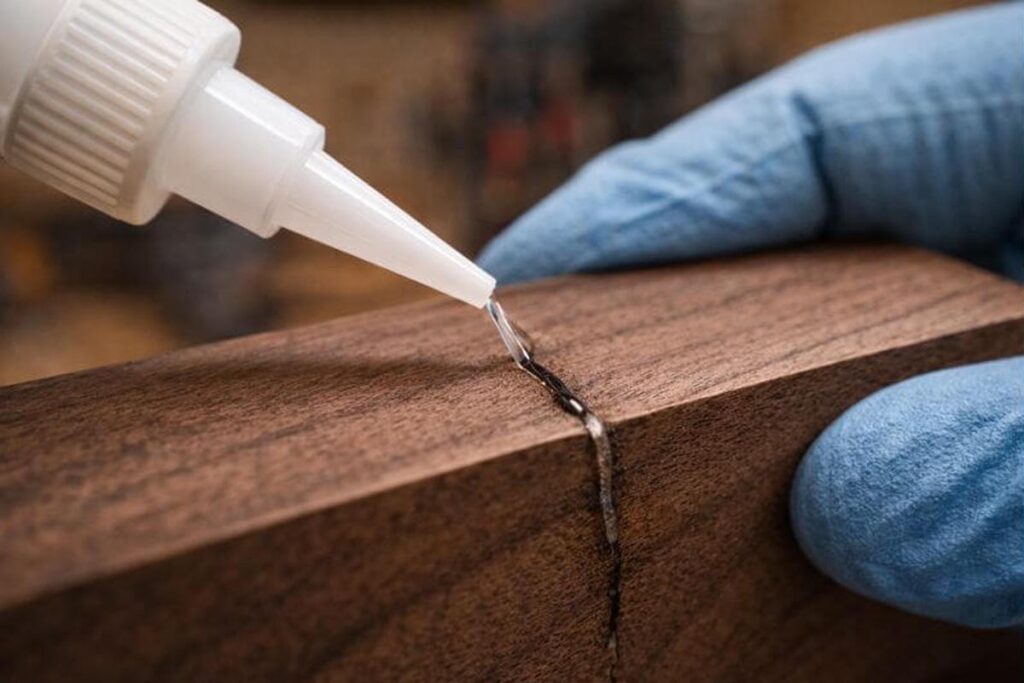
CA glue viscosities (thin, medium, gel) change the outcome
If you’ve only used the tiny tubes from the checkout aisle, you’re missing how CA behaves.
- Thin CA: Wicks into cracks and pores. Great for hairline splits.
- Medium CA: More control, better for small parts and edges.
- Thick/gel CA: Stays where you put it, good for vertical surfaces.
Accelerator sprays can speed curing, but they can also make the bond more brittle if you get heavy-handed. Use them like seasoning—light, not drenched.
Wood glue vs super glue: head-to-head comparison
Here’s the practical comparison most people are searching for.
| Factor | Wood Glue (PVA) | Super Glue (CA) |
|---|---|---|
| Best at | Wood-to-wood joints | Quick fixes, small parts |
| Working time | Minutes | Seconds |
| Clamp needed | Usually yes | Often no |
| Flex/impact | Handles movement better | Can crack under shock |
| Gap filling | Poor (needs tight fit) | Limited (better with gel) |
| Sanding/finishing | Generally friendly, if cleaned | Can leave shiny hard spots |
| Water resistance | Depends on type | Varies, often limited |
| Typical use | Furniture, panels, joinery | Chips, cracks, tiny repairs |
If you’re trying to estimate strength, read this before you trust a “feels strong” joint: how strong wood glue really is on common joints and how much weight glued joints can hold.
Strength and durability (including how each one fails)
Wood glue wins most woodworking joints because it bonds into wood fibers and tolerates seasonal movement better. A well-fit joint glued with PVA can be stronger than the surrounding wood.
CA glue can be surprisingly strong in pure tension on small parts, but it’s more likely to fail with shock, twisting, or flexing. If you’re repairing something that gets bumped—chair spindles, stool rungs, tool handles—CA is usually the wrong long-term choice.
Drying, clamping, and working time
CA glue is fast. That’s the upside and the downside. You get almost no reposition time, and misalignment happens quickly.
Wood glue gives you time to align, clamp, and clean squeeze-out. It does require patience. If you want to speed things up safely, this is the method I use in the shop: ways to make wood glue dry faster without ruining strength.
For sanding schedules, don’t guess. Use this: how long wood glue should dry before sanding.
Surface compatibility: porous vs non-porous
Wood glue loves porous wood-to-wood contact. It’s a poor choice for slick plastics or metal.
CA glue does better with mixed materials, but surface prep matters. Clean, dry, lightly scuffed surfaces bond better. Some plastics still resist CA, and oily woods can be stubborn too.
Finish quality: staining, sanding, and glue visibility
Glue mistakes show up under finish, especially stain.
- Wood glue residue can block stain and leave pale patches.
- CA glue spots can cure glass-hard and sand differently, leaving shiny halos.
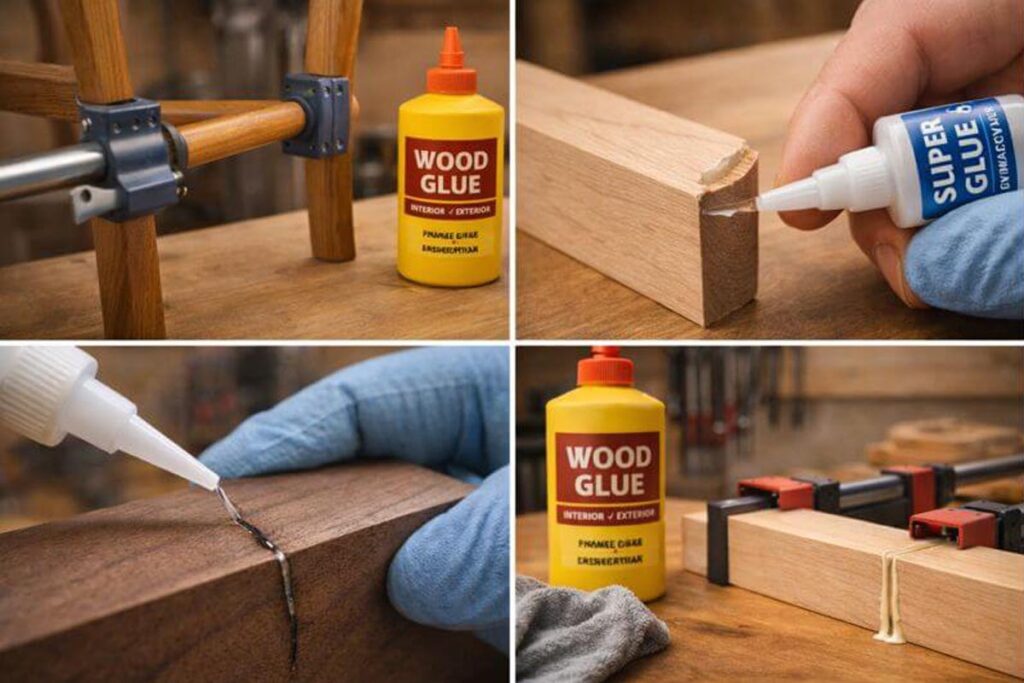
If your project will be stained, it’s worth knowing the truth here: whether wood glue can be stained and how to avoid blotches.
Best uses by project (where most people get stuck)
This is the section that saves you time and wasted parts.
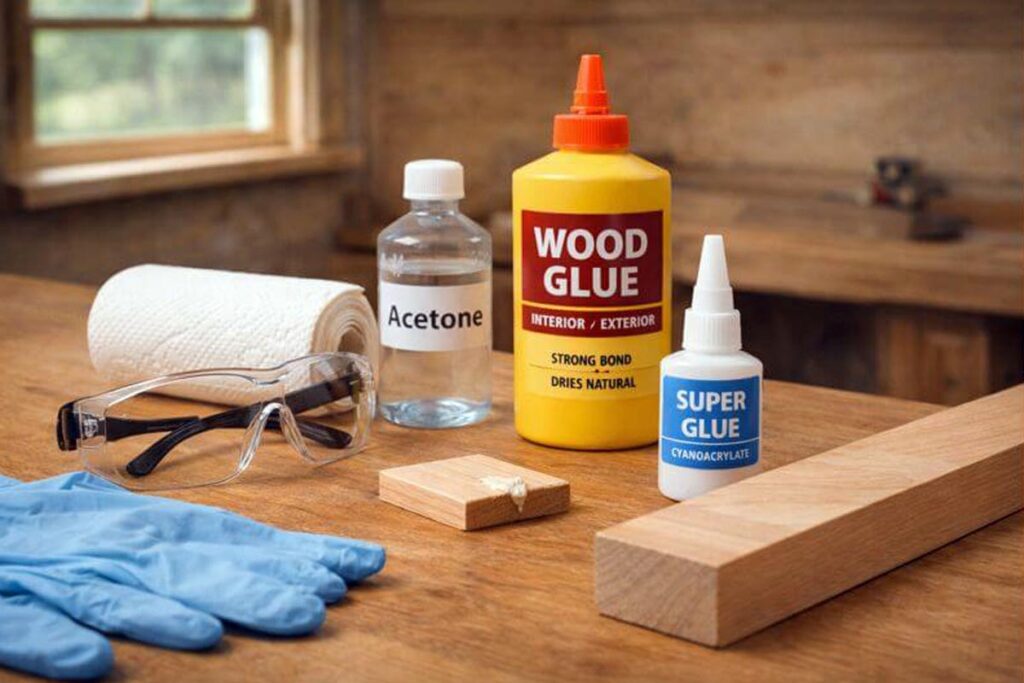
When wood glue is the better choice
Reach for wood glue when you’re doing:
- Furniture repairs (chairs, stools, tables).
- Joinery (dowels, mortise-and-tenon, biscuits, rabbets, dados).
- Panel glue-ups and edge joints.
- Anything that will carry weight or get daily movement.
If the joint is structural, use enough glue—but not a puddle. Here’s the sweet spot: how much wood glue to use for strong joints.
If you’re specifically fixing furniture, this roundup helps you choose a glue type without overthinking it: the best wood glue options for furniture repair jobs.
When super glue is the better choice
Super glue makes sense for:
- A small chip on a corner or molding.
- A hairline crack that needs wicking.
- A quick repair when you can’t clamp.
- Small craft parts that are hard to fixture.
It’s also handy as a temporary “tack” while a slower glue cures—just don’t confuse that trick with a structural fix.
Are they interchangeable?
Sometimes, but you’ll usually regret treating them as equals.
- If you substitute CA glue for wood glue on a structural joint, it may fail when the wood moves.
- If you substitute wood glue where you needed a quick, no-clamp bond, it can slip around and cure misaligned.
Think of wood glue as the long-haul workhorse. Think of CA glue as the quick fix that needs the right conditions.
How to apply each glue for the strongest bond
Most glue failures aren’t about the glue. They’re about prep, fit, or rushing.
Wood glue application technique (the shop-tested method)
- Dry fit first. Make sure it closes without force.
- Clean the surfaces. Dust and oil weaken bonds.
- Apply a thin, even coat to one face (or both on end grain).
- Clamp firmly, not brutally. You want contact, not starvation.
- Wipe squeeze-out at the right time, not after it hardens.
Clamp timing trips people up. Use this as your baseline: how long wood glue takes to set and how long before you remove clamps safely.
Super glue (CA) application technique (avoid the common mistakes)
- Test-fit and plan the alignment. You won’t get many do-overs.
- Use less than you think. CA bonds best in thin layers.
- Press and hold steady for the initial grab.
- Let it fully cure before sanding or stressing it.
- Pick the right viscosity—thin for cracks, gel for edges.
A pro tip that saves headaches: if you’re bonding an end-grain chip, seal the surface with a tiny amount first, then glue. End grain drinks adhesive and leaves a weak joint if you don’t.
Safety, storage, and cleanup
Glues are tools. Treat them like tools.
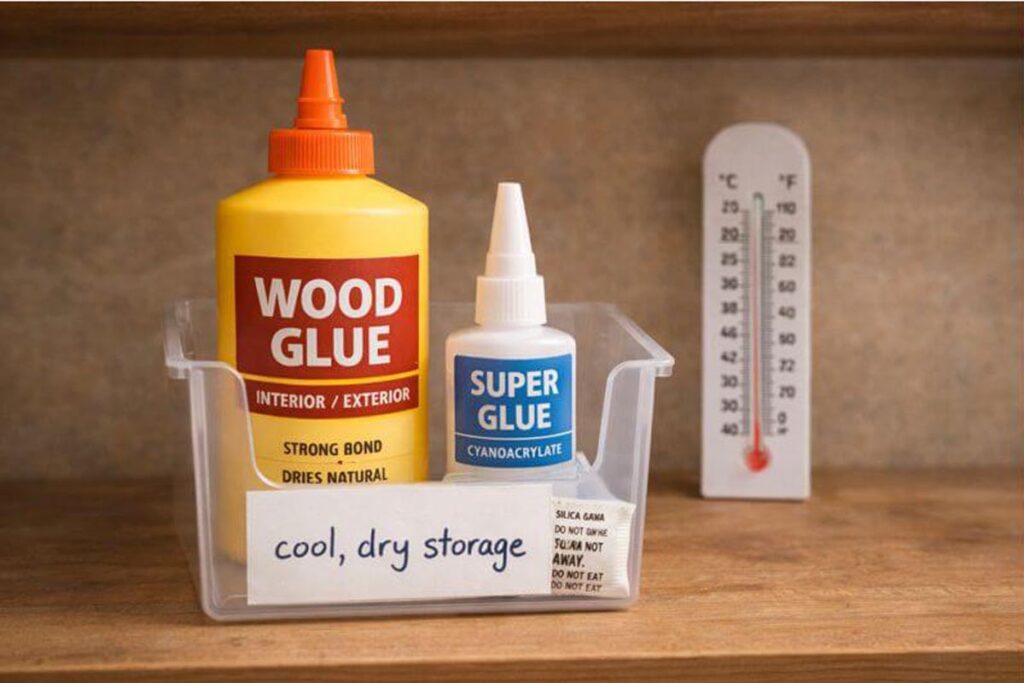
- Ventilation matters, especially with CA fumes.
- Eye protection is smart when you’re leaning in close.
- CA glue can bond skin instantly. Keep acetone nearby, and don’t panic.
Wood glue generally isn’t scary, but it can still irritate skin. Wash up after long sessions.
Removing excess glue without wrecking your finish
For wood glue, cleanup timing is everything. Wipe squeeze-out when it’s rubbery, or scrape it once it’s fully hard. Don’t smear it into pores.
For CA glue, careful sanding usually works. Debonder or acetone can help, but test first, especially on finished surfaces.
If you need a step-by-step approach that won’t chew up your project, follow this: how to remove dried wood glue without damaging wood.
Storage and shelf life
Wood glue can thicken or spoil over time. Keep it sealed, avoid freezing, and don’t store it in a hot garage.
CA glue lasts longer when stored cool and tightly sealed. Wipe the nozzle, cap it clean, and keep it upright if you can.
If you’re unsure whether that old bottle is still trustworthy, this is the quick check: how to tell if wood glue has expired.
FAQs on Wood Glue vs Super Glue

Which is stronger: wood glue or super glue?
For most wood joints, wood glue is stronger in real use because it handles movement and stress better. Super glue can feel strong instantly, but it often fails brittle under shock or flex.
Does super glue work on wood?
Yes, especially on small parts and hairline cracks. It’s less reliable on joints that need flexibility or long-term impact resistance.
How long does super glue take to dry compared to wood glue?
CA glue grabs in seconds and cures fairly quickly. Wood glue needs clamp time and then full cure time before the joint reaches maximum strength.
What surfaces does super glue not stick to well?
Some plastics resist CA glue, and oily or dirty surfaces can cause failures. Clean and lightly scuff smooth surfaces for better results.
Is wood glue waterproof?
Some wood glues are more water-resistant than others. Look for Type II or Type III PVA when moisture is likely, and consider epoxy for harsh exposure.
Is super glue waterproof?
CA glue can handle light moisture, but it’s not the best choice for repeated soaking or outdoor exposure. For wet environments, pick an adhesive designed for it.
Are wood glue and super glue interchangeable?
Only in limited situations. Wood glue is built for woodworking joints with clamping and fit. Super glue is built for speed and small repairs, not flexing furniture joints.
Final Thoughts
Wood glue is the better choice for wood-to-wood joints that carry stress. Super glue earns its keep on small, fast repairs and tricky no-clamp moments.
When you match the glue to the job—strength needs, movement, moisture, and finish—you get repairs that stay put and look clean.