Stained Birch Plywood: 7 Fast Fixes for Blotch-Free Results
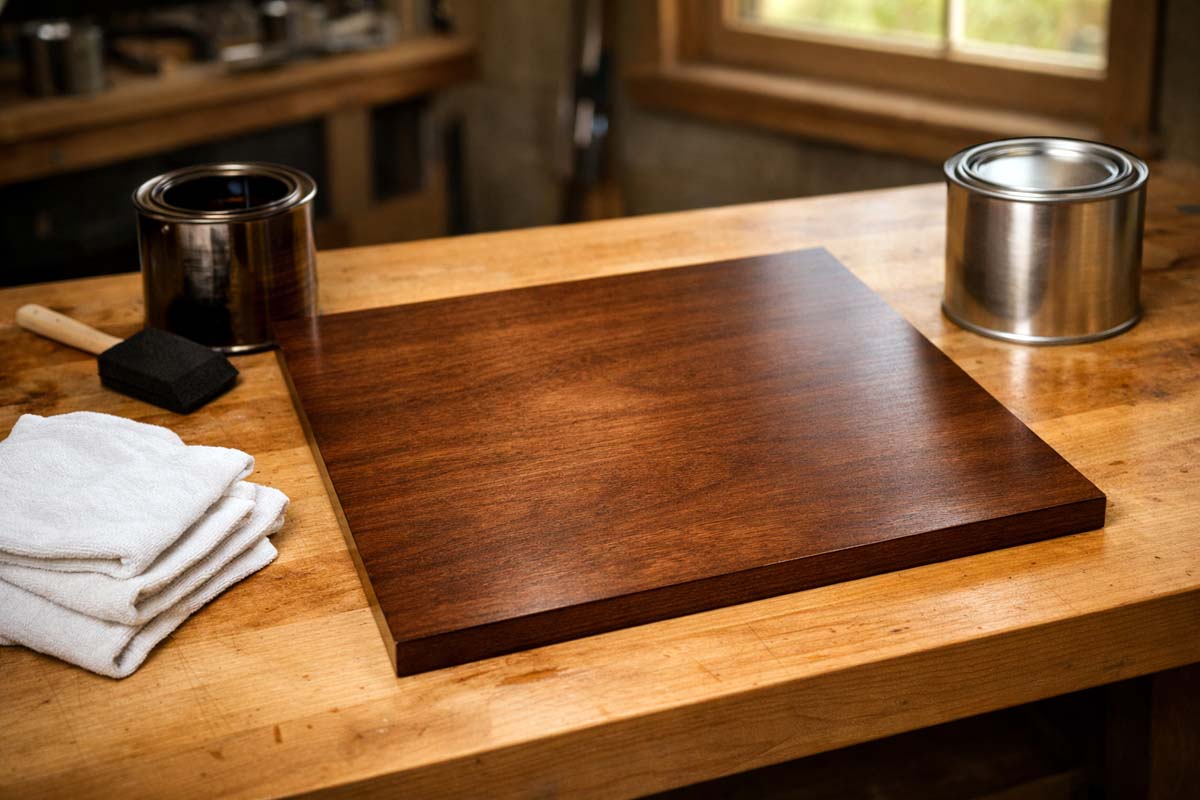
Stained birch plywood can look clean and “furniture-grade,” but birch veneer absorbs color unevenly when you rush prep or use the wrong stain type. Birch has tight grain and patchy porosity, so pigment-heavy plywood stain often turns into dark freckles and light streaks. A controlled sanding schedule, a light washcoat or conditioner, and the right color system (dye, gel stain, or toner) produce consistent results. This guide walks through staining birch plywood for light to dark finishes, including Baltic birch, with shop-tested steps and fixes.
After you finish the basics here, my guides on cabinet-grade plywood details and birch plywood for cabinets help you choose sheets that stain more predictably.
Contents Here
- 1 What is stained birch plywood?
- 2 Why does staining birch plywood blotch?
- 3 What birch plywood stains the best?
- 4 Tools and materials that make staining birch predictable
- 5 How to prep birch plywood before staining
- 6 The best way to stain birch plywood evenly
- 7 How to stain birch dark without muddy patches
- 8 Can you stain Baltic birch plywood?
- 9 Common mistakes when staining plywood
- 10 What clear coat works best over stained birch plywood?
- 11 Quick troubleshooting: what to do when birch stain looks bad
- 12 FAQs about Stained Birch Plywood
What is stained birch plywood?
Stained birch plywood is birch-veneered panel stock that a finisher colors with dye, stain, or tinted finish, then protects with a clear topcoat. The face veneer is thin, so sanding and stripping require a lighter touch than solid birch. Birch plywood takes color well when you control absorption across the veneer, edge banding, and end grain.
Learn more at: Staining Baltic Birch Plywood: 9 Pro Tricks for Zero Blotch
Why does staining birch plywood blotch?
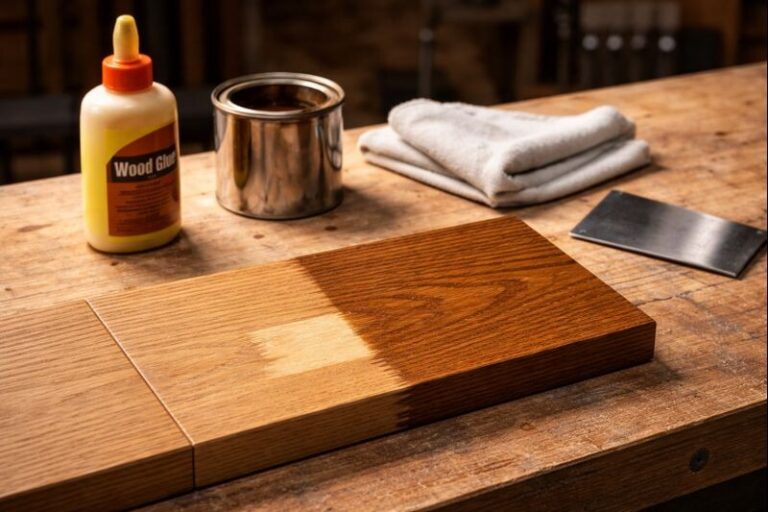
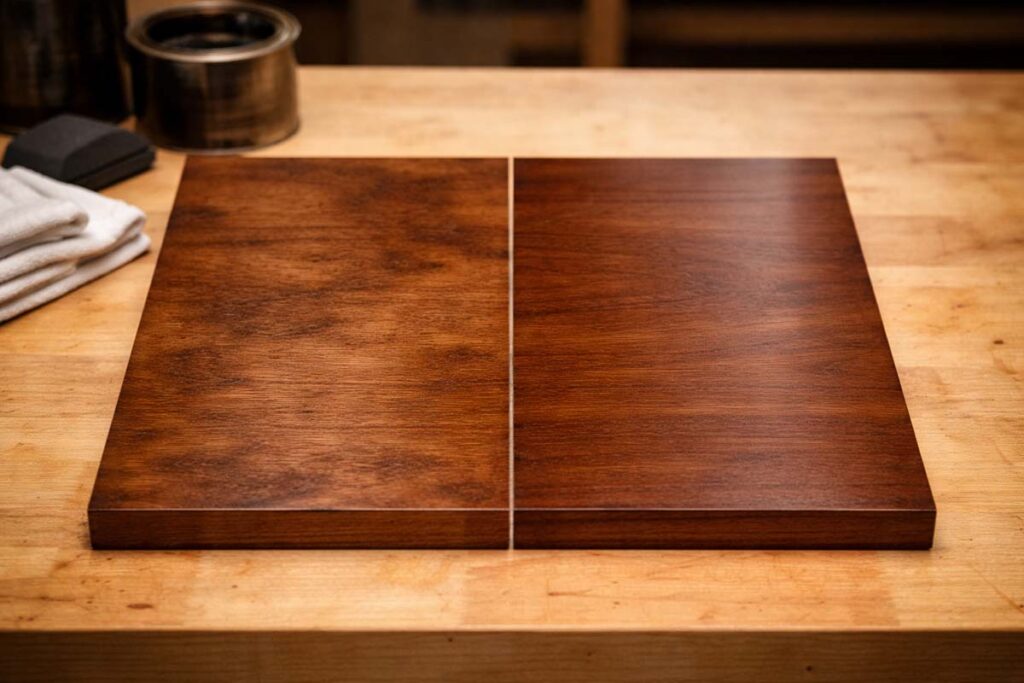
Birch blotches because the veneer has uneven density and mixed grain direction across the sheet. Softer patches drink more color while harder patches resist it. Pigment stains lodge in those “thirsty” areas and exaggerate contrast. Glue squeeze-out and sanding scratches also repel stain and show up as pale islands.
What birch plywood stains the best?
Cabinet-grade birch plywood stains more evenly than lower grades because it uses cleaner face veneer and fewer filled patches. Baltic birch also finishes well because it uses thicker face veneer than many big-box birch panels, but it still blotches if you skip conditioning. Panels with heavy football patches, mineral streaks, or face repairs show more contrast after staining.
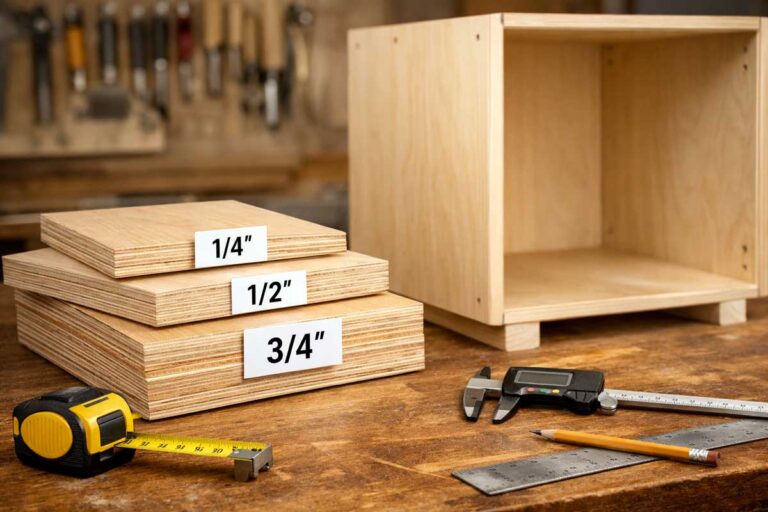
If your project needs a stiff, flat panel, thickness matters too. Follow this detailed plywood thickness guide to match stiffness to shelves, doors, and trays without overbuilding.
Tools and materials that make staining birch predictable
A small kit prevents most birch problems.
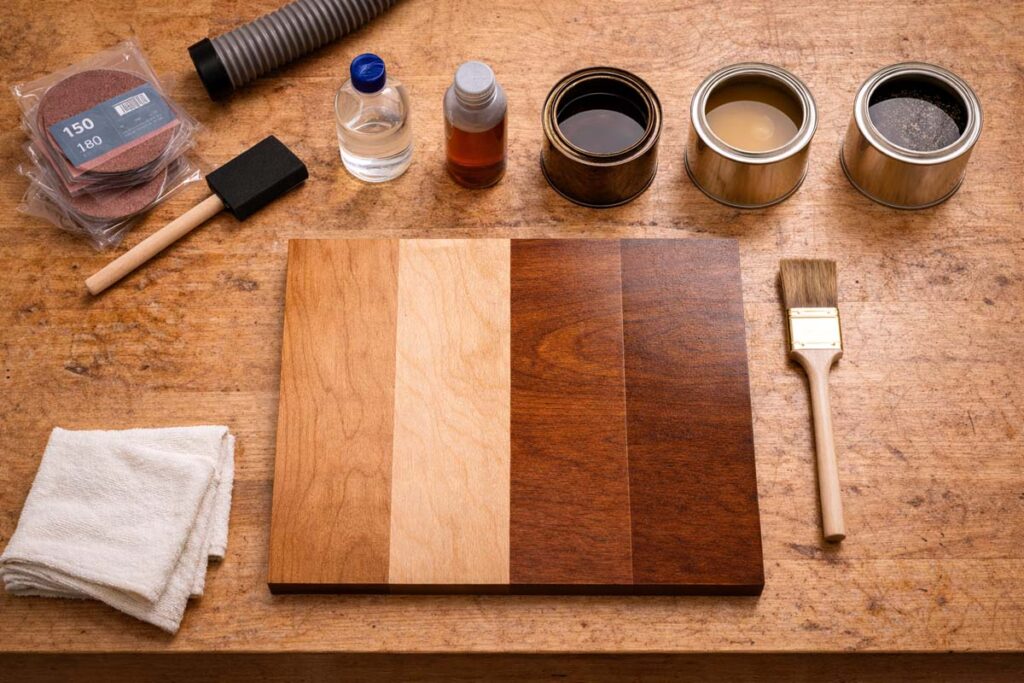
- Random orbit sander plus fresh discs (120, 150, 180, 220 grit)
- Vacuum and tack cloth or clean microfiber
- Wood conditioner or dewaxed shellac for a washcoat
- Dye (water or alcohol), or gel stain, or a high-quality wiping stain
- Clean rags or foam brushes
- Seal coat (dewaxed shellac or sanding sealer)
- Topcoat: waterborne poly, oil poly, wiping varnish, or lacquer
- Nitrile gloves and organic vapor respirator when solvents are present
How to prep birch plywood before staining
Good prep does most of the “color work.”
Check the veneer before you sand
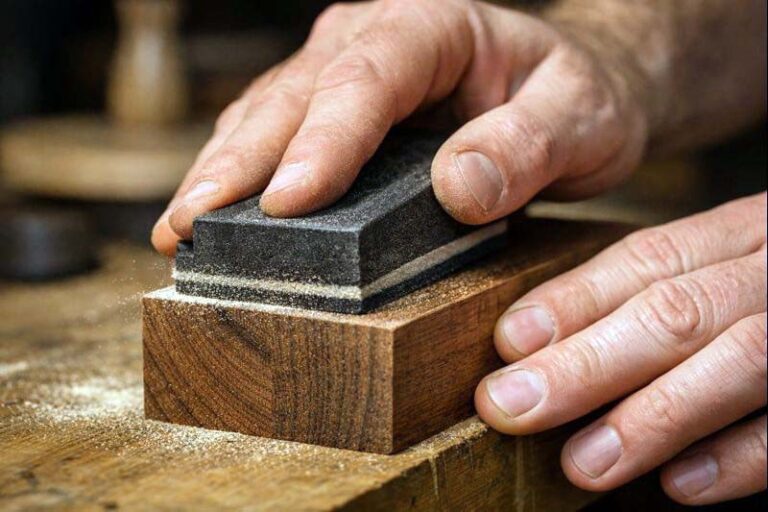
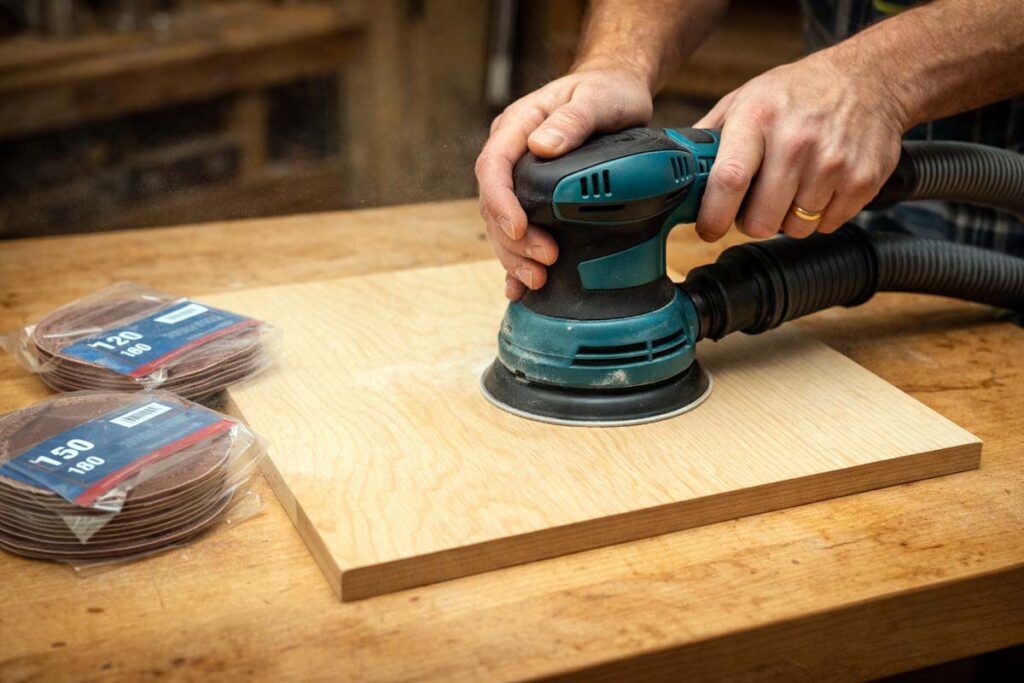
Birch face veneer is thin. Aggressive sanding cuts through to the core and creates pale patches that never match. Sand just enough to level and remove mill glaze.
Sand in a controlled grit schedule
Use this sequence for most birch plywood:
- Sand the face at 120 grit to level only.
- Sand at 150 grit to remove 120 scratches.
- Sand at 180 grit for uniform scratch pattern.
- Stop at 180 or 220 depending on your stain type.
Stop at 180 for dye or oil wiping stains that need a little “tooth.” Go to 220 for gel stain or when you want slightly lighter color. Always vacuum between grits.
Remove glue contamination
Glue blocks stain. Scrape squeeze-out while it’s rubbery, then sand lightly. If you suspect glue haze, wipe with mineral spirits and look for shiny spots before staining.
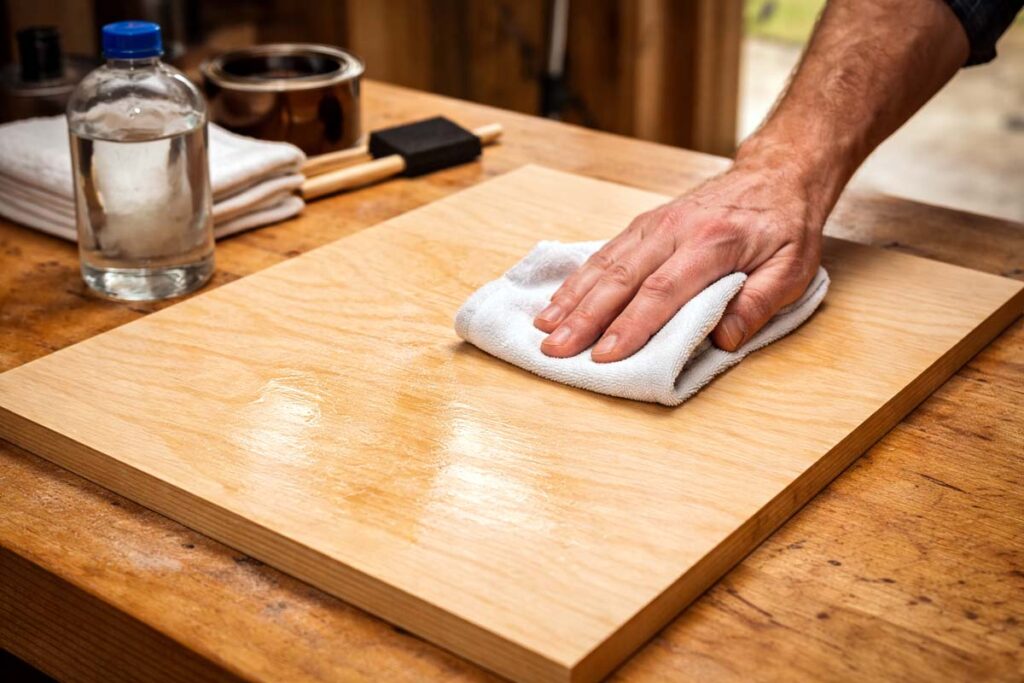
Treat edges and end grain differently
Plywood edges absorb finish fast. If you want stained edges, plan edge banding or a light seal coat first. When you need smooth end grain on solid trim pieces, use the approach in my end-grain sanding guide.
The best way to stain birch plywood evenly
An even finish comes from controlling absorption before you add color.
Option A: Conditioner + wiping stain (simple and reliable)
Use this when you want a traditional “wood stain” look without hard blotches.
- Apply pre-stain conditioner evenly.
- Let it penetrate per the label, then wipe off excess.
- Stain the panel with a wiping stain, working wet edge to wet edge.
- Wipe back to your target color, then let it dry fully.
- Seal and topcoat.
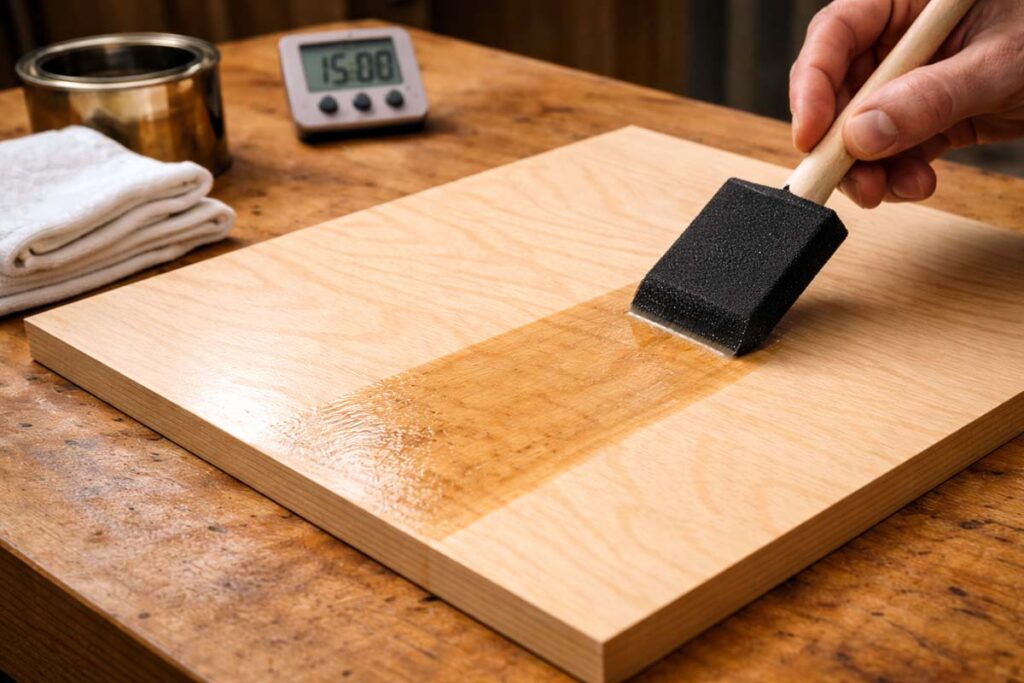
Conditioner reduces contrast. It also lightens overall color. Plan on a slightly weaker stain result.
Option B: Dye first, then seal, then glaze or gel stain (best control)
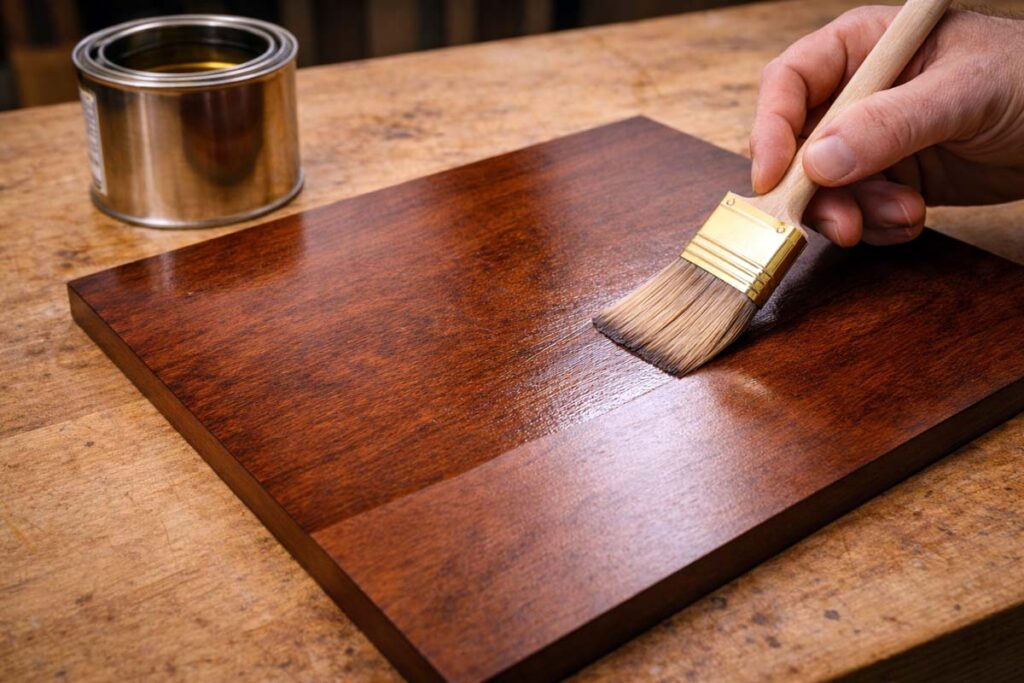
Use this when you want uniform color and depth.
- Apply dye evenly (spray, sponge, or rag) and keep a wet edge.
- Let the dye dry, then scuff lightly with a gray pad.
- Apply a thin seal coat (dewaxed shellac works well).
- Add depth with a gel stain or glaze, then wipe back evenly.
- Topcoat after proper dry time.
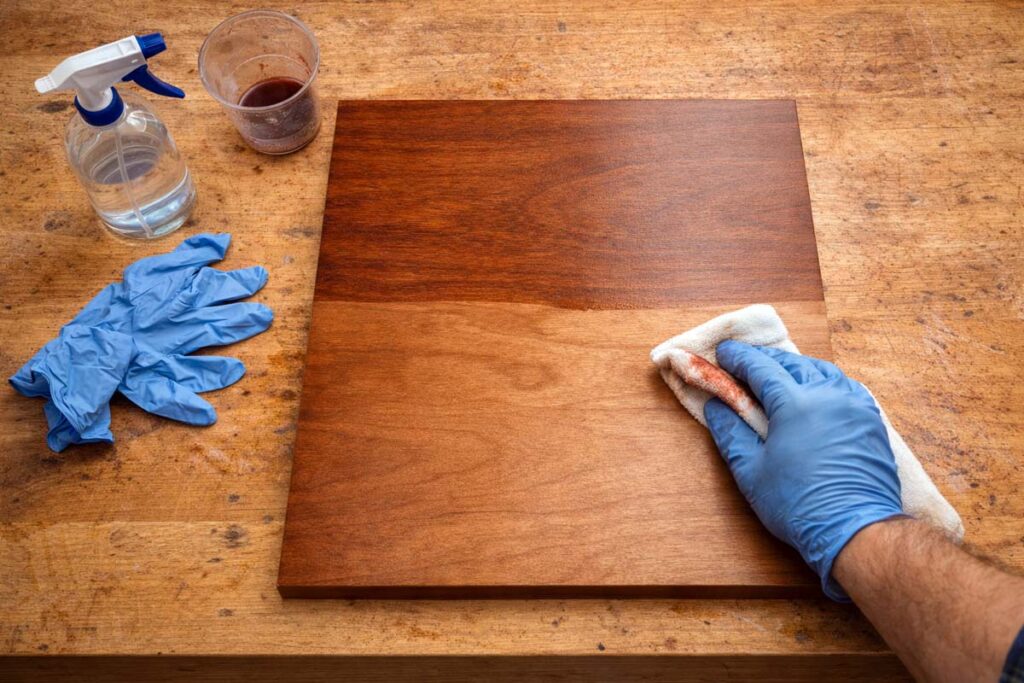
Dye colors the wood fibers instead of packing pigment into soft spots. The seal coat keeps the next layer from going blotchy.
Option C: Toner in the finish (best for matching and darkening)
Use this when you need consistent color across multiple panels, doors, or shelves.
- Seal the wood with a clear sealer coat.
- Spray a tinted finish (toner) in light passes.
- Lock it in with clear topcoats.
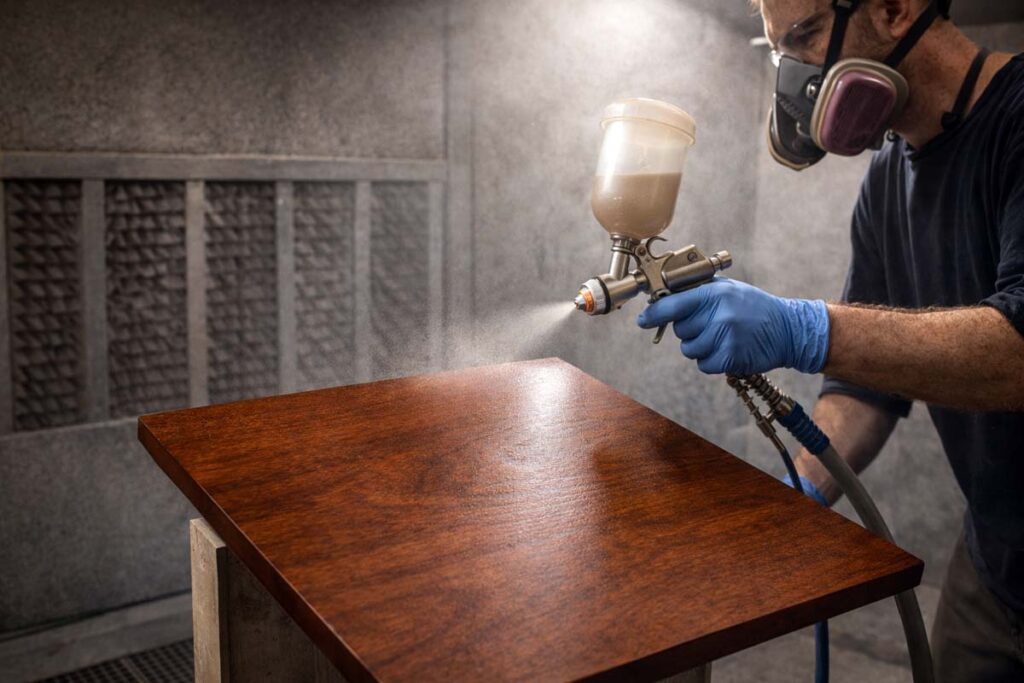
Toner builds color on top of the wood, so it avoids “map-like” blotching. It also helps when you need repeatability.
How to stain birch dark without muddy patches
Staining birch dark takes a different approach than oak or ash. Dark pigment stains tend to look dirty on birch.
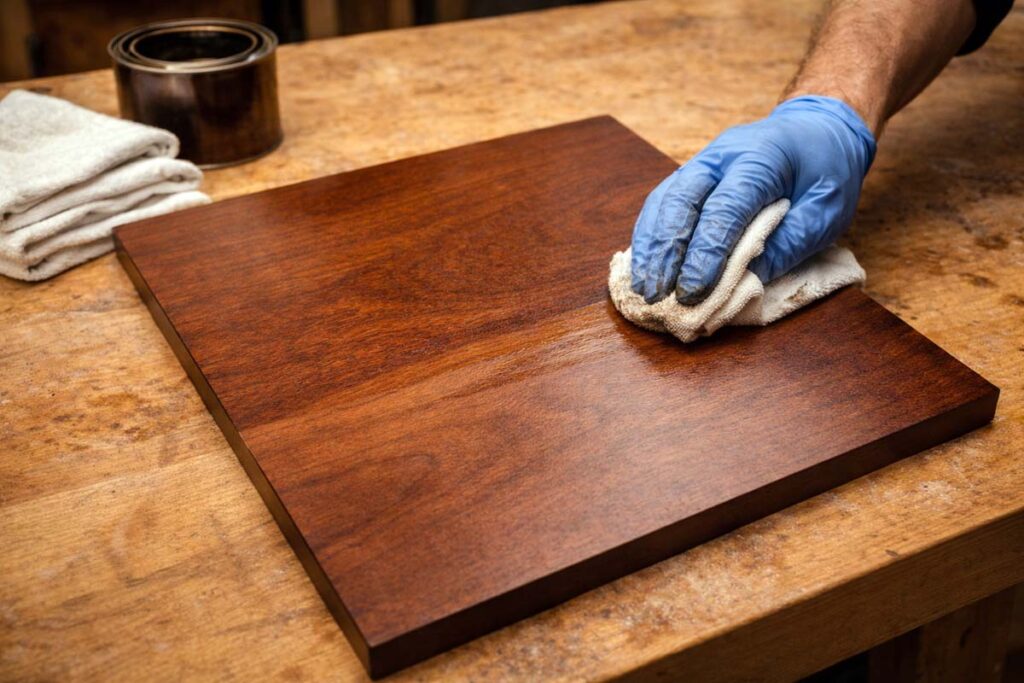
Use this workflow for “staining birch dark” results that stay clean:
- Dye the birch to a medium-dark base tone.
- Seal with a thin washcoat.
- Use gel stain as a controlled glaze to deepen shadows.
- If you need more depth, add toner coats rather than more stain.
- Topcoat with a clear finish that matches the project use.
This stack builds color in layers instead of forcing pigment into uneven pores.
Can you stain Baltic birch plywood?
You can stain Baltic birch plywood, and it often finishes better than many big-box birch sheets because the face veneer is usually thicker and more consistent. Baltic birch still blotches when you apply pigment-heavy stain directly to bare wood. Use dye plus a seal coat, or use conditioner before a wiping stain, and keep sanding light to protect the veneer.
Common mistakes when staining plywood
- Skipping a test board: test on an offcut from the same sheet.
- Over-sanding edges and corners: veneer thins fast there.
- Leaving glue smears: they flash light after staining.
- Flooding stain and letting it dry in place: it creates lap marks.
- Topcoating too soon: trapped solvent causes haze and soft finish.
If your clear coat turns milky, my guide on cloudy clear coats and fixes walks through the common causes.
What clear coat works best over stained birch plywood?
Pick the topcoat based on exposure and look.
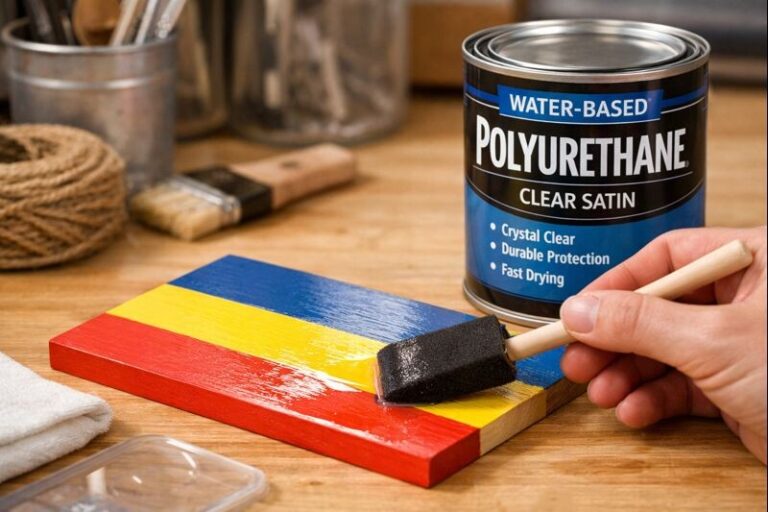
- Waterborne polyurethane: clear color, fast dry, good abrasion resistance.
- Oil-based polyurethane: warmer tone, longer dry, good durability.
- Wiping varnish: thin coats, easy application, slower build.
- Lacquer: fast build, easy repair, best sprayed.
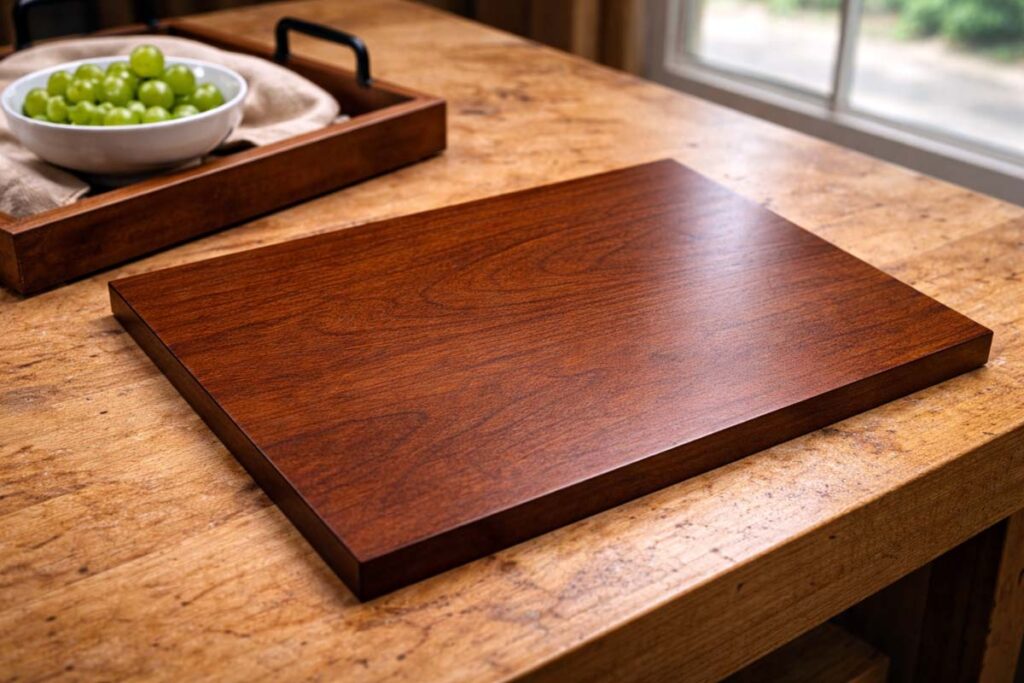
For serving trays and food-contact questions, use a fully cured film finish and follow manufacturer cure times. My article on whether polyurethane is food safe when cured helps you choose a finish for trays and boards.
Quick troubleshooting: what to do when birch stain looks bad
- Blotches: strip back lightly if possible, then switch to dye + seal coat + glaze/gel stain.
- Lap marks: re-wet the area with stain, blend, then wipe back evenly.
- Too dark: wipe with the stain’s solvent while it’s fresh, or sand back after full dry.
- Too light: add a dye layer or toner coats rather than piling on pigment stain.
- Raised grain (water dye): pre-raise grain with water, sand lightly, then dye.
FAQs about Stained Birch Plywood

Can you stain birch plywood?
Yes. Woodworkers stain birch plywood successfully when they sand lightly, remove glue contamination, and control absorption with conditioner, a washcoat, or a dye-first process.
Can birch plywood be stained?
Birch plywood can be stained, but direct pigment stain on bare birch often blotches. Dye plus a seal coat, or conditioner plus wiping stain, gives more even color across the veneer.
Can you stain Baltic birch plywood?
You can stain Baltic birch plywood. It usually takes color more evenly than some thin-veneer birch panels, but it still benefits from conditioner or a dye-and-seal approach to prevent blotching.
What is the best plywood stain for birch?
A dye stain gives the most even base color on birch. Gel stain works well as a second step over a seal coat because it adds depth without soaking unevenly into the veneer.
How do you prevent blotching when staining birch?
Prevent blotching by sanding to a consistent grit, removing all glue haze, and applying a pre-stain conditioner or a thin washcoat before pigment stain. For dark colors, use dye first and build depth with glazes or toner.