Sheet of Birch Plywood: 7 Fast Tests to Spot Better Panels
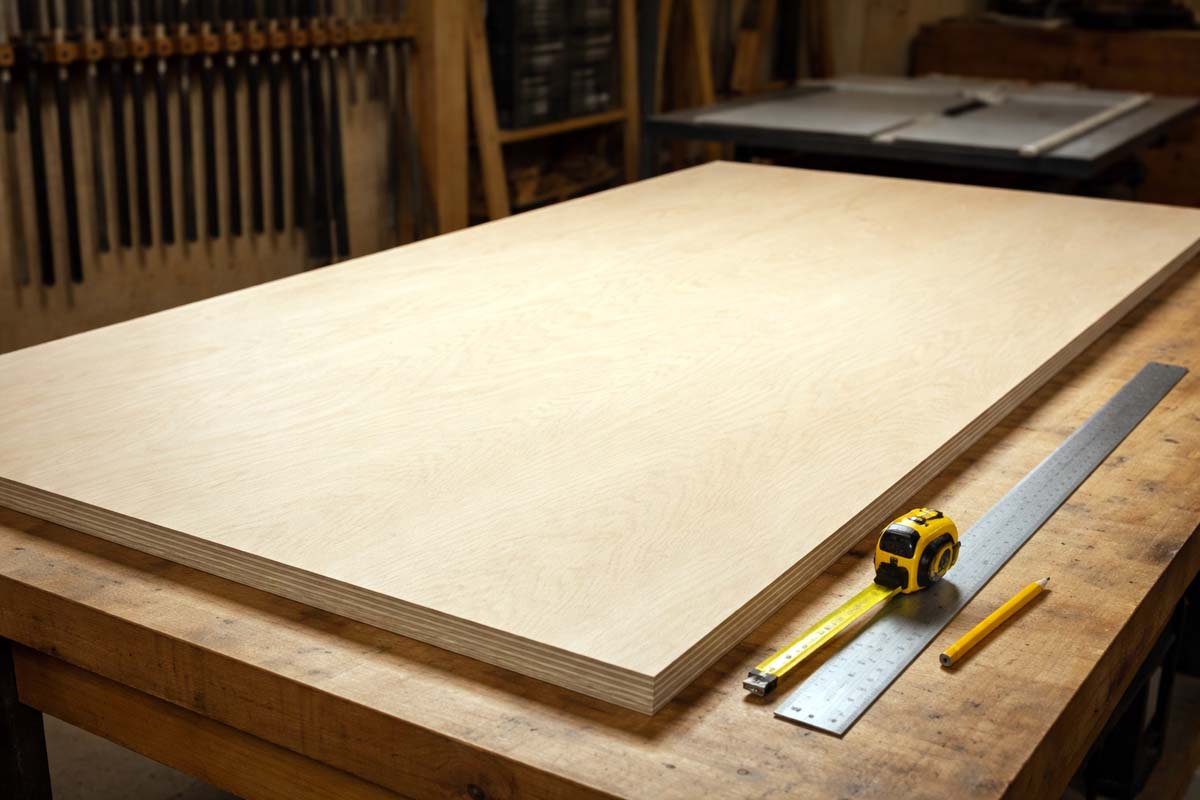
Sheet of birch plywood means a hardwood plywood panel with birch face veneers (and a core that may be veneer, MDF, particleboard, or a multi-ply birch core). Woodworkers buy it for clean faces, predictable machining, and a light, even color that takes paint and clear finishes well. The “right” sheet depends on size (often 4×8 sheet of birch plywood), thickness, grade, and core type. If you’re shopping for 4×8 sheets of Baltic birch plywood, know that Baltic birch is a specific multi-ply product and often comes in 5×5 panels too.
Contents Here
- 1 What is a sheet of birch plywood?
- 2 4×8 sheet of birch plywood: what you’re usually buying
- 3 4×8 sheets of Baltic birch plywood: what’s different
- 4 Which thickness works best for trays, drawer boxes, and cabinets?
- 5 How to spot a good sheet at the rack
- 6 Cutting and sanding birch plywood without tear-out
- 7 Joining birch plywood: screws, glue, and edge strength
- 8 Finishing birch plywood: clear coats, paint, and blotch control
- 9 How much does a sheet of birch plywood weigh?
- 10 How much is a sheet of birch plywood?
- 11 Safety notes that matter when handling full sheets
- 12 FAQs about Sheet of Birch Plywood
What is a sheet of birch plywood?
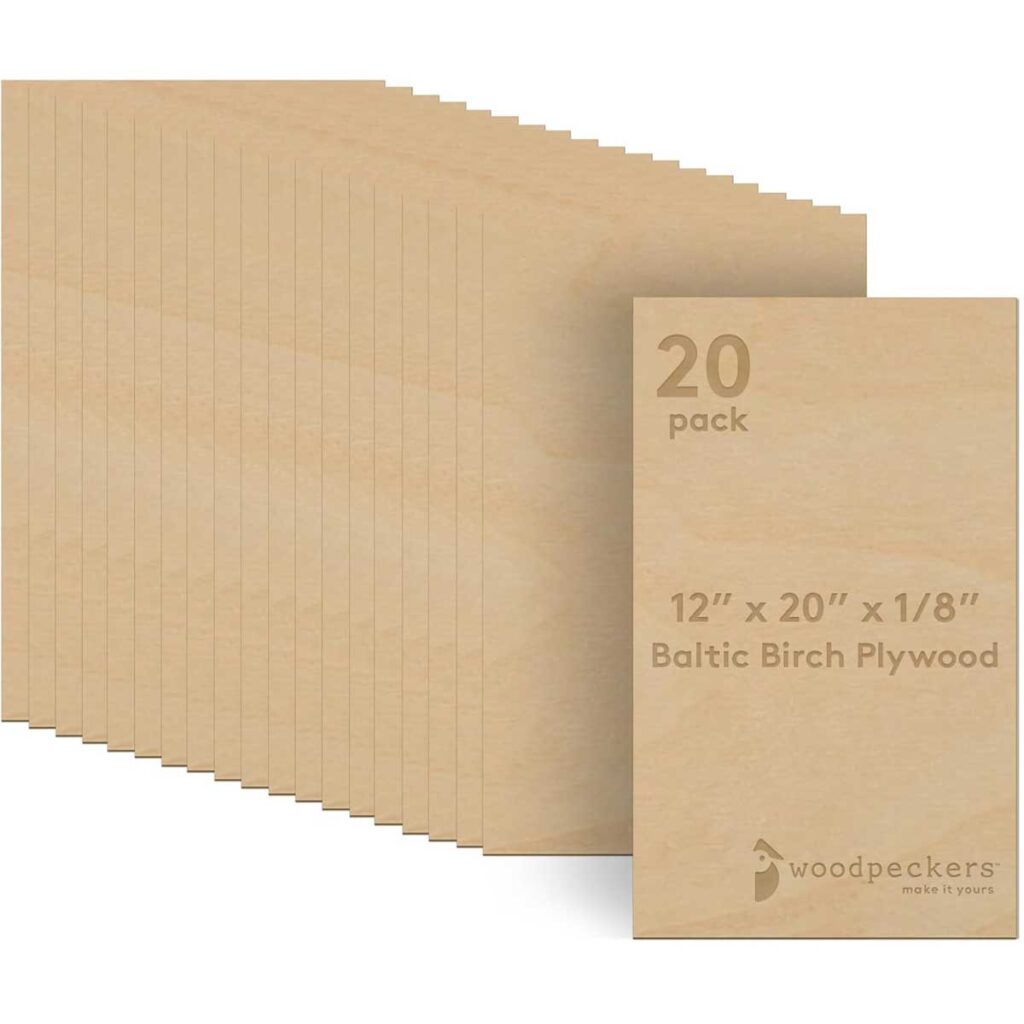
A sheet of birch plywood is a layered panel that uses birch veneer on the face and back. Manufacturers press the layers with adhesive to create a stable, flat panel that resists cupping better than solid wood. Birch faces look clean and tight-grained, so the panel works well for painted projects, drawer boxes, shop cabinets, and tray parts that need crisp edges. Below a example from Woodpeckers Store.
If you want a quick refresher on sizes and thickness choices, see my guides to common plywood sheet sizes and the complete plywood thickness guide.
Learn more: Thin Birch Plywood: How to Cut, Join, and Finish 1/8 Baltic Birch
4×8 sheet of birch plywood: what you’re usually buying
A 4×8 sheet of birch plywood is typically sold as “birch hardwood plywood” at home centers and lumberyards. The faces are birch veneer, but the core varies by product line.
Here’s what changes your results the most:
- Core type: veneer core machines better at edges; MDF core stays flatter; particle core is common in budget “cabinet” panels.
- Face grade: higher grades have fewer patches and more uniform color.
- Thickness tolerance: nominal 3/4 in plywood often measures a bit under.
If your project needs a clean interior look (cabinets, drawers), it helps to understand what sellers mean by “cabinet grade.” My explainer on knowing cabinet-grade plywood clears up the grading language.
4×8 sheets of Baltic birch plywood: what’s different
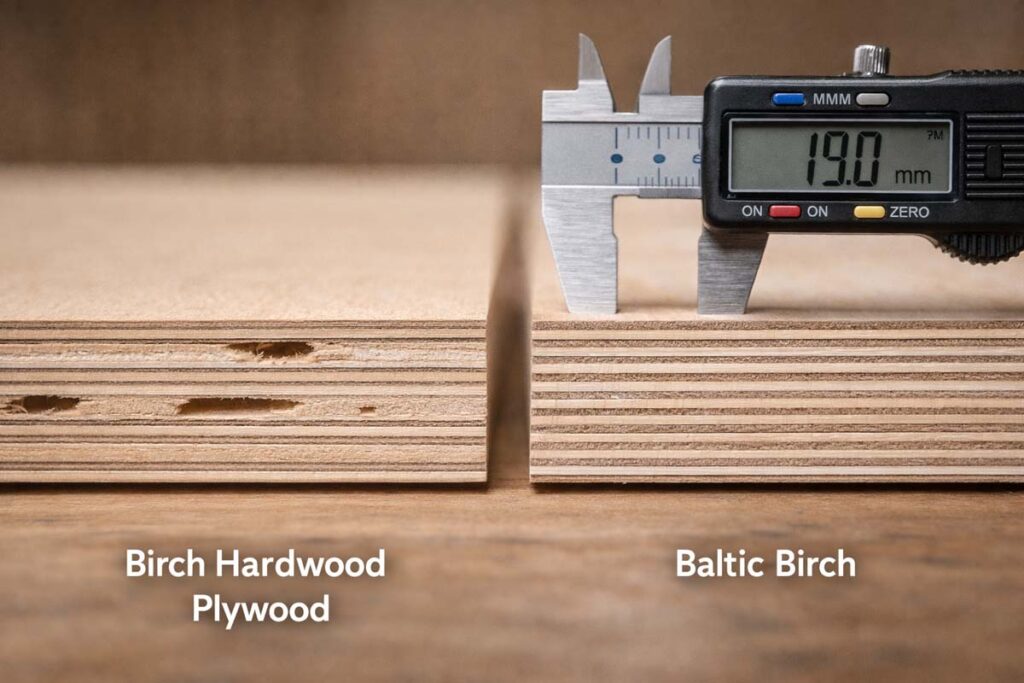
Baltic birch plywood is a multi-ply panel built with many thin birch plies. The core is close to void-free compared with typical domestic hardwood plywood, so edges look cleaner and hold screws more consistently. Many suppliers also sell it in 5×5 sheets, which matters for layout and waste. A Baltic birch brochure aimed at the trade highlights its multi-ply construction and stability as key performance traits.
If you’re buying “Baltic birch” in 4×8 sheets, read the product description closely. Some sellers label “Baltic birch” loosely, while true Baltic-style panels emphasize all-birch inner plies and higher ply counts.
Which thickness works best for trays, drawer boxes, and cabinets?
Thickness choice is a strength-and-weight decision, not a guess.
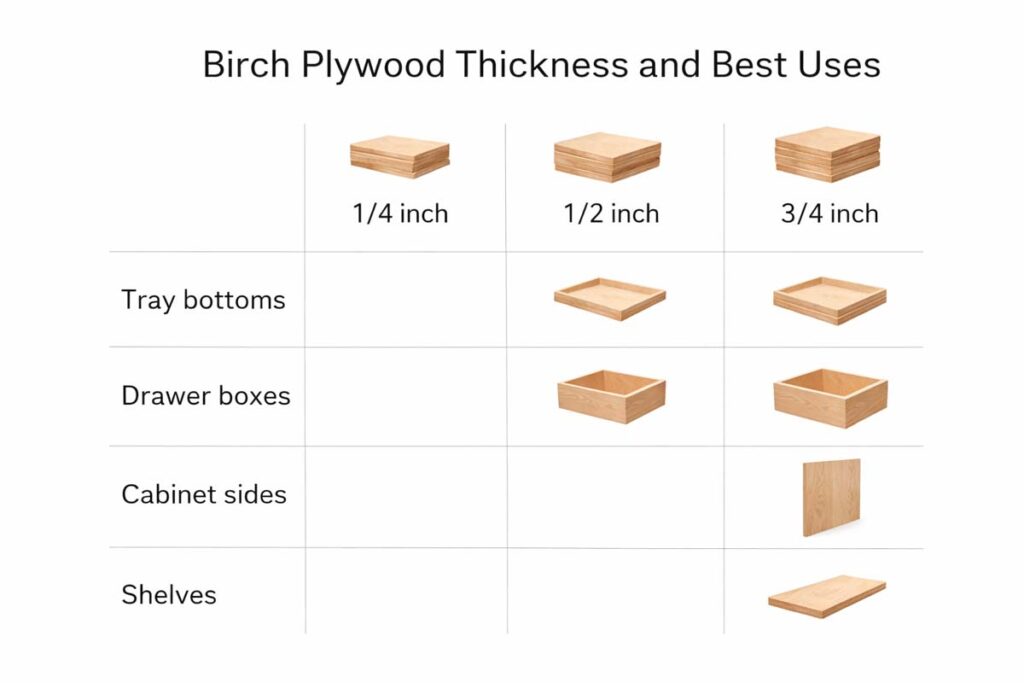
- 1/4 in (6 mm): tray bottoms, drawer bottoms (in grooves), back panels.
- 1/2 in (12 mm): light tray parts, small cabinet sides, moderate spans.
- 3/4 in (18–19 mm): cabinet boxes, shelves, tray tiers that need stiffness, parts that take screws.
If you’re building cabinets, birch is a common pick because it finishes cleanly and stays stable. This quick answer on the birch plywood for cabinets helps you decide when it’s the right material.
How to spot a good sheet at the rack
I check sheets the same way every time because plywood defects repeat.
- Sight down the length: reject sheets with a strong bow or twist.
- Check face patches: plower grades; avoid patch clusters in show areas.
- Inspect edges for gaps: voids show up as dark pockets at the edge.
- Look for veneer splits: tight hairline checks can telegraph through paint.
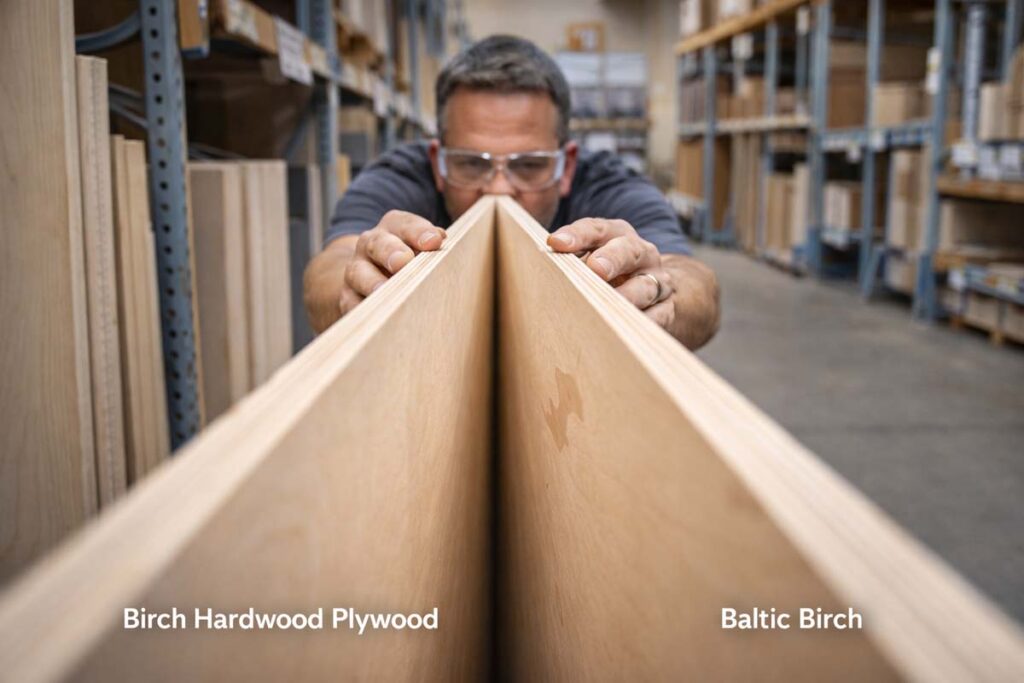
When you need store cuts to fit your vehicle, it helps to know what services are common. My guide on getting plywood cut to size covers what to ask for and how to confirm the cut is square.
Cutting and sanding birch plywood without tear-out
Birch veneer is thin, so tear-out happens fast when blades get dull or support is poor.
- Use a sharp, high-tooth-count blade for crosscuts and plywoot the sheet fully** with a cutting table or foam insulation underneath.
- Score the cut line with a knife when the face veneer is prone to splintering.
- Sand lightly with a flat block to avoid sanding through veneer.
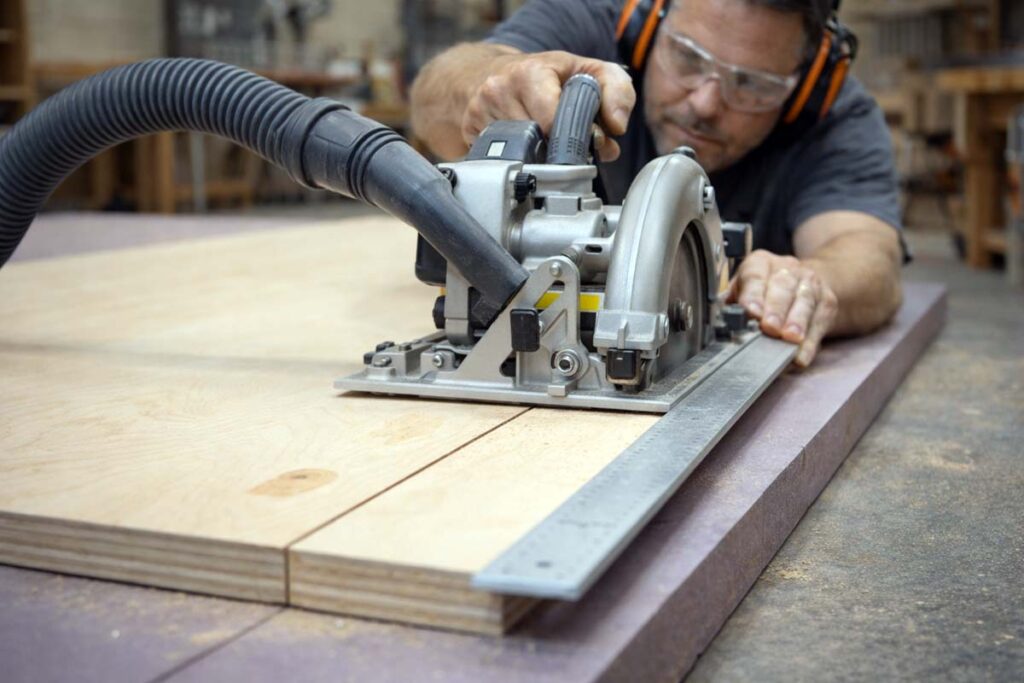
End grain isn’t the issue here, but edges still need care. This method for sanding end grain smooth also applies to plywood edges when you want a clean, paint-ready profile.
Joining birch plywood: screws, glue, and edge strength
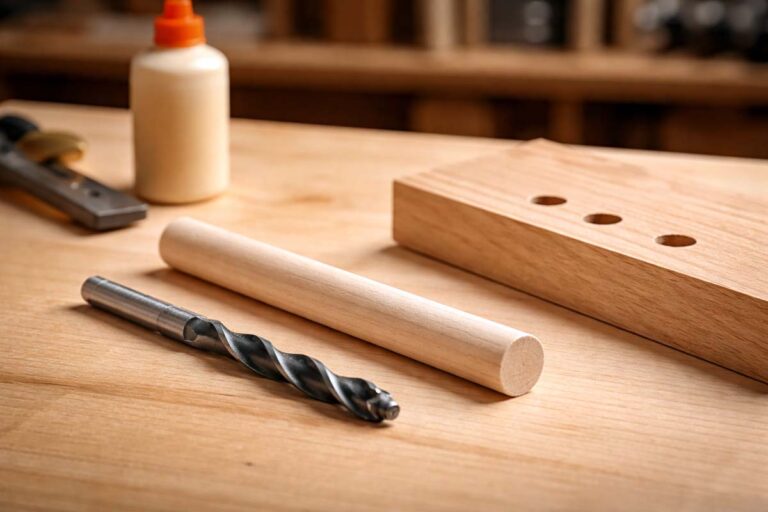
Plywood holds screws well in the face. It holds screws poorly at the edge unless the core is strong and you pre-drill.
- Pre-drill and countersink nd mushrooming.
- Use coarse threads for plywood cores that are softer.
- Add glue where it counts and clamp to keep panels aligned.
For glue choices that bond reliably to plywood, see my guide to understanding wood glue for plywood and the basics on knowing PVA wood glue.
Finishing birch plywood: clear coats, paint, and blotch control
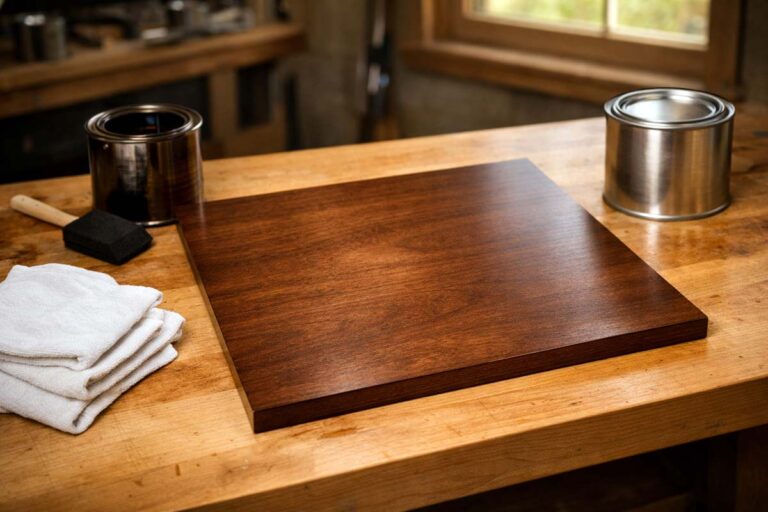
Birch faces accept clear finishes well, but the look depends on the veneer and any patches.
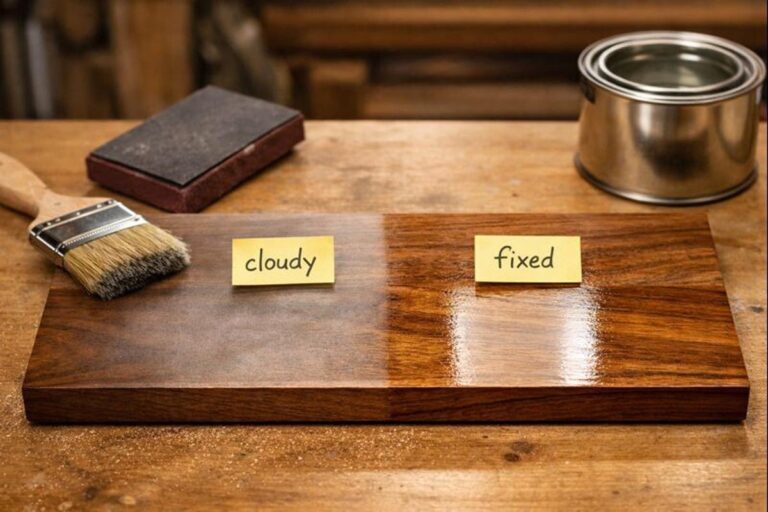
- For clear finishes: sand evenly and avoid ov For paint: use a primer that bonds to wood and fills minor grain texture.
- For blotch control: birch can show uneven absorption under some stains, so test on offcuts first.
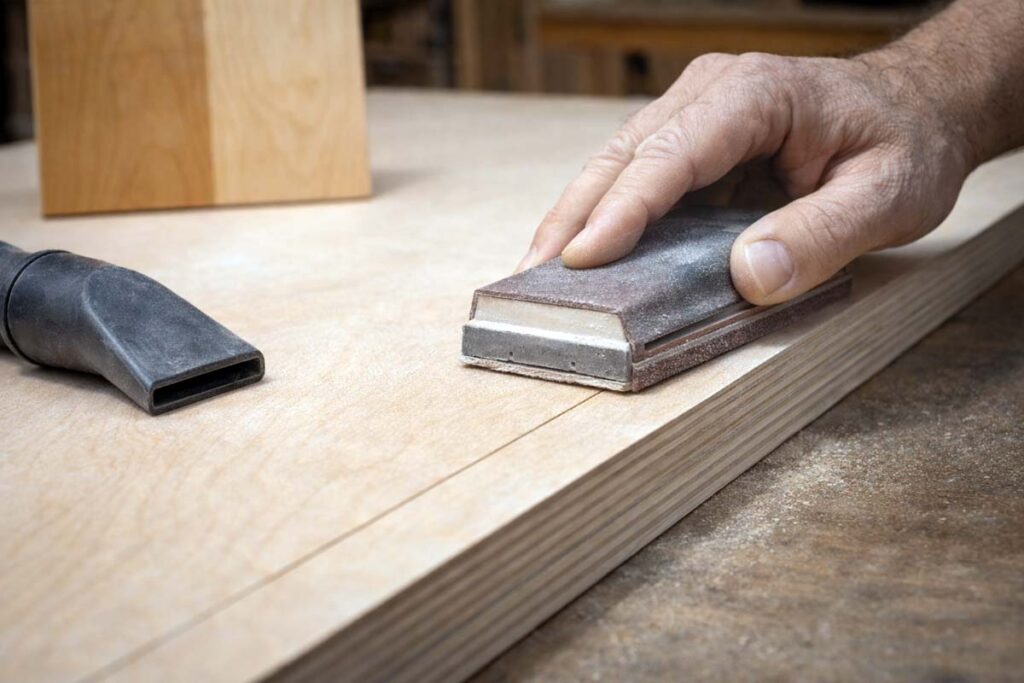
If you’re sealing a tray that will be handled often, this guide on sealing a wooden serving tray walks through durable topcoat choices and cure habits.
How much does a sheet of birch plywood weigh?
Weight depends on thickness, core, moisture, and adhesive content. A practical way to estimate is area × thickness × density. A PEFC reference sheet lists bi kg/m³** and suggests birch plywood can be roughly 700 kg/m³ due to glue and pressing.
Using that 700 kg/m³ estimate:
- 4×8 sheet, 3/4 in (19 mm): about 87 lb (calculated).
- Online calculators also land in the same neighborhood for 4×8 birch at 3/4 in, often in the 80+ lb range depending on density assumptions.
How much is a sheet of birch plywood?
Price moves by region, grade, thickness, and whether you’re buying domestic birch vs Baltic-style panels. One recent cost roundup puts a 4×8 birch plywood sheet in a wide band (roughly $22–$70) depending on grade and thickness. Treat that as a starting point and confirm local pricing with your supplier.
For broader pricing context across plywood types, see my breakdown of understanding plywood sheet costs.
Safety notes that matter when handling full sheets
A 4×8 panel can weigh enough to strain your back and bind a saw mid-cut.
- Lift with a partner when you can.
- Support offcuts so the kerf doesn’t pinch the blade.
- Wear eye protection and hearing protection during cutting and routing.
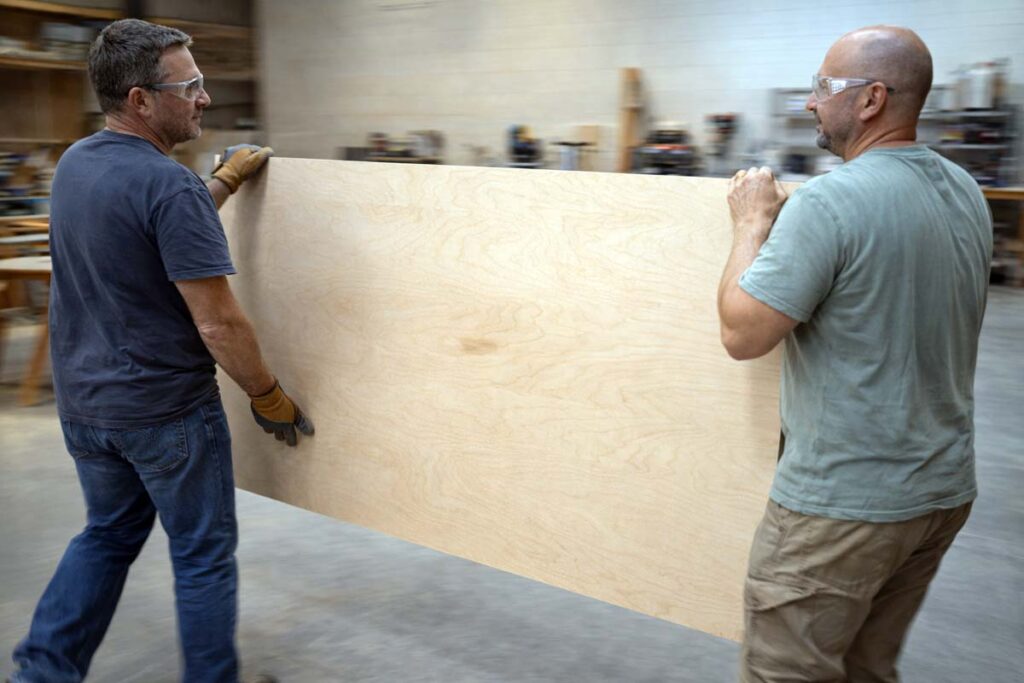
If you’re setting up a safer routine, my checklist of essential safety gear for builds covers the basics that prevent the common injuries.
FAQs about Sheet of Birch Plywood

How much is a sheet of birch plywood?
Most 4×8 birch plywood sheets land around $30–$80, depending on thickness, face grade, and core type. Big-box “shop grade” costs less; higher-grade cabinet panels cost more.
How much does a 4×8 sheet of birch plywood weigh?
A 4×8 birch plywood sheet commonly weighs about 40–90 lb depending on thickness and core. Thin 1/2-inch panels are lighter; 3/4-inch panels often land in the 70–90 lb range.
How much does a sheet of 3/4 birch plywood weigh?
A 3/4-inch 4×8 sheet of birch plywood typically weighs around 70–90 lb. Veneer-core sheets can be a bit lighter, while denser cores (or higher resin content) push weight up.
How much does a sheet of baltic birch plywood weigh?
Baltic birch is often sold in 5×5 sheets, not 4×8. A 5×5 sheet in 3/4-inch (18 mm) commonly weighs about 55–70 lb, depending on ply count and moisture.
Is Baltic birch the same as regular birch plywood?
Not exactly. “Regular” birch plywood is usually birch faces over a mixed core, while Baltic birch is built with many thin, all-birch plies for cleaner edges and more consistent strength.