Is Birch Plywood Good for Cabinets? 7 Fast Ways to Avoid Voids
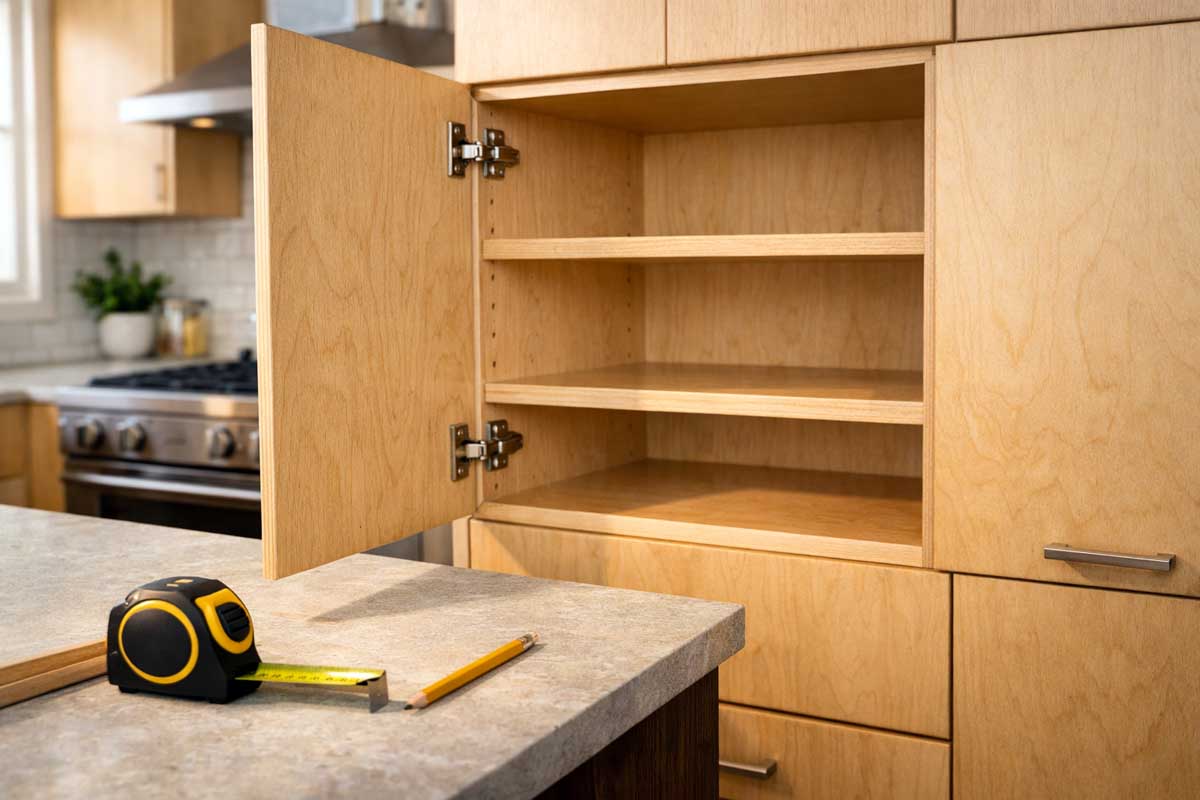
Is birch plywood good for cabinets? Yes—birch plywood builds strong, flat cabinet boxes, and it holds screws reliably when you use the right joinery and fasteners. Cabinet shops use birch-faced and Baltic birch panels because the cross-laminated plies resist seasonal movement better than most solid wood parts. The catch is quality: “birch plywood” ranges from void-free multi-ply panels to thin-faced construction sheets that chip and telegraph defects. This guide breaks down which birch plywood works for cabinets, what thickness to buy, and how to build boxes that stay square.
Contents Here
- 1 What birch plywood is in cabinet terms
- 2 The short answer on performance
- 3 Birch plywood types and what to buy
- 4 Why birch plywood works for cabinet boxes
- 5 Where birch plywood falls short
- 6 Best birch plywood thickness for cabinets
- 7 How to build cabinets with birch plywood that stay square
- 8 Finishing birch plywood for cabinets
- 9 When birch plywood is the wrong pick
- 10 Buying checklist: how to spot the good panels fast
- 11 FAQs about Birch Plywood for Cabinets
- 12 Bottom line
What birch plywood is in cabinet terms
Birch plywood is a panel product that bonds thin wood veneers into a cross-grain stack. The cross-lamination increases dimensional stability because each layer restrains the next. Cabinet-grade birch plywood usually means one of two products:
- Birch-faced hardwood plywood: birch veneer on the faces with a veneer core, MDF core, or particleboard core.
- Baltic birch plywood: an all-birch, multi-ply panel that commonly uses more plies at a given thickness than typical hardwood plywood, so edges look layered and uniform. Maker suppliers commonly describe 18 mm Baltic birch as 13-ply, with thin face veneers and thicker core veneers.
Learn more: Is 1/2 Plywood Good for Cabinets? 7 Tough Truths & Fixes
The short answer on performance
Birch plywood performs well for cabinet boxes because it stays flat, stays square, and accepts screws and dados without crumbling. Baltic birch adds a practical bonus: fewer internal voids and more consistent edges on many SKUs, which helps drawers, shelves, and exposed plywood details.
Low-end “birch” panels fail in two predictable ways: thin face veneer that sands through, and core voids that weaken dadoes and screw bite.
Birch plywood types and what to buy
Baltic birch vs birch-faced plywood
Baltic birch is typically built with an odd number of plies and relatively consistent veneer thickness. Suppliers commonly list face veneers around 0.7–1.0 mm with inner veneers around 1.3–1.5 mm, depending on thickness. That construction makes edges look clean and reduces surprise voids when you route joinery.
Birch-faced hardwood plywood varies more because the faces tell you nothing about the core. A “birch” face can sit over:
- Veneer core (lighter, better screw holding than composite cores)
- MDF core (flatter, heavier, weaker screw holding at edges)
- Particleboard core (common in boxed cabinets; stable but demands confirmat-style fasteners and careful edge treatment)
Grades that matter for cabinet work
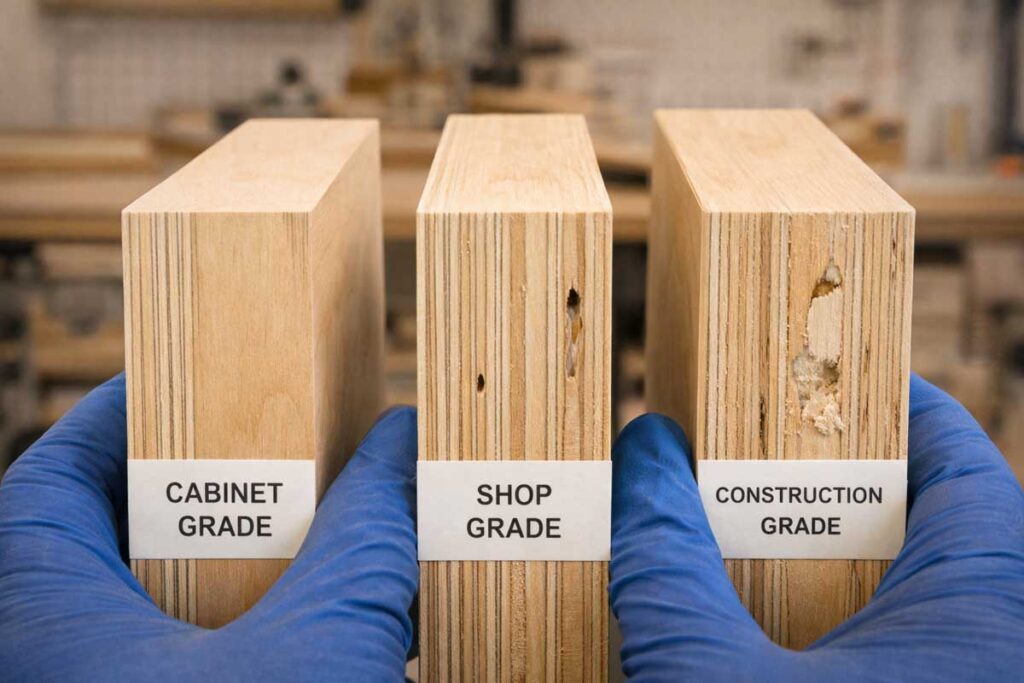
Cabinets care about two grades at once: face grade (appearance) and core grade (voids and patching). A clean face does not guarantee a clean core. When you shop, look for wording like “cabinet grade,” “shop grade,” “BB/BB,” or explicit “void-free” claims, and then verify by looking at the panel edge.
Baltic birch suppliers often publish face veneer grades and ply counts by thickness, which makes comparison easier.
Know more: What Size Plywood for Cabinets: 5 Simple Sizes That Work Every Time
Why birch plywood works for cabinet boxes
Flatness and stability that keeps doors aligned
A cabinet box fails when it racks out of square. Cross-laminated plywood resists that racking better than wide solid wood sides because each veneer layer counteracts movement from the next. That stability protects door reveals and drawer gaps across humidity swings.
Screw holding and joinery strength
Cabinet construction depends on fasteners and glue. Plywood spreads screw threads across multiple veneers instead of one crumbly fiber layer. The Forest Products Laboratory has published work on screw fastening strength in plywood, which reflects why plywood remains a standard cabinet material.
In practice, birch plywood bites best when you drive into long grain veneers (face direction) and when you avoid edge-only screws with short embedment.
Clean machining for dados and rabbets
Birch machines crisply with sharp carbide. Dadoes stay tight, and rabbets hold backs well. Baltic birch often routs more predictably because the core plies stay uniform and many product lines target furniture and cabinetry use.
Finishing flexibility: paint or clear
Birch takes clear finishes evenly when you prep it right, and it paints well when you seal the grain and control blotching. Birch veneer still behaves like real wood, so it absorbs stain unevenly unless you use a conditioner or a washcoat.
Where birch plywood falls short
Thin face veneer sands through fast
Some birch-faced panels use thin face veneer. Thin veneer turns one aggressive sanding pass into a pale “oops” patch. Treat faces like veneer: scrape, sand lightly, and avoid leveling with coarse grits.
Edges need a plan
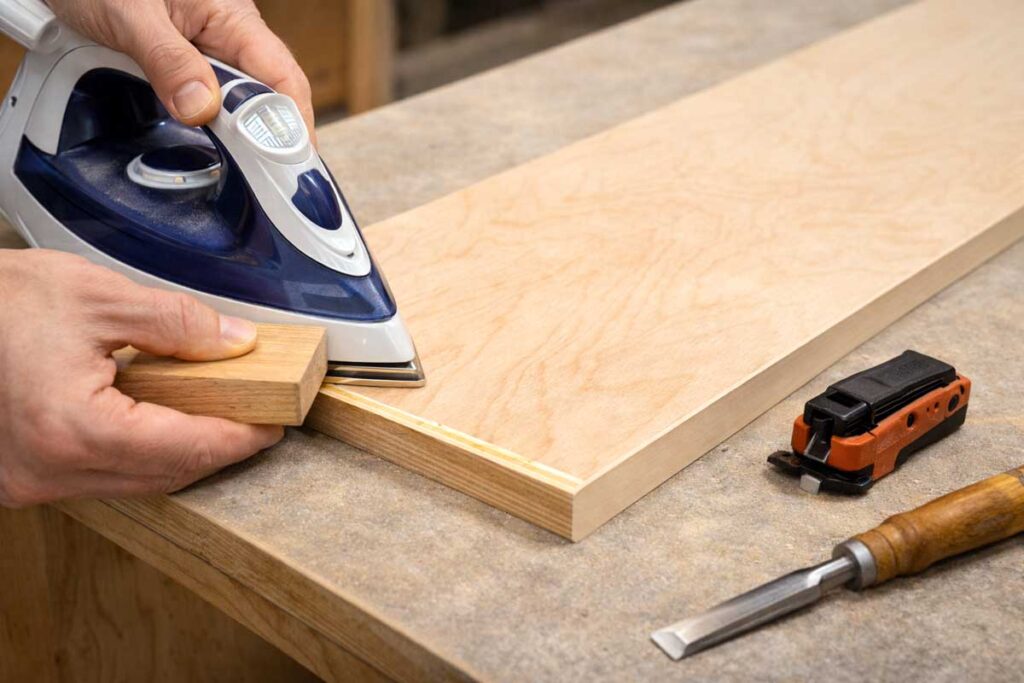
Plywood edges look busy unless you want the layered look. You either embrace it (Baltic birch-style) or hide it with:
- Edge banding (iron-on, pre-glued, or wood strips)
- Solid wood face frames
- Applied solid edging on shelves and gables
Moisture exposure requires the right panel and finish
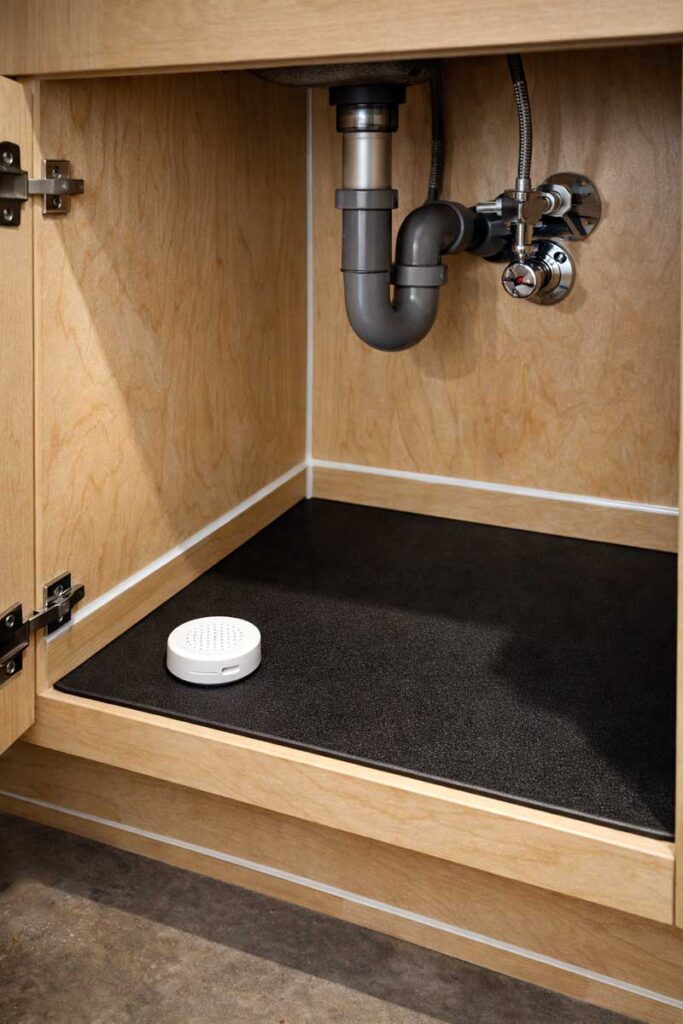
Kitchen and bath cabinets live around water. Choose a panel rated for moisture resistance when the box sits near sinks or dishwashers. Some Baltic birch product lines specify moisture content ranges and water resistance categories (such as MR or WBP) depending on glue type and intended exposure.
Moisture-resistant does not mean waterproof. A wet cabinet toe-kick still swells if water stands.
Off-gassing and compliance depend on the adhesive system
Formaldehyde emissions come from resins used in composite wood products. In the U.S., TSCA Title VI sets maximum emissions at 0.05 ppm for hardwood plywood (veneer core or composite core). If you build for a tight house or a sensitive client, ask for TSCA Title VI / CARB Phase 2 documentation and keep finishes low-VOC as well.
Best birch plywood thickness for cabinets
Thickness is not a style choice; it’s a stiffness and hardware choice.
- 3/4 in (18 mm): standard for cabinet sides, bottoms, tops, and fixed shelves. Baltic birch is commonly sold in 18 mm with a high ply count, which stiffens shelves and helps joinery hold.
- 1/2 in (12 mm): common for cabinet backs (captured in dadoes) and drawer boxes, depending on design.
- 1/4 in (6 mm): common for drawer bottoms and back panels when fully supported.
If you plan frameless cabinets with European hinges, 3/4 in panels keep hinge screws and plates happier over time.
How to build cabinets with birch plywood that stay square
Cut strategy that prevents chip-out
Score your cut line and support the face veneer.
- Use a sharp plywood blade (high tooth count) in a table saw or track saw.
- Put the best face down for circular/track saw cuts (most blades cut upward at the front).
- Use blue tape along the cut line when veneer chips easily.
Joinery that matches plywood behavior
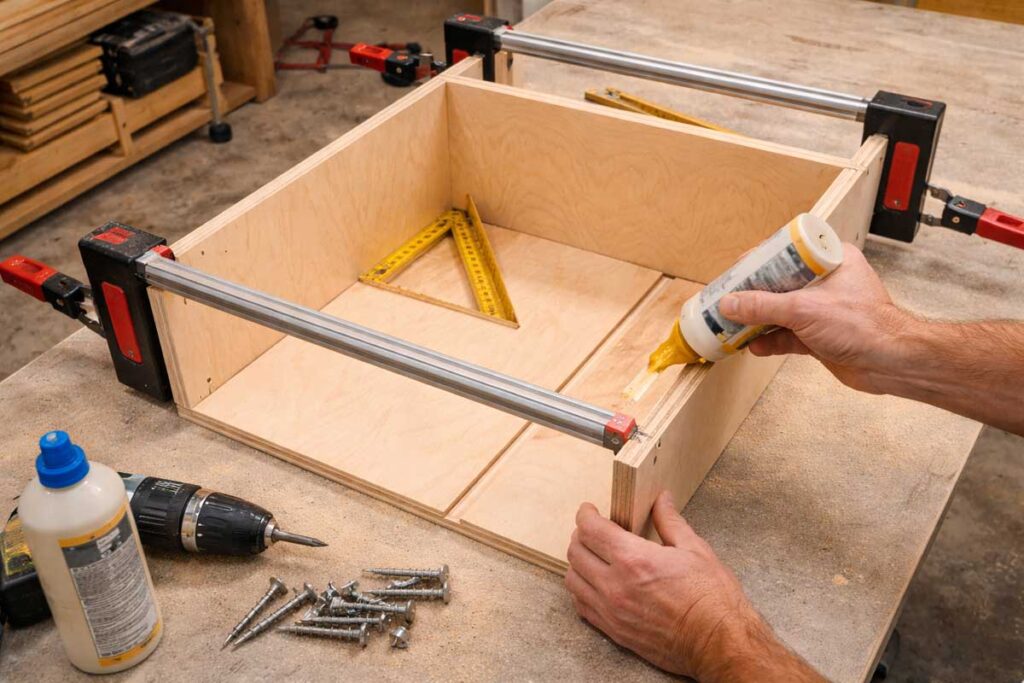
Plywood likes wide glue surfaces and mechanical alignment.
Strong, efficient options:
- Dados for bottoms and fixed shelves
- Rabbets for backs
- Confirmat screws for frameless boxes (especially into composite cores)
- Pocket screws for face-frame cabinets when you back them with glue
Avoid relying on brad nails alone. Nails locate parts; glue and screws carry the load.
Fasteners that don’t split veneers
Pilot holes prevent veneer “jacking” and plying. Drive screws with a clutch. If you see the face bulge, the screw is too close to the edge or you skipped the pilot.
Finishing birch plywood for cabinets
Clear finish
Birch rewards a clean prep.
- Sand lightly to 180–220 grit.
- Apply a washcoat (dewaxed shellac works) if you plan to stain.
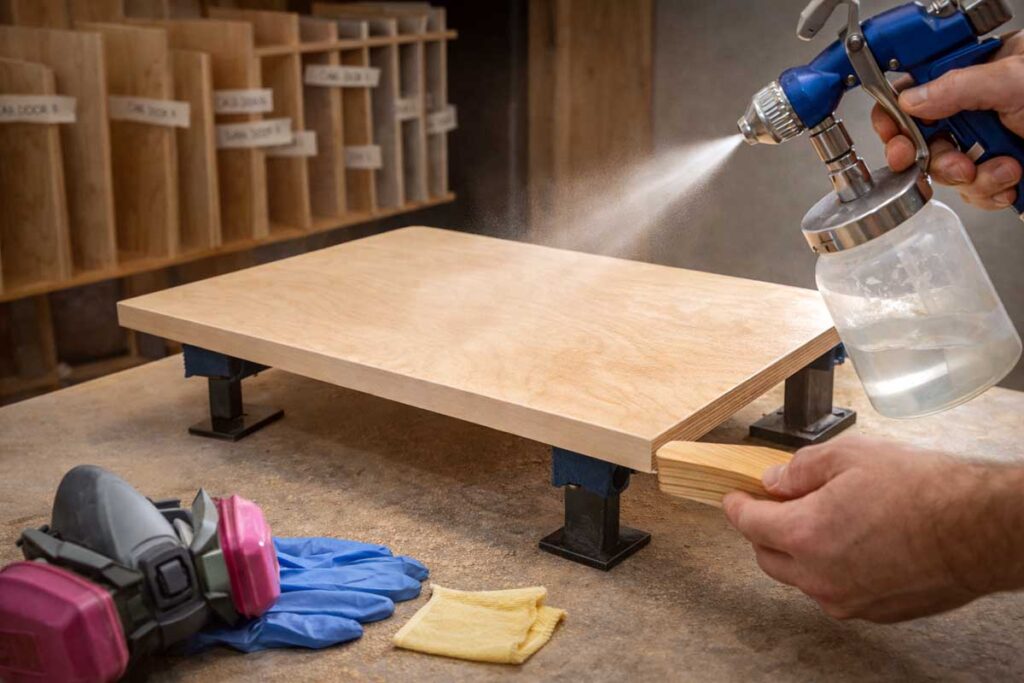
- Use a durable topcoat for kitchens: a quality waterborne polyurethane or conversion finish system if you spray.
Painted finish
Paint hides the face, not the flaws.
- Fill voids and edge checks with a hard filler.
- Seal edges because plywood edges drink primer.
- Prime with a bonding primer, then topcoat with a cabinet-grade enamel.
When birch plywood is the wrong pick
Birch plywood is not the best answer when the project demands one of these outcomes:
- Ultra-smooth painted doors: MDF doors beat plywood for flatness and edge shaping.
- Lowest-cost boxes: particleboard with a melamine surface dominates budget cabinet lines, but it demands the right fasteners and edge protection.
- Outdoor cabinetry: use exterior-rated panels and designs that shed water, or move to materials made for exterior exposure.
Buying checklist: how to spot the good panels fast
Use quick, physical checks in the aisle:
- Look at the edge for voids and overlaps.
- Check for flatness by sighting down the sheet.
- Inspect the face for football patches, open knots, and sanding swirls.
- Ask for TSCA Title VI / CARB Phase 2 paperwork if emissions compliance matters. EPA lists 0.05 ppm as the hardwood plywood limit under TSCA Title VI.
FAQs about Birch Plywood for Cabinets

Is Baltic birch better than regular birch plywood for cabinets?
Often, yes. Baltic birch usually has more consistent plies and fewer voids, so dados, rabbets, and exposed edges machine cleaner. Regular birch-faced plywood varies a lot by core quality.
Is birch plywood strong enough for kitchen cabinets?
Yes—cabinet-grade birch plywood in 3/4-inch thickness makes stiff, square boxes and holds fasteners well with dados and glue. The weak link is usually cheap cores or poor assembly, not birch itself.
What about formaldehyde in birch plywood cabinets?
Formaldehyde depends on the glue and whether the panel meets emissions rules. Ask for TSCA Title VI / CARB Phase 2 documentation, and let parts air out before install for a noticeable odor drop.
Is Baltic birch plywood good for cabinets?
Yes. Baltic birch is a solid choice for frameless boxes, drawer parts, and shelves because it’s stable and machines predictably. It also looks sharp if you leave edges exposed with a clear finish.
Is birch plywood good for speaker cabinet?
Yes, for many builds. Birch plywood stays stiff and resists rattles, which helps speaker boxes sound tight. Use void-free panels, brace the enclosure, and seal every seam so air leaks don’t ruin performance.
Bottom line
Birch plywood earns its place in cabinets because it stays flat, machines cleanly, and supports strong joinery with real wood veneers. Choose cabinet-grade panels, verify the core, and build with dados/rabbets and sensible screw practices. If you want exposed edges and consistent machining, Baltic birch often gives you the cleanest experience for drawer parts and modern box details.