How to Reglue a Loose Chair Joint: 7 Steps for a Rock Solid Fix
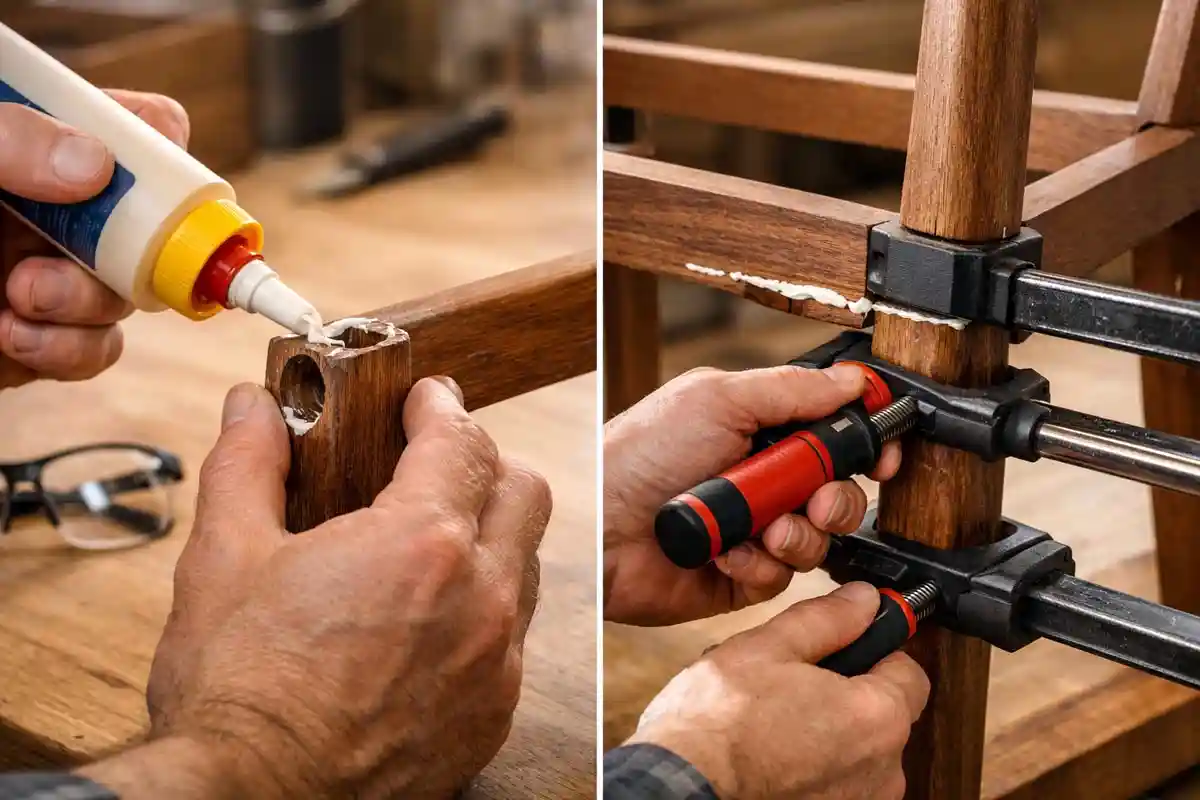
Reglue a loose chair joint by taking the joint apart, scraping it back to clean wood, applying fresh glue to both mating surfaces, then clamping it in alignment until the bond cures. That process works because wood glue needs direct wood-to-wood contact and steady pressure to set without movement. In this guide, you’ll learn how to find the exact joint that’s slipping, separate it without splitting the chair, prep the surfaces so new glue actually bites, clamp it square, and handle common problems like gaps, worn dowels, and stripped screw blocks.
Contents Here
- 1 Confirm the looseness before you pull anything apart
- 2 Tools and materials that make this go smoothly
- 3 Choose the right glue for the job
- 4 Disassemble the loose joint without splitting the chair
- 5 Remove old glue so the new bond can bite
- 6 Dry-fit the joint and fix the fit before glue-up
- 7 Step-By-Step: How to Reglue a Loose Chair Joint
- 8 Clamping tips that keep the chair square
- 9 What to do if you can’t fully take the joint apart
- 10 Common failure points and how to avoid them
- 11 When you should stop and repair the wood instead
- 12 Safety notes for a chair repair
Confirm the looseness before you pull anything apart
A chair can wobble from one joint or from the whole frame racking. Set the chair on a flat floor and push the backrest side-to-side with light force. Watch each joint line. The joint that opens or shifts is the one that needs attention.
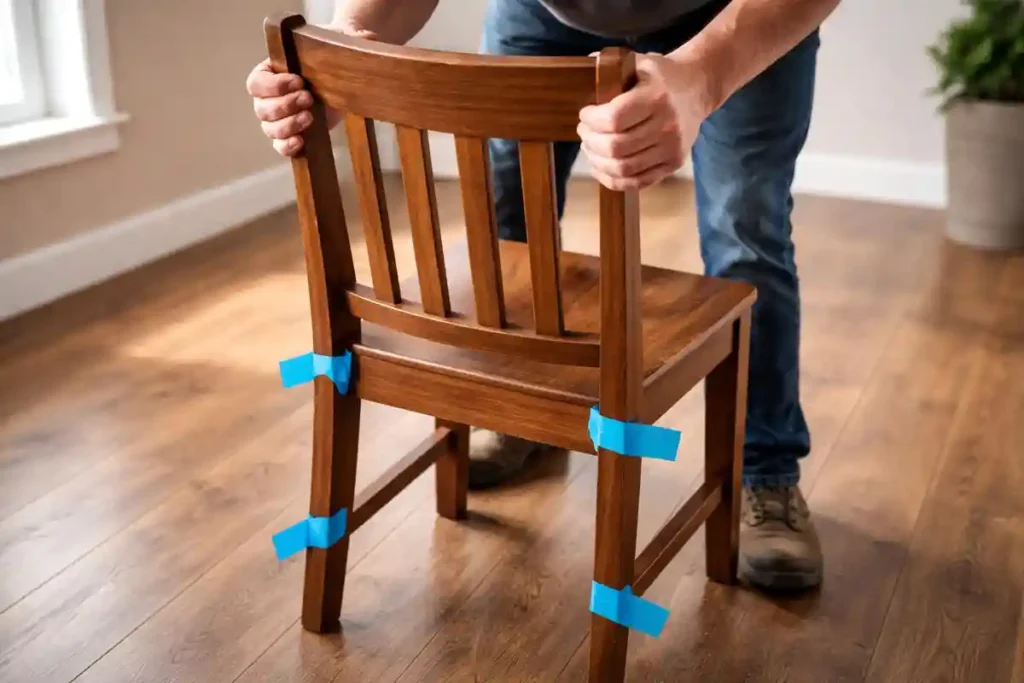
If the seat is screwed on and blocks your clamps or access, remove it first. Keep screws together so you don’t mix lengths.
Tools and materials that make this go smoothly
You don’t need a full cabinet shop, but you do need control.
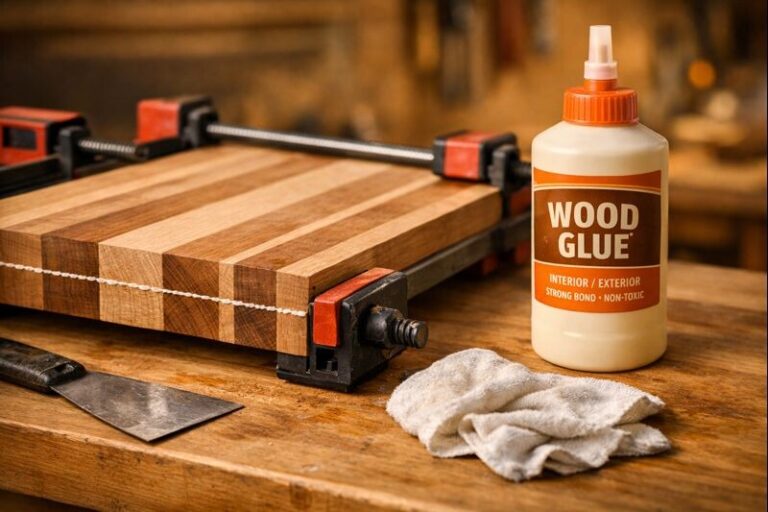
- PVA wood glue (most chair joints want standard wood glue)
- Clamps (bar clamps, parallel clamps, or a strap clamp for awkward frames)
- Rubber mallet and a scrap wood block (to tap without denting)
- Small stiff brush or disposable acid brush (for glue spread)
- Putty knife, scraper, or a sharp chisel (for old-glue removal)
- Painter’s tape and a pencil (for alignment marks)
- Rags and a small cup of water (for fresh glue squeeze-out)
If you’re unsure what adhesive fits your joint and conditions, start with my best glue for furniture joints and a quick checklist of beginner woodworking tools so you can prep, glue, and clamp with confidence.
Choose the right glue for the job
Most solid-wood chair joints do best with PVA wood glue when the joint still fits properly. PVA grabs porous wood fibers and cures into a strong bond when the parts seat fully and stay still.
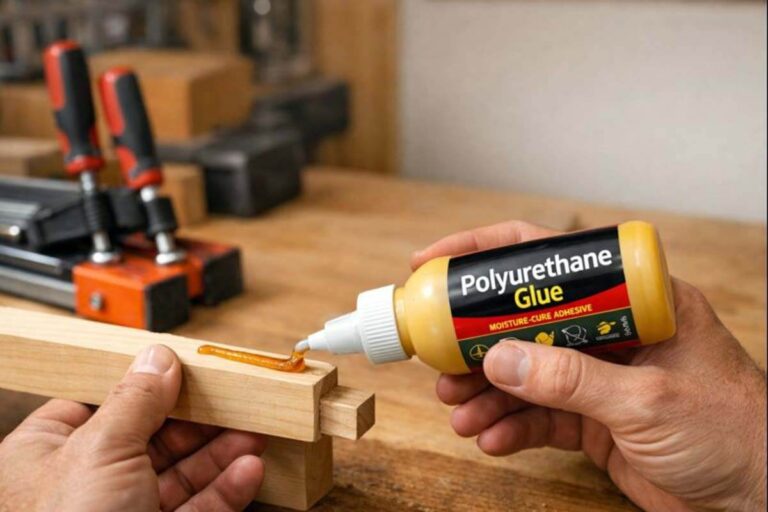
Use epoxy when you cannot restore a tight fit and you’re dealing with small, unavoidable gaps. Epoxy can bridge space, but it won’t magically fix a joint that’s sloppy from broken or crushed wood. For a practical breakdown of when each makes sense, see glue versus epoxy for repairs.
Disassemble the loose joint without splitting the chair
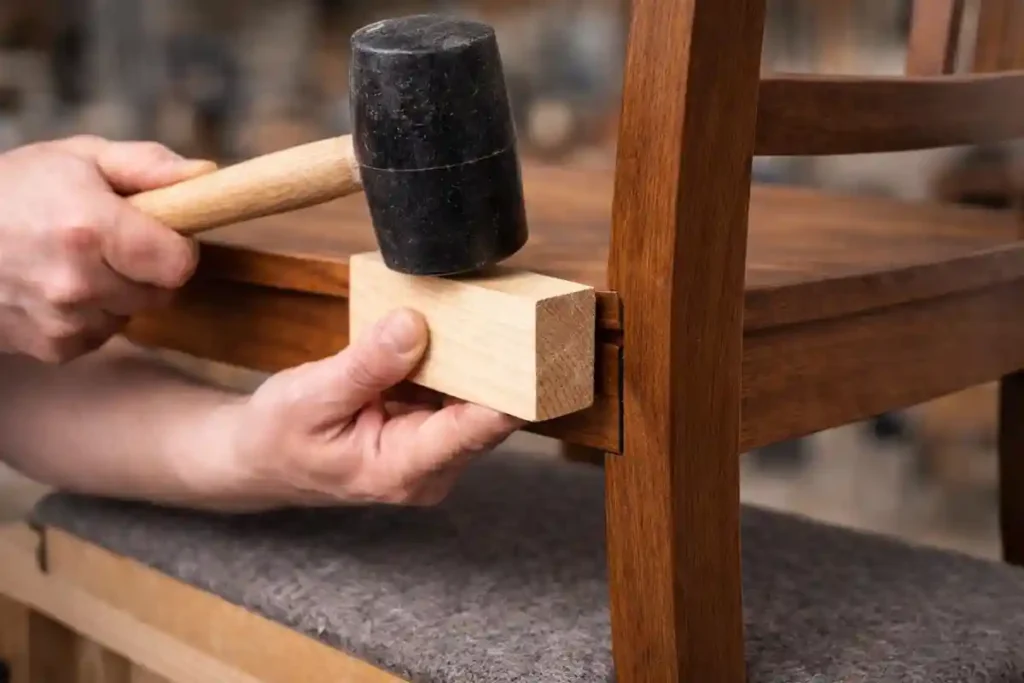
Chair parts crack when you pry. Tapping and support keep things intact.
- Mark alignment. Draw light pencil registration marks across the joint so you can put it back in the same orientation.
- Support the work. Lay the chair on its side on a towel or cardboard. Support the leg or rail close to the joint you’re loosening.
- Tap, don’t pry. Use a rubber mallet and a scrap block to tap the joint apart. Work in small steps and change angles if needed.
- Stop if wood starts to split. If you see a crack opening in the surrounding wood, pause and change strategy. Forcing it makes the repair bigger.
If a joint won’t budge, check for hidden screws, nails, or corner blocks. Remove fasteners before you keep tapping.
Remove old glue so the new bond can bite
Fresh glue does not bond well to old glue. Clean wood-to-wood contact matters more than using “stronger” glue.
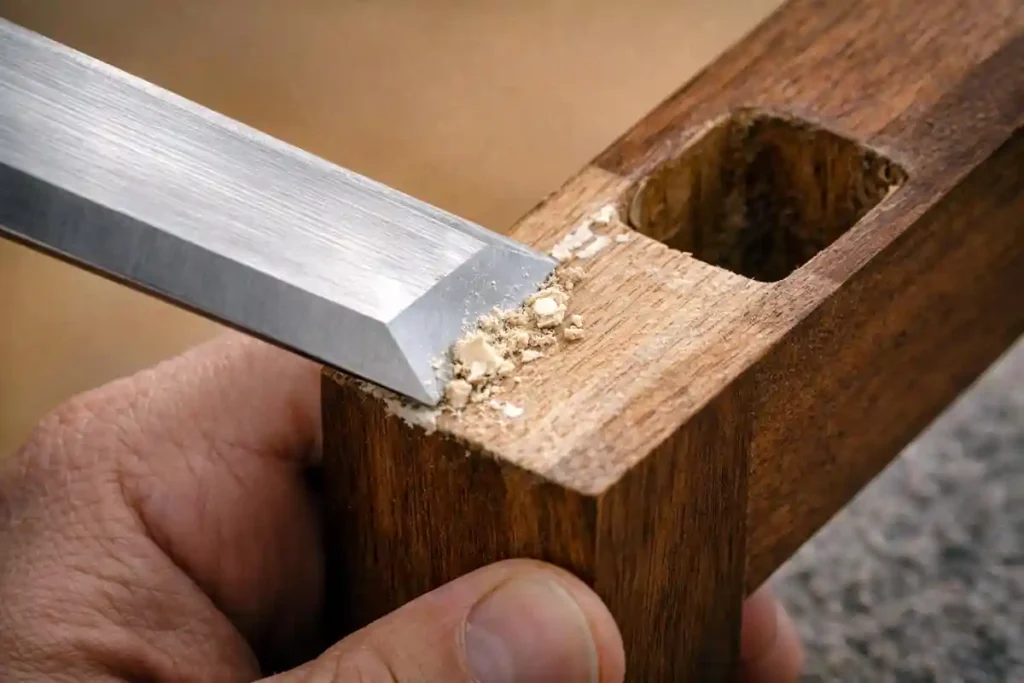
Scrape the mortise walls and the tenon or dowel back to clean wood. Use a sharp tool flat to the surface so you don’t change the fit. Avoid rounding edges. Light sanding is fine for thin residue, but don’t sand so much that the joint gets looser.
If you’re working around a finished surface and you’re worried about gouging, follow the safer cleanup approach in removing wood glue without damage.
Dry-fit the joint and fix the fit before glue-up
A good dry-fit seats fully with firm hand pressure. If the joint slides together with no resistance, glue alone won’t save it.
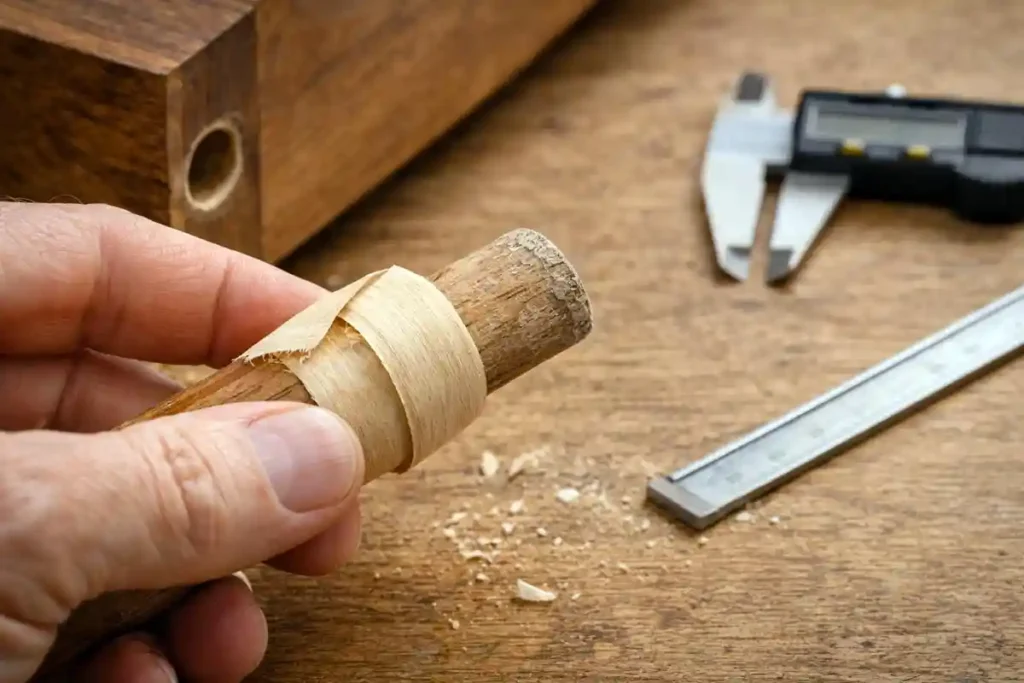
If the joint is only slightly loose
A thin shim can restore tight contact. Use a small shaving of matching wood, glued to the tenon cheek, then trim it so the joint seats firmly.
If a dowel joint is sloppy
Replace worn dowels or adjust fit. If you need a refresher on dowel basics and sizing, this helps: how wooden dowels are used in joinery. If you’re specifically gluing dowels back into place, read glue for bonding dowel joints.
If the looseness comes from corner blocks or screws
Many chairs rely on corner blocks under the seat. If those screws spin or won’t tighten, fix the wood first so the block can actually do its job: repairing a stripped screw hole.
Step-By-Step: How to Reglue a Loose Chair Joint
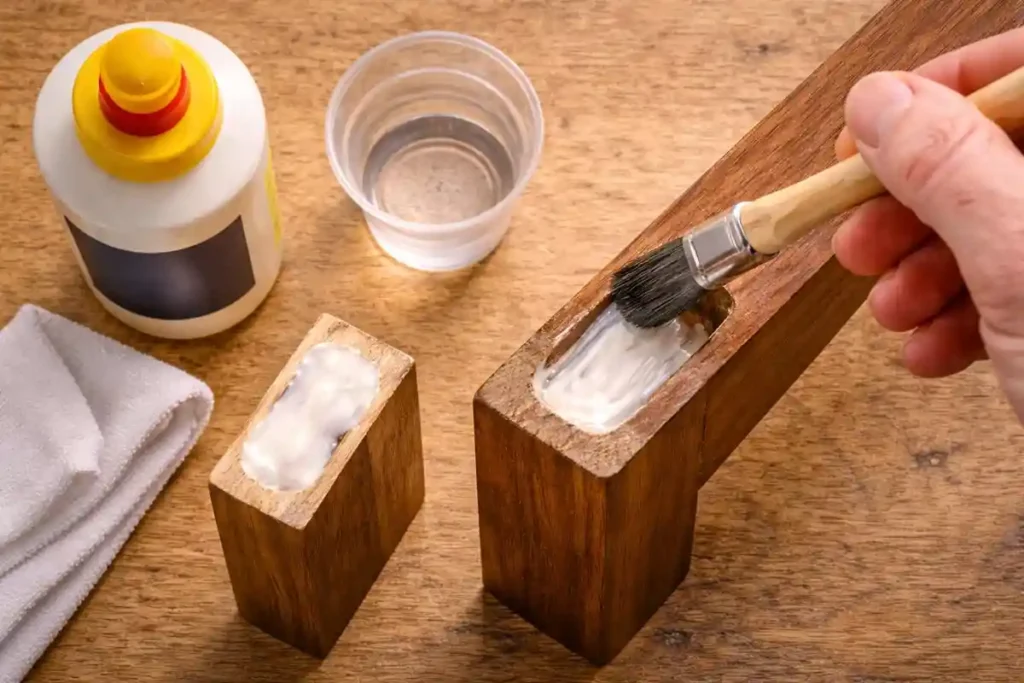
Follow this sequence so each step supports the next.
- Remove the seat if it blocks access. Flip the chair and back out screws. Store screws together.
- Mark alignment. Use pencil registration marks across each joint so parts return to the same orientation.
- Disassemble the loose joint. Tap with a rubber mallet using a scrap block. Work slowly to avoid splitting.
- Clean off old glue. Scrape glue to bare wood. Lightly sand only if needed for stubborn residue.
- Dry-fit the joint. Push parts together without glue. The joint should seat fully with firm hand pressure.
- Apply glue to both mating surfaces. Brush a thin, even coat on the tenon/dowel and inside the mortise/hole.
- Assemble and clamp. Close the joint fully and clamp until the seam closes and parts stay aligned.
- Clean squeeze-out. Wipe fresh PVA glue with a damp rag. Avoid flooding water into the joint.
- Hold clamping time, then rest. Keep clamps on for the recommended clamp window, then let the chair sit untouched. For timing guidance, use understanding how long to clamp wood glue and knowing how long does it take for wood glue to dry.
Clamping tips that keep the chair square
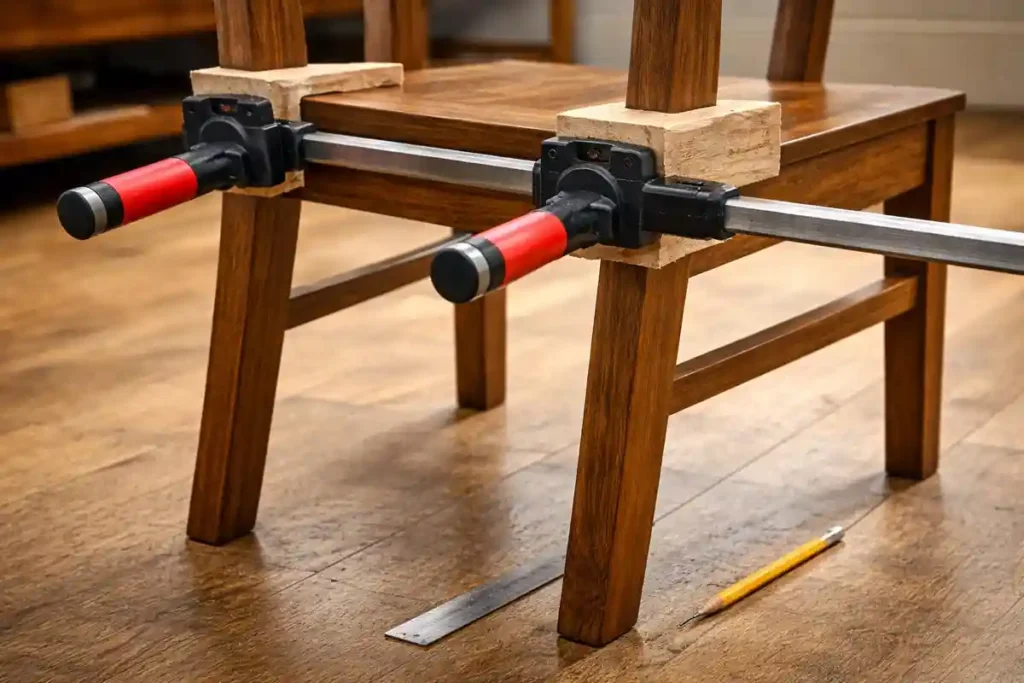
A chair joint fails again when clamps pull the frame out of square. Clamp along the line of force that closes the joint, not across the chair at an angle. Use cauls (scrap wood pads) to spread pressure and protect edges. Check that all four legs sit flat on the floor before walking away.
What to do if you can’t fully take the joint apart
Sometimes the joint won’t separate without risking a crack. In that case, you’re doing a compromise repair.
Work glue into the gap as deeply as possible, flex the joint gently to pull glue inward, then clamp it so the gap closes. This works best when the joint still fits and only the glue line failed. If the joint is worn loose, injection alone often fails because you never regain tight wood-to-wood contact.
Common failure points and how to avoid them
A chair re-glue fails for predictable reasons.
- Old glue left behind: new glue sticks to wood better than to old glue.
- Too much glue: excess glue can prevent full seating and keeps the joint “floating.”
- Bad clamp direction: clamps can rack the frame and lock twist into the chair.
- Moving the chair too soon: early use breaks the bond before it develops strength.
- Skipping fit repair: glue doesn’t replace missing wood or crushed fibers.
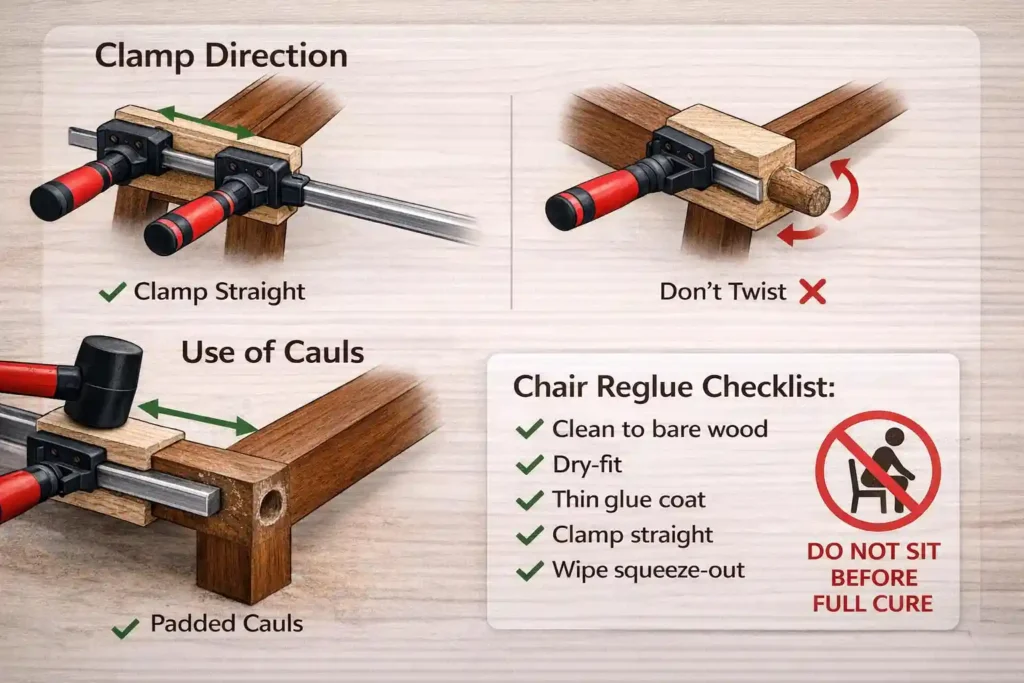
If you tend to over-apply adhesive, this is worth a quick read: how much wood glue is enough.
When you should stop and repair the wood instead
Regluing is not the right fix if you find broken structure.
Stop and address the damage first if you see split mortises, cracked legs, or crushed joint walls that crumble under a scraper. Those problems need reinforcement, patching, or part replacement before glue can hold.
Safety notes for a chair repair
A loose chair can dump someone sideways without warning. Test stability before anyone sits on it. Keep fingers out of clamp pinch points, pad clamp jaws to avoid crushing edges, and support the chair securely during disassembly so it can’t roll or drop while you’re tapping.