Acrylic Craft Paint: What It Is, How It Works, and the 10 Best Picks
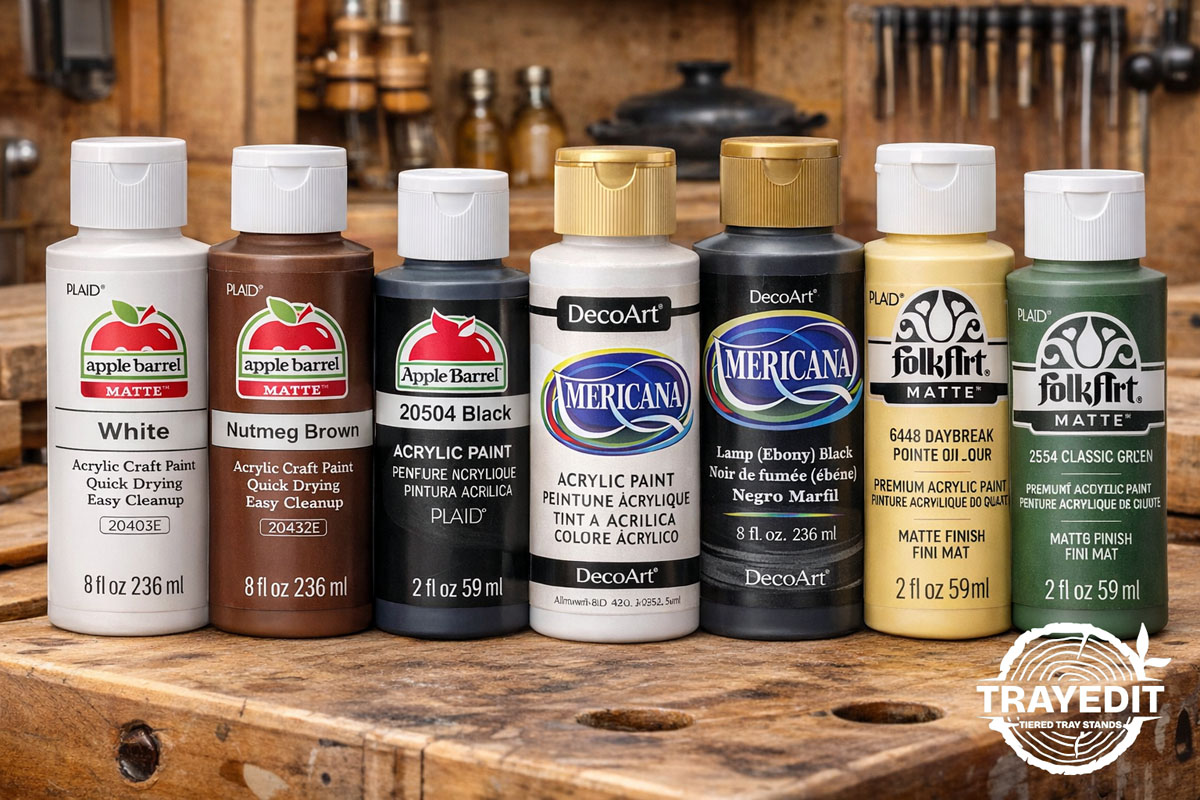
Acrylic Craft Paint is a water-based paint made for hobby projects, small décor pieces, and quick color work on mixed surfaces. It spreads easily, cleans up with soap and water, and dries fast because water leaves the paint film through evaporation and absorption. Once dry, the acrylic binder forms a clear plastic-like film that holds the pigment in place. That simple chemistry explains why craft acrylics feel friendly in the shop—and why surface prep and topcoats decide whether the finish stays crisp or turns tacky.
Contents Here
- 1 Quick Checklist: The Top 10 Water-Based Acrylic Craft Paints
- 2 What is Acrylic Craft Paint?
- 3 How Acrylic Craft Paint works
- 4 What Acrylic Craft Paint sticks to (and what needs prep)
- 5 When to use Acrylic Craft Paint
- 6 When to avoid Acrylic Craft Paint (or plan for a topcoat)
- 7 Reviews of the 10 Best Acrylic Craft Paints
- 7.1 Apple Barrel Acrylic Craft Paint Set 8 Fl Oz
- 7.2 Apple Barrel Acrylic Craft Paint Set 2 fl oz
- 7.3 DecoArt Americana Acrylic Paint Set
- 7.4 Delta Creative Ceramcoat Acrylic Paint (8 oz)
- 7.5 Delta Creative 18 Ceramcoat Acrylic Paint Set
- 7.6 FolkArt Art Talk with Andy Acrylic Paint Set
- 7.7 Craft Smart 36 Assorted Acrylic Paint Set
- 7.8 GOTIDEAL Acrylic Paint Set
- 7.9 Testors 297583 Craft Acrylic Paint Set
- 7.10 Martha Stewart Multi-Surface Satin Acrylic Paint Set
- 8 How to Choose the Right One: Acrylic Craft Paint Buying Guide
- 9 Getting a durable finish on wood projects
- 10 Common problems and practical fixes
- 11 Safety, labeling, and cleanup
- 12 FAQs about Acrylic Craft Paint
- 12.1 Is craft smart acrylic paint non toxic?
- 12.2 What is acrylic craft paint used for?
- 12.3 Is acrylic craft paint the same as artist acrylic paint?
- 12.4 Is acrylic craft paint washable?
- 12.5 Do I need to seal acrylic craft paint on wood?
- 12.6 Does acrylic craft paint dry darker than it looks in the bottle?
- 13 Bottom line
Quick Checklist: The Top 10 Water-Based Acrylic Craft Paints
- Apple Barrel Acrylic Craft Paint Set 8 Fl Oz
- Apple Barrel Acrylic Craft Paint Set 2 fl oz
- DecoArt Americana Acrylic Paint Set
- Delta Creative Ceramcoat Acrylic Paint (8 oz)
- Delta Creative 18 Ceramcoat Acrylic Paint Set
- FolkArt Art Talk with Andy Acrylic Paint Set
- Craft Smart 36 Assorted Acrylic Paint Set
- GOTIDEAL Acrylic Paint Set
- Testors 297583 Craft Acrylic Paint Set
- Martha Stewart Multi-Surface Satin Acrylic Paint Set
What is Acrylic Craft Paint?
Acrylic craft paint is a water-based acrylic paint that uses an acrylic polymer emulsion to bind pigment into a flexible film, and it’s packaged and priced for crafts rather than fine-art longevity. Many common craft lines are labeled as “acrylic craft paint,” and their safety sheets often list no hazardous ingredients under standard classifications.
In plain shop terms: it’s an easy-handling acrylic designed to cover wood signs, seasonal décor, ceramics, and similar projects without specialty solvents.
How Acrylic Craft Paint works
Acrylics don’t “dry” the way glue cures or epoxy kicks. They dry by losing water, then locking into a film as the binder particles fuse together.
Here’s the sequence that matters at the bench:
- Water leaves the paint film through evaporation (and sometimes absorption into porous material), which pulls the acrylic solids closer together.
- The paint “skins over,” then becomes touch-dry as the surface forms a thin continuous layer. Thick areas can stay soft underneath.
- Coalescence builds a tougher film as polymer particles deform and fuse into a more continuous network. This stage controls early durability and adhesion.
- Cure continues over time, especially in thicker paint films or humid conditions, as residual volatiles leave and the film stabilizes.
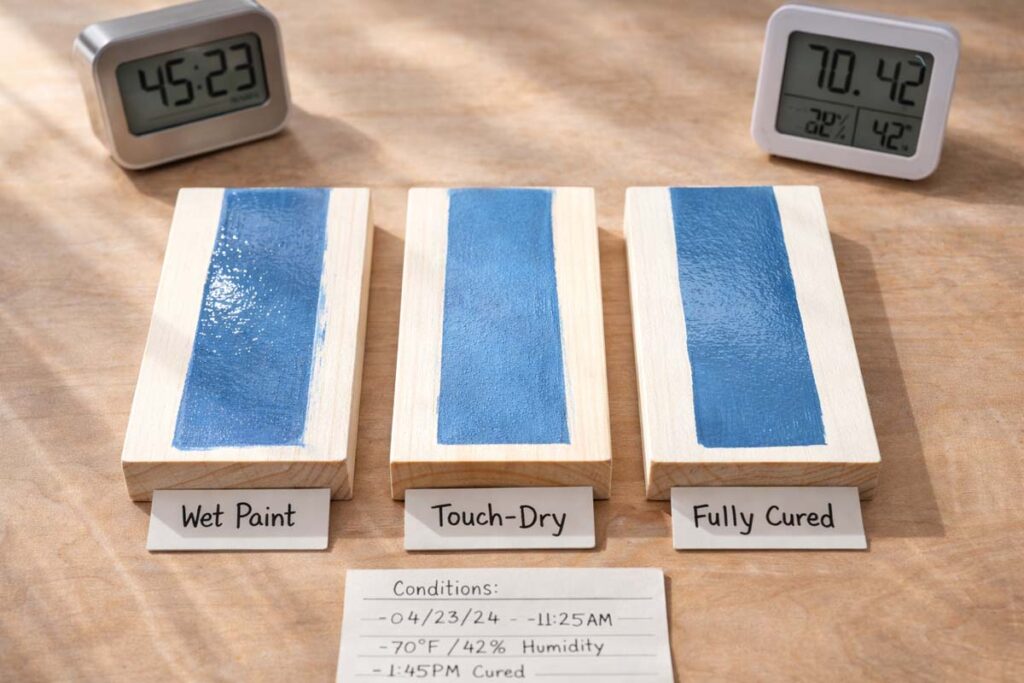
One more shop reality: temperature controls whether coalescence happens correctly. GOLDEN’s technical notes warn that temperatures below 49°F (9°C) prevent proper coalescence and can lead to cracking, poor adhesion, or a powdery film.
What Acrylic Craft Paint sticks to (and what needs prep)
Acrylic craft paint bonds best to clean, slightly textured, non-oily surfaces. Porous materials like unfinished wood and paper give it “tooth,” so the film grips well. Smooth plastics, glossy finishes, and slick metals need abrasion or a bonding primer.
GOLDEN’s guidance for acrylic mediums is direct: abrade nonabsorbent surfaces (metals, glass, plastics, oil-based paints) to improve adhesion.
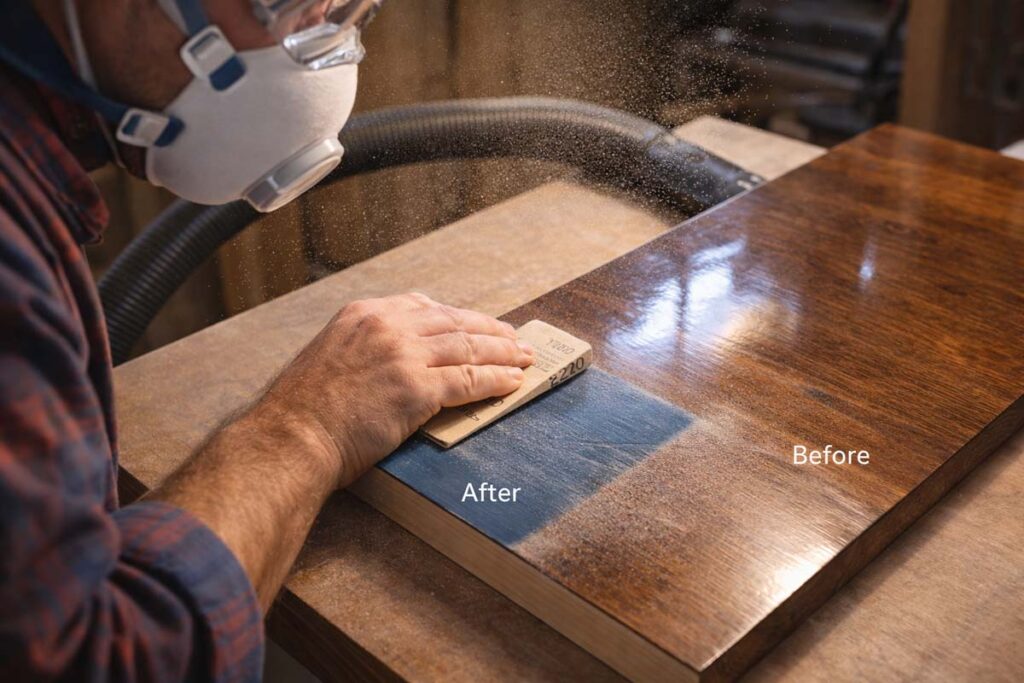
On wood projects, I treat adhesion like a three-part job: cleanliness, tooth, and uniform absorbency. If your tray sign has end grain or soft pine, sanding and priming do more for the final look than a fancy brush.
If brush marks are your recurring enemy, use my “thin coats and level it” approach and match your tools to the paint—this walkthrough on getting a smooth painted finish without brush marks helps you dial that in: get a smooth painted finish without brush marks.
When to use Acrylic Craft Paint
Acrylic craft paint earns its keep when you want fast color, easy cleanup, and reliable coverage on indoor pieces.
Good use cases in a wood shop:
- Tiered tray signs, minis, and seasonal cutouts
- Basecoats under stencils and vinyl masks
- Touch-up color on decorative trim and routed letters
- Quick test panels to decide a palette before committing to a full build
- Kids’ and classroom projects where water cleanup matters
Because it dries by water loss and film formation, it supports layering well—thin coats stack faster than heavy coats.
When to avoid Acrylic Craft Paint (or plan for a topcoat)
Acrylic craft paint is a solid decorative coating, but it isn’t a magic shield.
Skip it—or protect it carefully—when you expect:
- Standing water, frequent washing, or outdoor exposure (rain, sun, freeze/thaw)
- High abrasion (constant sliding, stacking, or metal-on-paint contact)
- Food-contact surfaces unless you’re using a finish system rated for that use and fully cured (and even then, follow product labeling)
- Cold-weather painting where the surface drops below ~49°F/9°C during drying, which risks film failure
Acrylic films become more stable after coalescence and continued drying, but “dry to touch” is not the same as “ready for hard service.”
Reviews of the 10 Best Acrylic Craft Paints
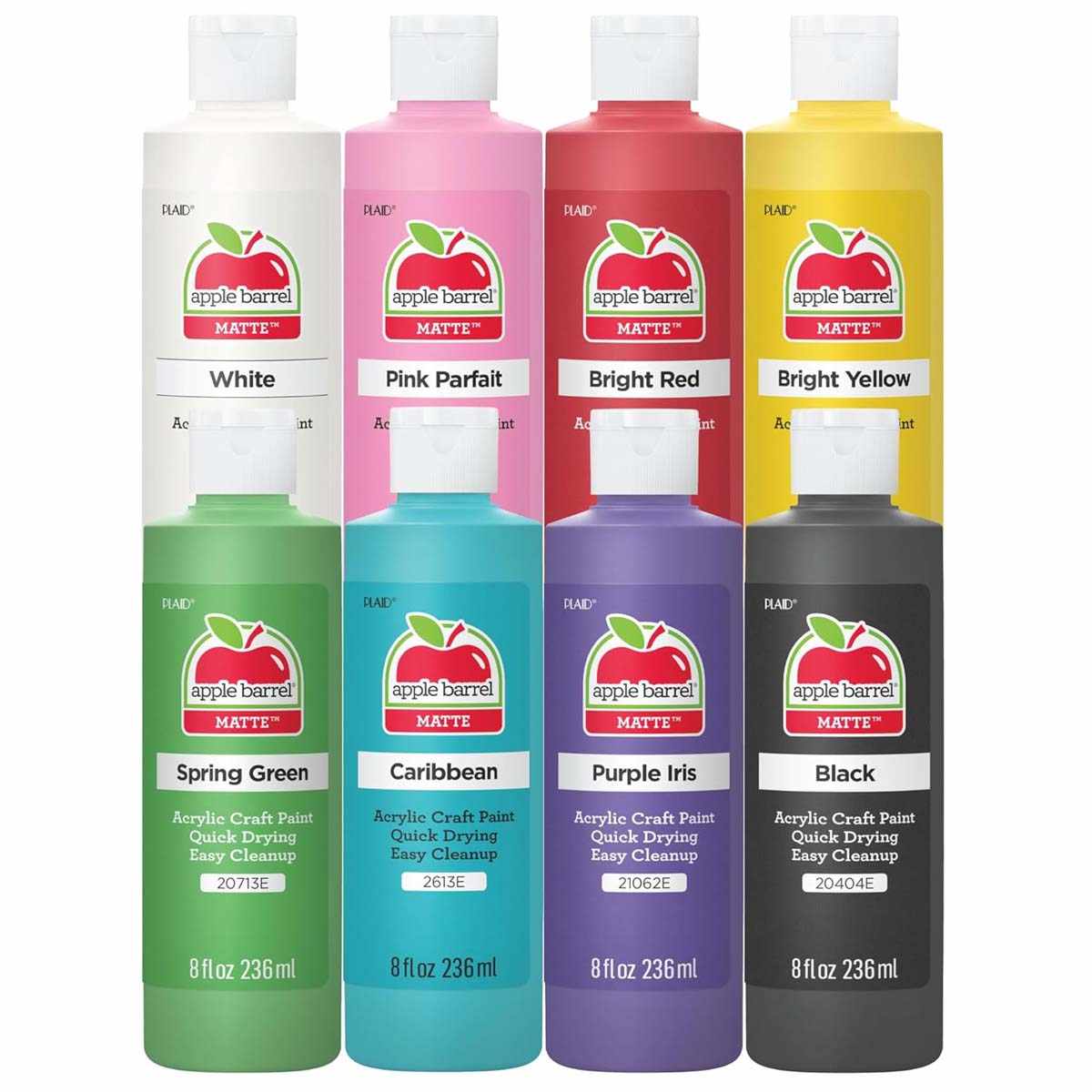
Apple Barrel Acrylic Craft Paint Set 8 Fl Oz
Big-Bottle Matte Acrylic Paint for Crafts
You get larger bottles in core colors, so you spend less time refilling small 2 oz paints. It’s water-based and non-toxic, and it cleans up with soap and water while wet—great for fast production runs on wood, paper, and canvas.
$23.36 at AmazonBest for: batch projects, classroom bins, large wood signs.
Finish & size: matte; eight 8 oz bottles (64 oz total).
It’s not waterproof and lists not water resistant, so handled décor needs a clear topcoat.
Specifications
- Paint type: Acrylic
- Finish: Matte
- Pack: 8 bottles, 8 oz each
- Use: Interior
- Surfaces: Wood, paper, canvas
Pros
- Large bottles stretch further
- Easy cleanup while wet
- Bright, useful staple colors
- Made in USA
Cons
- Not water resistant
Apple Barrel Acrylic Craft Paint Set 2 fl oz
Starter 2 Oz Craft Paint Set for Stencils
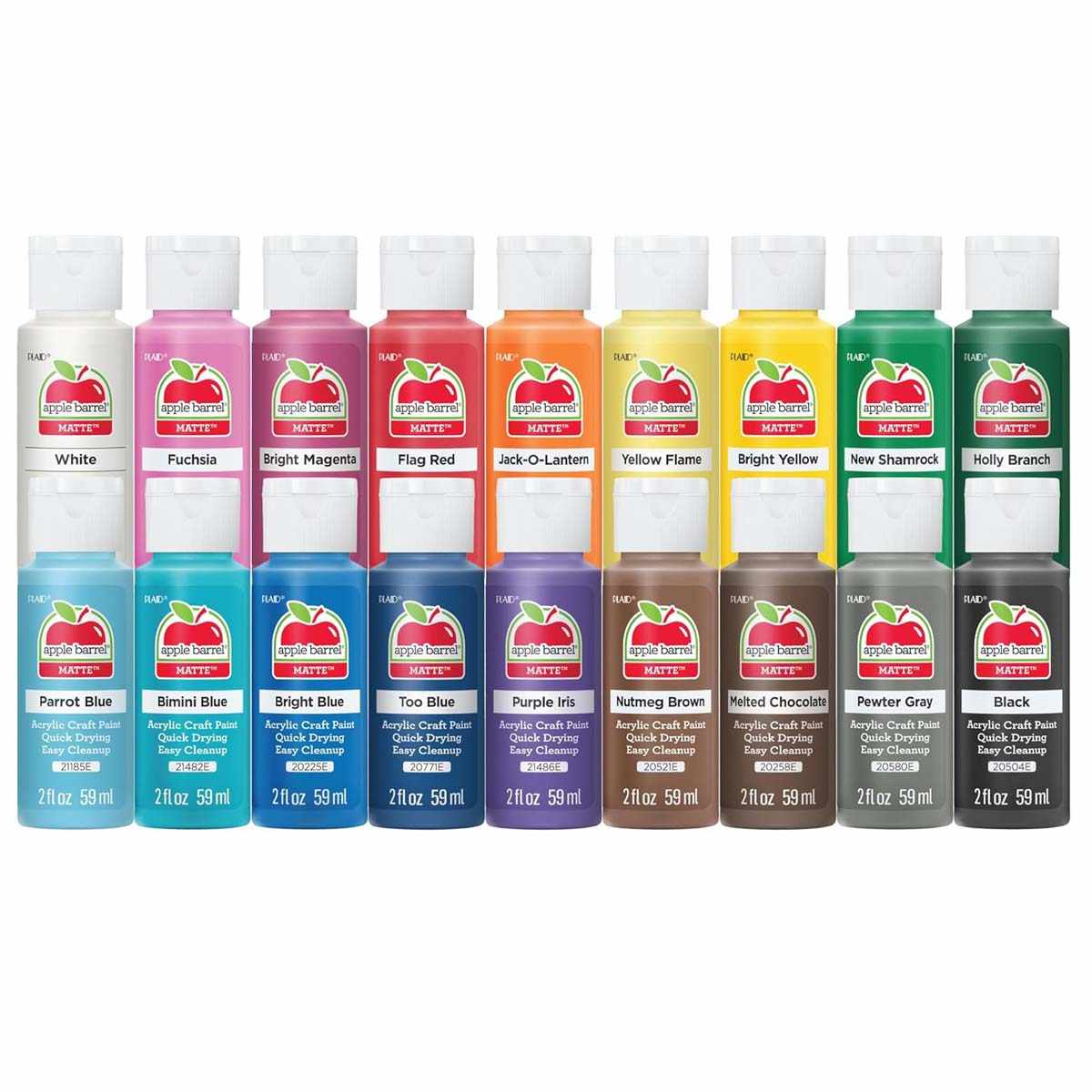
The 2 oz size matches how most crafters actually paint—small batches, lots of colors, less drying-out in storage. The set covers neutrals and brights, and the paint is formulated for brushing, stamping, stenciling, and sponging on wood, paper, canvas, and more.
$22.24 at AmazonBest for: stenciling, small décor, color variety without waste.
Finish & size: matte; eighteen 2 oz bottles (36 oz total).
Matte craft acrylic often needs two coats on raw wood unless you prime first.
Specifications
- Paint type: Acrylic
- Finish: Matte
- Pack: 18 colors, 2 oz each
- Use: Indoor/interior
- Surfaces: Wood, paper, canvas, Styrofoam
Pros
- Great color spread
- Good for detailed techniques
- Easy soap-and-water cleanup
- Made in USA
Cons
- Coverage varies by color
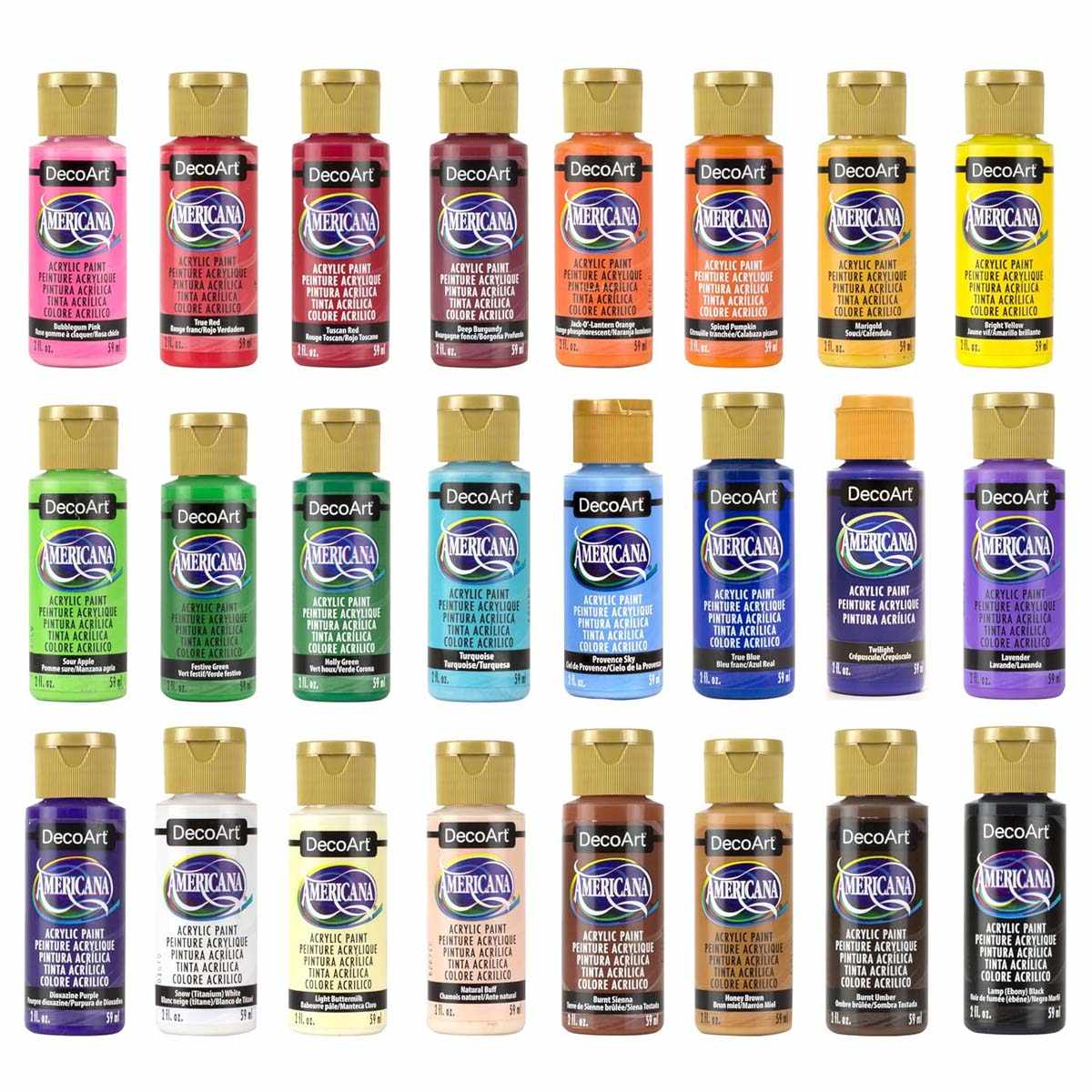
DecoArt Americana Acrylic Paint Set
Premium Water-Based Acrylic Paint for Smooth Coverage
This set is built like a real “do-most-things” palette: warm/cool primaries, useful earth tones, and strong darks. The brand calls out rich pigmentation and smooth, even coverage across wood, paper, canvas, and terra cotta—ideal when you want predictable layering and less streaking. It’s water-based, made in the USA, and designed to pair with clear coats like Duraclear or gloss glaze when you need protection.
$34.64 at AmazonBest for: smoother brushing, blending, and consistent color mixing.
Finish & size: matte; twenty-four 2 oz bottles (48 oz total).
Matte durability still depends on prep and sealing on handled items.
Specifications
- Paint type: Acrylic
- Finish: Matte
- Pack: 24 colors, 2 oz each
- Use: Interior
- Surfaces: Wood, paper, canvas, terra cotta
Pros
- Balanced 24-color palette
- Good for layering/blending
- Clean water cleanup
- Made in USA
Cons
- Needs topcoat for heavy handling
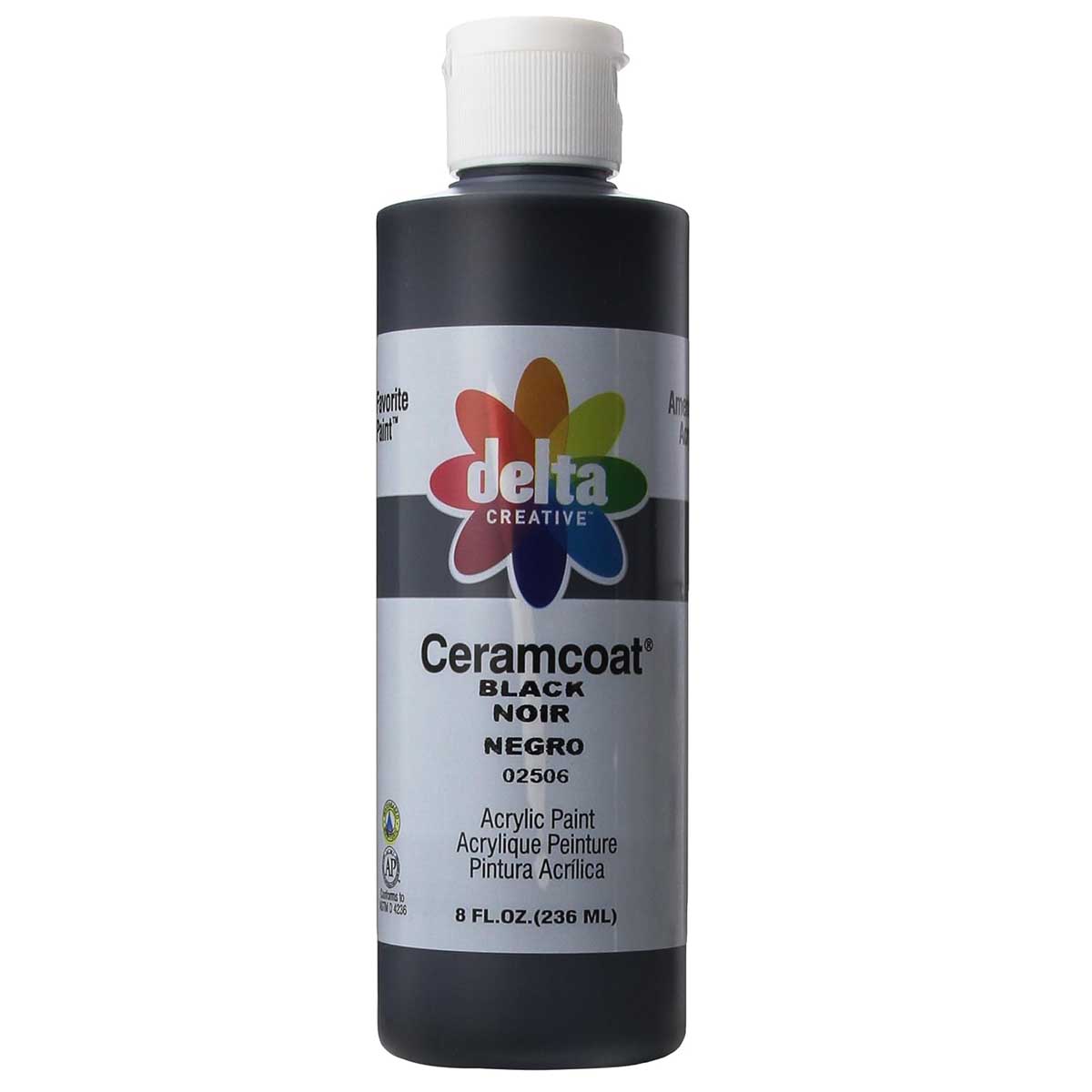
Delta Creative Ceramcoat Acrylic Paint (8 oz)
Opaque Quick-Drying Paint for Basecoats
When you paint signs, trays, or décor, black is the color you burn through. Ceramcoat’s “rich and creamy” formula targets excellent coverage for basecoating and stenciling, which helps edges stay crisp instead of patchy. It’s water-based, non-toxic, AP certified, and made in the USA—good signals for home shops and kids’ craft time.
$9.70 at AmazonBest for: bold basecoats, stenciling, and decorative painting where black matters.
Finish & size: listed as opaque black; bottle size shown 8 oz.
The listing has conflicting size notes (8 oz vs “contains one 2 oz bottle”), so verify the bottle size before ordering.
Specifications
- Paint type: Acrylic (Ceramcoat line)
- Color: Black (opaque)
- Use: Interior
- Finish: Not clearly specified
- Safety: AP non-toxic
Pros
- Strong black for coverage
- Great for stencils/basecoats
- Water-based cleanup
- AP certified
Cons
- Size details conflict
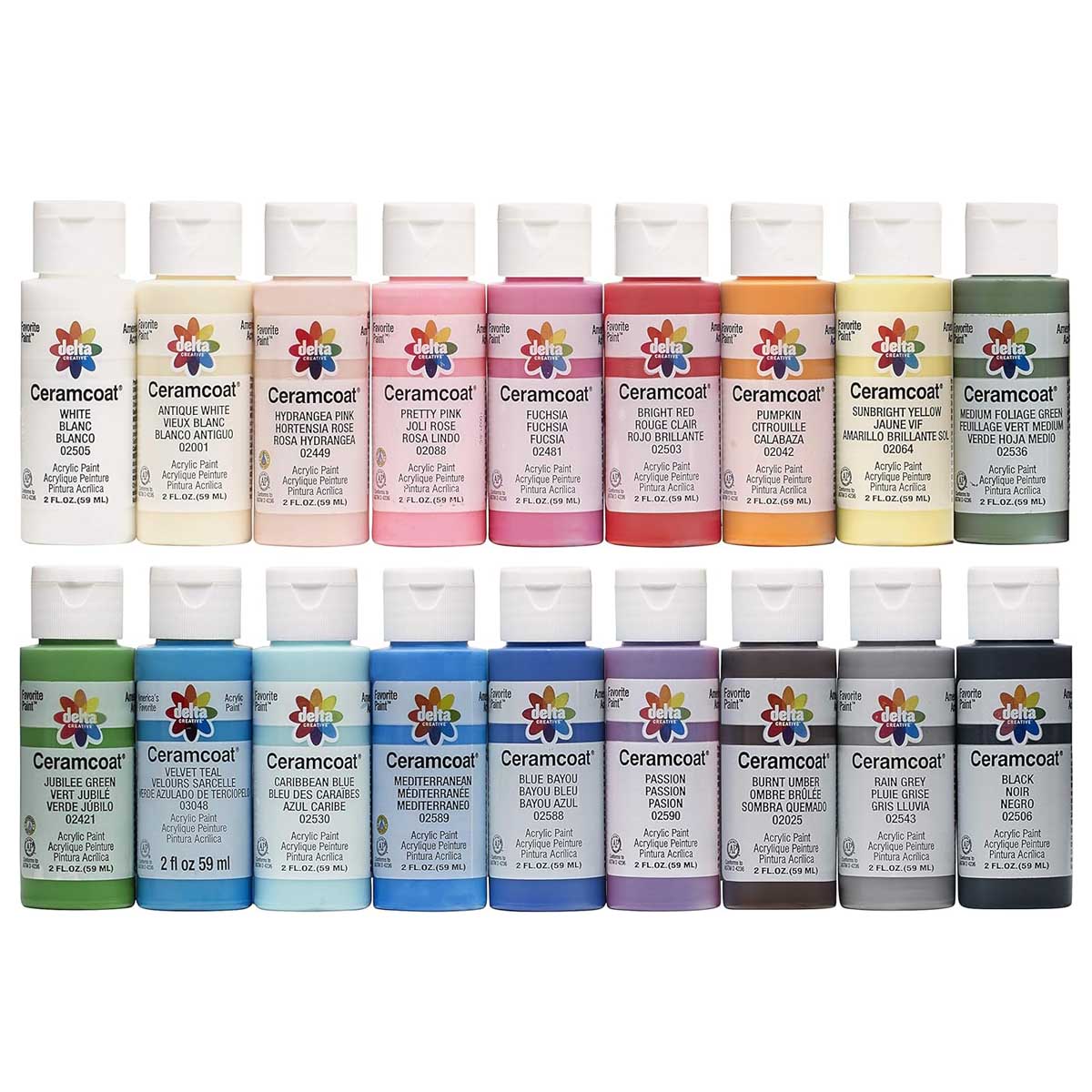
Delta Creative 18 Ceramcoat Acrylic Paint Set
Non-Toxic Craft Paint Variety Pack
Ceramcoat is a great pick for decorative painting because it’s creamy, glides on smoothly, and is easy to control with a brush or sponge. This set focuses on practical “top colors,” including strong whites, reds, blues, greens, and useful neutrals—exactly what you need for tray décor and stencil work. It’s water-based, AP certified non-toxic, and made in the USA.
$23.17 at AmazonBest for: home décor palettes, seasonal signs, and repeatable color schemes.
Finish & size: matte; eighteen 2 oz bottles.
It’s listed as not waterproof and only “water repellent,” so sealing matters for trays and frequently touched pieces.
Specifications
- Paint type: Acrylic
- Finish: Matte
- Pack: 18 colors, 2 oz each
- Use: Interior/exterior listed
- Surfaces: Wood, paper (and more in description)
Pros
- Smooth control for detail work
- Practical color selection
- AP certified non-toxic
- Made in USA
Cons
- Needs sealer for durability
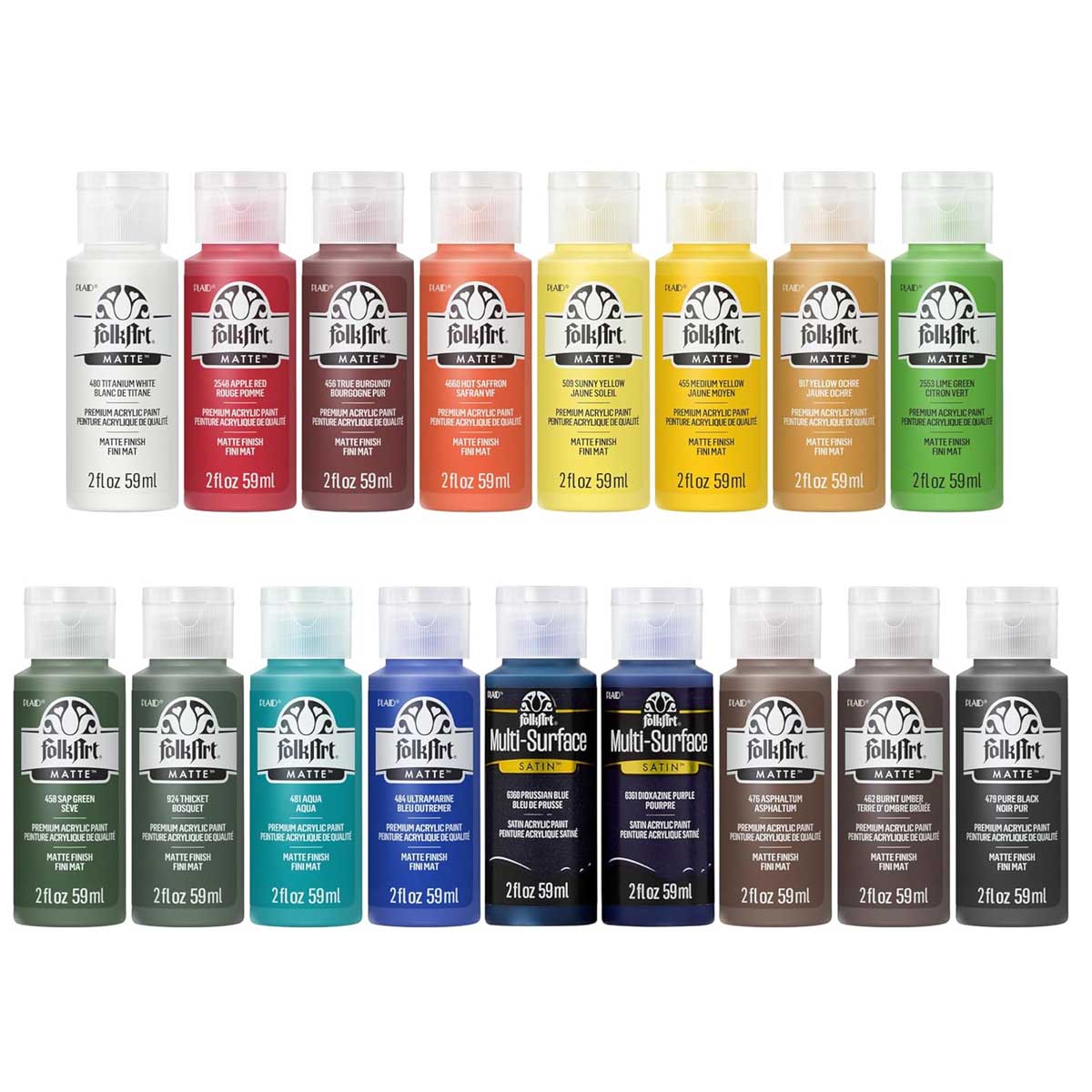
FolkArt Art Talk with Andy Acrylic Paint Set
Artist-Style Acrylic Paint for Wood Crafts
This kit is built around a curated palette from a resident artist, which helps beginners avoid random colors that don’t mix well. FolkArt positions it as “artist quality,” and the set includes a free YouTube lesson series with downloadable patterns—useful if you want structured practice rather than trial-and-error. It’s water-based and non-toxic, and it targets coverage plus blendability on wood projects.
$35.99 at AmazonBest for: learning techniques, blending, shading, and guided projects.
Finish & size: mostly matte; seventeen 2 oz bottles.
It’s still a craft acrylic system—seal anything that gets handled or cleaned.
Specifications
- Paint type: Acrylic
- Finish: Matte (plus some multi-surface colors)
- Pack: 17 colors, 2 oz each
- Use: Interior
- Surface: Wood
Pros
- Curated palette helps mixing
- Great for blending/shading
- Includes guided lessons
- Non-toxic
Cons
- Sealer recommended for wear
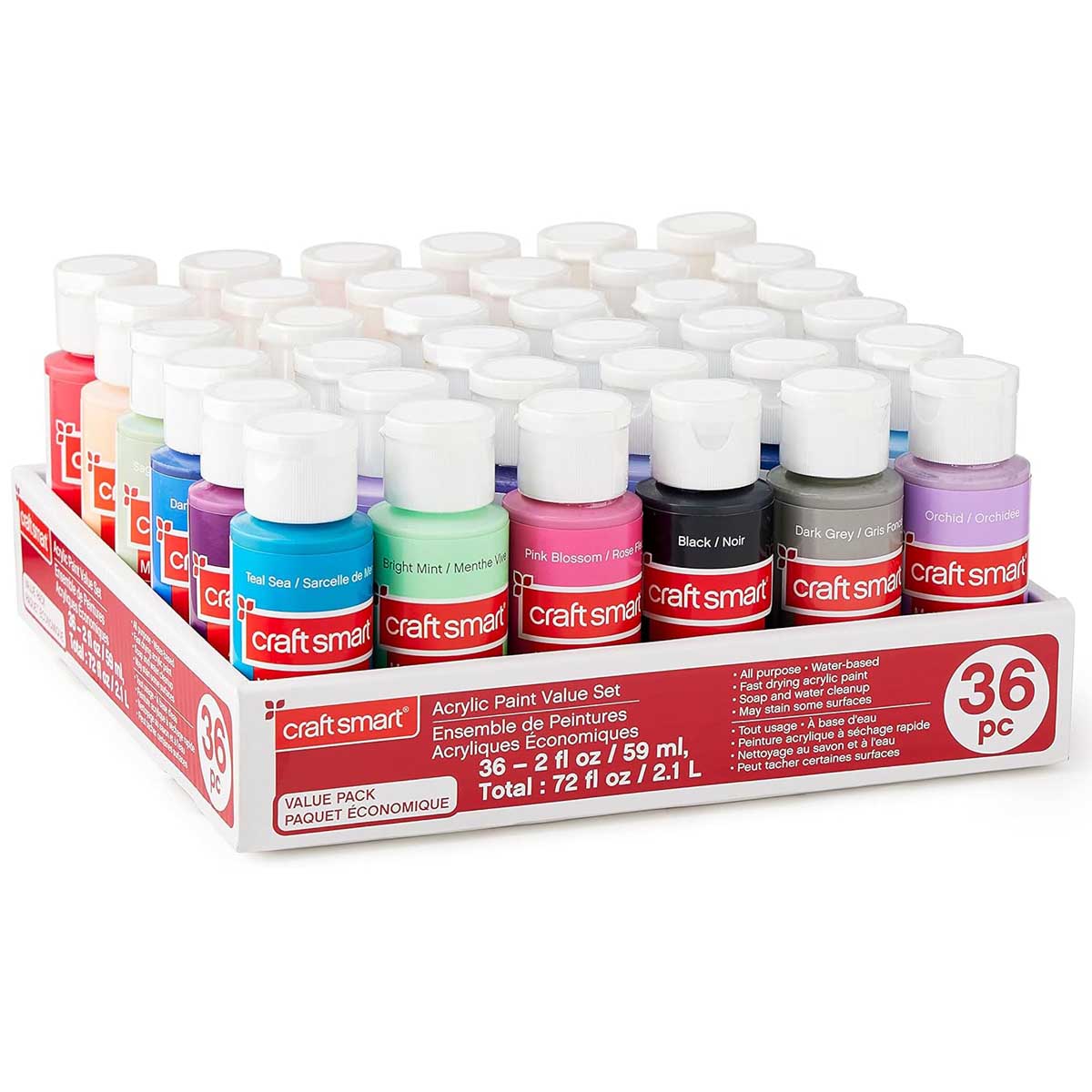
Craft Smart 36 Assorted Acrylic Paint Set
Value Acrylic Paint Set for Big Color Variety
This set is about breadth: 36 colors means fewer “mixing emergencies” mid-project, and the paint is described as fast-drying, intermixable, and easy-clean while wet. It’s designed for common craft surfaces—wood, canvas, paper, and more—so it works well for signs, cutouts, and practice boards.
$23.49 at AmazonBest for: classrooms, kids’ crafts, bulk color options on a budget.
Finish & size: matte; thirty-six 2 oz bottles (72 oz total).
Value paint can vary by color for opacity, so expect extra coats with lighter hues and always test stencils first.
Specifications
- Paint type: Acrylic
- Finish: Matte
- Pack: 36 colors, 2 oz each
- Form: Liquid
- Surfaces: Wood, canvas, paper
Pros
- Huge color range
- Good for practice and volume work
- Fast drying for layering
- Easy cleanup
Cons
- Opacity can vary by shade
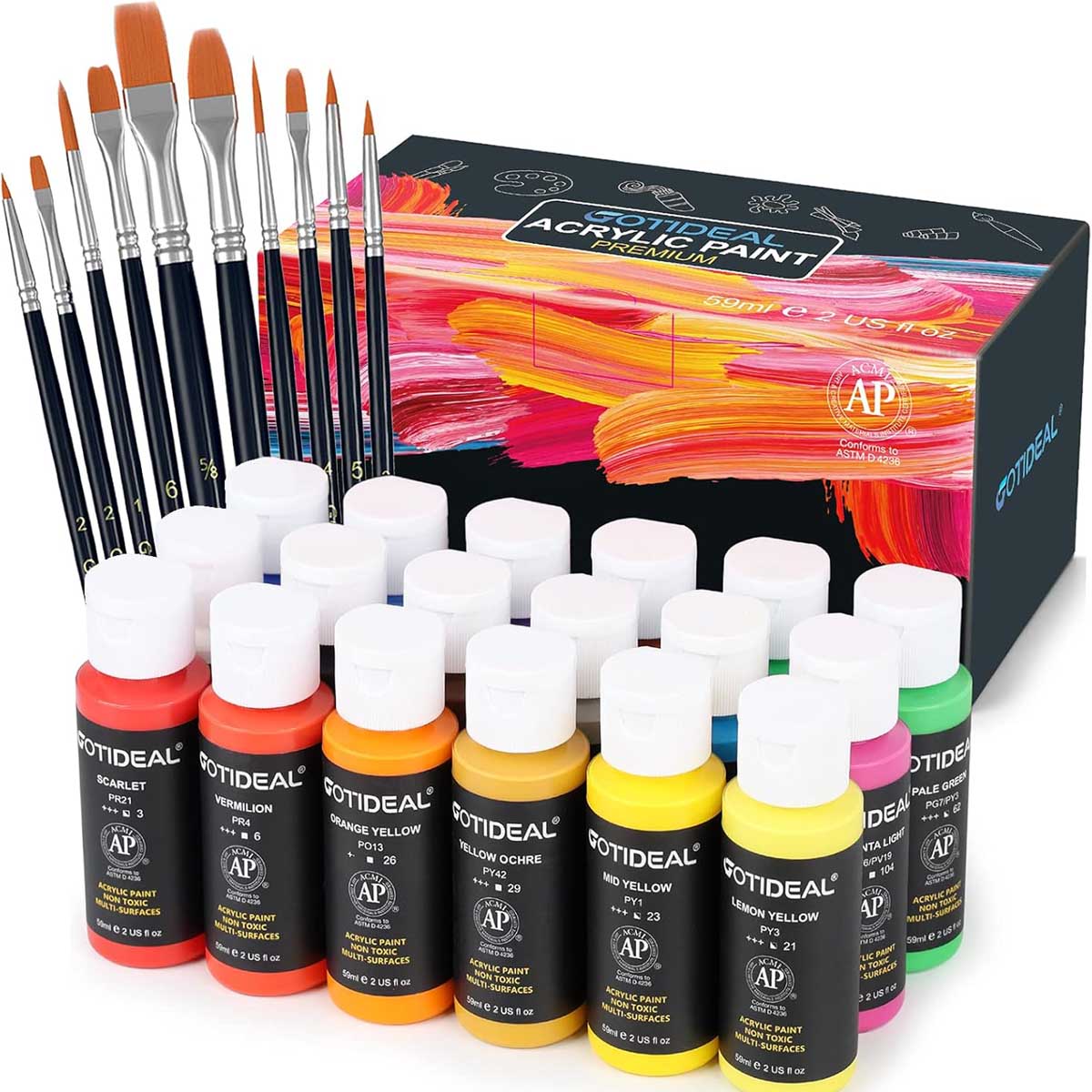
GOTIDEAL Acrylic Paint Set
All-Purpose Multi-Surface Acrylic Paint
The set targets “artist grade” positioning with a creamy consistency, strong pigments, and quick drying—helpful when you want coverage on both broad areas and fine details. It lists broad surface compatibility, including wood, ceramics, metal, plastic, and fabric-style projects, which is convenient for gift crafting and holiday décor. It’s non-toxic and claims AP/ASTM D-4236 and EN71-3 compliance—good for family use.
$19.99 at AmazonBest for: mixed-material crafts (wood + ceramic + rock painting).
Finish & size: matte; eighteen 2 oz bottles plus brush.
“Water resistant” isn’t the same as waterproof; plan a compatible clear coat for outdoor or washed items.
Specifications
- Paint type: Acrylic
- Finish: Matte
- Pack: 18 colors, 2 oz each
- Use: Interior/exterior listed
- Includes: Brush
Pros
- Wide surface range
- Strong pigment focus
- Quick drying for layers
- Non-toxic certifications listed
Cons
- Seal for moisture-heavy use
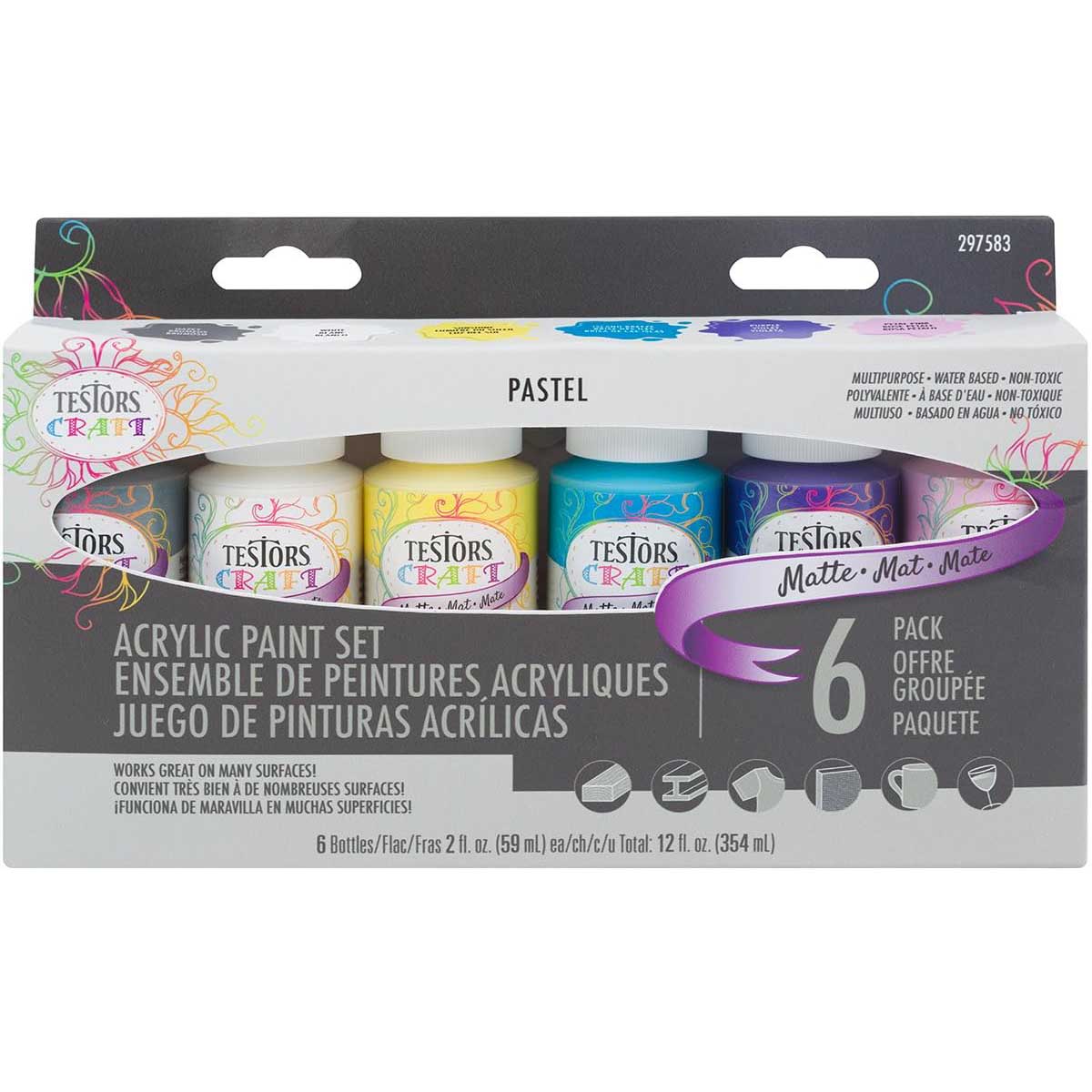
Testors 297583 Craft Acrylic Paint Set
Matte Water-Based Acrylic Paint for Mixed Surfaces
Testors emphasizes a “durable permanent coating” across a wide surface list—wood, metal, fabric, glass, canvas, and paper—which makes this a handy small set for detail work and accent colors. The flip-cap style is convenient when you paint in short sessions and don’t want messy lids. Cleanup stays easy while wet with soap and water, and it’s made in the USA.
$12.04 at AmazonBest for: small curated palettes, metal/fabric accents, on-trend colors.
Finish & size: matte; six 2 oz bottles (12 oz total).
With only six colors, it’s not the best pick if you need a full mixing library.
Specifications
- Paint type: Acrylic
- Finish: Matte
- Pack: 6 colors, 2 oz each
- Use: Interior/exterior listed
- Surfaces: Wood, metal, fabric, glass, paper
Pros
- Works on many surfaces
- Handy flip-cap design
- Good coverage focus
- Made in USA
Cons
- Limited palette size
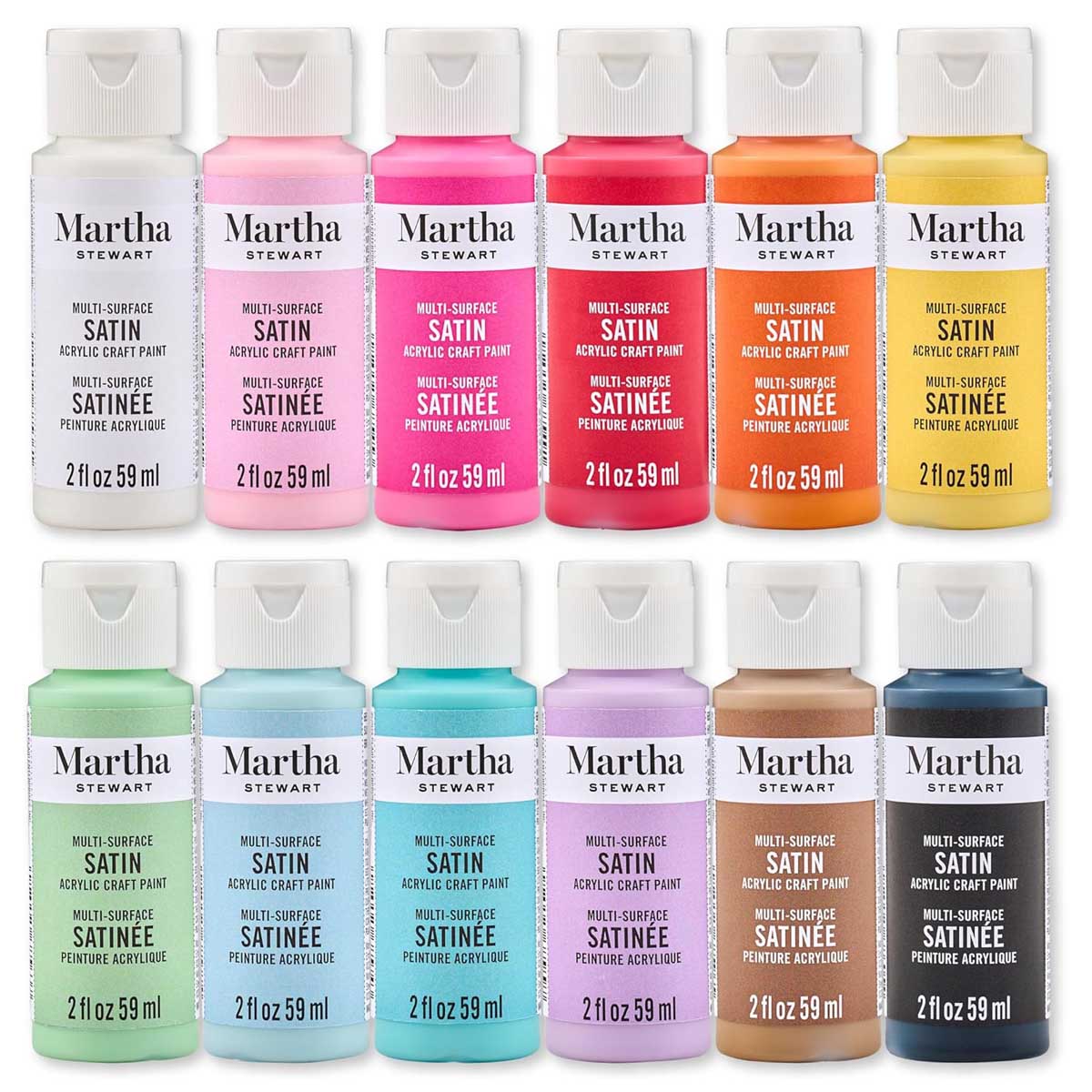
Martha Stewart Multi-Surface Satin Acrylic Paint Set
Washable Satin Acrylic for High-Use Décor
Satin is a smart middle ground: it looks richer than matte and cleans easier, which matters for trays and handled pieces. This set is built for multi-surface use (wood, glass, ceramic, metal, fabric, and more) and is labeled water-based, non-toxic, and indoor/outdoor. The standout claim is dishwasher-safe and machine-washable once cured, which is rare in craft paint sets and useful for certain home items.
$21.10 at AmazonBest for: trays, décor that gets wiped, multi-surface projects.
Finish & size: satin; twelve 2 oz bottles.
“Full cure time” is listed as 1.5 hours—test before washing or heavy use because real-world curing varies by thickness and conditions.
Specifications
- Paint type: Acrylic
- Finish: Satin
- Pack: 12 colors, 2 oz each
- Use: Interior/exterior
- Feature: Washable once cured
Pros
- Satin wipes cleaner than matte
- Broad multi-surface list
- Washable claim after cure
- Non-toxic, water-based
Cons
- Cure-time claim may vary in practice
How to Choose the Right One: Acrylic Craft Paint Buying Guide
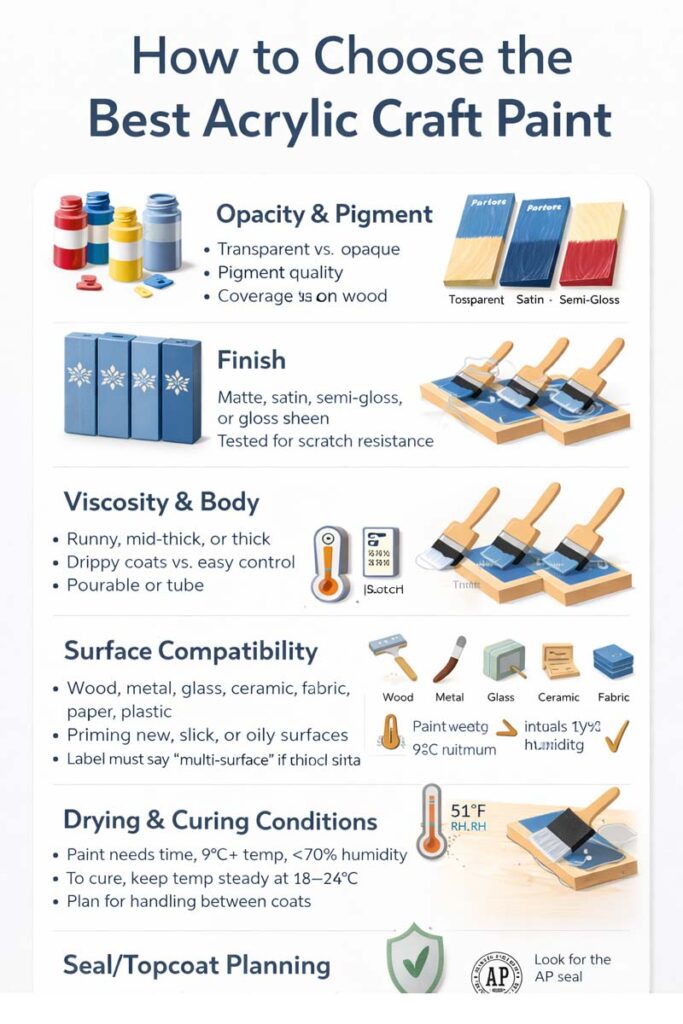
Acrylic craft paint quality depends on pigment load, binder strength, finish, and intended surface. Start by matching the paint to the job.
Pick the sheen for the function. Matte hides brush marks and looks good on rustic signs, but it scuffs easier. Satin or gloss wipes cleaner and shows color depth better on trays and décor that gets handled.
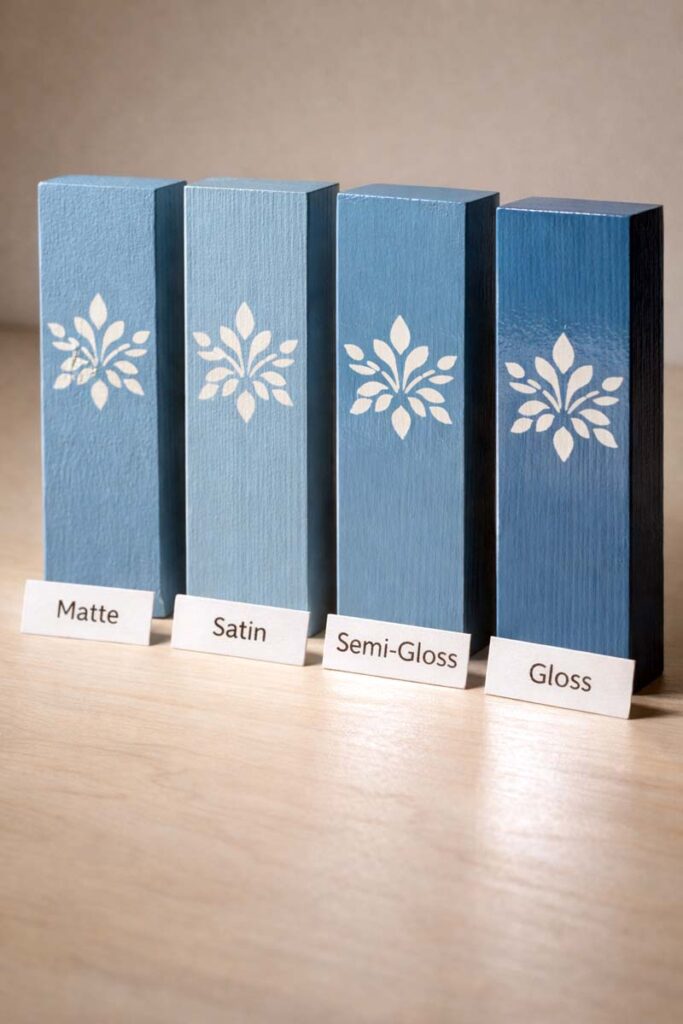
Check opacity and pigmentation. Look for “opaque” labels for stencils, lettering, and bright coverage. Transparent or “sheer” colors work for glazing effects but need more coats. If you need one-coat coverage, buy a line known for higher pigment load rather than thinning cheap paint and piling layers.
Choose a body that matches your application. Thin craft paints flow well for brushing and detail work. Heavy body or “multi-surface” formulas often build thicker and cover slicker materials better. For smooth finishes, you want paint that levels without dragging—if it strings or feels gummy, it will leave texture.
Match the formula to the surface. Unfinished wood and paper accept most craft acrylics. Glass, metal, glossy laminate, and plastic need either a true multi-surface acrylic or a bonding primer plus light sanding. If the label doesn’t list your surface, assume you need prep.
Plan the topcoat from day one. If the piece will be handled, washed, or used near moisture, pick a paint system that accepts a compatible clear coat (water-based acrylic, polyurethane, or a product the manufacturer recommends). Avoid mixing random clears without a test board.
Use safety labels as a filter. Prefer paints with the ACMI AP seal (especially for kids’ projects) and read the SDS if you’re sensitive to additives or preservatives.
Getting a durable finish on wood projects
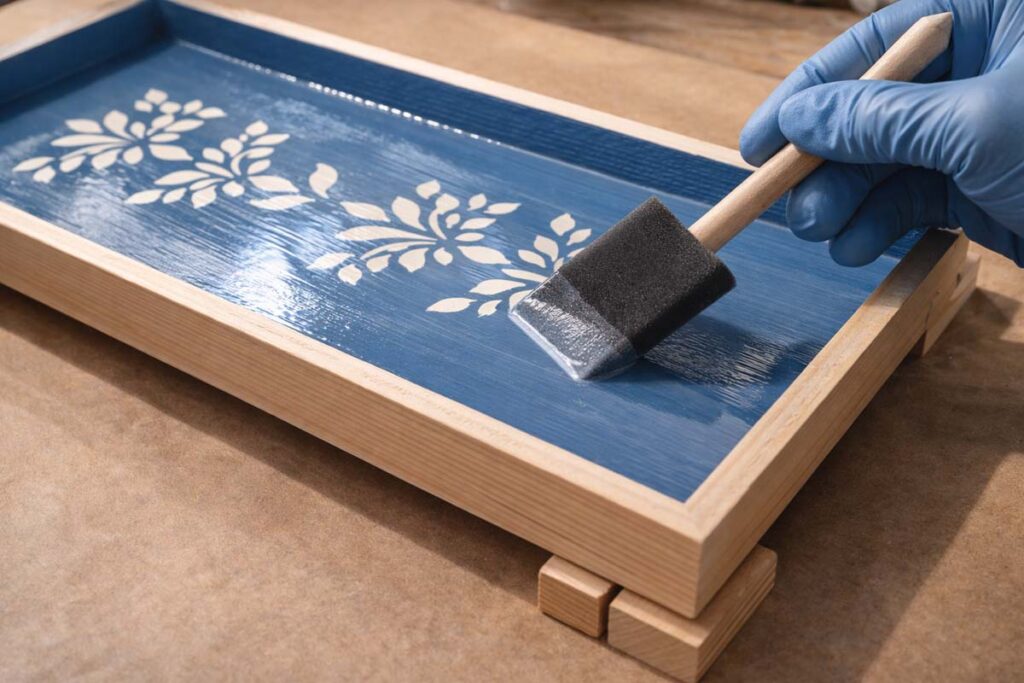
This is the workflow I lean on for tray décor, small signs, and anything that’s going to be handled.
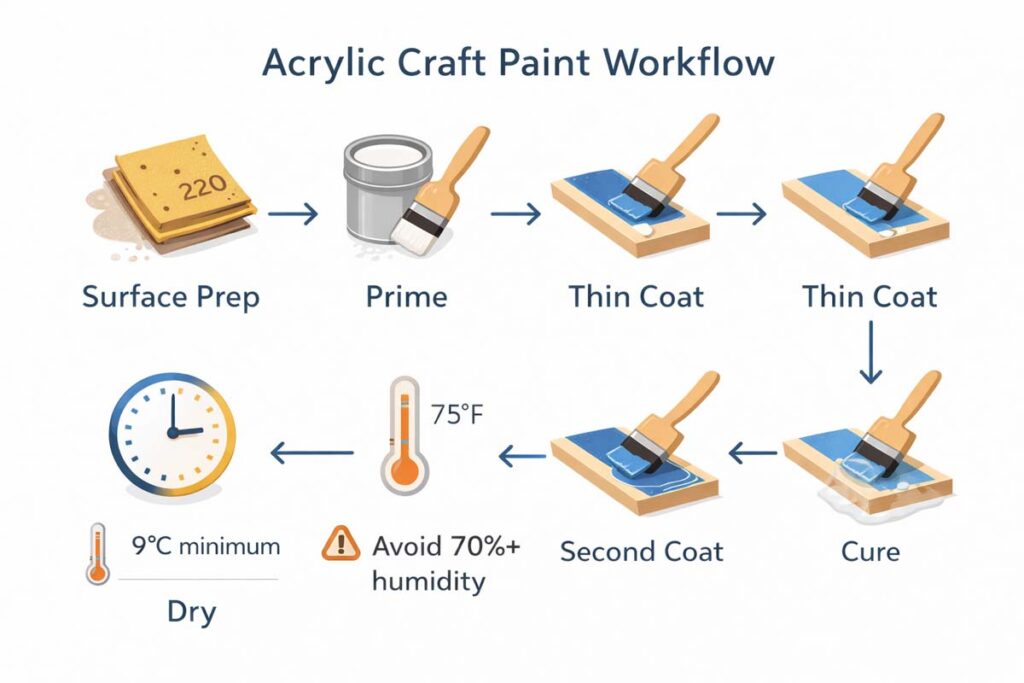
- Sand for tooth and uniformity. Most projects behave well after 150–220 grit, with attention to edges and end grain. If end grain keeps looking fuzzy, this guide on sanding end grain smooth helps you control it: sand end grain smooth.
- Clean the surface. Vacuum dust, then wipe with a slightly damp cloth or tack cloth suited to your finish schedule.
- Prime when the wood is blotchy or resinous. Pine and some plywoods telegraph through paint unless you block it.
- Apply thin coats. Acrylics dry by water leaving the film; thick coats slow that process and trap softness underneath.
- Keep the temperature in the safe zone. Aim around 70–90°F during drying and curing, and avoid surfaces below 49°F/9°C so the film can coalesce properly.
- Let the paint reach a stable state before topcoating. Acrylic films can look dry quickly, but thick layers can take far longer to reach a stable, coalesced state.
- Seal for handling and cleanability. For trays and décor that get touched, a clear coat turns “craft paint” into a more serviceable finish system.
If you’ve ever had acrylic stay rubbery, that’s usually a thickness/airflow/humidity problem or a rushed topcoat. This step-by-step fix is built around wood projects: seal acrylic paint on wood so it doesn’t stay tacky.
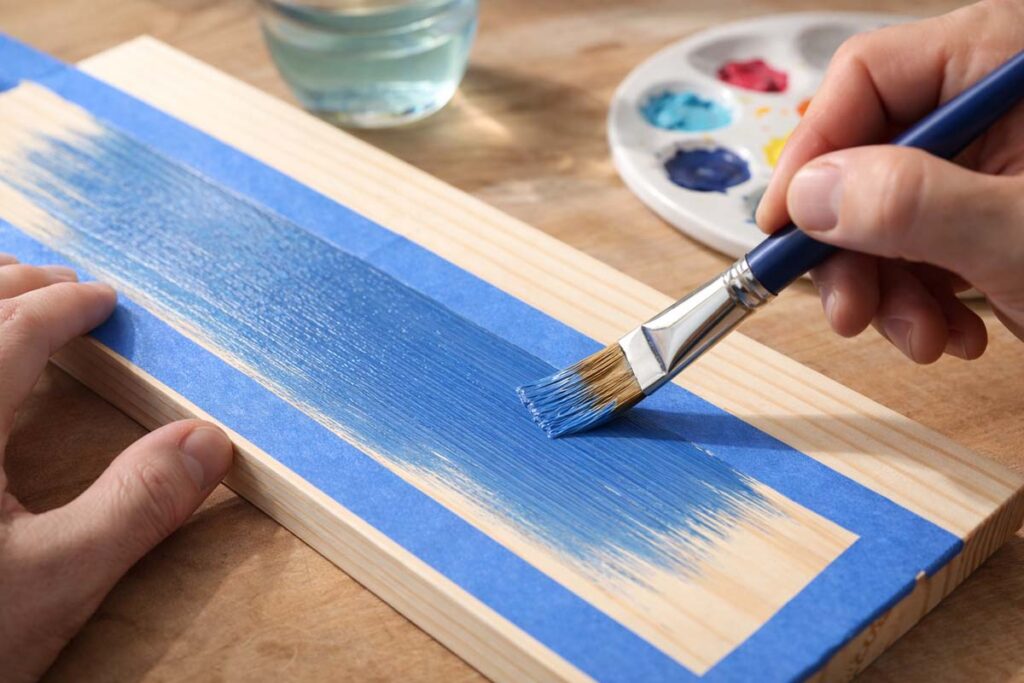
For serving trays specifically, you’ll also want to think about how you clean the piece and what that means for the finish stack: seal a wooden serving tray.
Common problems and practical fixes
Tacky paint that won’t harden often comes from heavy coats, high humidity, or topcoating before the film stabilizes. GOLDEN notes that even after extended periods, acrylic films can retain a measurable fraction of volatiles, and humidity pushes films to hold moisture longer.
Fix: strip back to stable layers if needed, then rebuild with thinner coats and better airflow.
Poor adhesion or peeling usually traces back to glossy surfaces, oils, or cold curing. Abrade slick surfaces and keep temperatures above the minimum film-forming range.
Cloudy clear coats show up when moisture gets trapped or when incompatible products get stacked too fast. If your topcoat hazes, this troubleshooting guide saves a lot of rework: why clear coats get cloudy and how to fix them.
Safety, labeling, and cleanup
Most craft acrylics are marketed as low-odor and easy to use, but safety still starts with labels and ventilation.
Plaid’s Apple Barrel Matte Acrylic Craft Paint SDS (dated 6/2/2022) lists no GHS label elements and no hazardous ingredients in its composition section, and it provides Poison Control contact information for health emergencies.
When you’re buying for kids, classrooms, or sensitive users, look for recognized labeling programs. The Art & Creative Materials Institute (ACMI) explains that the AP (Approved Product) Seal indicates materials certified by toxicological evaluation to contain no materials in sufficient quantities to be toxic or injurious when used as intended, including for children.
In the U.S., federal guidance also ties art material labeling to chronic hazard rules. The U.S. Consumer Product Safety Commission summarizes how LHAMA amended federal law to require labeling of chronically hazardous art materials, with requirements codified in regulation.
Basic shop habits that reduce risk:
- Ventilate when you’re painting, sanding between coats, or spraying topcoats.
- Wash hands before eating or drinking in the shop.
- Keep paint out of reach of small kids unless you’re supervising closely and the product is labeled for that use.
FAQs about Acrylic Craft Paint

Is craft smart acrylic paint non toxic?
Many Craft Smart acrylic paints are marketed as non-toxic, and the Plaid SDS for CraftSmart Multi-Surface Premium Satin Acrylic Paint lists no GHS label elements and no hazardous ingredients. Still, don’t ingest it.
What is acrylic craft paint used for?
Acrylic craft paint is used for quick, colorful finishes on small projects like wood signs, tray décor, paper crafts, and simple ceramics. It’s popular for basecoats, stenciling, and touch-ups because cleanup is easy.
Is acrylic craft paint the same as artist acrylic paint?
Not exactly. Both use an acrylic binder, but artist acrylics usually deliver higher pigment load, better lightfast ratings, and more consistent viscosity. Craft acrylics focus on affordability and general-purpose coverage.
Is acrylic craft paint washable?
Acrylic craft paint is washable with soap and water while it’s still wet, but once it dries it becomes water-resistant, so you’ll usually need scrubbing (or a remover) unless it’s sealed and you’re just wiping the surface.
Do I need to seal acrylic craft paint on wood?
Seal it when the piece gets handled, wiped, or sits near moisture—like trays, coasters, or kid projects. For wall décor that won’t be touched, sealing is optional but still improves scuff resistance.
Does acrylic craft paint dry darker than it looks in the bottle?
Often, yes. Acrylics can look lighter when wet and shift slightly darker or duller as they dry because the binder changes how it reflects light. Always dry a test swatch first.
Bottom line
Acrylic craft paint is a water-based acrylic system that dries by evaporation and film coalescence, which makes it fast, forgiving, and easy to clean up. It shines on indoor décor and small wood projects when you prep the surface, keep coats thin, and let the film stabilize before you seal it. When the job involves water, abrasion, cold curing conditions, or heavy handling, your clear coat choice—and your patience between steps—decides whether the finish lasts.