Where to Buy Wooden Dowels: 7 Smart Spots for Perfect Fit
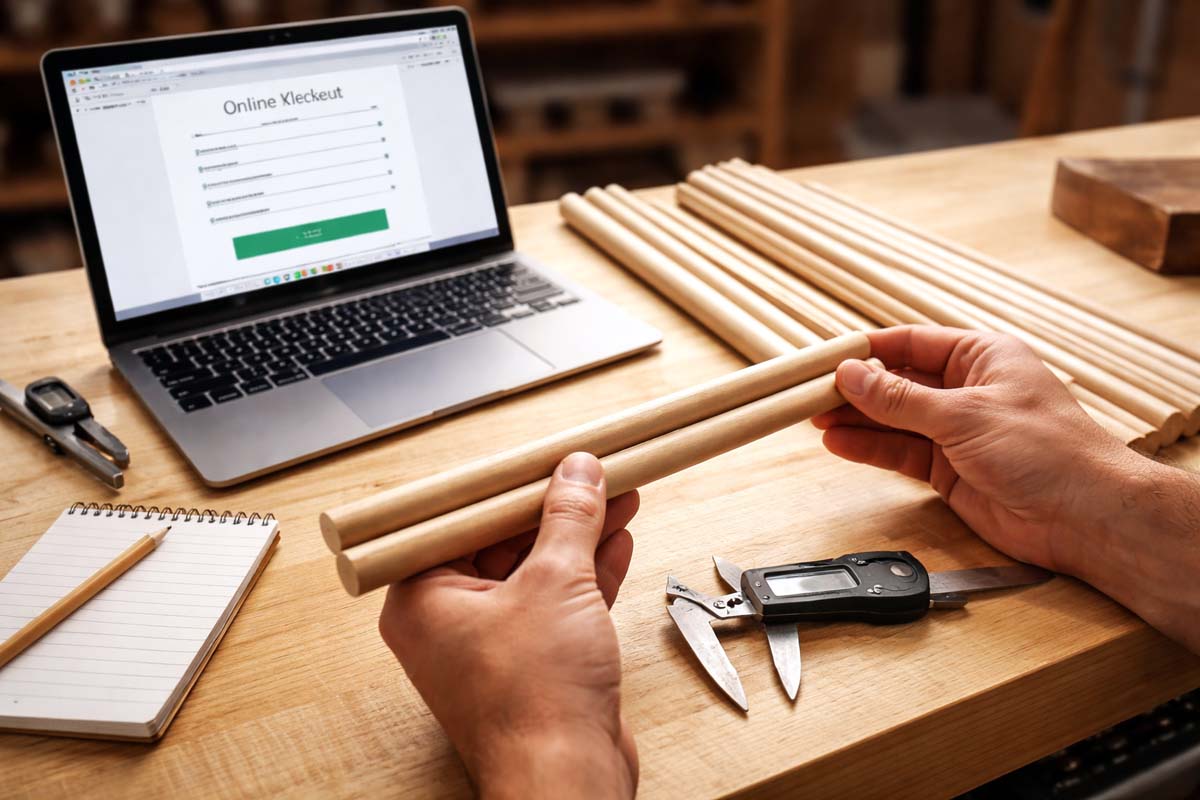
Buy wooden dowels from home centers for common sizes, woodworking retailers for consistent tolerances, hardwood yards for species-matched stock, or reputable online dowel suppliers when you need hardwood, long lengths, or bulk.
This guide breaks down the best places to shop based on what you’re building—dowel-joinery, chair rungs, closet poles, toys, or craft work—and how picky to be about diameter and straightness. It compares big-box stores, woodworking retailers, local hardwood yards, and online dowel manufacturers, then closes with quick, shop-friendly checks so the dowels you bring home fit your holes, take glue well, and stay straight.
Contents Here
- 1 Start with the dowel you actually need
- 2 What “good dowel stock” looks like in plain terms
- 3 Big-box home centers
- 4 Woodworking retailers
- 5 Hardwood yards and local millwork shops
- 6 Where to buy hardwood dowels when species and fit matter
- 7 Online dowel manufacturers and wood-parts suppliers
- 8 Industrial suppliers for joinery dowel pins
- 9 Hobby and craft suppliers
- 10 Marketplaces and “everything stores” online
- 11 Quality checks before you buy
- 12 A buying checklist by project type
- 13 When it’s smarter to make your own dowels
- 14 FAQs on Buy Wooden Dowels
- 15 Bottom line for Buy Wooden Dowels
Start with the dowel you actually need
Woodworkers use “dowel” to mean a few different products, and each one points to a different best place to buy.
- A dowel rod is a long, round rod (often 36″ or 48″) used for legs, rails, closet poles, jigs, toys, and sometimes for making your own joinery pins.
- A dowel pin is a short piece (often 1″–2″ long) meant for joinery. Many are fluted or grooved so glue spreads and air escapes.
- A dowel plug is a short face-grain “button” used to hide screws.
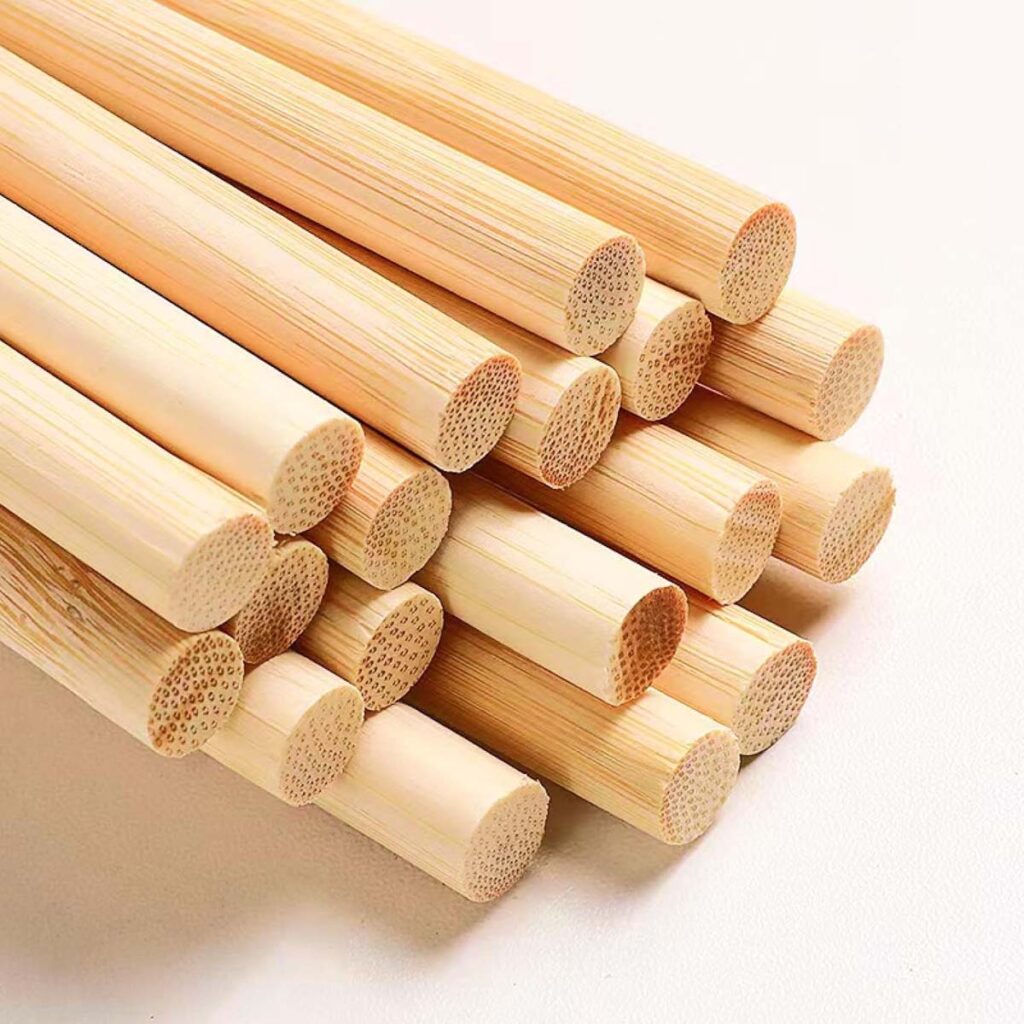
If the project needs a visible dowel (like a chair rung or an exposed peg), species and grain look drive the decision. If the dowel hides inside a joint, straightness and consistent diameter matter more than perfect color match. See my notes on choosing a wood glue that bonds dowel joints reliably.
If you’re deciding between species, read how dowel rods work as alignment pins in joinery so you match the wood to the job.
What “good dowel stock” looks like in plain terms
A good dowel does three things well: it stays straight, it stays close to size, and it stays stable.
- Straightness and stability often start with drying. Atlas Dowel says it kiln-dries dowel lumber to a 7–9% moisture target before turning and sanding, specifically to reduce movement after production.
- Consistent diameter matters because drilled holes and dowels need to match. Rockler lists its birch dowel rods as 36″ long with a diameter tolerance of ±1/64″ (about ±0.016″), and it lists diameters from 1/8″ to 1-1/4″.
- Clear, straight grain matters when the dowel takes bending loads (chair rungs, toy handles, tool handles). Woodcraft describes its 36″ round dowels as straight-grained, smooth sanded, and kiln-dried for stability and straightness.
One more practical point: moisture content is not a guess. The USDA Forest Products Laboratory describes moisture content as a percentage of oven‑dry mass and notes that ASTM D4442 covers four methods of determining moisture content.
(You don’t need to run lab tests on dowels, but it explains why “kiln-dried” and “moisture target” are meaningful specs when a supplier provides them.)
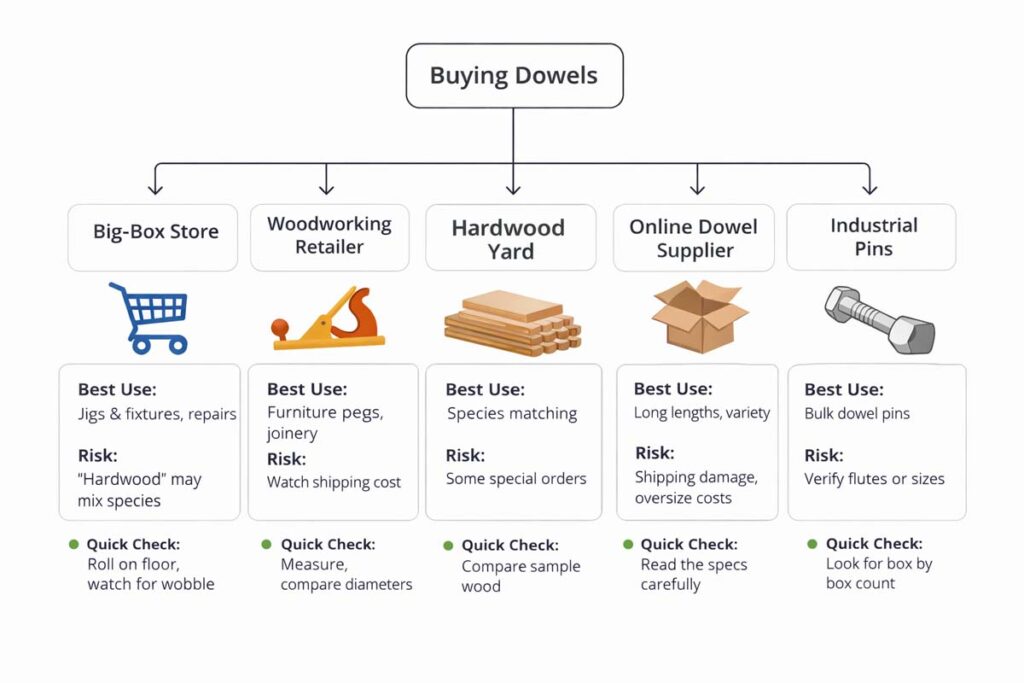
Big-box home centers
Home centers work when the dowel is a simple part and perfection isn’t the goal: shop jigs, paint-grade pieces, quick repairs, kids’ crafts, and closet rods.

You’ll usually see common diameters and common lengths, often 48″ in the rack. Home Depot, for example, sells a 48″ × 1/2″ round dowel listed as aspen in one product line.
What to expect at the big box:
- Best for: same-day pickup, basic sizes, paint/stain-grade rods, closet/utility use.
- Watch for: mixed “hardwood” labeling (sometimes it’s aspen, poplar, birch, or a mix), fuzzy sanding, and pieces that pick up a bend from long rack storage.
Quick in-aisle check: pull the dowel out and roll it on the store floor (or any flat surface). If it wobbles or “hops,” leave it.
Woodworking retailers
Woodworking stores and woodworking-focused websites tend to publish clearer specs, and they carry more joinery-oriented options (including better dowel pins and more hardwood species).
Rockler gives a good example of what “specs you can shop by” look like. Its birch dowel rods are listed as 36″ long, kiln-dried, and held to ±1/64″ tolerance.
Rockler also lists oak dowel rods as 48″ long, with actual diameters varying by ±1/64″, made from mixed red/white oak.
Woodcraft describes its 36″ round dowels as straight-grained and kiln-dried for stability and straightness.
What to expect from woodworking retailers:
- Best for: joinery dowels, furniture parts, predictable sizing, and species like oak/maple/birch.
- Watch for: shipping cost on long lengths if a local store isn’t nearby.
Hardwood yards and local millwork shops
If the project needs a match (oak to oak, maple to maple, walnut to walnut), a hardwood dealer is often the cleanest path.
A hardwood yard can sometimes order dowel stock, but the bigger advantage is material matching. You can bring a cutoff of your project wood and compare color and grain in person. For visible pegs, that saves time at finishing.
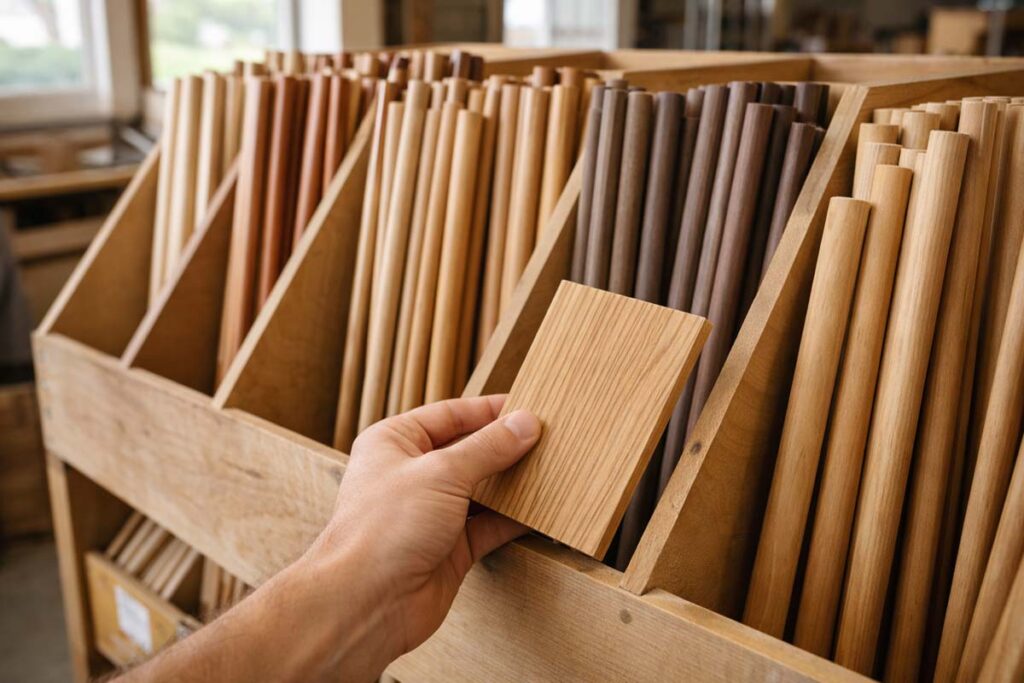
Local cabinet/millwork shops are another option. Many shops buy dowels for rails and fixtures, and some sell small quantities or tell you exactly where they source theirs.
What to expect:
- Best for: matching a specific species, larger diameters, furniture-grade work.
- Watch for: limited “retail” packaging—some yards don’t stock every diameter, and special orders take longer.
Where to buy hardwood dowels when species and fit matter
If the search phrase is where to buy hardwood dowels, the short answer is: start with woodworking retailers for small orders, then move to dedicated dowel suppliers for species variety, long lengths, and consistent production.
Bear Woods lists hardwood dowels in multiple species (maple, oak, walnut, hickory, cherry, and others) and describes them as kiln dried, clear, smooth, and accurately sized, with many hardwood dowels made to order.
Baird Brothers lists hardwood dowel rods in diameters from 5/16″ to 2″ and lengths from 3′ to 12′, with multiple species options.
Atlas Dowel states it offers dowels in 15+ species and kiln dries to a 7–9% moisture target before turning and sanding.
That combination—species choice, long lengths, published specs—usually beats the “hardwood dowel” rack at a general hardware store when the dowel is a visible part of the piece.
If you want a quick refresher on how common woods behave, this guide comparing pine, oak, and maple for woodworking builds keeps the tradeoffs simple.
Online dowel manufacturers and wood-parts suppliers
Online suppliers shine in three situations:
- You need a non-standard species (walnut, cherry, mahogany, hickory).
- You need long lengths for rails or rungs.
- You need quantity with consistent sizing.
Baird Brothers explicitly lists lengths up to 12 feet, which is a big deal when you’re building long rails or matching multiple chair rungs.
Atlas Dowel and similar manufacturers talk about moisture targets and production steps, which helps you predict stability after the dowel reaches your shop.
One practical note: long dowels ship as oversize. Expect higher shipping costs and more chances for damage in transit, even when the dowel itself is well-made. That isn’t a quality knock—it’s a packaging and carrier reality.
Industrial suppliers for joinery dowel pins
If you’re buying dowel pins for joinery (not long rods), industrial suppliers and hardware catalogs can be the most straightforward source—especially when you want them by the box.
A McMaster-Carr listing reproduced in an MIT case-study document describes hardwood dowel pins with grooves that spread glue evenly and push excess glue out of the hole, and it shows package quantities such as 100 pieces for certain sizes.

This category is a good fit when you’re building cabinets, boxes, face frames, or production runs where speed matters and the dowel never shows.
Hobby and craft suppliers
For models, classroom projects, and lightweight builds, craft suppliers often carry small diameters and manageable lengths with clean sanding.
Craftparts, for example, lists a birch dowel size of 5/8″ × 36″ and describes it as kiln-dried and smooth.
These suppliers are also handy when you need oddball small sizes quickly, and you don’t want to buy a whole bundle from an industrial source.
Marketplaces and “everything stores” online
Online marketplaces are convenient when you know exactly what you need and you’re willing to verify it when it arrives. The risk is inconsistency: sellers sometimes mix species, use vague labeling (“hardwood”), or ship dowels that pick up a bend in a thin box.
If you shop marketplaces, treat the listing like a spec sheet:
- Look for a stated species, not “hardwood” alone.
- Look for a stated actual diameter or tolerance.
- Look for length, quantity, and whether the dowels are kiln-dried.
Quality checks before you buy
These checks take a minute and prevent most of the frustration that makes dowels feel “cheap.”
- Roll test for straightness. Roll the dowel on a flat surface. A good one rolls smoothly. A bent one “walks” or lifts off the surface.
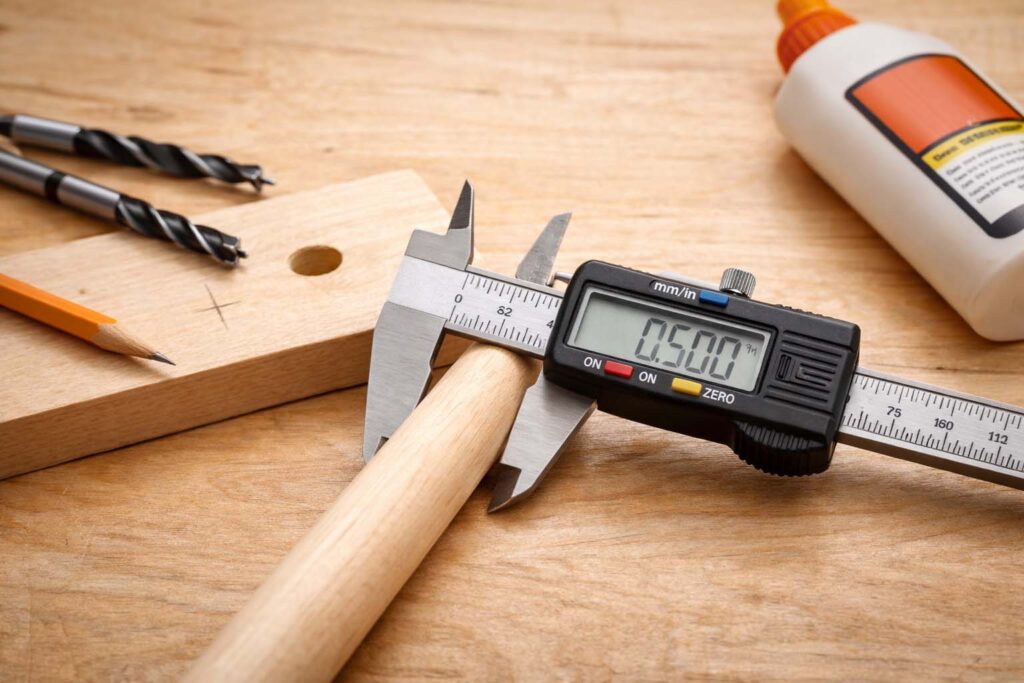
- Measure the diameter. Use calipers. If the supplier states a tolerance, compare reality to the claim. Rockler publishes ±1/64″ on many dowel rods, which gives you a clear pass/fail target.
- Check grain runout. Look at the side grain along the dowel. A dowel with severe runout breaks easier in bending loads.
- Inspect the ends. End checks (little cracks) often grow under stress or after glue-up.
- Match the job to the species. Aspen/poplar works for paint-grade and light-duty uses; oak/maple works better for hard-wearing pegs and furniture parts.
A buying checklist by project type
If you want a quick decision path, use this:
- Cabinet and box joinery (hidden dowels): grooved dowel pins sold in bulk from woodworking or industrial suppliers.
- Furniture pegs and visible joinery: hardwood dowels from woodworking retailers or dedicated dowel suppliers with clear species labeling.
- Chair rungs and rails: long hardwood dowel rods (3’–12′) from hardwood-focused suppliers.
- Jigs, shop fixtures, quick repairs: big-box dowel rods in common sizes (often 36″–48″).
- Models and classroom work: craft suppliers with smaller diameters and shorter lengths.
When it’s smarter to make your own dowels
Buying is efficient for standard sizes. Making your own makes sense when you need a custom diameter, a perfect species match, or dead-straight grain for strength.
A dowel plate and straight-grained square stock let you control grain orientation and size, and you avoid the “mystery hardwood” problem entirely. This route also helps when you need a slightly oversized dowel to fit a worn hole—something retail dowels rarely solve cleanly.
If you also use plugs (which are basically short dowel cousins used for hiding fasteners), this piece on choosing wooden plugs for screw holes helps you match grain and get cleaner results.
FAQs on Buy Wooden Dowels

Where to buy hardwood dowels in long lengths?
Buy long hardwood dowels from hardwood-focused online suppliers that list lengths beyond 48″. Baird Brothers lists hardwood dowel rods from 3′ to 12′ and diameters from 5/16″ to 2″, which covers most furniture rails and chair parts. Long-length dowels often ship oversize, so factor packaging and freight into the decision.
Are “hardwood” dowels at home centers actually hardwood?
Home centers often label dowels as “hardwood,” but the species varies by product line. One Home Depot listing identifies a 48″ × 1/2″ round dowel as aspen, which is a hardwood botanically but not a dense furniture hardwood like maple or oak. For furniture-grade pegs, shop listings that name the species (oak, maple, cherry) and publish tolerances.
What tolerance matters for dowel joinery?
Diameter consistency matters more than a perfect nominal number. Rockler publishes a ±1/64″ diameter tolerance on several dowel rod listings, and that’s a workable benchmark for fitting drilled holes without slop or splitting. If your holes are drilled with brad-point bits, measure a dowel and drill test holes in scrap to confirm the fit before committing to the project parts.
Are fluted dowel pins better than plain pins?
Fluted or grooved dowel pins manage glue and trapped air better than perfectly smooth pins. A McMaster-Carr listing reproduced by MIT describes hardwood dowel pins with grooves that spread glue evenly and push excess glue out of the hole. For hidden joinery, fluted pins reduce hydraulic pressure in the hole and make assembly less fussy.
How do I avoid dowels that move after I buy them?
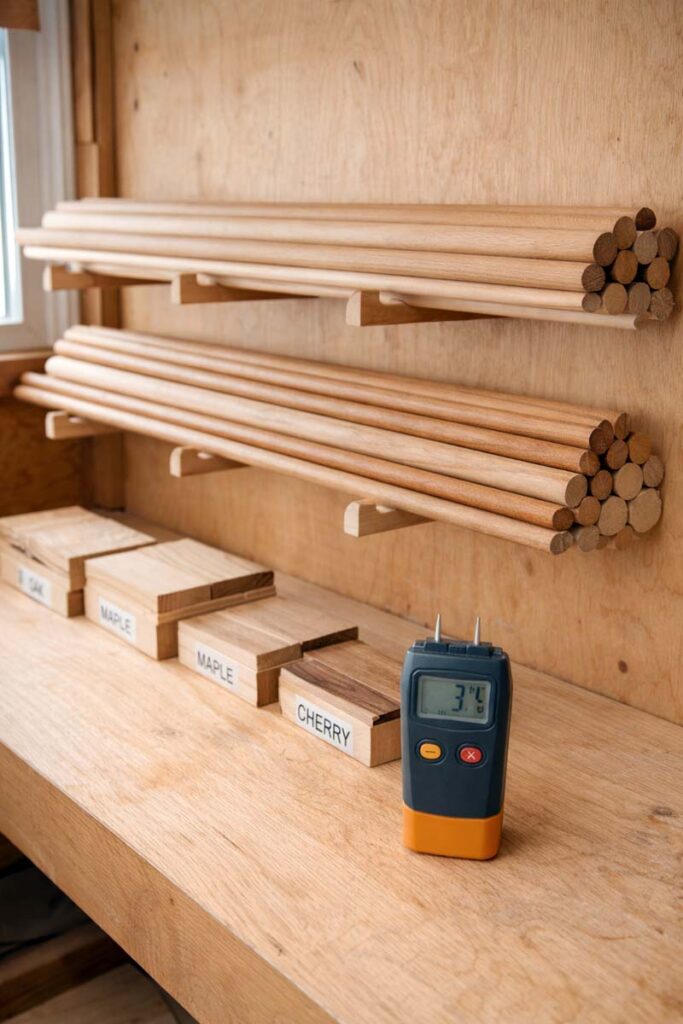
Start by buying dowels with a clear drying claim from a reputable supplier. Atlas Dowel states a 7–9% moisture target before turning and sanding, which aims to reduce movement after production.
Bottom line for Buy Wooden Dowels
For quick utility work, home centers cover the basics. For predictable sizing and joinery, woodworking retailers earn their keep with clearer specs and better consistency. And for furniture-grade results—especially when you’re asking where to buy hardwood dowels—dedicated dowel suppliers and hardwood-focused dealers give you the best shot at straight, stable stock in the species and lengths your project needs.