Where to Buy Basswood: 6 Best Stores for Carving and Woodworking
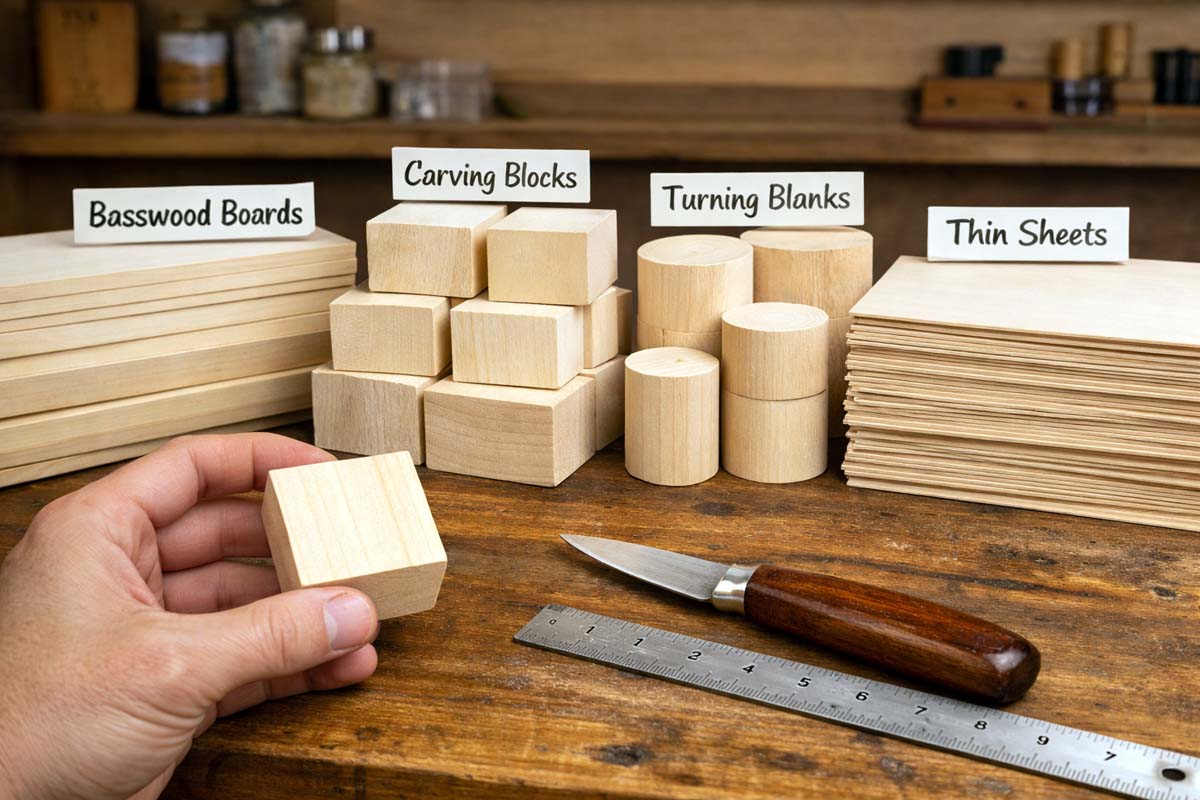
To buy basswood, check local craft stores for small blocks and sheets, woodworking suppliers or hardwood dealers for boards, and reputable online or specialty carving suppliers when you want clear, carving-ready stock shipped to you. Start by deciding whether you need surfaced boards, carving blocks, turning blanks, or hobby sheets. Then compare grain, dryness, and corner quality before you pay for shipping. This guide breaks down the best places to buy each type and how to pick basswood that carves clean.
A quick map before we get specific:
- Boards and dimensional lumber: woodworking retailers, local hardwood dealers, online lumber sellers
- Carving blocks: specialty carving suppliers, craft stores, some online retailers
- Turning blanks: wood blank suppliers, turning specialty shops, online blank sellers
- Thin sheets: hobby suppliers, art stores, model-making suppliers, online sheet sellers
If you are still choosing a wood species for a build, my guide on choosing between pine, oak, and maple for common shop projects helps you compare strength, grain, and finishing behavior without guesswork.
Contents Here
- 1 Where to buy basswood boards and dimensional lumber
- 2 Where to buy basswood carving blocks
- 3 Where to buy basswood turning blanks
- 4 Where to buy thin basswood sheets
- 5 Where to buy basswood for carving
- 6 What to look for when buying basswood
- 7 Carving-specific buying tips
- 8 Simple buyer checklist
- 9 Storage at home
- 10 FAQs about Buy Basswood
- 11 Final Remarks
Where to buy basswood boards and dimensional lumber
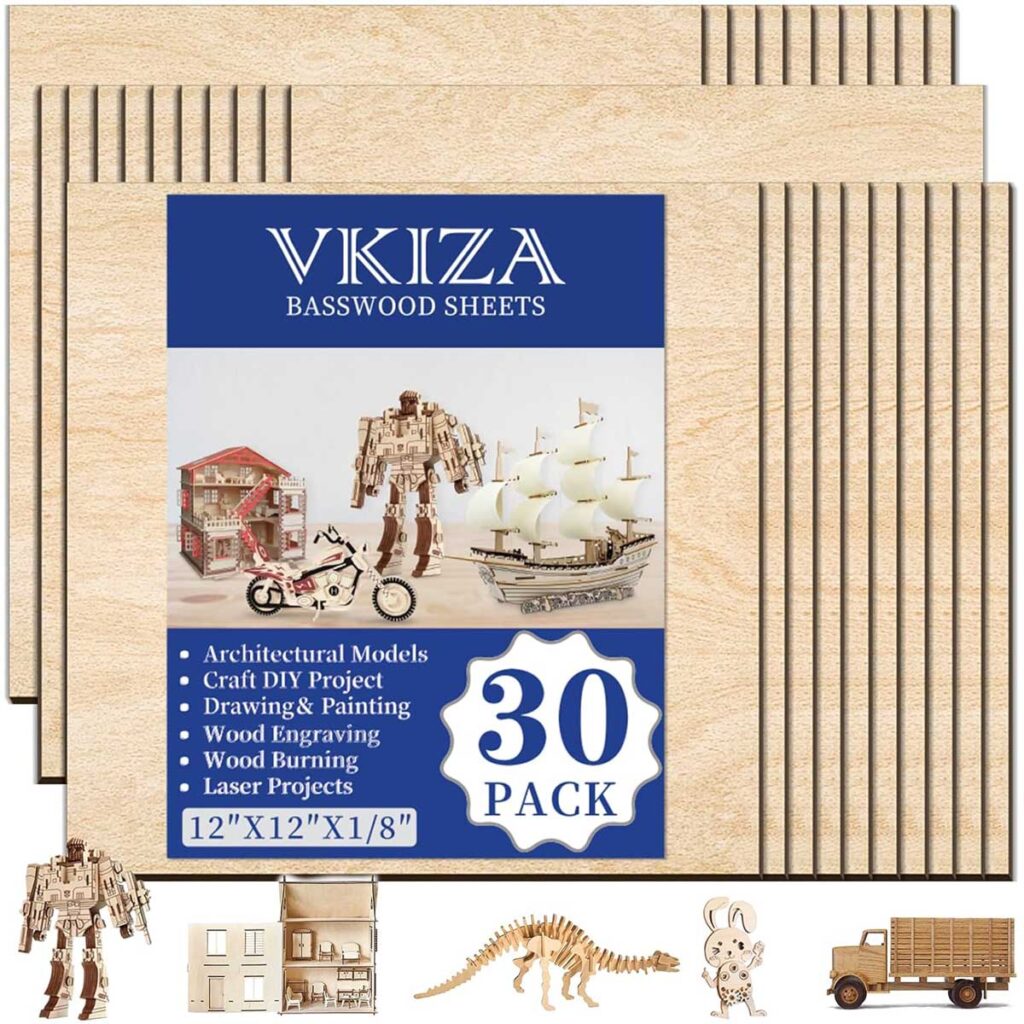
Boards work best for trays, small boxes, paint-grade projects, and any job where you want straight, flat stock. Basswood often sells as S4S (surfaced on four sides), which saves time when you do not want to joint and plane. Below is an example of a 30-pack of basswood sheets from VKIZA Store:
Buy boards locally when you want to hand-pick grain. A hardwood lumber yard lets you sight down the length for twist and bow, and you can reject boards with knots or checks.
Buy boards from woodworking suppliers when you want predictable sizing. Woodcraft sells basswood dimensional lumber and lists basswood as Tilia americana on its product page, which helps when you want the species clearly identified.
Rockler also sells basswood stock as pre-planed pieces, which suits projects that need consistent thickness.
Buy boards online when you want cut-to-size convenience. Ocooch Hardwoods sells basswood as both “by the piece” dimensioned lumber and bulk options, which works well when you need specific sizes shipped to your door.
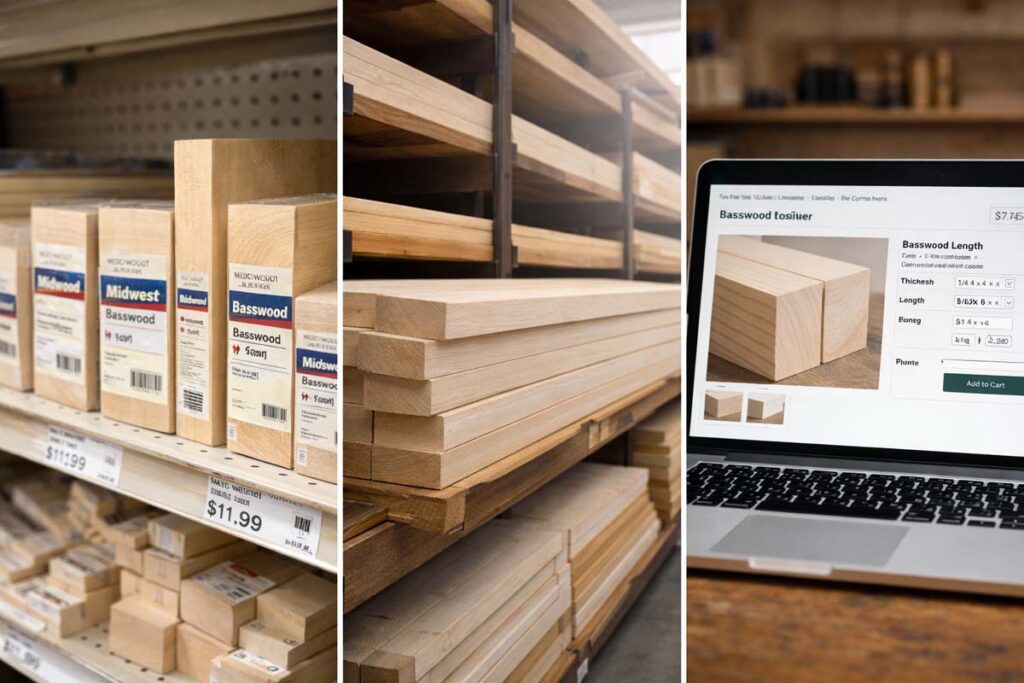
What I look for when buying basswood boards
- Flatness matters more than figure. Basswood does not “show off” grain like walnut or oak.
- Clean edges save time. A bruised corner on a soft wood can telegraph through paint.
For projects that need more dent resistance than basswood provides, this roundup of wood types that hold up better for structural tray builds can steer you toward tougher options.
Where to buy basswood carving blocks
Carving blocks are thicker and usually cut to predictable sizes, with square corners and clearer grain. That is exactly what you want for whittling, relief carving, and small figure work.
Craft stores work for beginner blocks and quick local pickup. Michaels lists a Midwest Products basswood carving block and describes it as premium-quality basswood suited to cutting, whittling, and sanding.
This route is handy when you want one block today and you do not want to pay shipping.
Specialty carving suppliers work for clearer stock and better consistency. TreelineUSA sells basswood blocks and states that it selects basswood from prime logs, kiln dries it, and cuts it into carving blocks.
That kind of sourcing matters when you want long, clean grain lines and fewer surprises inside the block.
Online “hobby wood” brands work when you want a wide size range. Midwest Products sells basswood sheets, strips, and blocks as hobby stock, which fits model making and small craft builds.
A practical note on shipping. Basswood dents easily. When you buy online, look for sellers that protect corners and wrap blocks so they cannot bang together in the box.
Where to buy basswood turning blanks
Turning blanks are thicker blocks meant for the lathe. You want dry wood, square edges, and enough extra thickness for truing the blank round.
Wood blank suppliers are the most direct option. Bell Forest Products lists basswood wood blanks and notes that its blank surfaces may ship rough or wax coated, which is common in the blank world.
What matters most for turning blanks
- A blank with checks at the end grain wastes time and can fly apart on the lathe.
- A waxed end is not a defect. Wax often protects end grain from splitting in storage and shipping.
If you plan to cut blanks yourself, sharp tooling helps you avoid tear-out on soft woods. This simple guide on basic tool maintenance that keeps cuts cleaner stays useful whether you carve or turn.
Where to buy thin basswood sheets
Thin sheets serve model builders, crafters, scroll-saw users, and anyone making lightweight panels. Sheets also solve problems that boards do not, like making small box lids or layered art pieces.
Hobby wood manufacturers cover the widest range. Midwest Products sells basswood as sheets and strips and calls out that thin basswood cuts with a hobby knife while thicker stock needs a saw.
Art suppliers and model shops are reliable sources for sheet packs. Blick sells Midwest Products genuine basswood sheets in multiple sizes and thicknesses, which helps when you need a consistent stack for a batch project.
Hobbylinc also carries Midwest basswood sheets and strips, which is useful when you want hobby-wood sizes shipped.
Thin sheet buying tip. If a sheet arrives with a slight cup, do not force it flat by bending. Store it flat with weight and let it relax slowly in your shop environment.
Where to buy basswood for carving
Where to buy basswood for carving comes down to one question: Do you need clear, predictable grain, or do you need fast and local?
Here’s an example of a 24 pcs of basswood carving blocks from the reliable Bluvizo Store:
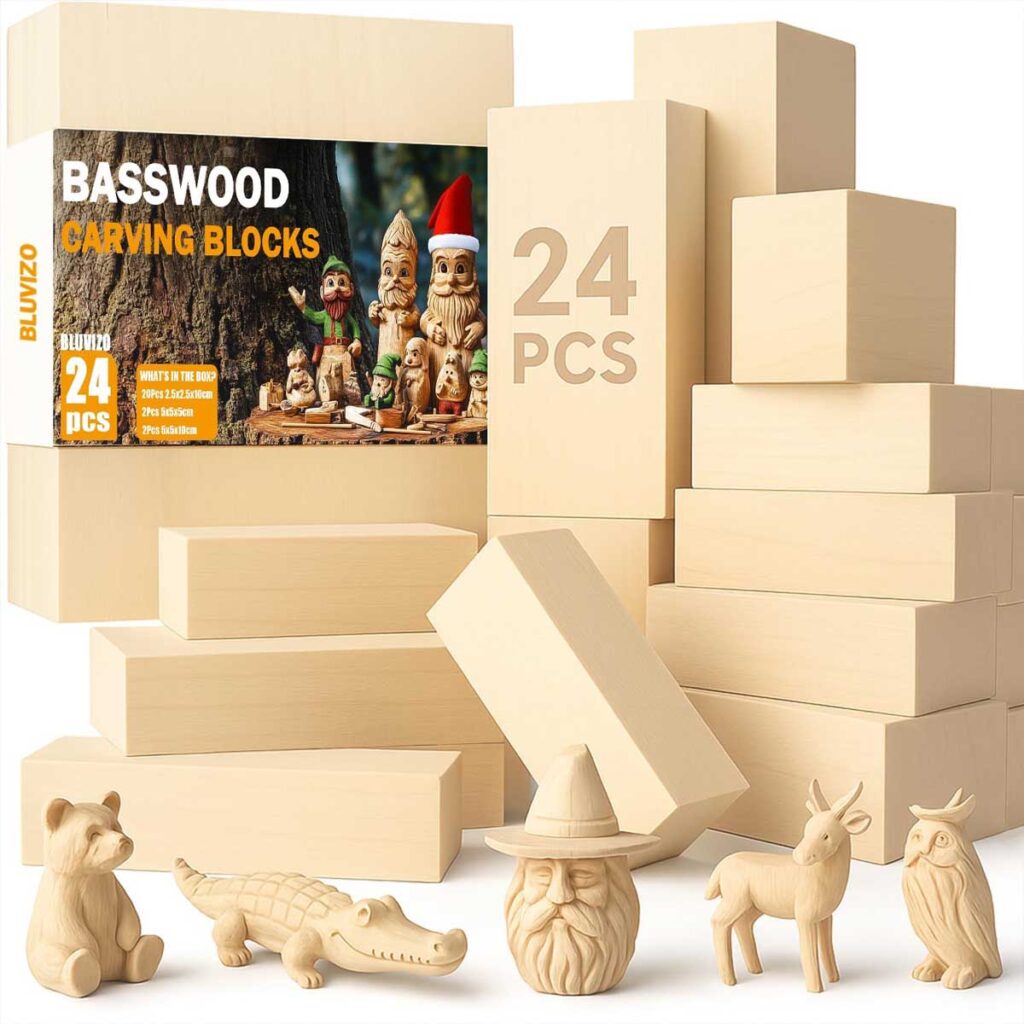
Choose a specialty carving supplier when grain quality matters. TreelineUSA states it kiln dries and cuts basswood into carving blocks, which aligns with what most carvers want: stable blocks with clean corners.
Choose a craft store when you want to start today. Michaels carries Midwest Products basswood carving blocks, which covers practice cuts, small figures, and simple relief work without a wait.
Choose an online lumber seller when you want larger clear pieces. Some online lumber shops sell basswood by the piece in board form, which you can cut into custom blocks when you need sizes that craft stores do not stock.
A naming tip that saves time. Some sellers label basswood as linden (the same general genus in the Tilia family). If your search comes up empty, try “linden carving blocks” along with “basswood.”
What to look for when buying basswood
Basswood rewards careful selection. It carves easily, but it also dents easily, and defects show up fast once you start cutting.
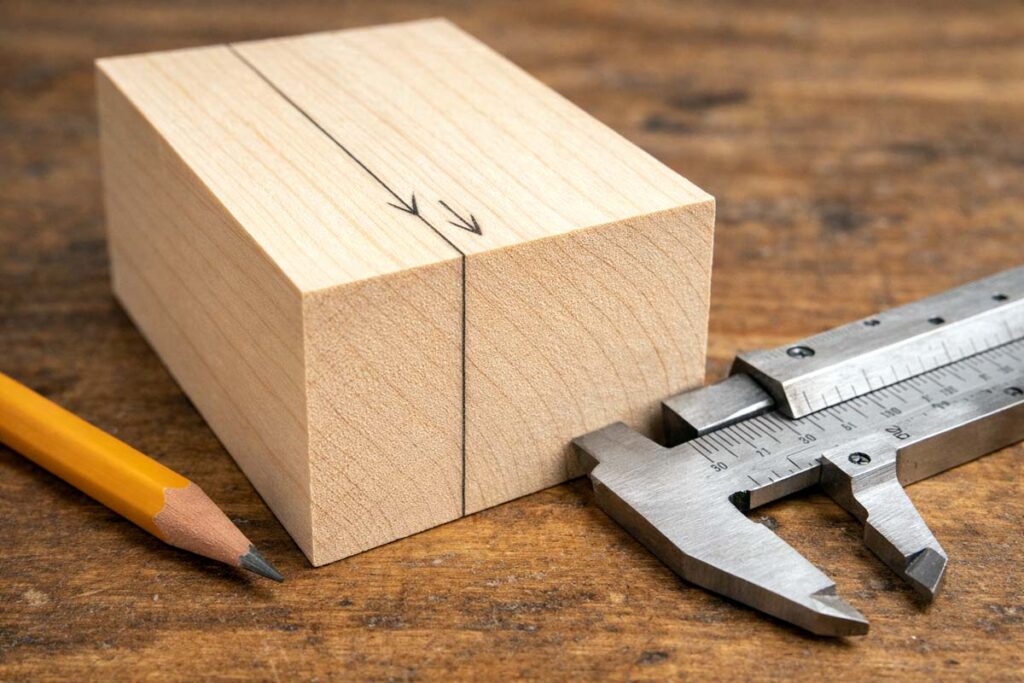
Straight grain
Straight grain cuts cleaner and resists sudden splits. When you look at the face grain, you want long lines that run the length of the board or block.
Minimal knots and no pith
Knots deflect a knife edge and leave hard spots. Pith (the center of the tree) tends to crack and move. A clear block carves more predictably.
Dry, stable stock
Dry stock holds shape. Wet stock moves as it dries, which can twist a flat relief panel or open a hairline check right through a face.
When you buy online, look for sellers that describe drying method or storage. TreelineUSA explicitly mentions kiln drying for its blocks.
Clean corners and square edges
A crisp corner gives you layout reference. A mashed corner forces you to cut past your intended shape.
This matters most with small carvings because you do not have “extra” material to waste.
Carving-specific buying tips
Carving is less forgiving than general woodworking because the knife follows the wood. These buying habits prevent a lot of frustration.
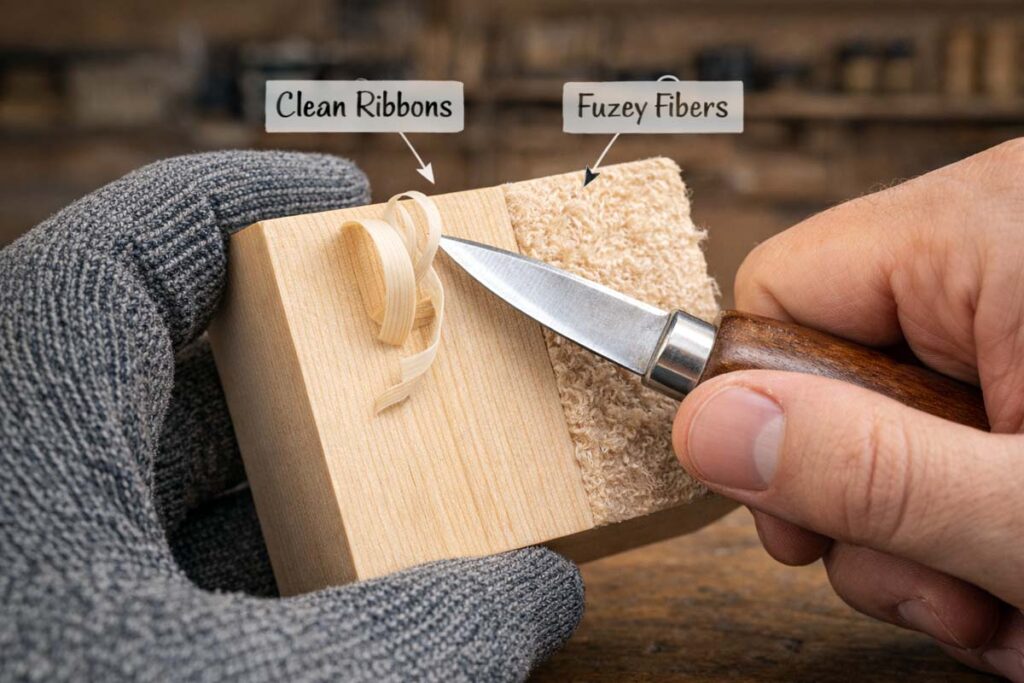
Pick block size with extra margin
A block that matches your finished dimensions leaves no room for clamps, holding grips, or small design changes. Buy a block a bit larger in every direction, then trim after you establish the shape.
Check grain direction before you buy
Grain direction controls whether your knife slices clean or lifts fibers. Look at the side of the block and imagine your main cuts.
- If the grain runs out the side quickly, your knife can pry fibers up.
- If the grain runs straight through the length, you get cleaner slicing cuts.
Avoid fuzzy grain by choosing clean stock and planning your cuts
Basswood can “fuzz” when tools scrape instead of slice. You reduce fuzz two ways:
- Buy clearer stock with straighter grain.
- Cut with sharp edges and take slicing passes instead of rubbing passes.
When fuzz shows up around end grain details, this guide on sanding end grain smooth without tearing fibers gives a clean, repeatable approach.
Look for uniform color when you want consistent detail
Basswood often ranges from creamy white to slightly darker patches. Color variation does not ruin a carving, but it can signal density changes. Uniform blocks tend to feel more consistent under the knife.
Simple buyer checklist
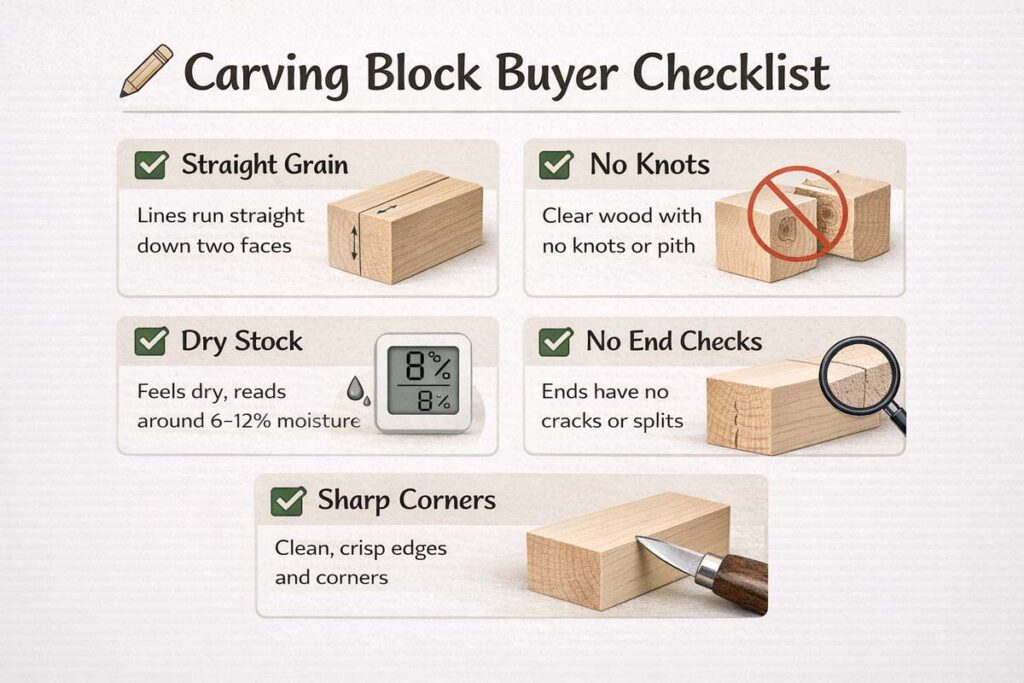
For carving blocks, check these 5 things
- Straight grain on at least two faces so the knife tracks predictably
- No knots, bark pockets, or pith in the area you plan to carve
- No checks on the end grain because cracks spread during carving
- Dry feel and clean smell with no damp odor or visible mold
- Sharp, square corners with no crushed edges from handling or shipping
If a seller shows only one photo, ask for a second photo of the end grain. End grain tells the truth about checks and grain runout.
Storage at home
Good storage keeps basswood flat, dry, and ready to use.
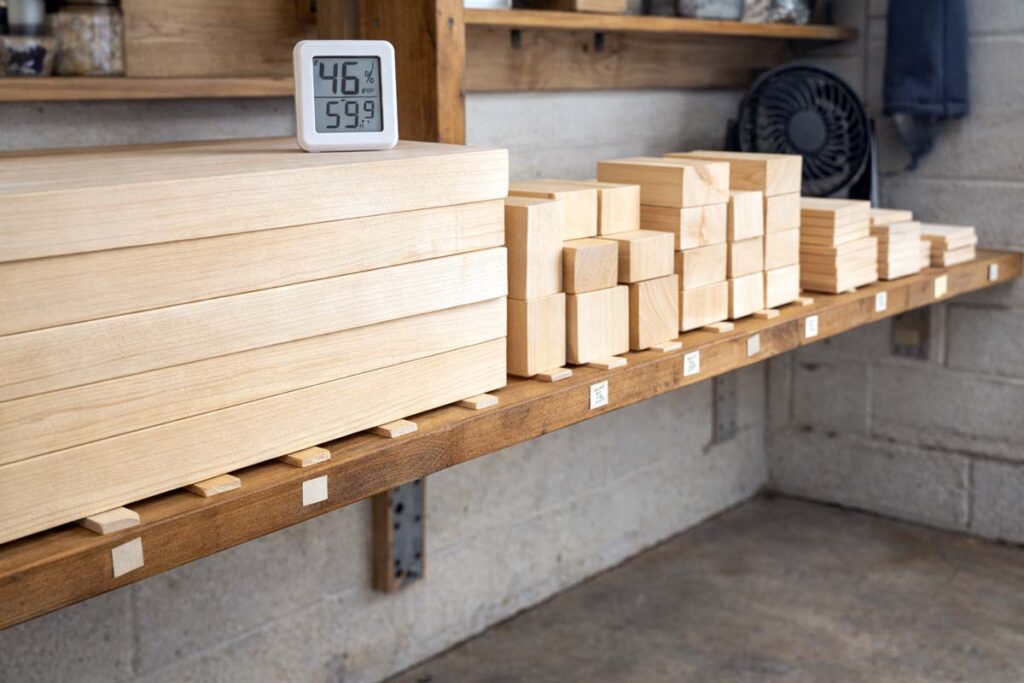
Store boards flat and supported. Use level supports under the full length. If you stand boards in a corner, basswood can take a set.
Keep wood out of damp basements and off concrete. Concrete moves moisture. Put boards on a shelf or rack with airflow under it.
Sandwich thin sheets between flat panels. Two flat boards with light weight on top keep sheets from curling.
Let new wood acclimate. Give stock time in your shop space before you carve or cut to final size, especially if it shipped from a different climate.
If you do any sanding, wear eye protection and a dust mask. Fine wood dust irritates lungs, even with “friendly” woods like basswood. My roundup of basic safety gear that covers common shop tasks applies here too.
FAQs about Buy Basswood

What size basswood is best for carving?
For carving, pick a block that matches your pattern plus extra room for your grip. A 1–2 inch thick, hand-sized block works well for most beginner whittling and small relief work.
Can I use basswood from craft stores?
Yes, craft-store basswood works for practice and simple carvings. Inspect each piece for dents, end checks, knots, and twist, and choose the cleanest block you can find on the shelf.
Is basswood the same as linden wood?
Often, yes. sellers use “basswood” and “linden” for related Tilia species. Check the product listing for the botanical name (like Tilia americana) so you know what you’re buying.
How do I tell if a basswood block is too wet?
A too-wet block feels cool and heavy, smells damp, and fuzzes instead of slicing clean. Use a moisture meter if you have one; indoor carving wood reads around 6–12%.
What is the difference between basswood boards and carving blocks?
Basswood boards sell as longer, thinner stock for woodworking, and you cut parts from them. Carving blocks come pre-cut thicker, squarer, and usually clearer, so knives track more predictably.
Final Remarks
Basswood buys go smoothly when you pick the right seller for the form you need. Craft stores cover small blocks and sheets for quick starts. Woodworking suppliers and online lumber shops cover boards for paint-grade projects. Specialty carving suppliers cover clear, kiln-dried blocks that hold detail. Focus on straight grain, minimal knots, dry stock, and clean corners, then store your wood flat and dry so it stays ready for the next carving.