What type of plywood for shed floor: 9 Mistakes to Avoid Fast
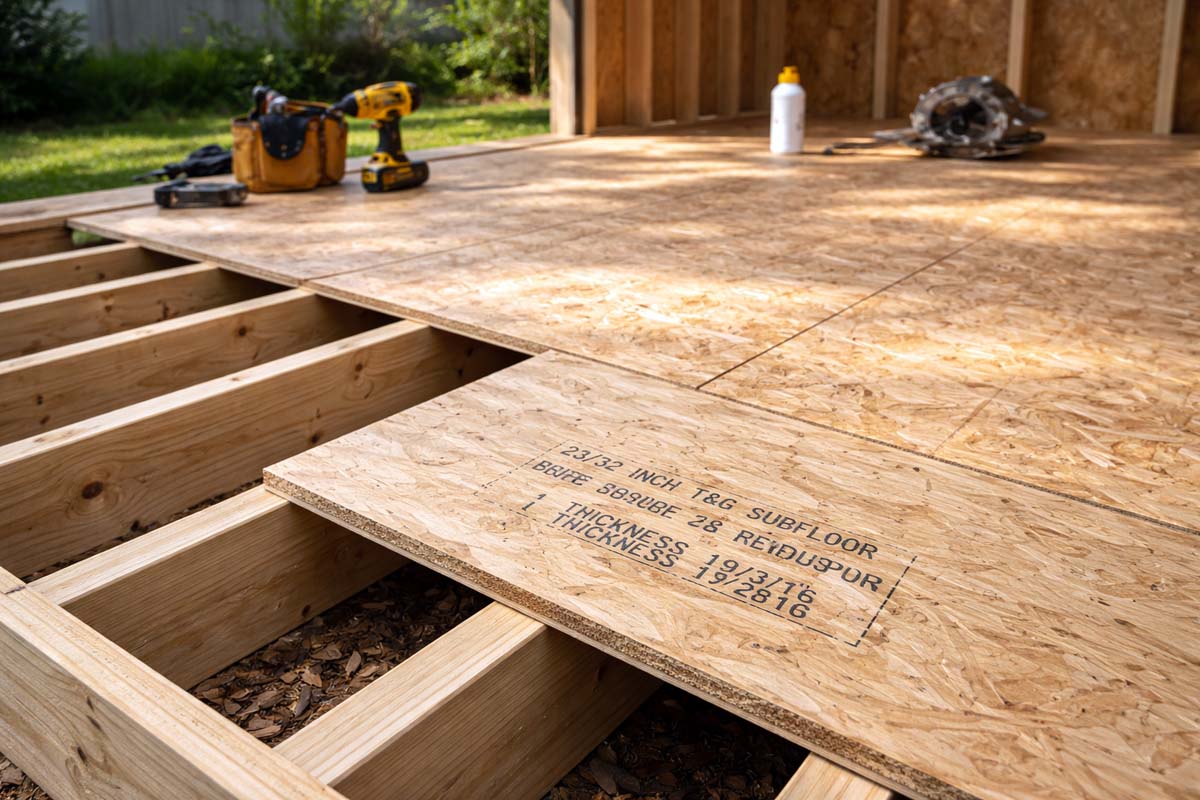
Wondering what type of plywood for shed floor works best? Use 3/4-inch tongue-and-groove, exterior-rated subfloor plywood (Exposure 1 or Exterior) for a shed floor because it stays stiff across joists and holds up better to shed moisture and foot traffic.
Most shed floors fail from the same causes: thin panels, interior glue, wet air trapped underneath, or unsupported seams. In this guide, I’ll walk you through the plywood stamp to look for, the right thickness for common joist spacing, and a few practical details that keep floors solid for years.
Contents Here
- 1 What plywood type holds up best on a shed floor?
- 2 What thickness plywood should you use for a shed floor?
- 3 Is tongue-and-groove plywood worth it for a shed floor?
- 4 Is OSB okay for a shed floor?
- 5 Should the plywood be pressure-treated for a shed floor?
- 6 What matters more than “treated vs. untreated”? Keeping the floor dry.
- 7 What plywood grade should you buy for a shed floor?
- 8 How should you lay plywood for a shed floor so it stays flat and strong?
- 9 What fasteners work best for shed-floor plywood?
- 10 Should you seal or paint shed-floor plywood?
- 11 Common shed-floor plywood mistakes that shorten its life
- 12 Quick buying guide you can use in the lumber aisle
- 13 FAQs about Plywood for Shed Floor
What plywood type holds up best on a shed floor?
Exterior-rated subfloor plywood holds up best because manufacturers build it to carry floor loads and resist moisture better than interior panels.
At the lumber rack, check the panel stamp for:
- Exposure 1 or Exterior (water-resistant glue line)
- Sturd-I-Floor / Subfloor or Rated Sheathing (made to span framing and take foot traffic)
- A span rating that fits your joist spacing (the stamp tells you the intended use)
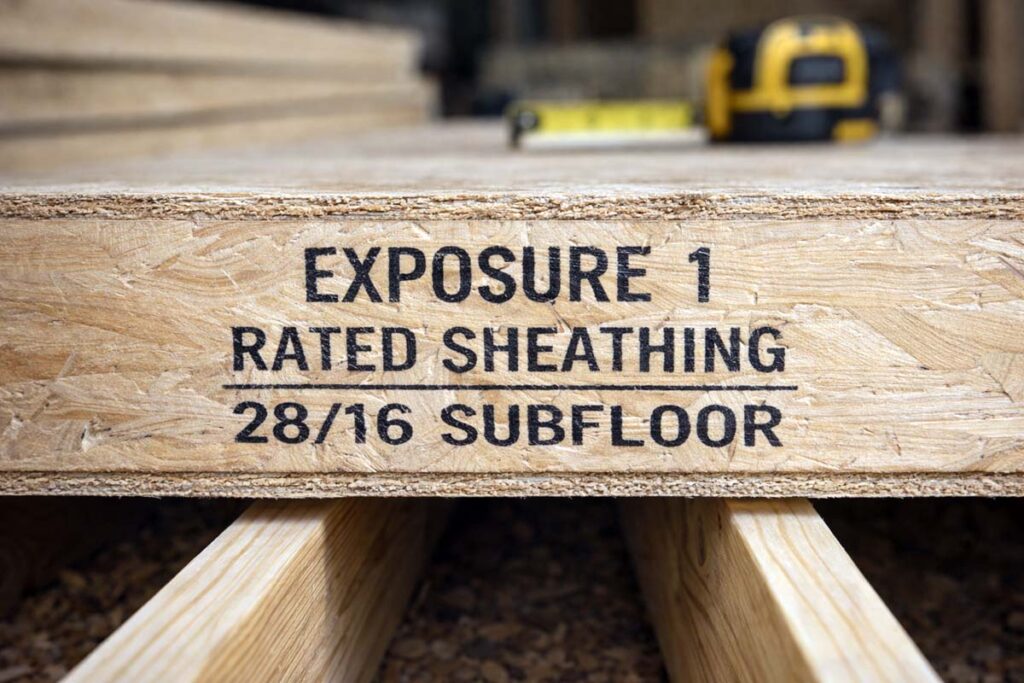
If the stamp says Interior, skip it. Interior plywood belongs in dry rooms, not in a shed that sees seasons.
What thickness plywood should you use for a shed floor?
For most sheds, 3/4 inch (often labeled 23/32) is the safe, common choice. It feels firm underfoot and resists flex that loosens screws over time.
Match thickness to the framing you built:
- 16-inch on-center joists: 3/4 inch is the dependable pick for a working shed.
- 12-inch on-center joists: 5/8 inch can work for light storage, but 3/4 inch still feels better with point loads.
- 24-inch on-center joists: 3/4 inch minimum, and the stamp matters even more.
If you want a quick refresher on how plywood thickness is labeled at the store, check my guide on the thickest plywood you can buy and common thickness ranges.
Is tongue-and-groove plywood worth it for a shed floor?
Yes. T&G edges support each other at the seams, which reduces bounce and keeps joints from working loose. That matters most when you roll heavy stuff around, like a mower, cart, or shop vac.
T&G is especially helpful when:
- Joists are 16 inches on center or wider
- You do not want to install blocking under every seam
- The shed will see rolling loads
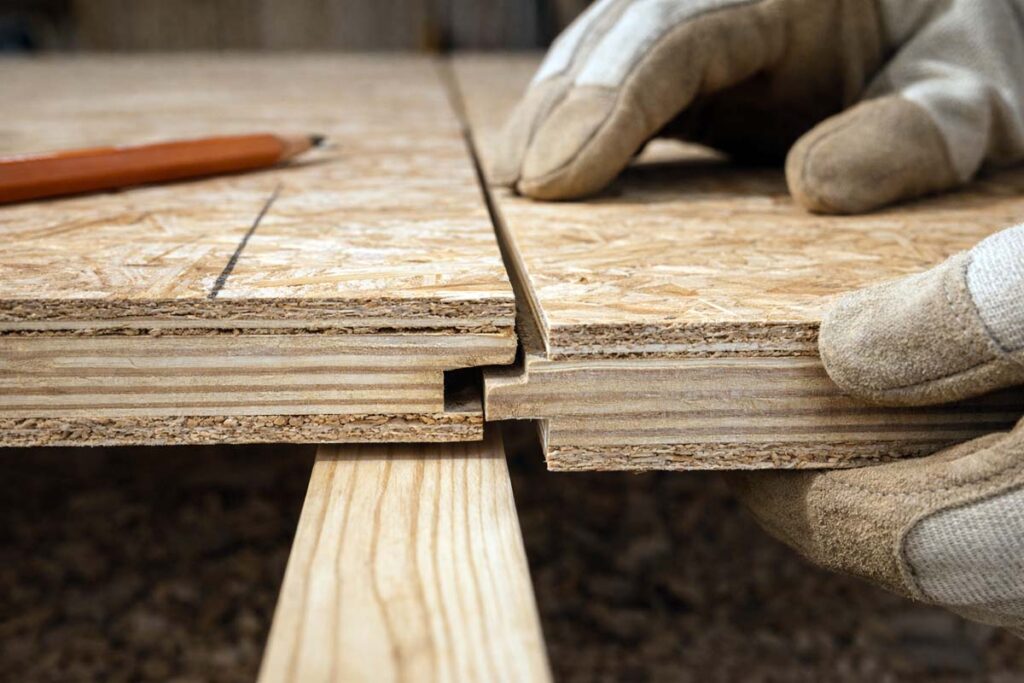
Square-edge plywood still works, but it should have blocking under every unsupported seam so the joint can’t flex.
Is OSB okay for a shed floor?
OSB can work in a shed, but plywood usually ages better in real backyard conditions. Plywood tends to handle wet-dry cycles with less edge swelling, and it stays more forgiving when you remove and re-drive screws years later.
OSB makes sense when the shed stays dry underneath and you keep the edges protected. If your shed sees tracked-in snow, wet tools, or seasonal dampness, plywood gives you more margin.
Should the plywood be pressure-treated for a shed floor?
Pressure-treated plywood is helpful when the shed floor system stays damp, but it is not required for every build.
Consider pressure-treated panels when:
- The shed sits low to the ground with poor airflow underneath
- The site stays wet after rain for long stretches
- Splashback or runoff keeps hitting the underside
Standard exterior-rated subfloor plywood is usually fine when the shed is raised and dry underneath. If you do buy treated panels, expect them to be wetter and sometimes less flat. Let them acclimate before you fasten everything tight.
What matters more than “treated vs. untreated”? Keeping the floor dry.
A shed floor lasts longer when it can dry out. You can do that with simple, practical steps that don’t cost much.
Focus on three things:
- Airflow under the shed: raise the base on skids, blocks, or piers so air can move.
- Ground moisture control: use gravel and a ground vapor barrier if the soil stays damp.
- Edge protection: panel edges wick water fast, so protect them if the shed sees wet storage.
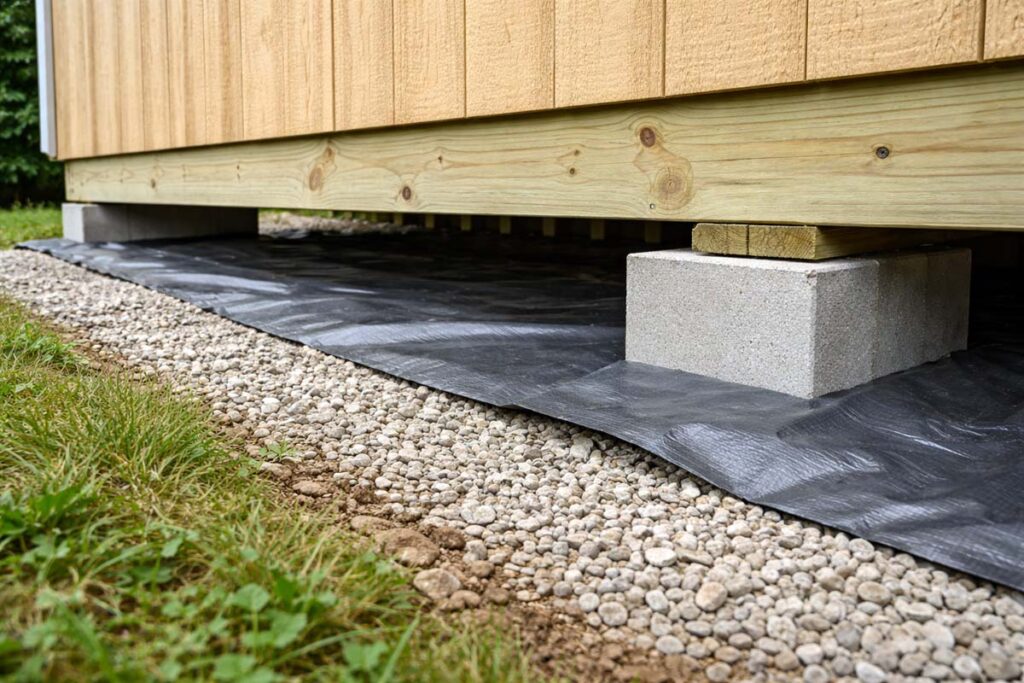
Even the best plywood will struggle if the underside stays wet all season.
What plywood grade should you buy for a shed floor?
For shed floors, pay for structure and glue, not a pretty face veneer.
Two good, common choices:
- Subfloor-rated panels (Sturd-I-Floor or similar): made for floors, usually a strong all-around pick.
- CDX sheathing (Exposure 1 / Exterior): affordable and widely available, and the rough face is fine for a floor.
What to avoid: cabinet-focused plywood. It costs more and doesn’t automatically give you a better floor. It’s built for indoor casework, not spanning joists in a humid shed.
If you’re unsure what “cabinet grade” really means (and why it’s not automatically better for floors), check my guide on what cabinet-grade plywood means.
How should you lay plywood for a shed floor so it stays flat and strong?
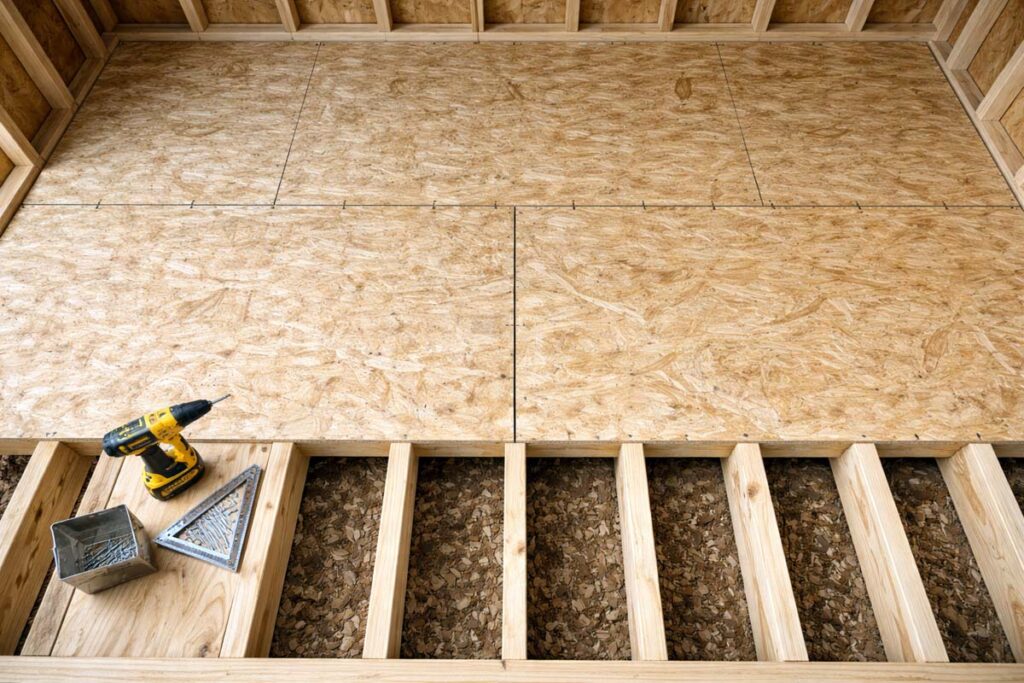
A solid shed floor comes from correct layout, supported seams, and consistent fastening. Do the basics well and the floor will feel firm for a long time.
- Run sheets perpendicular to the joists. This uses the panel’s strength the right way.
- Stagger end seams. Don’t let four corners meet in one spot.
- Support every seam. T&G supports itself; square-edge needs blocking.
- Leave a small expansion gap at sheet edges. Wood moves with humidity.
- Fasten on every joist. Hit your lines and keep spacing consistent.
If you’re gluing panels to joists, check my guide on wood glue for plywood so you choose an adhesive that bonds well and holds up to seasonal movement.
What fasteners work best for shed-floor plywood?
Use exterior-rated screws or structural screws meant for framing. They resist corrosion better than basic interior screws and they hold tight when the floor sees movement.
A few practical tips from the shop:
- Drive fasteners flush, not buried deep. Overdriving weakens the top veneer.
- Start screws away from the edge to reduce splitting.
- Snap a chalk line or mark joists so you don’t miss framing.
If you plan to store very heavy items, consider adding blocking and extra fasteners at seams, especially near doors where traffic is highest.
Should you seal or paint shed-floor plywood?
Sealing helps when you track in water and mud, or store wet gear. It’s most useful on edges and seams, because that’s where plywood absorbs moisture fastest.
A simple approach that works for many sheds:
- Seal or prime panel edges before installation if you can.
- After installation, coat the floor with a durable floor paint or porch enamel if you want easier cleanup.
- Let coatings cure fully before you load the shed.
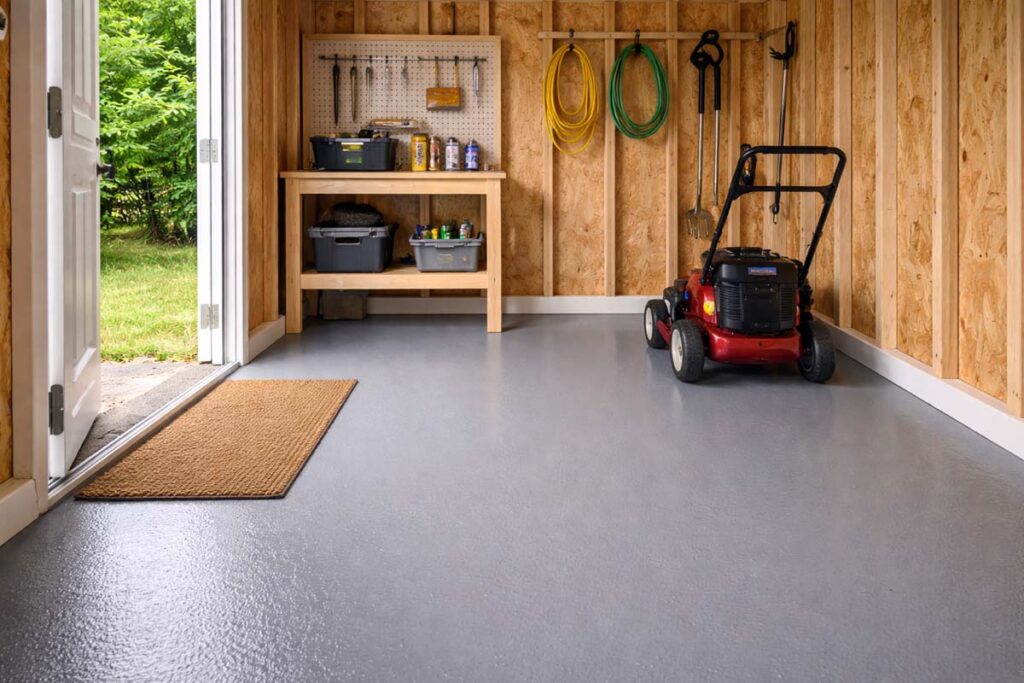
If the shed is used like a small shop, a sealed floor also sweeps cleaner and resists staining.
Common shed-floor plywood mistakes that shorten its life
Most early failures trace back to a few avoidable choices.
- Buying interior plywood: the glue line isn’t meant for humidity.
- Going too thin: flex leads to squeaks, loose fasteners, and cracked seams.
- Leaving seams unsupported: square-edge sheets need blocking under joints.
- Ignoring moisture underneath: wet soil and no airflow keep the underside damp.
- Skipping edge protection in wet climates: edges swell first and telegraph through.
Quick buying guide you can use in the lumber aisle
If you want one reliable target that fits most backyard sheds, buy:
- 3/4-inch (23/32) exterior-rated subfloor plywood
- Tongue-and-groove edges, if available
- A panel stamp that says Exposure 1 or Exterior
- A stamp that indicates Subfloor / Sturd-I-Floor or Rated Sheathing
If you’re looking at lower-cost stacks and wondering what “shop grade” really buys you, check my guide on what shop-grade plywood is.
FAQs about Plywood for Shed Floor

What is the best plywood for a shed floor?
For most sheds, the best choice is 3/4-inch tongue-and-groove, exterior-rated subfloor plywood (Exposure 1 or Exterior). It stays stiff between joists, handles humidity better, and supports rolling loads.
What is the best plywood flooring for a 12×16 shed?
A 12×16 shed usually benefits from 3/4-inch (23/32) exterior-rated T&G subfloor plywood over 16-inch on-center joists. If you’ll park heavy equipment inside, this thickness helps prevent bounce and seam movement.
How to lay a plywood floor for a 10×12 shed?
Run sheets perpendicular to the joists, stagger seams, and support all edges (T&G helps). Leave a small expansion gap at edges, glue joists if you want stiffness, then screw down consistently.
What plywood would you use for a shed floor?
I’d use 3/4-inch exterior-rated subfloor plywood, preferably tongue-and-groove, because it’s built for span and foot traffic. If the shed sits low and stays damp, I’d consider pressure-treated panels.
What size plywood for a shed floor?
Most shed floors use 4×8 sheets, but “size” also means thickness: 3/4-inch fits most builds. Match the panel’s span rating to your joist spacing, especially at 16 or 24 inches on center.