How to Remove Wood Glue Without Damaging Wood: 7 Safe Tricks
To remove wood glue without damaging wood, you need the right method for your surface. Dried glue can seal the grain, block stain, and leave shiny patches under a clear coat. The safest approach is simple: identify the glue and the finish, start gentle, then step up only if needed.
Contents Here
- 1 Start here—identify glue and wood finish before you touch anything
- 2 Tools and materials that keep the wood safe
- 3 Remove fresh squeeze-out without driving glue into the grain
- 4 Remove dried glue from unfinished wood
- 5 Remove dried glue from finished wood without sanding through the clear coat
- 6 After removal—blend the surface so the repair disappears
- 7 Mistakes that damage wood and show up later
- 8 Prevention tips that make glue cleanup almost boring
- 9 FAQs on Remove Wood Glue Without Damaging Wood
- 10 Conclusion
Start here—identify glue and wood finish before you touch anything
Wood glue cleanup goes sideways when you treat every mess the same. A scraper that’s perfect on bare lumber can scratch a tabletop finish. A solvent that softens one glue can haze lacquer or soften paint. Take one minute to check two things: what glue it is and what finish you’re working over.
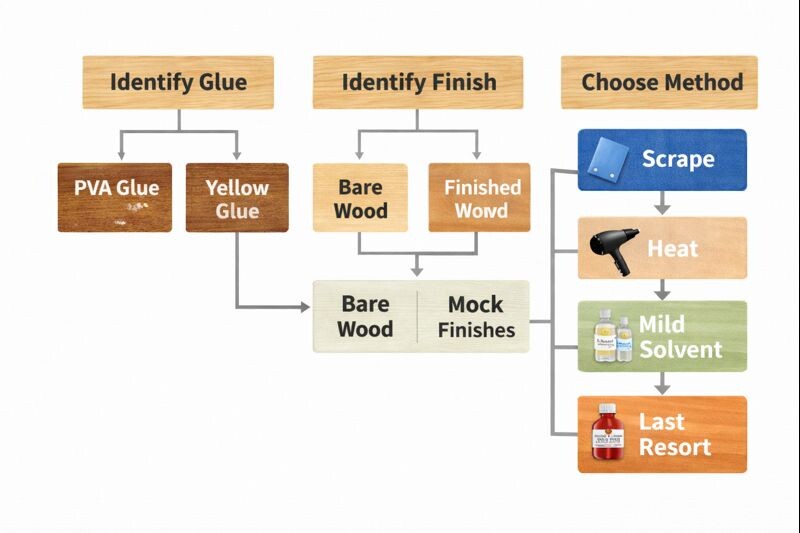
Glue timing can be confusing, especially when the shop is cold. This quick breakdown shows how long wood glue needs to fully cure for real strength, so you can judge what you’re dealing with.
Common glue types and what they respond to
Most shops run into a few usual suspects:
- PVA (yellow or white woodworking glue): Dries hard, usually slightly rubbery. Heat and careful scraping usually release it without tearing fibers. Mild acids like vinegar may soften thin residue.
- Polyurethane glue (often foams as it cures): Expands and turns amber. Scraping is usually the main solution once cured.
- Epoxy (two-part): Very hard and glassy. Mechanical removal is common; heat can help, but finishes complicate it.
- CA glue (cyanoacrylate, “super glue”): Bonds fast and hard. Acetone can dissolve it, but acetone can also ruin finishes.
- Hide glue (common in older furniture repairs): Often reversible with heat and moisture, which is handy.
If you want a quick refresher on the most common shop glue, start here. It explains what PVA wood glue actually is and how it behaves in plain terms.
Also learn: Does Gorilla Wood Glue Dry Clear? 5 Fast Tests You Can Do Today
Tools and materials that keep the wood safe
The top mistake I see is reaching for something too aggressive too soon. Keep a small “safe removal kit” ready, and most glue problems stay minor.
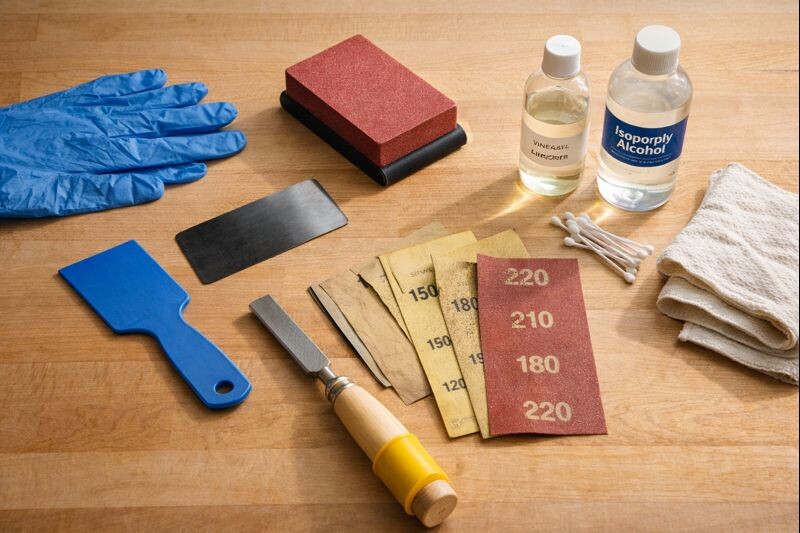
You’ll get the best results with:
- Plastic scraper or an old credit card
- Card scraper (a sharp one makes all the difference)
- Sharp chisel for careful paring (only when you can control the cut)
- Sandpaper and a sanding block (150, 180, 220 grit are common)
- Hair dryer or low-heat gun (use the lowest setting that works)
- Cotton swabs, clean rags, and paper towels
- Painter’s tape to protect edges and nearby trim
- Nitrile gloves and good ventilation if you use solvents
Solvents people reach for—when they’re safe (and when they aren’t)
Solvents are useful, but they’re also the easiest way to damage a finish. When you do use one, keep it targeted, quick, and tested first.
- Warm water: Helpful for fresh PVA, but risky for spreading glue into open grain.
- White vinegar: Often used for thin PVA residue; start with a short dwell time.
- Isopropyl alcohol: Sometimes helps with light residue; it can also dull some finishes.
- Mineral spirits: Great for revealing residue on bare wood; usually safer on cured oil finishes.
- Acetone: Effective on CA glue and some residues, but harsh on many finishes.
Always do a test on an inconspicuous spot first. If the finish turns tacky, dull, or cloudy, stop.
If this cleanup is part of a fix, choosing the right woodworking adhesive for furniture joints makes the repair stronger and the squeeze-out easier to control.
Remove fresh squeeze-out without driving glue into the grain
Fresh squeeze-out is the easiest cleanup, but it’s also where people accidentally make a permanent stain problem. Wiping wet glue with a damp rag can push it into the pores. Later, stain won’t penetrate evenly, and you’ll see a pale “ghost” line.
Instead, control the mess and remove it cleanly:
- If you can, lift the bead with a plastic scraper before wiping.
- If it smears, wait for the glue to set, then scrape it off.
- Save sanding for the very end, and only on bare wood.
Clamp time matters, because movement creates more squeeze-out to clean later. This overview explains how long to clamp wood glue for a reliable bond without guessing.
The “set-then-scrape” timing window
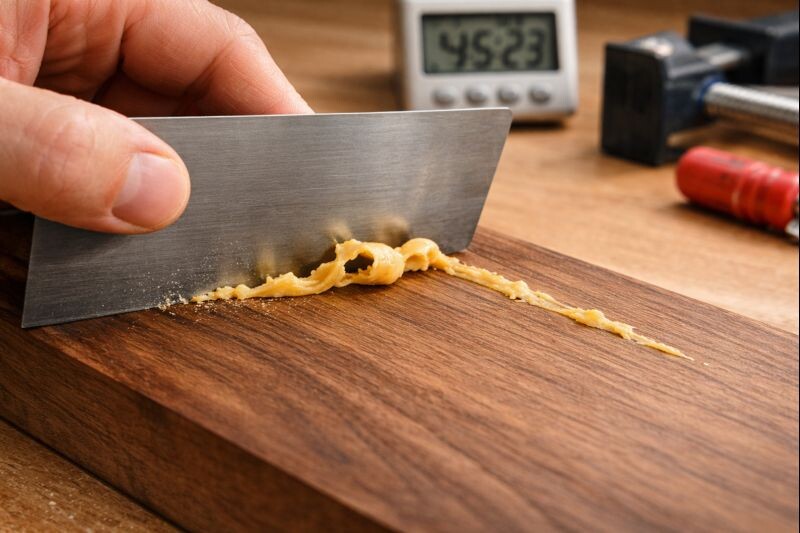
For most PVA glues, there’s a sweet spot where the glue is firm but not rock hard. It often lands around 30–60 minutes, depending on temperature, spread, and wood species. At that point, you can shave it off cleanly with a plastic scraper or a sharp chisel used like a paring tool.
A simple rule: if it strings like caramel, it’s too wet. If it chips like glass, you waited too long.
Remove dried glue from unfinished wood
Unfinished wood gives you options, because you can sand and blend. The goal is to remove the glue without digging a low spot into the board. Start with scraping, then finish with light sanding.
How to scrape dried glue without gouging
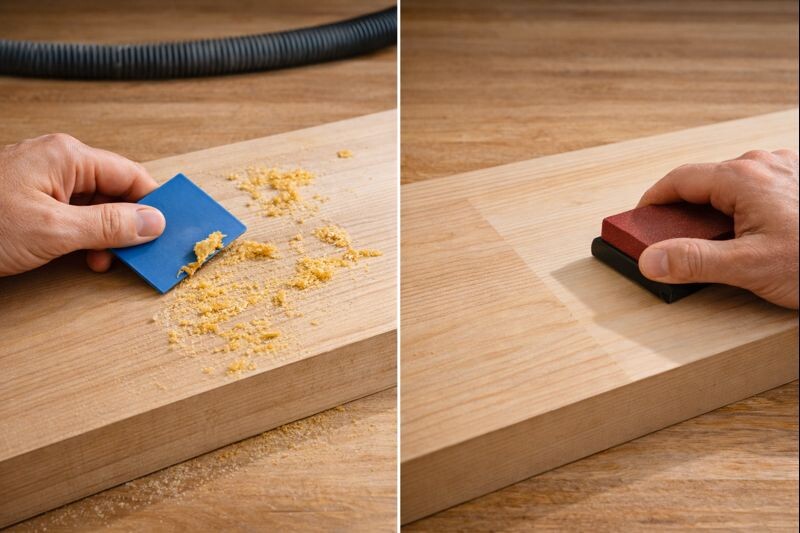
Scraping is safer than sanding at first, because sanding can spread glue across the surface. Use a plastic scraper for wide, flat areas, then switch to a card scraper or chisel if needed.
Here’s what keeps it clean:
- Work with the grain whenever possible.
- Keep your scraper low, not steep, to avoid digging.
- Take thin shavings rather than prying chunks.
- Stop as soon as you reach wood fibers, not “perfectly smooth.”
If you do need a chisel, keep it razor sharp and use two hands. I like to brace my forearms on the bench so the cut stays controlled.
How to find invisible glue before staining
Dried PVA can look like bare wood, especially on light species. Before you stain or oil, do a quick “reveal” test:
- Wipe the area with mineral spirits or plain water.
- Look for spots that stay lighter or resist wetting.
- Scrape or sand those spots again until the wetting is even.
That one check saves a lot of heartbreak after finishing, especially on open-grain woods like oak.
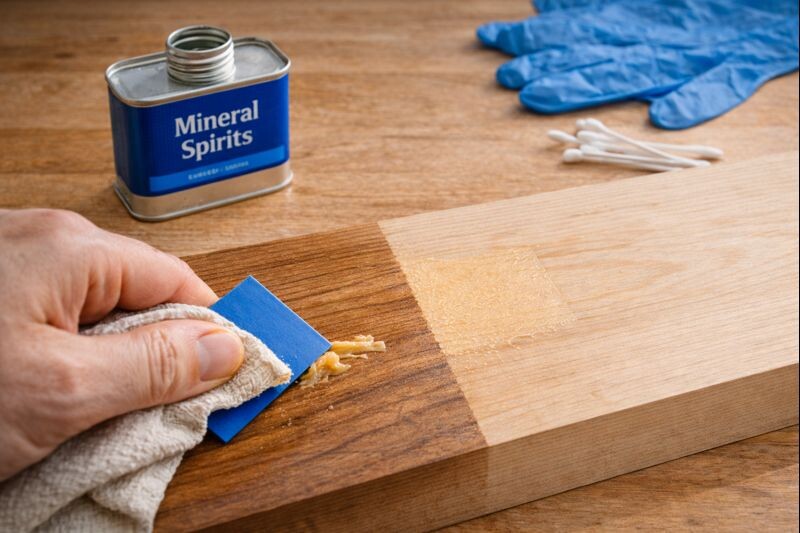
Sand and blend the surface, not just the glue spot
Once the glue is gone, feather the area. Use a sanding block and light pressure. Start around 150 or 180 grit, then finish at 220. Don’t chase a tiny shiny dot by sanding a deep crater into the board.
Sanding too early smears glue and clogs your paper fast. This quick answer covers when wood glue is dry enough to sand without clogging paper so you don’t waste time.
Remove dried glue from finished wood without sanding through the clear coat
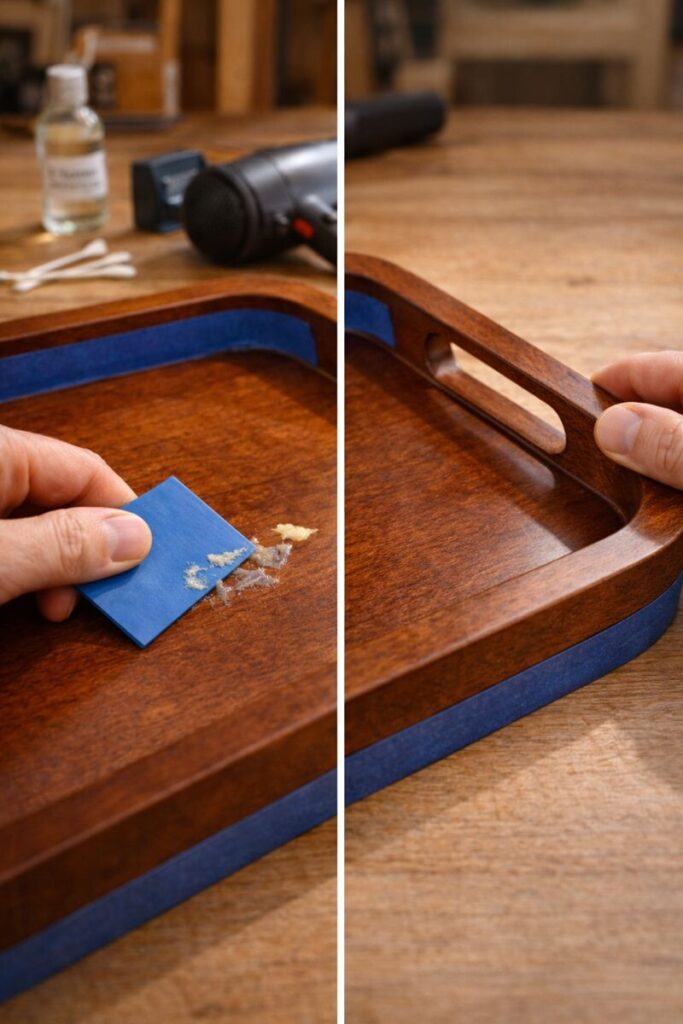
Finished furniture and trays need a lighter touch. Sanding often cuts through the topcoat before you realize it. Start with the gentlest method, and stop as soon as the glue releases.
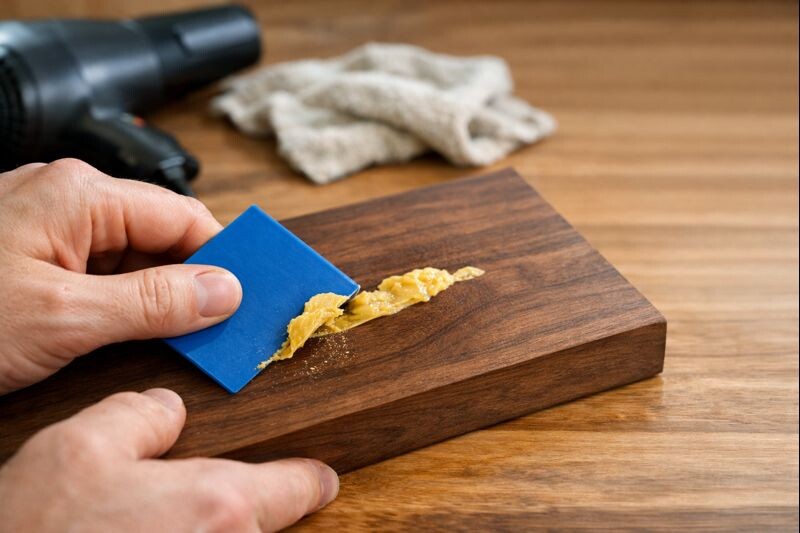
Heat + plastic scraper method (usually the safest first step)
Heat softens many glues just enough to lift them. A hair dryer is often safer than a heat gun, because it’s harder to scorch a finish.
Try this:
- Warm the glue with moving heat for 15–30 seconds.
- Test with a plastic scraper at the edge of the blob.
- Lift the glue off in thin layers, not one big pry.
- Wipe with a dry cloth, then reassess.
If the finish starts to look hazy, you’re too hot or you’ve stayed in one spot too long. Let it cool, then switch methods.
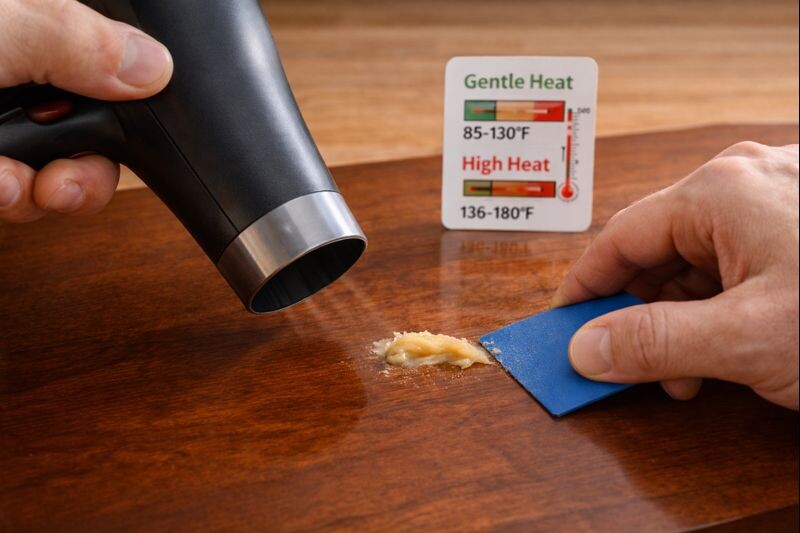
Vinegar spot treatment for PVA haze or thin residue
When you’re dealing with a thin film or a light smear of PVA on a finished surface, vinegar can help. The key is keeping it targeted and brief.
- Dampen a cotton swab or corner of a rag with white vinegar.
- Touch the glue only, not the whole surface.
- Wait 20–40 seconds, then rub lightly.
- Lift softened residue with a plastic edge.
Follow with a clean, slightly damp cloth, then dry the area. If the finish dulls, stop and move to mechanical removal instead.
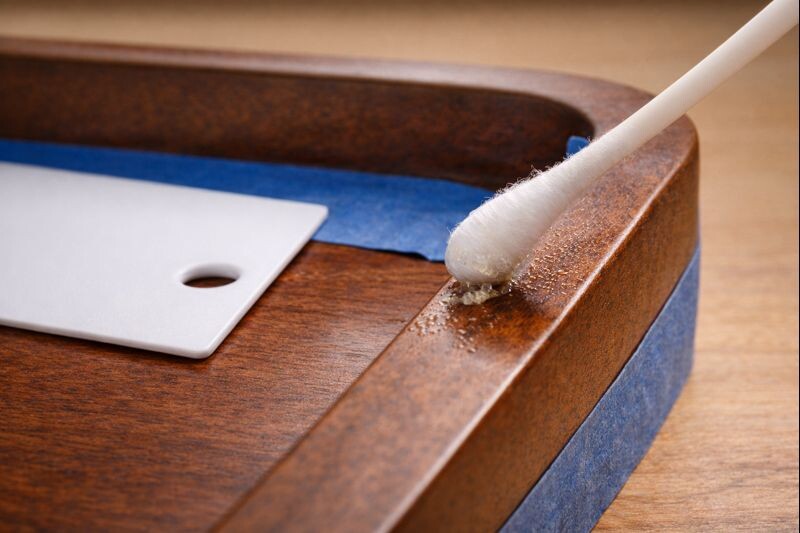
Rubbing alcohol for light residue on some finishes
Isopropyl alcohol sometimes helps lift light residue, but it can dull shellac or soften fresh finishes. Use it only after a hidden-spot test confirms the finish stays stable. Apply it like vinegar: small area, short contact, gentle wipe.
Finished pieces can haze up from the wrong cleaner or too much rubbing. These tips on cleaning a sealed wood tray without dulling the finish help you keep the sheen even.
Acetone is last-resort for CA glue, and risky on many finishes
Acetone can dissolve cyanoacrylate, but it can also strip or haze lacquer, varnish, and some paints. If you suspect super glue on a finished surface, test acetone in a hidden spot first. Use a barely damp swab, touch only the glue, and wipe immediately.
If the finish changes even slightly, stop. At that point, careful scraping is usually safer than chemicals.
After removal—blend the surface so the repair disappears
Once the glue is gone, the job isn’t always done. Bare wood may need a light sanding blend. Finished wood may need a small touch-up to match sheen.
On unfinished wood, wipe off dust, then apply your stain or finish. On a finished piece, you might be able to restore the gloss with a little matching topcoat or polish. Go easy, and build sheen in light passes instead of heavy rubbing. Heavy rubbing can make a larger dull patch than the original glue spot.
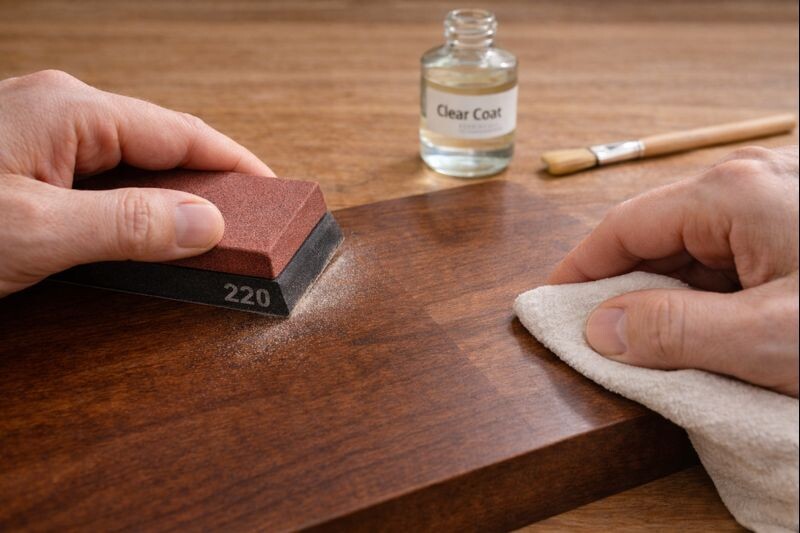
Walnut can show cleanup marks quickly if the sheen shifts. This walkthrough on finishing walnut wood so it looks even and deep helps you match the surrounding area.
Mistakes that damage wood and show up later
Most “wood damage” from glue removal comes from one of these habits:
- Wiping wet squeeze-out with water, which pushes glue into pores.
- Starting with a metal scraper on a finished surface.
- Sanding too early, which smears glue and clogs paper.
- Overheating a finish, which causes haze or softening.
- Skipping the residue reveal test before staining.
When you slow down for two minutes, the wood stays flat and the finish stays clean.
Prevention tips that make glue cleanup almost boring
You can avoid most glue removal work with small habits:
- Apply less glue than you think you need. A thin, even coat bonds well and keeps squeeze-out manageable.
- Use painter’s tape along glue lines on finished or pre-finished parts.
- Keep a damp rag nearby, but use it after scraping, not before.
- Do a dry clamp-up first so parts don’t slide under pressure.
If you’re dialing in application, a small change goes a long way. This quick read on how much wood glue to use for strong joints without squeeze-out keeps things tidy.
FAQs on Remove Wood Glue Without Damaging Wood

Will vinegar remove dried wood glue?
Vinegar can soften thin PVA residue, especially smears and haze. It won’t reliably break down epoxy or polyurethane glue. Keep vinegar contact short, and test first on finished surfaces.
Does rubbing alcohol remove wood glue?
Alcohol may help with light residue, but it can dull shellac and some clear coats. Use it only after a hidden-spot test, and keep it targeted with a swab.
What’s the safest way to remove glue from finished wood?
Start with gentle heat and a plastic scraper. If needed, try mild spot treatment on the glue only. Avoid sanding unless you’re prepared to refinish that area.
Is acetone safe on wood?
Acetone is usually safe on bare wood in small amounts, but it can damage many finishes. It’s most useful for cyanoacrylate glue, and it should be treated as a last resort.
Can I “unglue” a wood glue joint?
Most PVA joints aren’t meant to be reversible, but heat and moisture can sometimes weaken them. Hide glue is more reversible than PVA, especially in older furniture work.
Conclusion
Removing glue cleanly is mostly about choosing the gentlest method that works. Identify the glue and the finish, scrape before you sand, and use heat or mild spot treatments before harsh solvents. When you take that order seriously, the wood stays crisp and the finish looks untouched.