How to Get Wood Glue Off Skin: 7 Fast, Safe Fixes
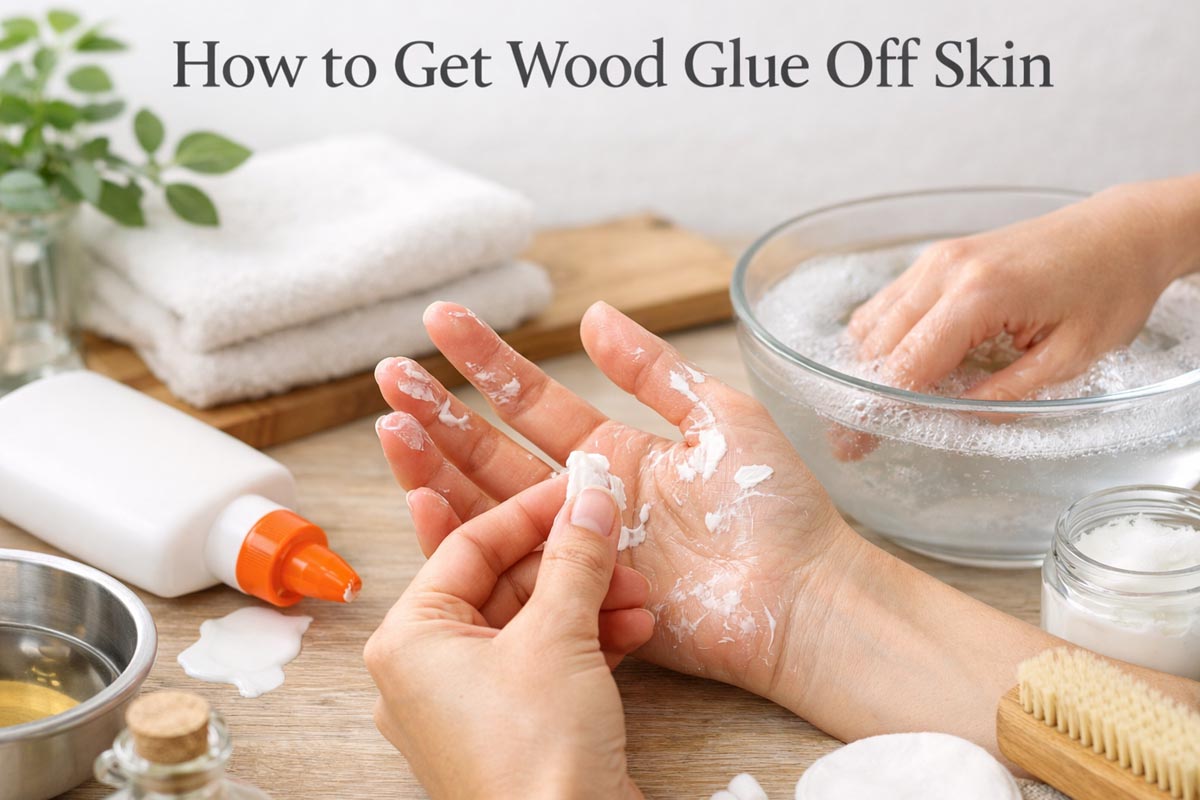
To remove wood glue off skin, the trick is matching the method to the mess. Wet glue lifts with simple washing, while cured glue needs softening and patience. I’ll walk you through the gentle steps first, then the stronger options—plus aftercare so your hands don’t feel sanded raw.
Contents Here
- 1 Identify what you’re dealing with before you scrub
- 2 If the glue is still wet, do this first
- 3 If the glue has dried, start gentle and work up
- 4 Stubborn residue: careful options that can work
- 5 When it’s better to stop and let it wear off
- 6 Aftercare: keep your hands from cracking
- 7 Preventing wood glue on skin next time
- 8 When to get medical help
- 9 FAQs on getting wood glue off skin
- 9.1 Will wood glue come off skin on its own?
- 9.2 What’s the safest way to remove dried wood glue from hands?
- 9.3 Can I use acetone (nail polish remover) on my skin for wood glue?
- 9.4 How do I prevent glue squeeze-out from becoming a sticky mess?
- 9.5 What if it wasn’t carpenter’s glue and it won’t wash off?
- 10 Final Thoughts
Identify what you’re dealing with before you scrub
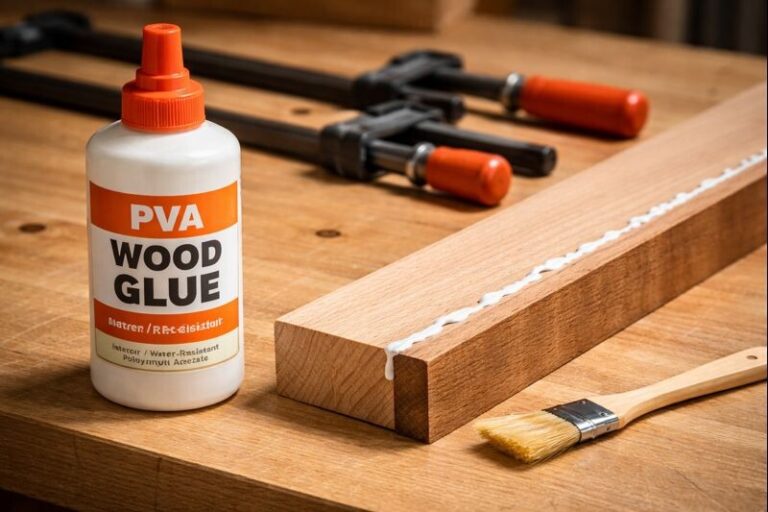
Most “wood glue” in a shop is yellow or white carpenter’s glue, usually PVA-based. Some people also mean polyurethane glue or other adhesives, which behave differently on skin. If you’re not sure what you used, look at the bottle and treat it cautiously.
A quick decision saves your skin:
- Is the glue still wet/tacky, or fully cured and rubbery?
- Is it a thin film, or a thick blob?
- Is it near eyes, lips, or a cut?
If you want the quick nerdy version for common carpenter’s glue, read up on why most yellow carpenter’s glues are PVA-based—it helps explain why soap and soaking work so well.
Quick safety check before you start
If skin is bonded together, don’t yank it apart. Soak and separate slowly. Avoid strong solvents near eyes, mouth, and any broken skin. If anything burns, stings sharply, or a rash starts, stop and switch to gentle washing.
Read next: Titebond Wood Glue vs Gorilla Wood Glue: 7 No-Regret Choices
If the glue is still wet, do this first
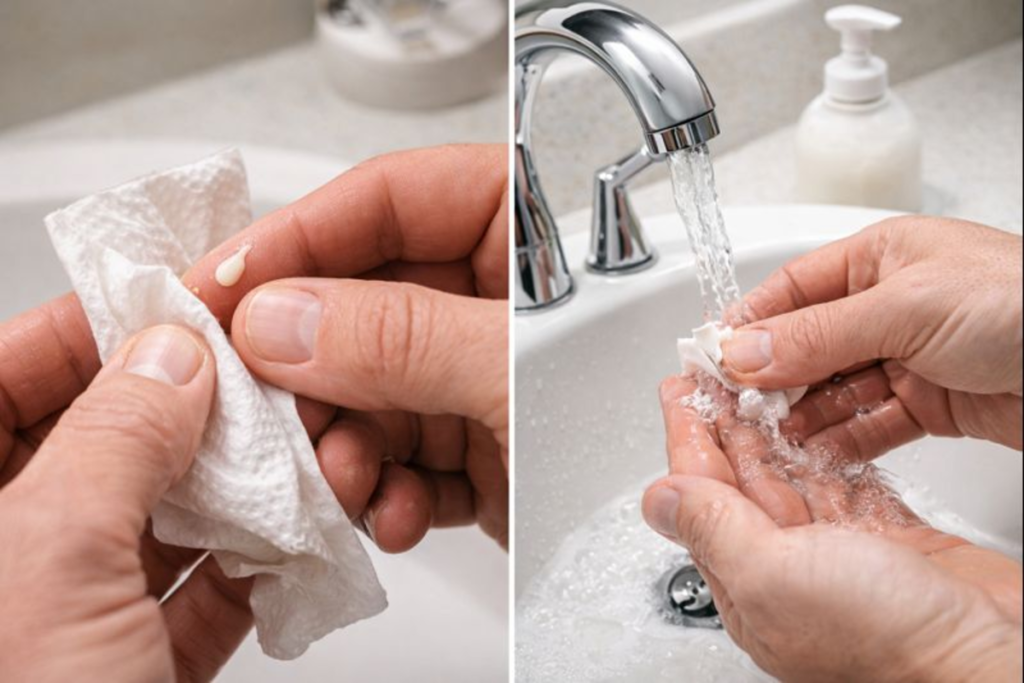
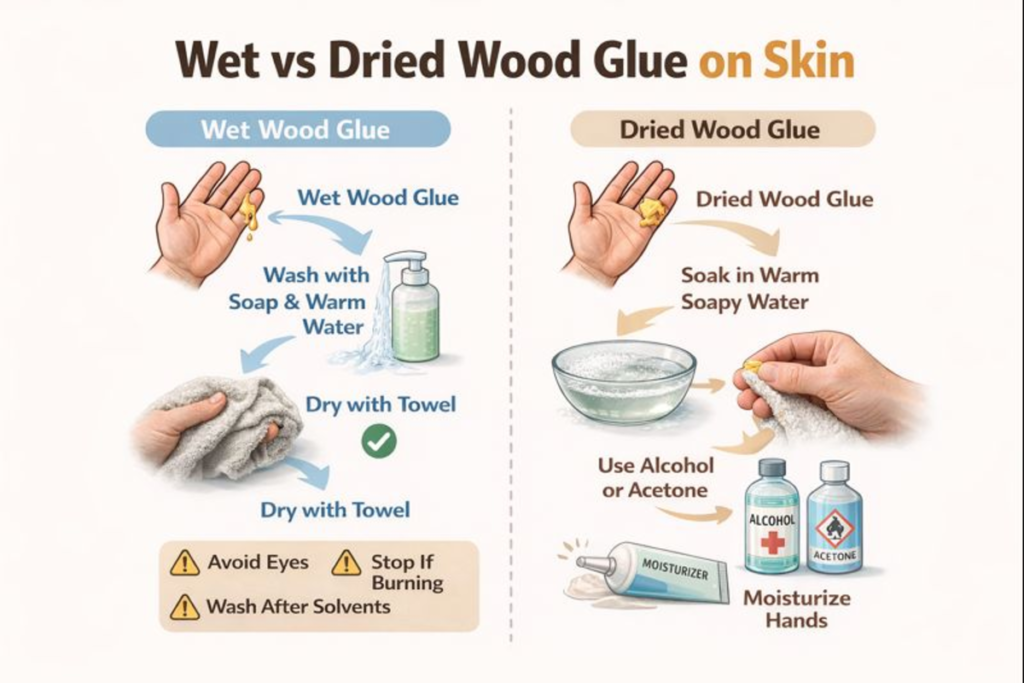
Wet wood glue is the easiest scenario, and you can usually handle it in two minutes.
- Wipe off excess with a paper towel or rag.
- Wash with warm water and soap, rubbing lightly.
- Rinse, then wash again if it still feels tacky.
The big mistake is smearing it around your hands. Get the bulk off first, then wash.
What you’ll need
You don’t need a fancy kit. Grab:
- Warm water
- Mild hand soap or dish soap
- Soft washcloth or paper towel
- Hand lotion (for the end)
If the glue has dried, start gentle and work up
When wood glue cures on skin, it usually forms a thin plastic-like film. Your goal is to soften it, then roll it off—without scraping your skin underneath.
Soak, then roll the glue off
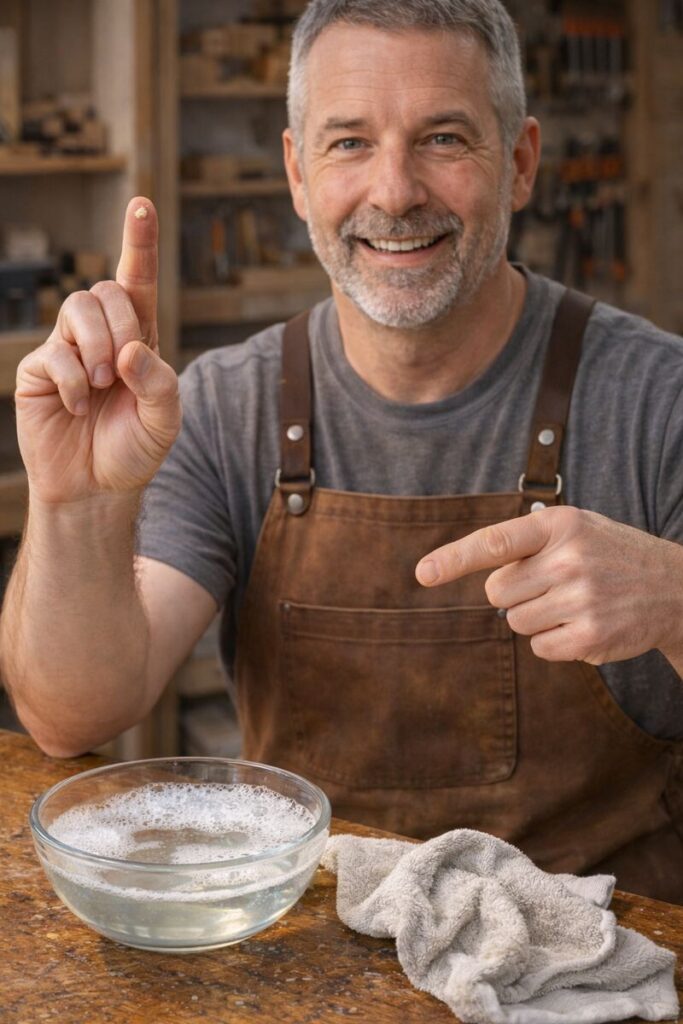
- Soak the area in warm, soapy water for 5–10 minutes.
- Rub lightly with your thumb or a soft cloth.
- Roll the edge of the glue and peel it back slowly.
If it only lifts in tiny bits, soak again. Two short soaks beat one aggressive scrubbing session.
Use a little oil if it’s clinging
For stubborn edges, a small amount of cooking oil, baby oil, or mineral oil can help the glue release while you rub gently. Oil won’t “dissolve” cured PVA, but it can reduce friction and help the film roll off without tearing at your skin.
Don’t scrape with sharp tools
Razors, chisels, and knives don’t belong on skin—ever. If you need “tool help,” use a soft cloth, your fingernail, or a plastic card with very light pressure.
Stubborn residue: careful options that can work
If you’ve soaked, rolled, and washed, but there’s still a sticky haze, step up carefully. Spot-test first. Keep contact time short. Wash immediately afterward.
Alcohol-based products for light tackiness
Rubbing alcohol or alcohol-based hand sanitizer can help lift certain residues.
- Put a small amount on a cloth or cotton pad.
- Rub the glue spot for 10–20 seconds.
- Wash thoroughly with soap and warm water.
If your skin starts feeling hot or irritated, stop and rinse.
Acetone or nail polish remover, used sparingly
Acetone can remove some adhesive residues, but it’s drying and irritating for many people. If you use it:
- Use a tiny amount on a cotton pad.
- Rub only the glue patch, not surrounding skin.
- Wash immediately, then moisturize.
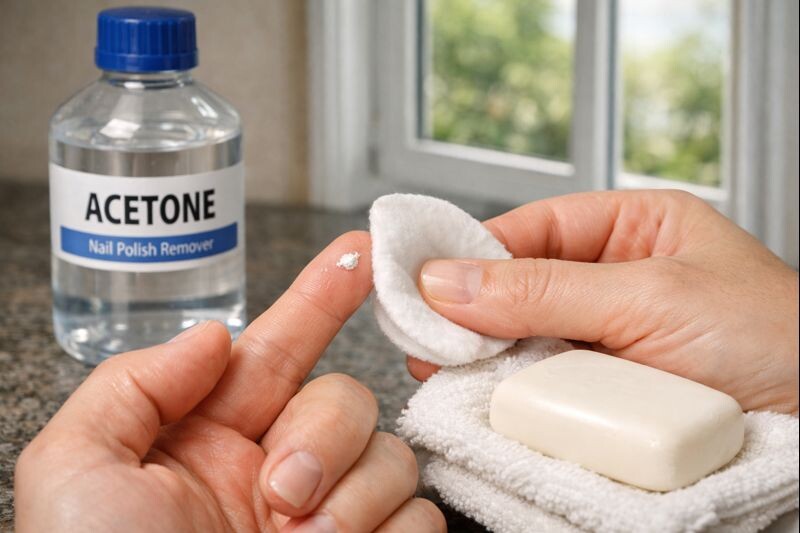
Avoid acetone near eyes, lips, and any cuts. Keep it away from flames and good finishes too.
Skip the harsh shop solvents on skin
Some DIY advice throws around stronger solvents, but your skin isn’t a test board. If the label or safety sheet doesn’t clearly support skin contact, don’t experiment. When in doubt, go back to soaking and time.
When it’s better to stop and let it wear off
Sometimes the safest choice is patience. A thin layer of cured glue will often loosen over the next day as you wash your hands normally and your skin sheds naturally. If the patch is small and not irritating, letting it wear off beats turning your knuckle raw.
If you’re wondering whether that glue is “done” once it hardens, it helps to know how long wood glue really takes to fully cure. Cured glue tends to act like a flexible film on skin until it finally releases.
Aftercare: keep your hands from cracking
Even gentle removal can dry your skin out, especially in winter or if you used alcohol/acetone.
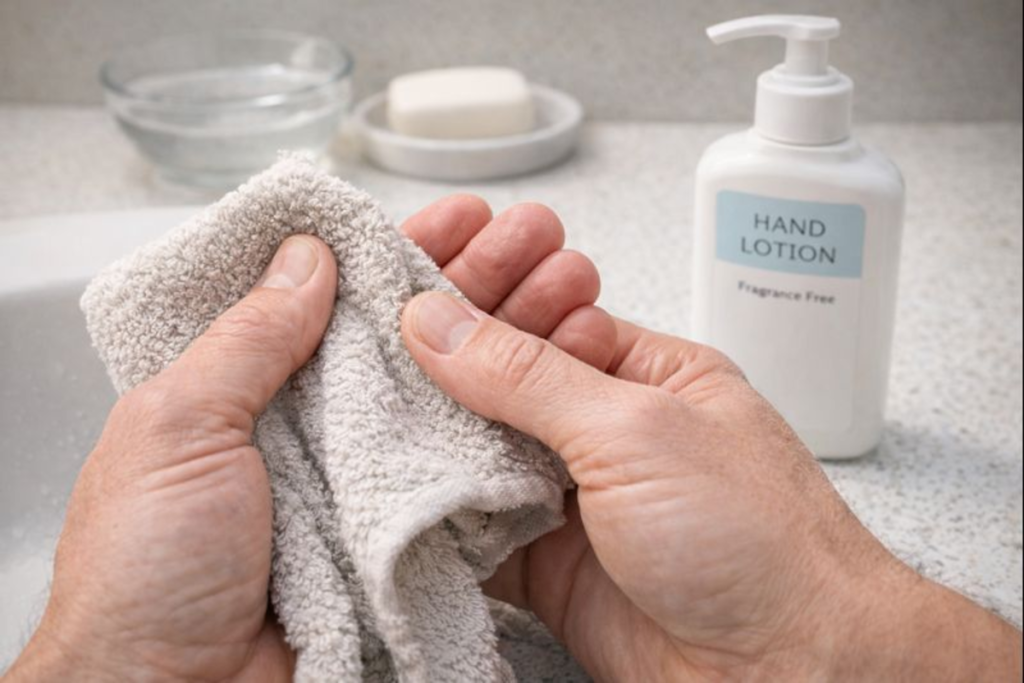
- Wash once more with mild soap.
- Pat dry, don’t scrub dry.
- Apply hand lotion or a simple moisturizer.
If skin feels tight or looks pink, give it a few hours and avoid solvents.
Preventing wood glue on skin next time
This is the part most people skip—until the next glue-up.
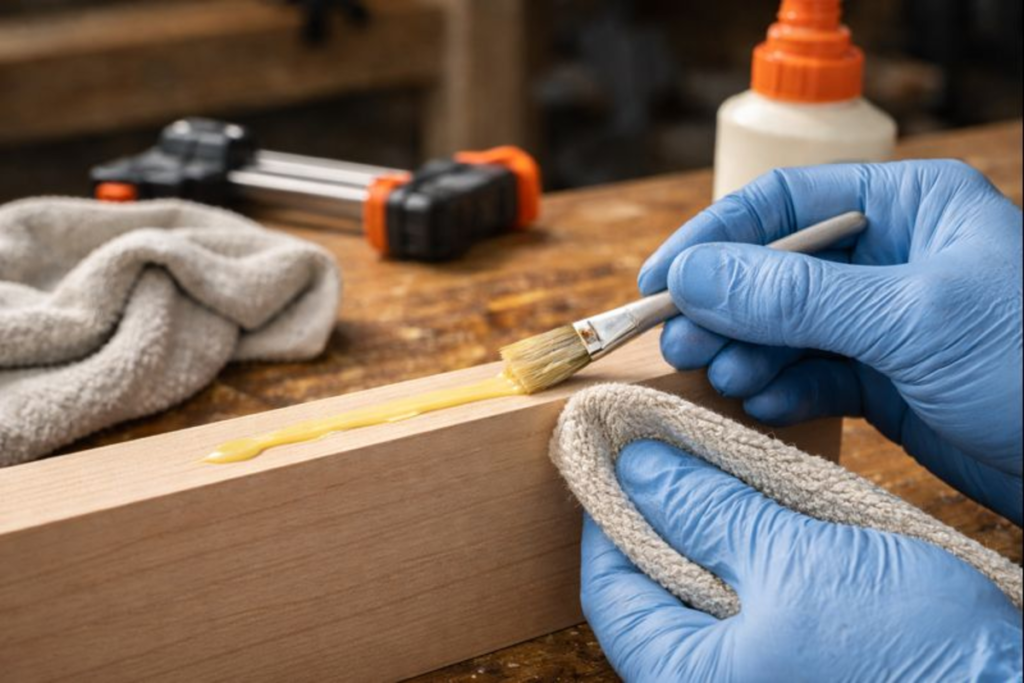
- Wear nitrile gloves for messy assemblies.
- Keep a damp rag close and wipe squeeze-out immediately.
- Use a smaller glue bottle tip or a brush for control.
- Wash hands during the job, not after everything is glued.
If you’re picking glue for a repair where you’ll be working fast, this guide on glue choices that make small furniture fixes easier can help you avoid the runny, everywhere mess.
When to get medical help
Most wood glue on skin is a nuisance, not an emergency. Still, get medical advice right away if:
- Glue gets in your eyes, mouth, or nose
- You have swelling, hives, or spreading redness
- Skin is bonded and you can’t separate it with soaking
- There’s severe burning, blistering, or glue in an open wound
- You have numbness or circulation issues in a finger
If a product label or safety sheet gives specific first-aid steps, follow that first.
FAQs on getting wood glue off skin

Will wood glue come off skin on its own?
Often, yes—especially a thin cured film. Normal handwashing and natural skin shedding will loosen it over a day or two. If it’s irritating, use warm soaks and gentle rolling instead of picking.
What’s the safest way to remove dried wood glue from hands?
Warm soapy water soaking, then gently rolling/peeling the softened glue off. Repeat the soak if needed. Finish with moisturizer.
Can I use acetone (nail polish remover) on my skin for wood glue?
You can for stubborn residue, but use it sparingly and briefly. Spot-apply, avoid sensitive areas, wash immediately, and moisturize. If it stings or irritates, stop.
How do I prevent glue squeeze-out from becoming a sticky mess?
Use less glue than you think, apply evenly, and wipe squeeze-out early. For the woodworking side of cleanup, this walkthrough on lifting glue squeeze-out without scarring the wood surface is worth keeping bookmarked.
What if it wasn’t carpenter’s glue and it won’t wash off?
Check the bottle. Polyurethane-type adhesives and other products can act differently. Stick with gentle methods first, then only use label-approved removal steps. If skin is bonded or irritated, seek medical advice.
Final Thoughts
Getting wood glue off your skin is mostly a patience game: wipe it while it’s wet, soak it when it’s dry, and only step up to alcohol or acetone when you truly need to. Wash well, moisturize after, and you’ll keep your hands comfortable for the next project.