Does Gorilla Wood Glue Dry Clear? 5 Fast Tests You Can Do Today
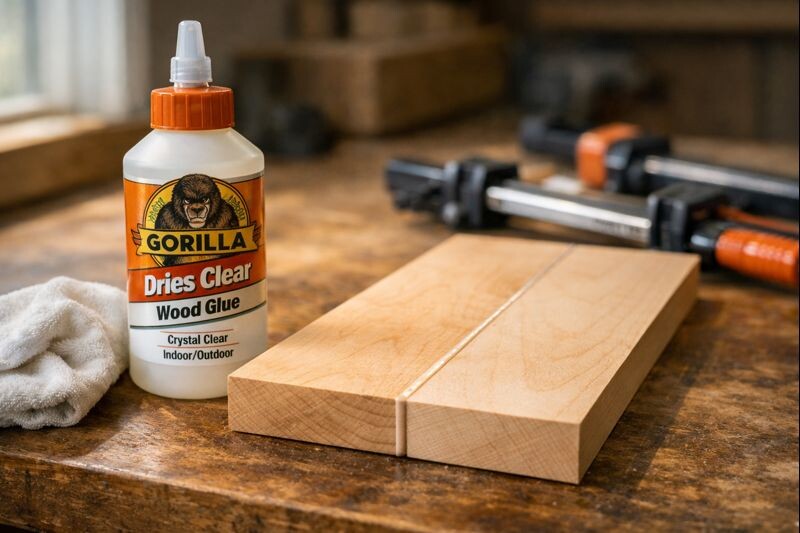
Does Gorilla Wood Glue dry clear depends on which Gorilla bottle you’re using and how clean your joint work is. In short, Gorilla makes multiple wood glues—Gorilla Dries Clear Wood Glue cures clear, while standard Gorilla Wood Glue dries a natural/tan color rather than crystal clear.
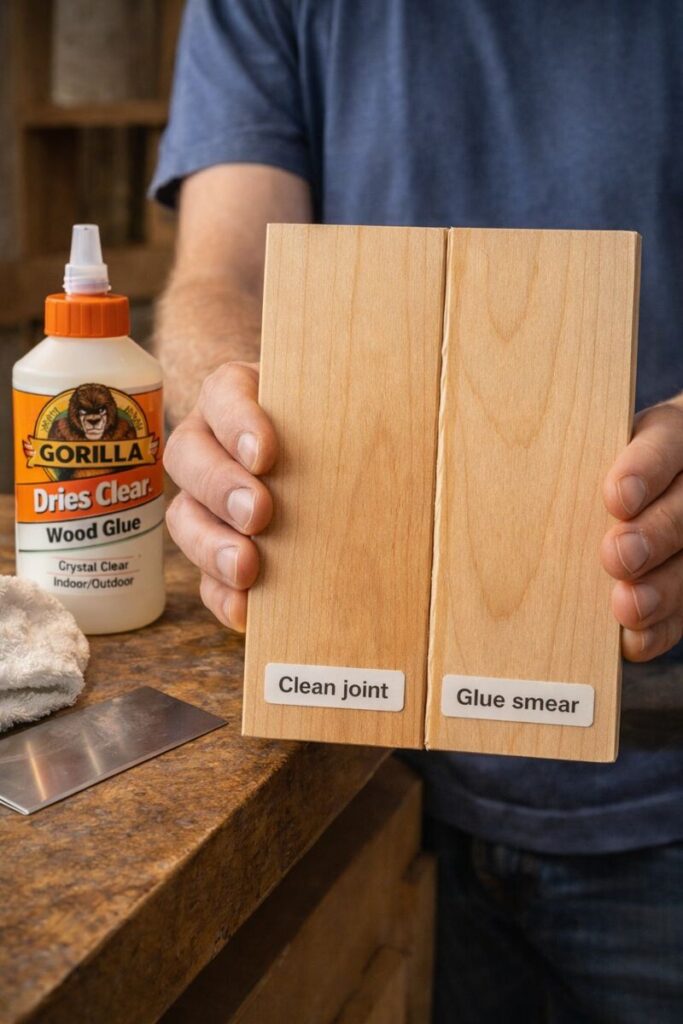
In a tight joint with a thin glue film, the right formula can all but disappear. In a sloppy joint with dried squeeze-out, any glue can show up like a shiny outline.
Contents Here
- 1 Quick answer: does Gorilla wood glue dry clear?
- 2 What “dries clear” really looks like on a glue line
- 3 The specs that matter for clarity: clamp time, cure time, and temperature
- 4 How to make Gorilla wood glue dry as clear as possible
- 5 Painting, staining, and finishing over Gorilla wood glue
- 6 Cleanup and removal (wood, tools, and skin)
- 7 Troubleshooting: why it didn’t dry clear (and how to fix it)
- 8 Gorilla vs other wood glues: clarity and finishing expectations
- 9 FAQs on Gorilla wood glue drying clear
- 9.1 Does Gorilla Wood Glue dry clear or yellow?
- 9.2 How long does Gorilla wood glue take to dry?
- 9.3 Can I stain over Gorilla Dries Clear Wood Glue?
- 9.4 Can I paint over Gorilla wood glue?
- 9.5 What’s the difference between Gorilla Wood Glue and Original Gorilla Glue?
- 9.6 How do I remove Gorilla wood glue from wood?
- 10 Conclusion
Quick answer: does Gorilla wood glue dry clear?
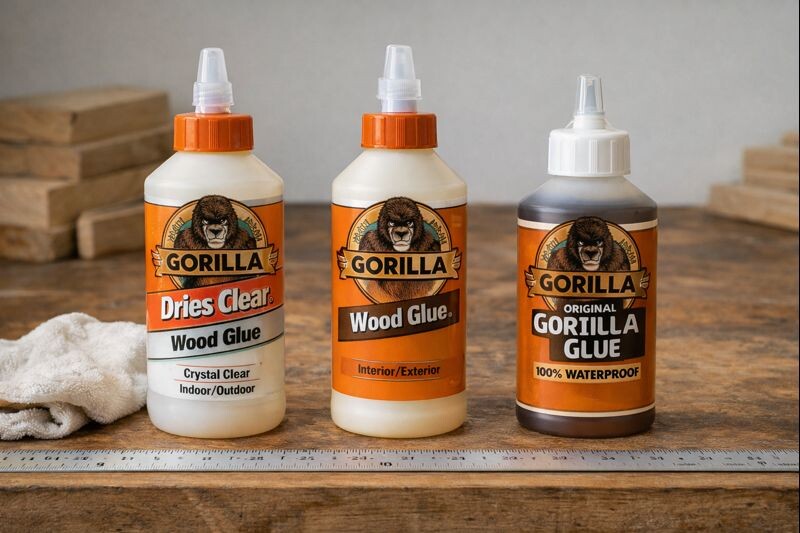
Gorilla makes more than one “wood glue,” and they don’t all dry the same color. Gorilla Dries Clear Wood Glue cures clear on wood surfaces and is meant to leave an invisible-looking bond line. Gorilla Wood Glue (the common PVA wood glue) dries a natural, translucent tan color.
Identify the exact Gorilla product before you judge the color
If the label says “Dries Clear Wood Glue,” you’re working with the clear-drying formula. If it just says “Gorilla Wood Glue,” expect a natural/tan glue line that blends well on most woods, but isn’t crystal clear. And if you grabbed Original Gorilla Glue (polyurethane), that’s a different animal entirely—it foams and is usually the worst choice when appearance matters.
Also know: How Strong Is Gorilla Wood Glue: 7 Hard Truths for Stronger Joints
What “dries clear” really looks like on a glue line
Clear-drying doesn’t mean the glue becomes invisible no matter what. It means the cured glue film on wood won’t add a yellow/orange cast, and a properly fitted joint can look like clean wood-to-wood contact after sanding and finishing.
Here’s what makes the difference in the shop:
- Thin glue line + tight joint: nearly disappears.
- Gaps or uneven pressure: the glue line gets thicker and catches light.
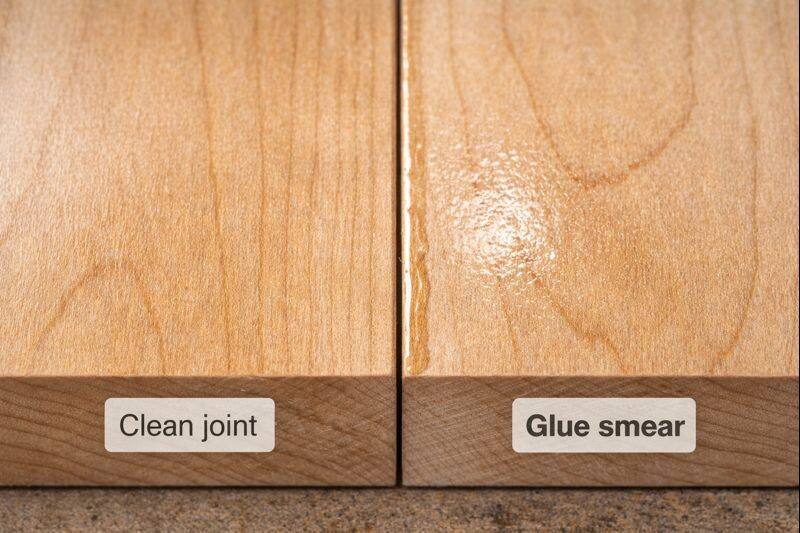
- Glue residue on the face grain: it seals pores and can leave a shiny streak under finish.
Why glue lines still show even when the glue dries clear
Most “visible glue” problems aren’t about the glue color. They’re about glue left on the surface. Any dried smear acts like a clear plastic coating over the wood. The finish won’t soak evenly, and the light hits that patch differently.
That’s why I’m picky about cleanup timing and why I like to explain the difference between set and cure. If you want a deeper breakdown, TrayEdit’s piece on the real meaning of full cure time in wood glue helps you plan sanding and finishing without smearing half-cured glue into the grain.
The specs that matter for clarity: clamp time, cure time, and temperature
With Gorilla’s PVA wood glues, you’ll commonly see:
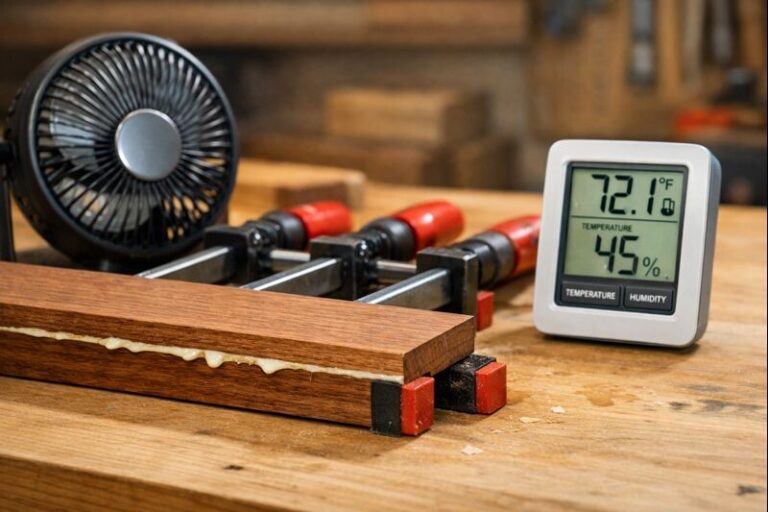
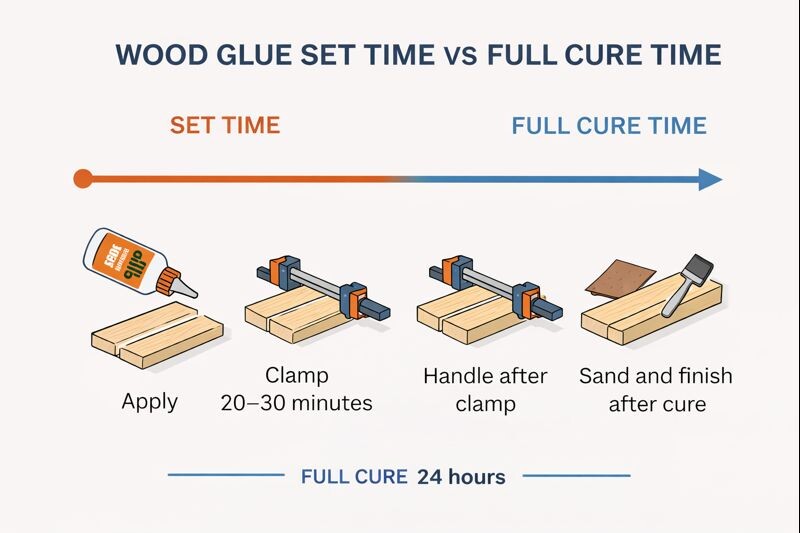
- Clamp time: about 20–30 minutes for a normal joint.
- Full cure: about 24 hours before heavy stress, aggressive sanding, or finishing.
- Application temperature: warm, stable shop temps matter; cold glue can thicken and create uneven squeeze-out.
If you’re the type who likes a simple rule: clamp it, leave it alone, and don’t rush the finish. That same mindset shows up in my notes on typical set times for wood glue in real projects.
Dry vs cure: the mistake that causes hazy joints
A joint can feel “dry” while the glue is still curing deeper in the seam. Sand too early and you can smear glue across the surface, especially on open-grain woods like oak. That smear often turns into a pale, cloudy patch once you wipe on stain or a clear coat.
How to make Gorilla wood glue dry as clear as possible
A clean-looking glue line is mostly about process. Here’s the routine I use when appearance matters.
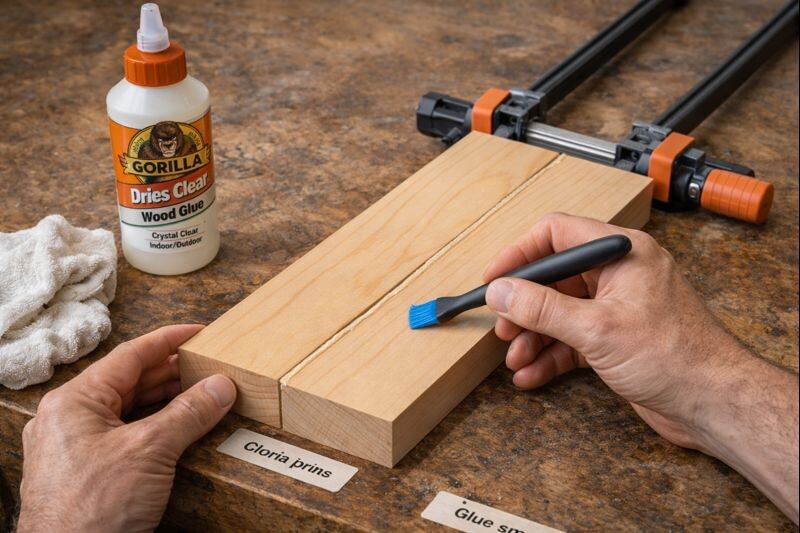
Step-by-step workflow for a clean bond line
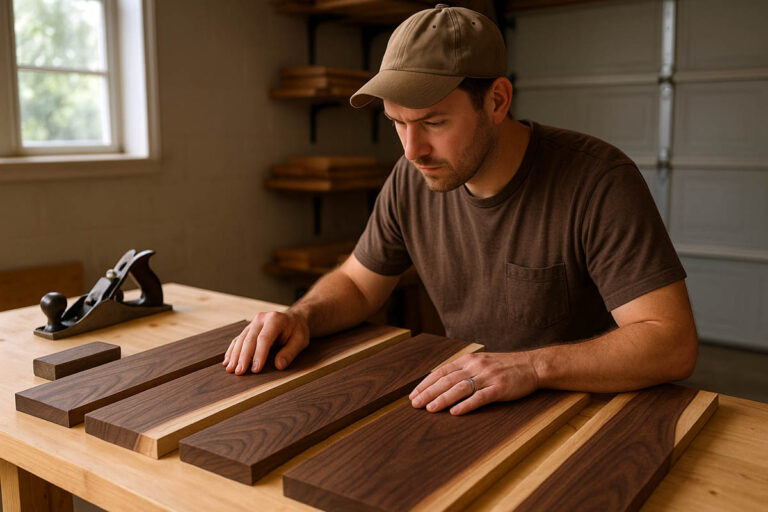
- Dry-fit first. If you can rock the pieces or see daylight, fix the fit before gluing.
- Prep the surfaces. Freshly cut or sanded wood bonds best; remove dust.
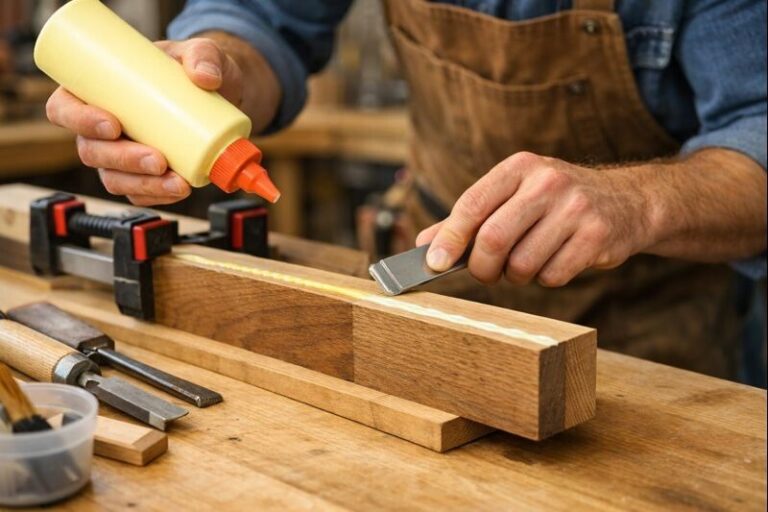
- Apply a thin, even layer. You want coverage, not puddles.
- Clamp evenly. Firm pressure across the joint, not just at the ends.
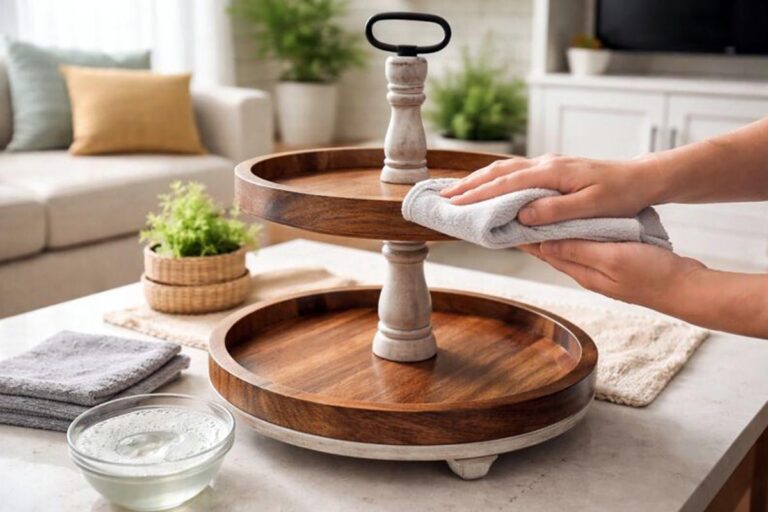
- Clean squeeze-out immediately. Wipe with a clean, damp cloth, then wipe again with a clean area.
- Let it cure fully. Treat 24 hours as your safe default before finishing.
If your shop is cold or humid and you’re tempted to rush, use safer methods instead of heat blasting the joint. I put my go-to options in practical ways to speed up glue drying without weakening the bond.
The best squeeze-out cleanup method (wet vs tacky vs dry)
- Wet: Wipe gently, then follow with a second pass using clean water and a clean rag section.
- Tacky (rubbery): Let it skin a bit, then peel or roll it off carefully.
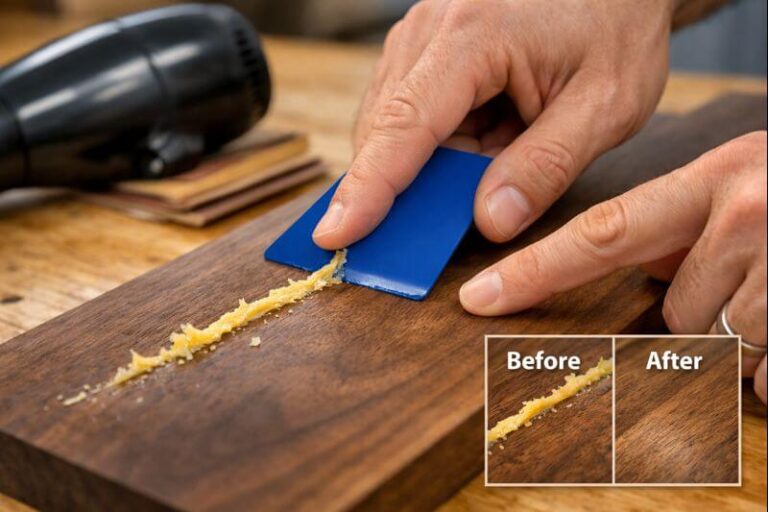
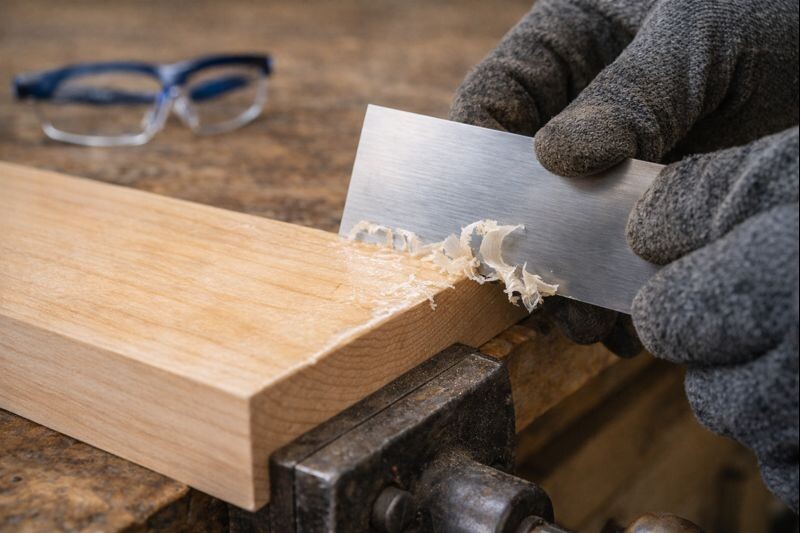
- Fully dry: Scrape it flush with a sharp scraper or razor, then sand lightly.
The goal is simple: don’t push glue into the surrounding grain.
Learn more: Does Wood Glue Expire? 12 Quick Answers for PVA, Epoxy, and CA
Painting, staining, and finishing over Gorilla wood glue
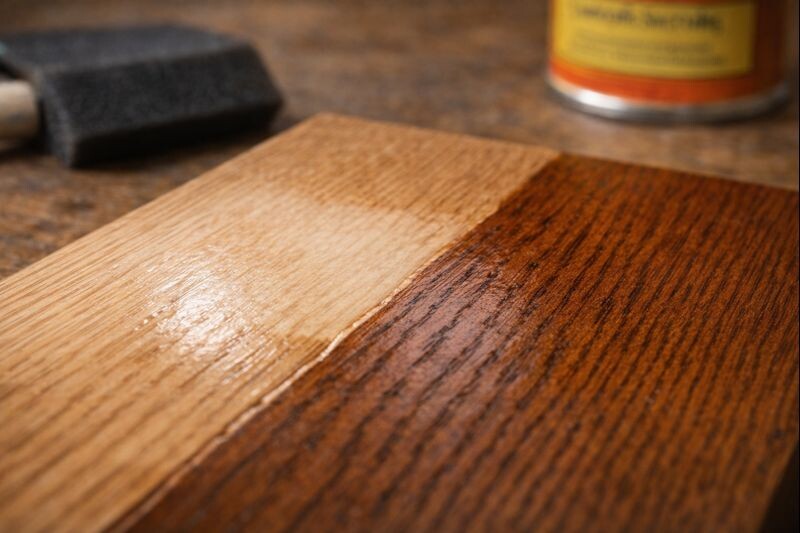
This is where people get frustrated, so I’ll be blunt: glue on the wood surface is the problem, not whether the glue itself is “stainable.” Gorilla’s Dries Clear Wood Glue is listed as paintable and sandable, but not stainable, which means you should not expect cured glue to accept stain the way wood does.
If you plan to stain, treat glue like contamination
If you’re staining a tabletop, chair rail, or cabinet face frame, make cleanup your priority. Dried glue blocks stain absorption and can show up as a light patch or a glossy halo.
My finishing habit is to sand the joint area, then wipe with mineral spirits (or water for water-based finishes) to check for blotchy spots. If you want a sanding approach that avoids shiny “glue burnished” patches—especially on end grain—TrayEdit’s guide to sanding end grain to a truly even surface is a solid companion.
Can you glue painted or stained wood?
For a strong joint, glue needs to bite into wood fibers. Paint and stain can interfere and lead to bond failure, especially in stressed joints. When strength matters, I sand back to clean wood where the joint will land, glue, then finish afterward.
If you’re doing a darker wood project and you’re picky about how a seam looks under clear coat, you’ll appreciate the finishing considerations in getting a clean clear finish on walnut and other dark woods.
Cleanup and removal (wood, tools, and skin)
The easiest cleanup is still “don’t let it dry where you don’t want it.”
- On wood (wet): damp cloth, multiple passes, clean water.
- On wood (dry): scrape carefully, then sand as needed.
- On tools: warm water while the glue is still fresh.
- On skin: soap and warm water, then patience—don’t rip at it.
Removing dried glue without damaging soft wood
Softwoods dent easily, and aggressive scraping can leave gouges that show through finish. Use a sharp scraper at a low angle and take thin shavings. If you need sanding, go light and keep it flat so you don’t dish out the surface.
Troubleshooting: why it didn’t dry clear (and how to fix it)
If you’re seeing a line, haze, or shiny patch, one of these is usually to blame.
Problem: the glue line looks shiny under finish
Cause: dried squeeze-out or glue smear on the surface.
Fix: scrape/sand back to clean wood, then re-finish that area.
Problem: the joint looks cloudy after sanding
Cause: sanding before full cure, smearing glue into the grain.
Fix: let it cure longer, then sand again and wipe clean.
Problem: the seam is obvious even with clear-drying glue
Cause: gaps, poor fit, or uneven clamp pressure creating a thick glue film.
Fix: improve the fit, use better clamping, and apply less glue next time.
Problem: the bond failed on a stained or painted surface
Cause: glue couldn’t grab wood fibers.
Fix: sand to bare wood in the joint area and re-glue.
When the repair matters more than the glue line—like a loose chair rung or a cracked rail—I choose strength and compatibility first. TrayEdit’s notes on picking an adhesive for common furniture repairs can save you from using the wrong product for the job.
Gorilla vs other wood glues: clarity and finishing expectations
Gorilla’s clear-drying option is handy when you’re building projects where glue lines might be seen—picture frames, mitered trim, lighter woods, or craft work. Traditional yellow and tan PVA glues are still excellent, but they can leave a warmer glue line that shows on pale woods or under certain clear coats.
If you’re doing fine joinery, remember this: fit beats formula. A perfect joint with a basic PVA looks better than a gappy joint with any “clear” glue.
FAQs on Gorilla wood glue drying clear

Does Gorilla Wood Glue dry clear or yellow?
Standard Gorilla Wood Glue dries a natural, translucent tan. Gorilla Dries Clear Wood Glue cures clear on wood surfaces, which helps the joint blend in.
How long does Gorilla wood glue take to dry?
Most joints need about 20–30 minutes of clamping time, but you should plan on roughly 24 hours for a full cure before heavy stress or finishing.
Can I stain over Gorilla Dries Clear Wood Glue?
Don’t count on it. Even if a glue is clear, cured glue doesn’t absorb stain like wood. The fix is to remove all surface glue before staining.
Can I paint over Gorilla wood glue?
Yes, once the glue is fully cured and the surface is sanded smooth. Paint is far more forgiving than stain, but surface prep still matters.
What’s the difference between Gorilla Wood Glue and Original Gorilla Glue?
Gorilla Wood Glue is a water-based PVA meant for wood-to-wood joints and doesn’t foam. Original Gorilla Glue is polyurethane-based, expands as it cures, and is easier to make messy on visible work.
How do I remove Gorilla wood glue from wood?
Wipe wet glue with a damp cloth. For dried glue, scrape carefully with a sharp scraper or razor, then sand lightly to blend the surface.
Conclusion
A clean-looking glue line comes from the right Gorilla wood glue and a tight, well-clamped joint. The Dries Clear formula cures clear on wood surfaces, while standard Gorilla Wood Glue dries a natural/tan color. Either way, wipe squeeze-out early, let it cure fully, and keep glue off any surface you plan to stain.