
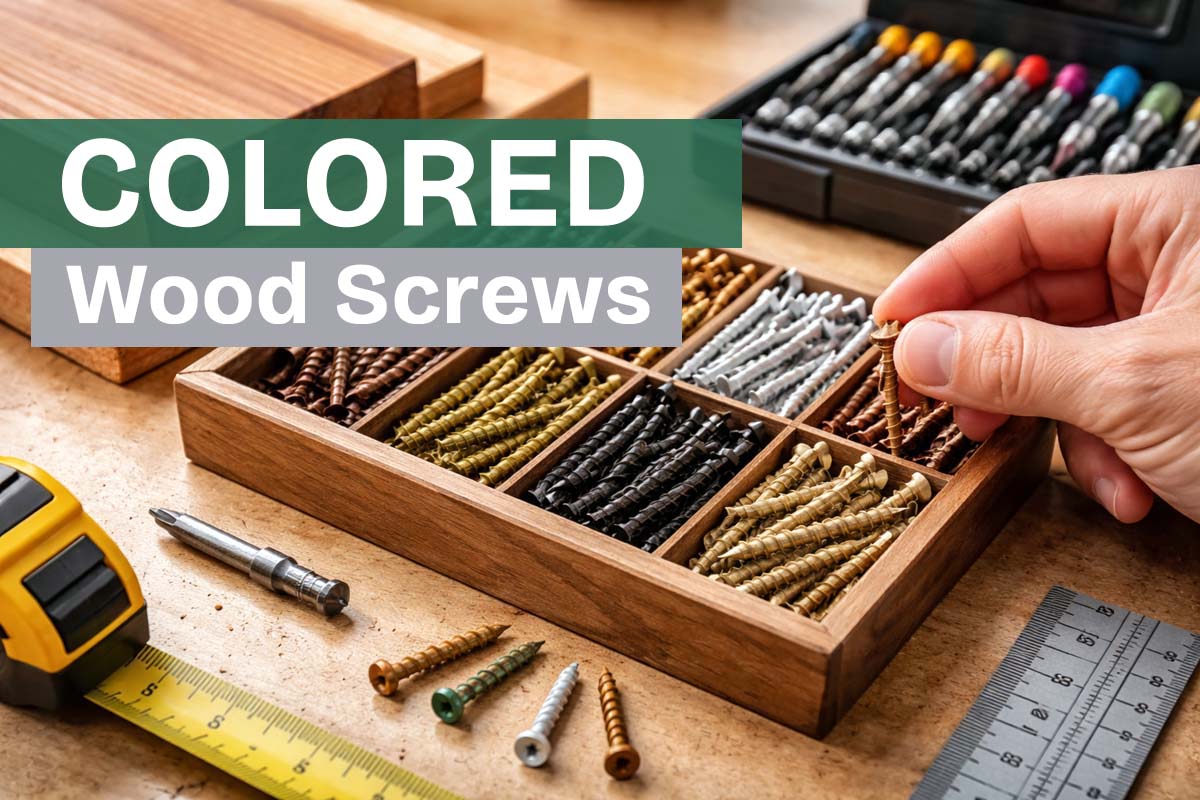
Colored wood screws are wood screws with painted or coated heads that are great for blending into decking, trim, and furniture, giving a cleaner finished look while helping reduce visible fastener spots and touch-up work.
The color helps, but the screw still needs the right steel, coating, head shape, and drive to last and to seat cleanly. This guide explains what “colored” means, where these screws work best, how to match shades, and how to install them cleanly.
Quick Checklist: 10 Best Colored Wood Screws
WELLOCKS Epoxy Coated Wood Screws
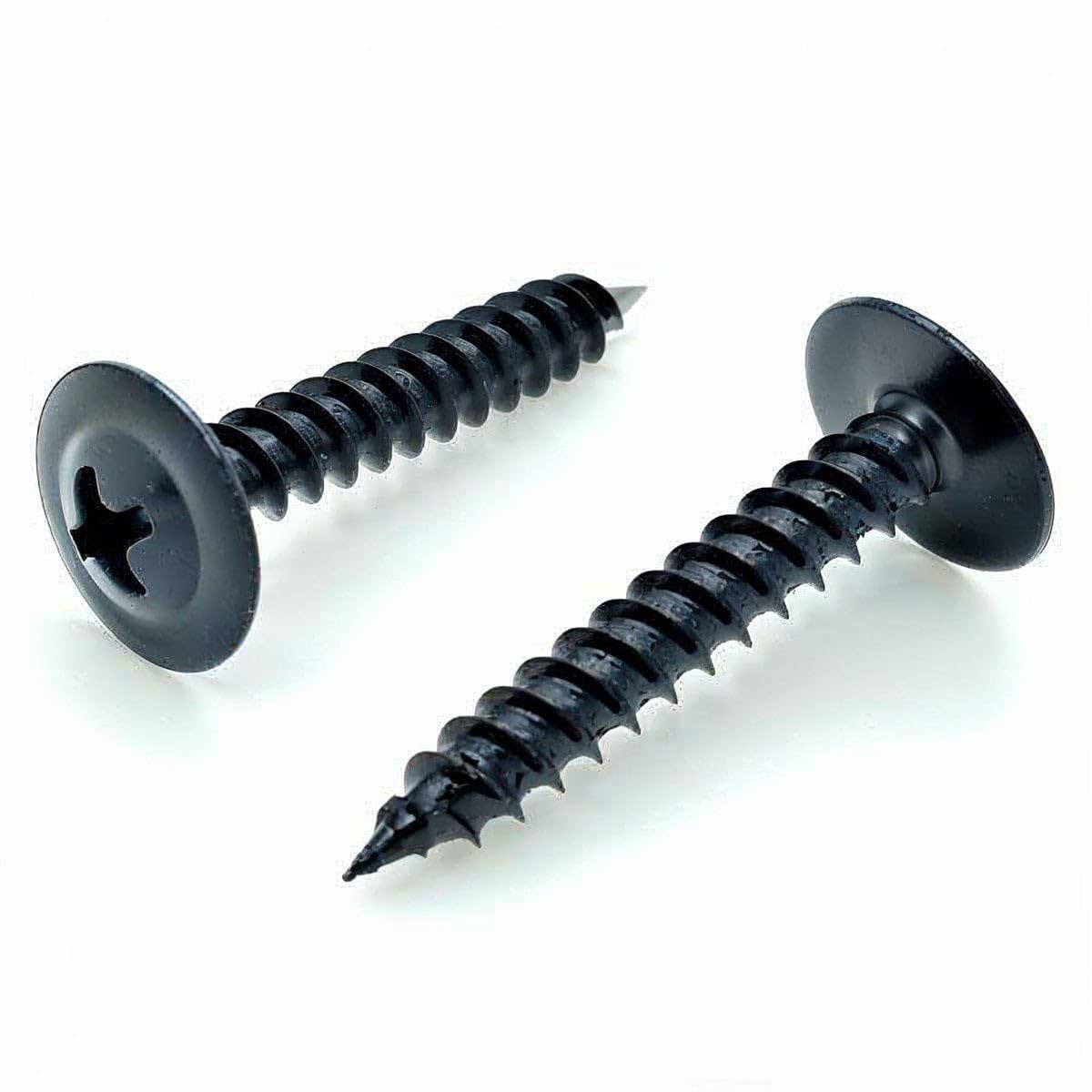
BCP Fasteners Black Phosphate Coated Wood Screws
What are colored wood screws
Colored wood screws use a colored head finish to reduce contrast against the surface. Most products color only the head and the washer face, not the full shank.
Manufacturers use three common approaches.
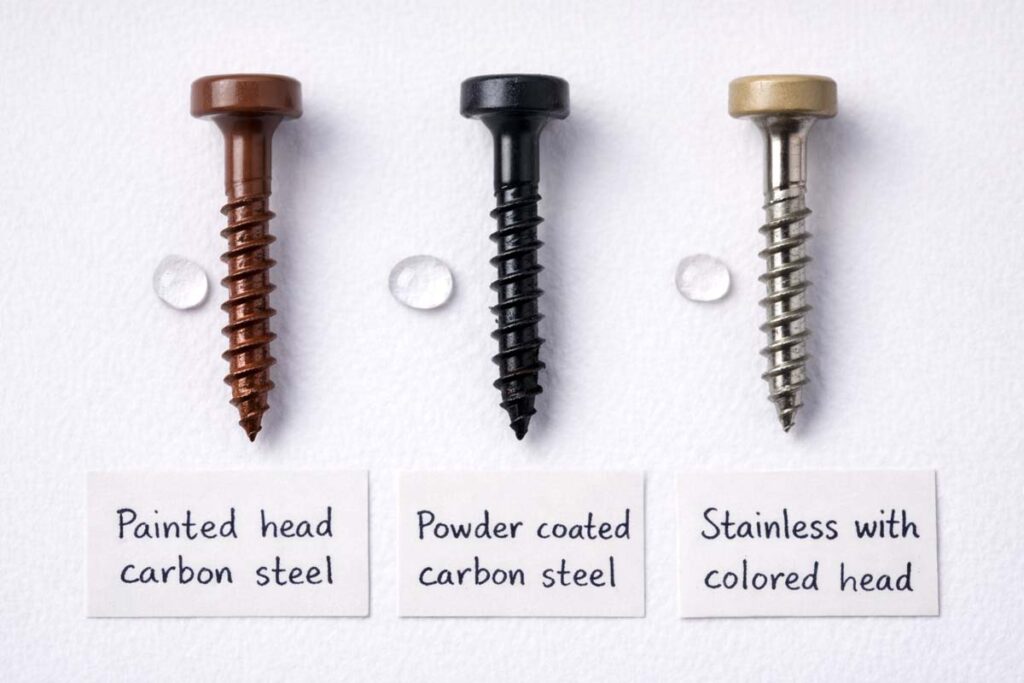
- Painted heads: A color layer sits on the head after plating. It matches well, but the edge of the head chips if the bit slips.
- Powder-coated or baked coatings: A thicker coating improves chip resistance and often improves outdoor durability.
- Color-matched systems: The brand ties specific screw colors to popular decking and trim colors through charts or selection tools.
If you’re matching hardware on visible trim, choose decorative wood screw heads that blend with your finish so the fasteners look intentional instead of distracting.
Where colored wood screws work best
Decking, composite, fascia, and exterior trim
Colored heads matter most when the fastener stays visible. Deck boards, fascia, picture-frame borders, stair treads, and PVC trim fit that category.
Outdoor builds punish weak screws. Sun, water, and treated lumber expose gaps in plating and thin paint. Choose the material and coating first, then pick color.
Interior finish work and decorative woodworking
Colored heads also fit indoor projects where a plug looks out of place. Cabinet toe-kicks, painted built-ins, wall racks, and shop fixtures often look cleaner with a matching head.
On stained hardwood, a close match keeps the eye on the grain. On painted trim, a matching head cuts down touch-up time.
Color matching methods that give consistent results
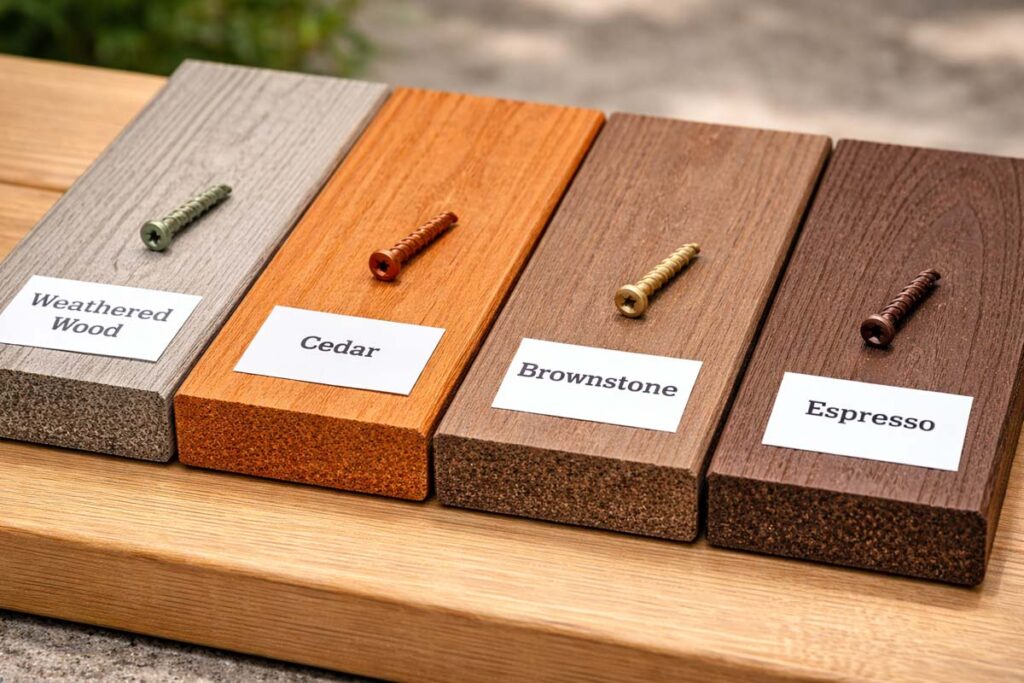
Use manufacturer charts and deck-board cross references
Deck screw brands publish cross-reference charts that map board brands and color names to screw colors. That approach reduces guesswork for composite and PVC boards.
Light changes perception. Compare sample heads to an offcut outdoors, in shade and sun, before ordering a large box.
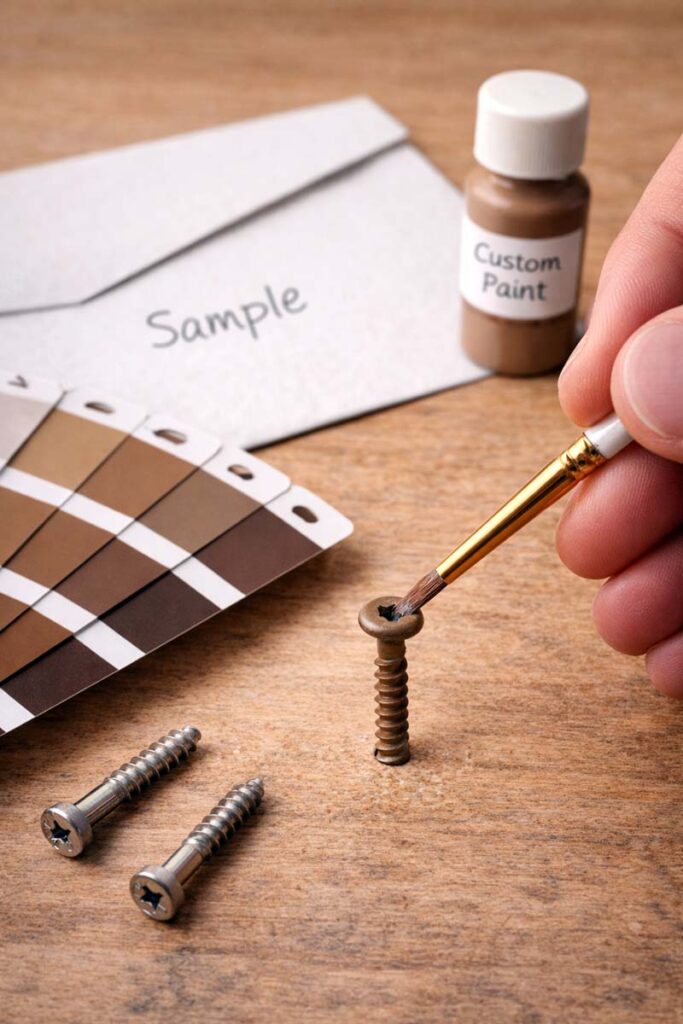
Use sample-based custom matching for specialty work
Some suppliers offer custom painted heads based on a sample, a swatch, or a color code. That option fits architectural trim, signage, and restoration work where the color needs tight control.
Custom matching also helps when the project mixes materials, such as painted steel brackets with wood trim.
Finishes and coatings: what holds up in real use
Paint on a screw head behaves like paint on a railing. It looks clean until abrasion breaks the film.
A powder coat or baked finish resists scratches better than thin paint, especially around the drive recess. Even so, a loose bit still marks the head if the driver wobbles.
For exterior work, prioritize coatings that resist corrosion and UV fade. A bright head that fades to chalky gray draws attention over time.
Material choices: color sits on top of the corrosion story
Carbon steel vs stainless steel
Carbon steel screws rely on plating and coatings to resist rust. When the coating breaks, rust starts at the edges and under the head.
Stainless steel resists corrosion through the alloy itself. For outdoor builds, stainless reduces staining on cedar and redwood and stays stable through wet seasons. For a deeper primer, this guide on stainless steel wood screws for exterior projects breaks down common options.
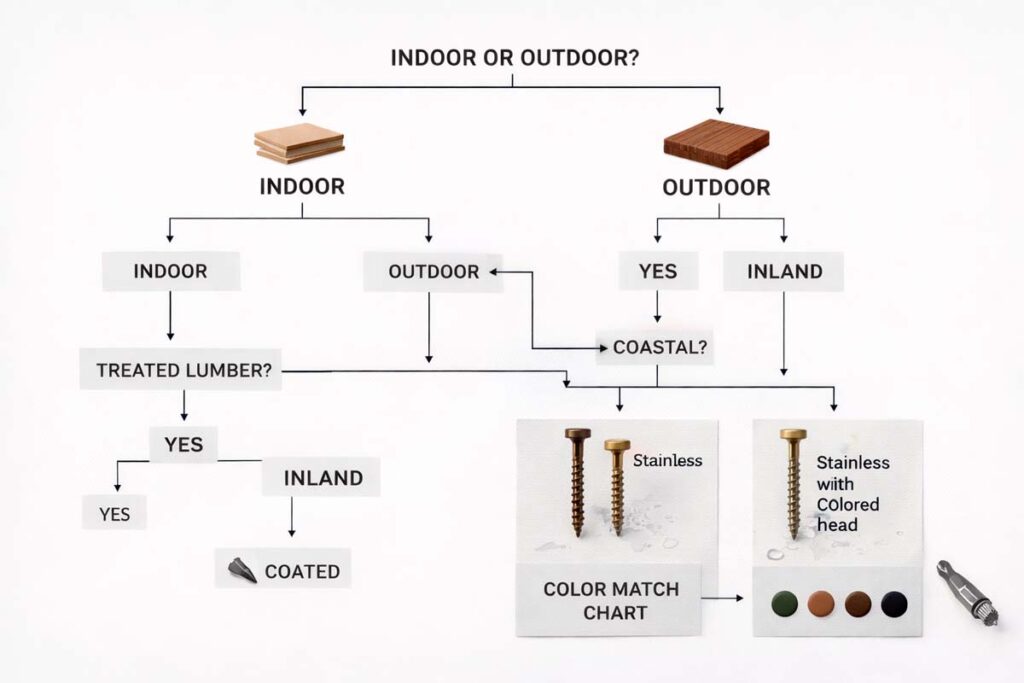
Treated lumber and coastal exposure checkpoints
Pressure-treated lumber accelerates corrosion when the screw material and coating do not match the environment. Coastal air also pushes rust fast.
Match your screw selection to the jobsite. Use exterior-rated screws for decks and fences, and step up to stainless when the project sees frequent wetting, spray, or salt.
Reviews of the 10 Best Painted Wood Screws
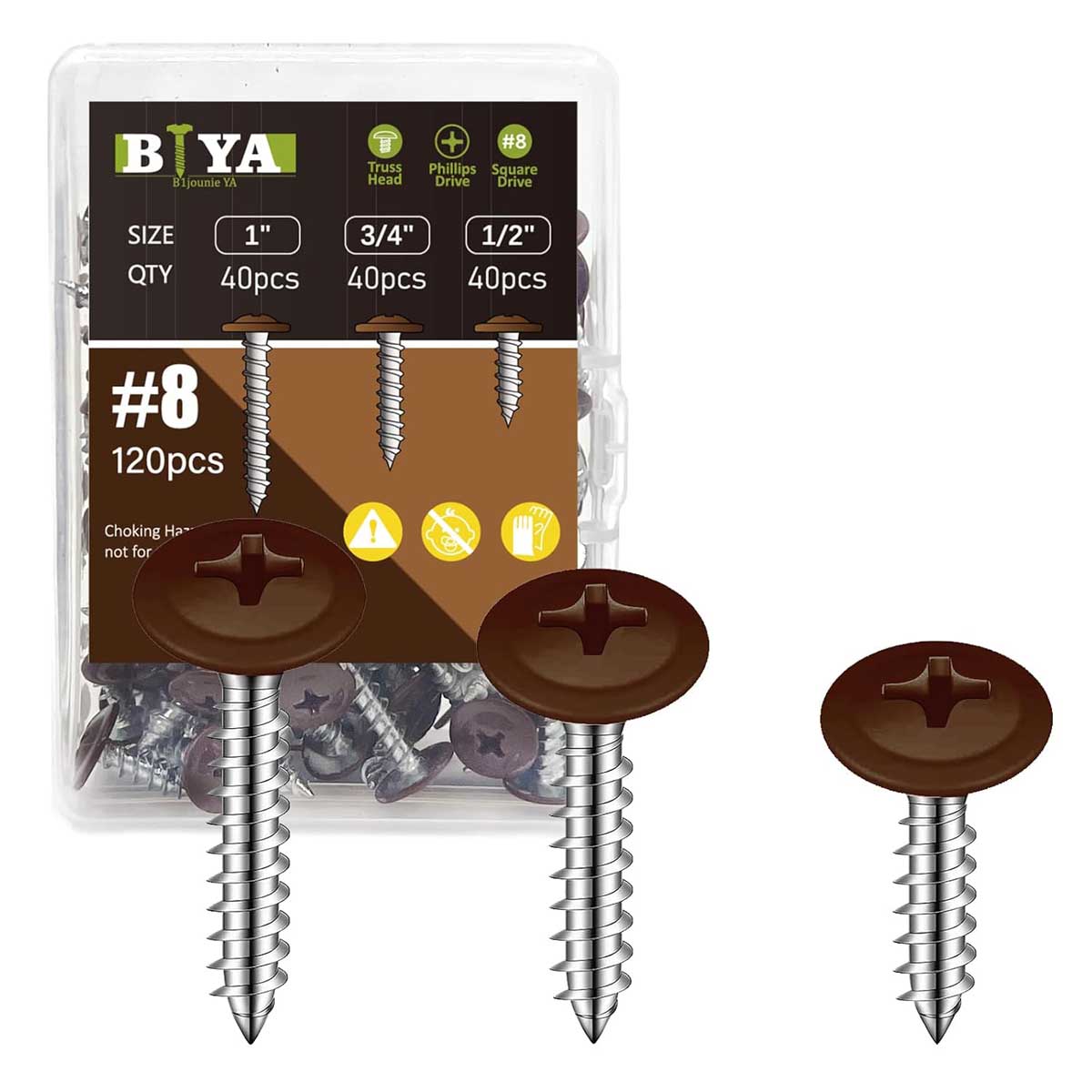
B1jounie YA Brown Wood Screws
The Best Painted Wood Screw Heads for Small Repairs
This assortment works well when you need brown screw heads that blend into stained trim, cabinets, or furniture touch-ups
$13.99 at AmazonThe truss head gives a wider bearing surface than a flat head, which helps on thin hardware and light-duty fastening. The Phillips drive is familiar, and the kit gives you three short lengths so you can avoid popping out the back of 1/2-inch stock. For general indoor work, the painted head is the main draw. One limitation: Phillips heads cam-out more easily than Torx when you lean on an impact driver, so a fresh bit and controlled torque matter.
Specifications
- Material: alloy steel
- Finish: brown painted head
- Sizes: #8; 1/2″, 3/4″, 1″ (120 pcs total)
- Head/drive: truss head, Phillips
- Point: self-drill point
Pros
- Blends with darker wood tones
- Handy short-length assortment
- Truss head spreads load well
Cons
- Phillips drive strips easier than Torx
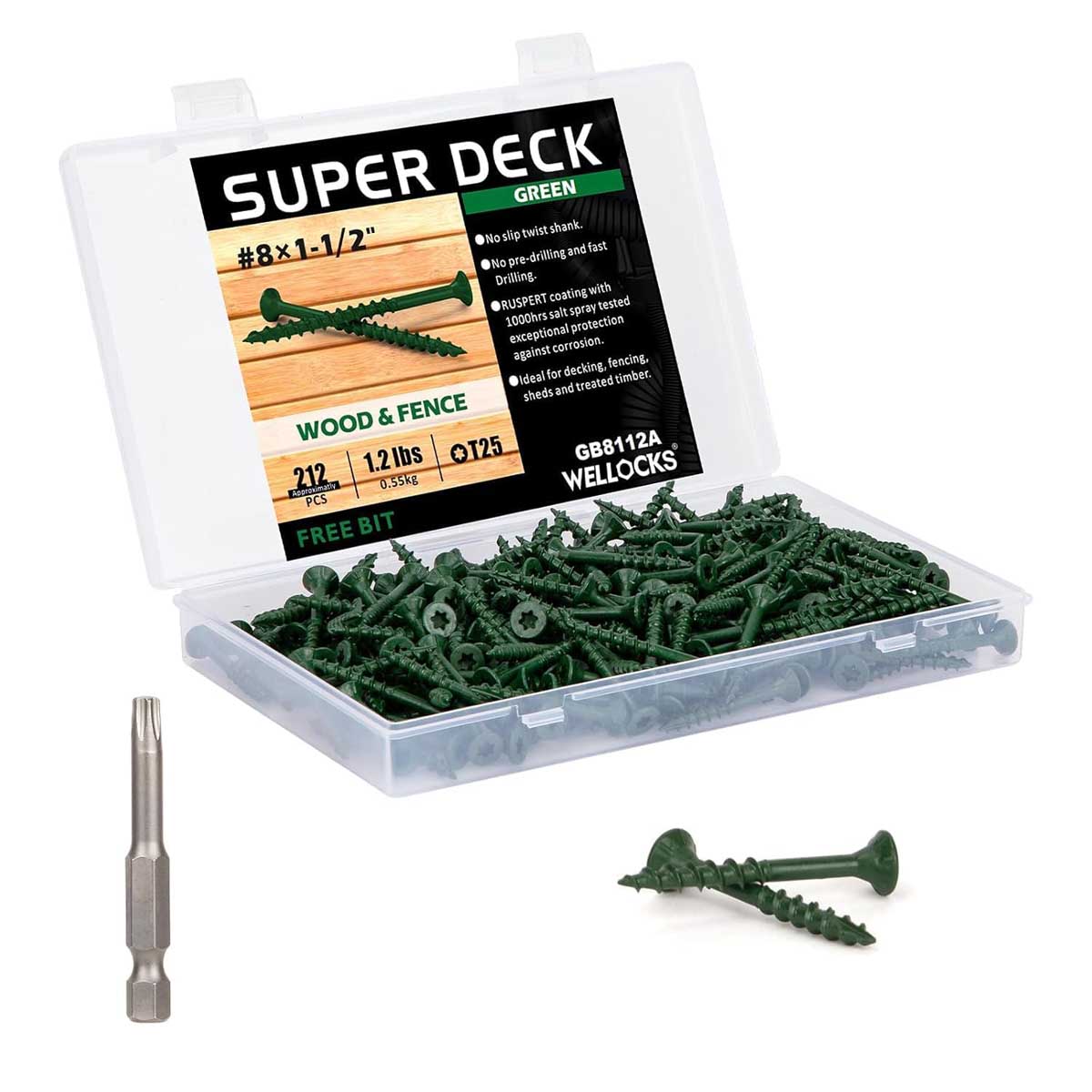
WELLOCKS Epoxy Coated Wood Screws
Best Coated Wood Screws for Pressure-Treated Lumber
These are built for outdoor boards where rust stain and snap risk ruin a deck fast. The Torx drive gives better bit engagement than Phillips, so you can run them consistently without chewing up heads.
$8.99 at AmazonThe maker positions the coating as corrosion-resistant and claims a 1000-hour salt spray test, which fits the use case of pressure-treated lumber and composite decking. The #8 x 1-1/2″ length is a common sweet spot for 5/4 deck boards and rails. One limitation: the flat head sits best in a proper countersink or decking board with a clean pilot start, so sloppy starts can leave a proud head.
Specifications
- Material: carbon steel
- Finish: RUSTPER coating (tan)
- Size: #8 x 1-1/2″ (204 pcs)
- Head/drive: flat head, Torx (T-25)
- Point: self-drill point
Pros
- Torx reduces cam-out
- Coating targets outdoor corrosion
- Designed for deck and composite work
- Partial thread helps pull boards tight
Cons
- Flat head can sit proud if you start crooked
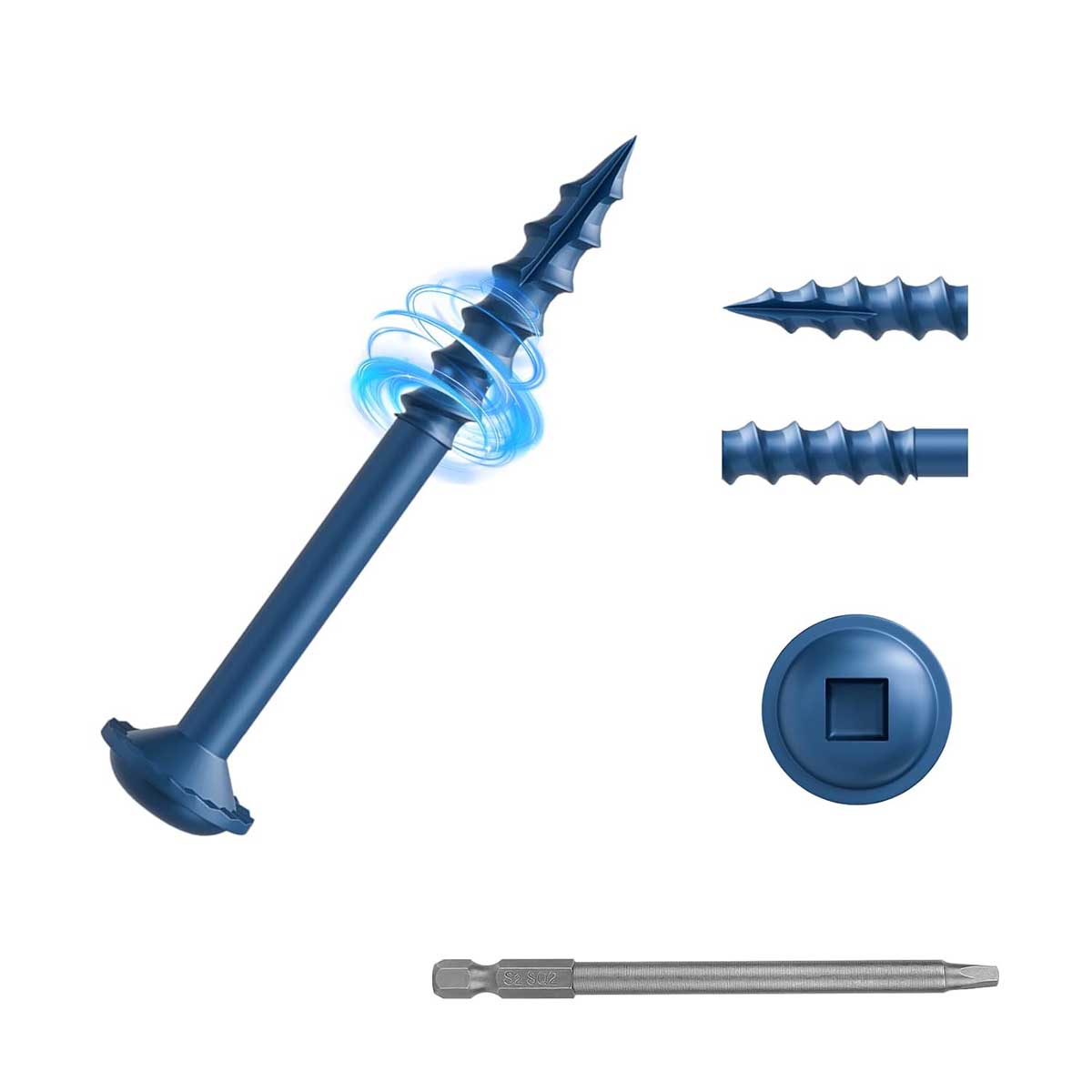
Kryonix Anti-Rust Blue Coated Wood Screws
Best Blue-Coated Pocket Joinery Fasteners
If you build tray stands, cabinets, or shop fixtures with a pocket-hole jig, this style makes sense. The washer head seats cleanly in a pocket without burying itself, and the square drive holds the bit well when you’re driving at an angle.
$14.99 at AmazonThe blue coating is marketed for anti-corrosion, and the screw is sized for thicker joinery where you need reach and bite. One limitation: these are purpose-built for pocket holes, so they’re not the prettiest “colored screw heads” choice for exposed decorative work. Use them where the joint hides the fastener and the structure matters.
Specifications
- Material: high-quality carbon steel
- Finish: blue coated anti-corrosion layer
- Size: #8 x 2-1/2″ (300 pcs)
- Head/drive: washer head, square drive
- Point/thread: self-tapping, coarse thread
Pros
- Square drive stays engaged
- Washer head seats well in pockets
- Long length suits thicker assemblies
- Coarse threads grip softwoods
Cons
- Not meant for exposed, decorative faces
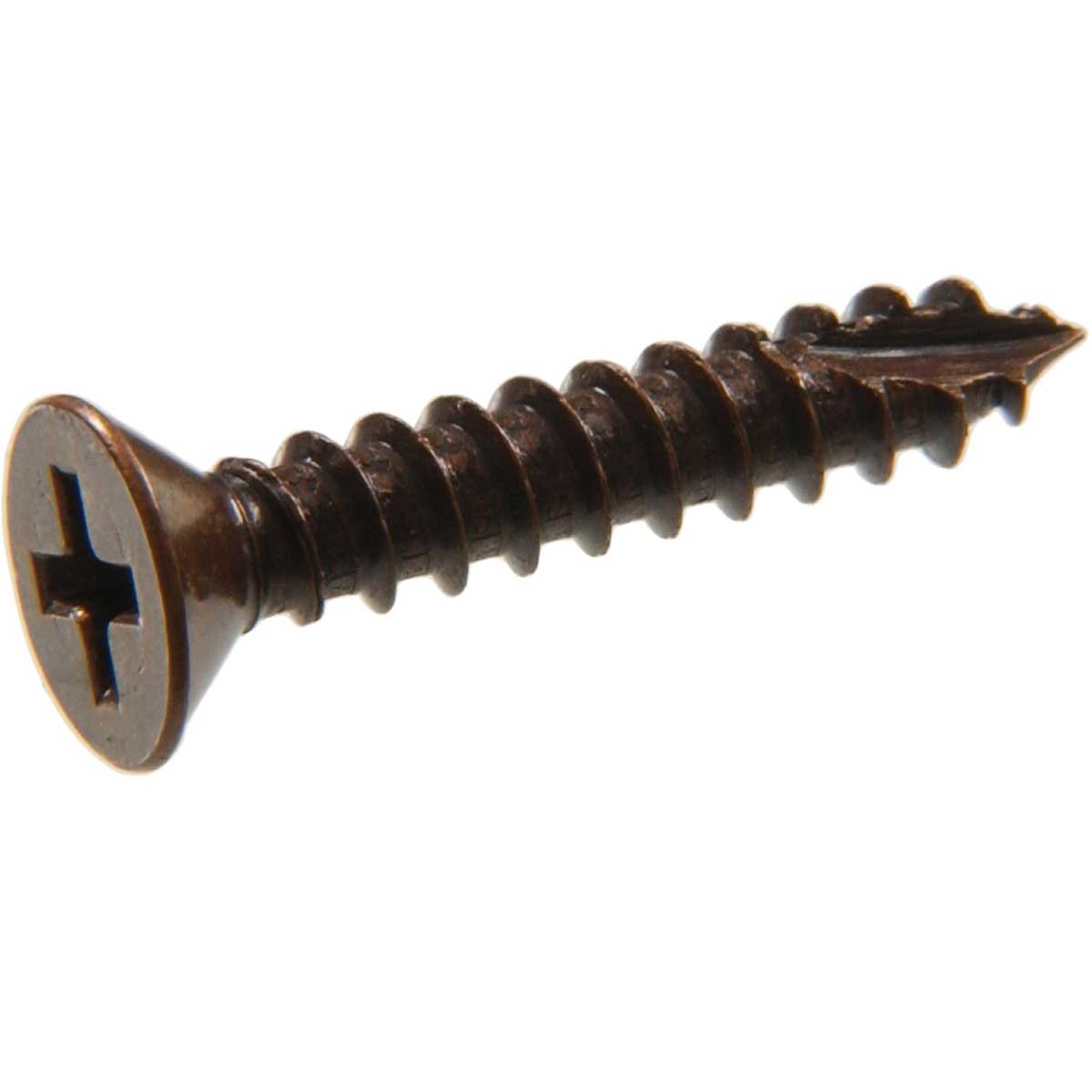
Hillman Flat Phillips Antique Bronze Wood Screw
Best Decorative Wood Screw for Traditional Trim
This is the classic look for brass hardware, hinges, and small wood joints where the screw head is part of the appearance.
$10.77 at AmazonThe flat Phillips head fits countersunk holes, and the tapered wood-screw form helps holding power in wood when installed correctly. Hillman also recommends pre-drilling, which is good practice for hardwoods and near-edge fastening. One limitation: you’re looking at a single-piece listing here, so it’s not a cost-effective “kit” for larger builds. Treat it as a match-and-replace screw when you need one to fit existing hardware.
Specifications
- Material: steel (brass exterior finish)
- Finish: brass
- Size: #7 x 0.75″ (single piece)
- Head/drive: flat head, Phillips
- Point: Type A point
Pros
- Brass look suits classic hardware
- Flat head seats in countersinks
- Good choice for replacements
Cons
- Single screw is impractical for multi-screw projects
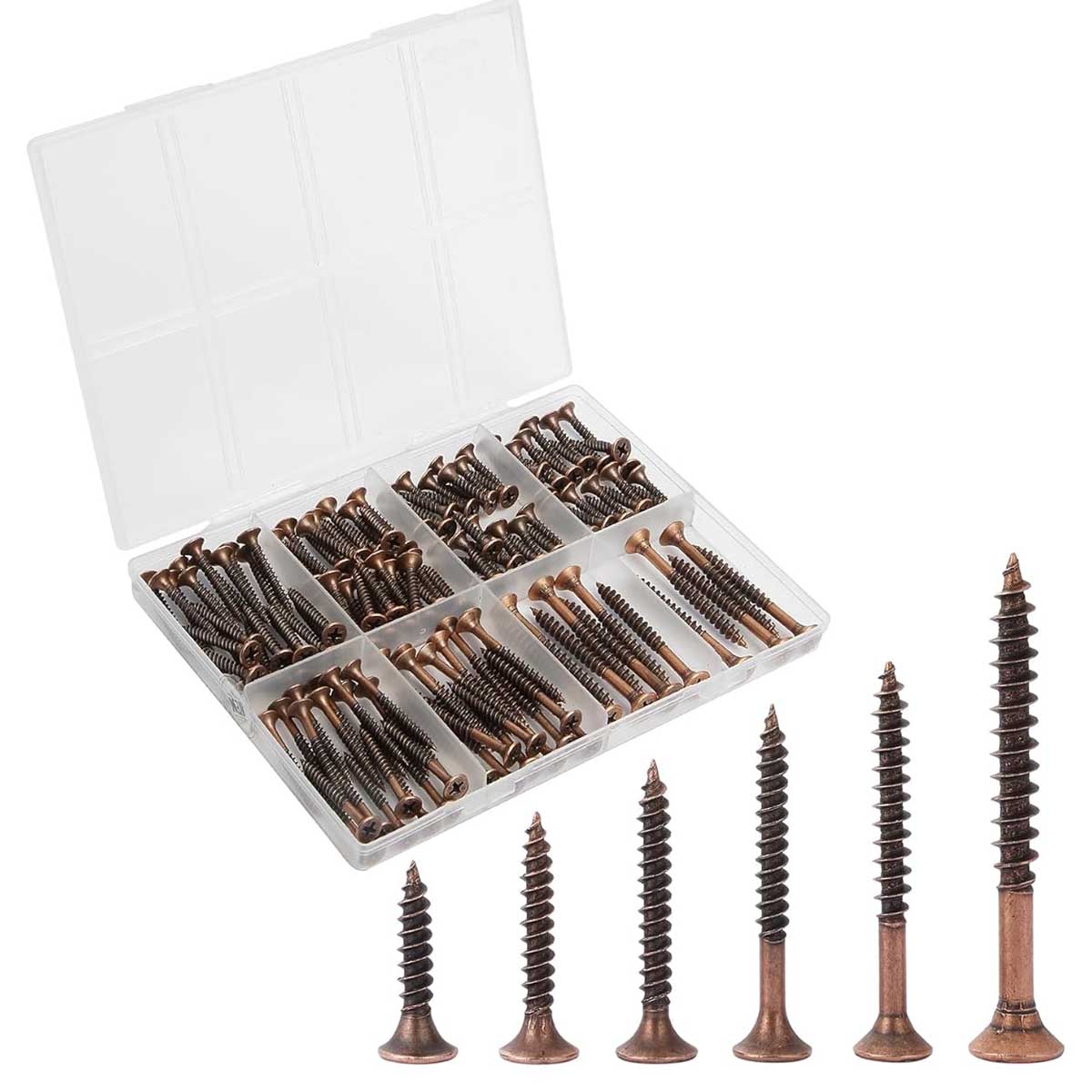
Mr Pen Bronze Wood Screws Assortment Kit
Best Bronze-Toned Wood Fastener Kit for General Shop Use
This assortment is handy when you want a consistent bronze look across small builds like shelves, light fences, or utility furniture.
$8.99 at AmazonYou get six metric lengths, and the included organizer keeps sizes separated so you don’t waste time sorting. The galvanized iron construction targets corrosion resistance, which helps if a project sees humidity or occasional outdoor exposure. One limitation: Phillips heads are easier to strip than Torx, especially in harder material or when you’re rushing. Use the right driver, keep pressure straight, and consider a pilot hole in hardwood to keep the heads clean.
Specifications
- Material: galvanized iron
- Finish: galvanized with bronze exterior finish
- Sizes: 20, 25, 30, 35, 40, 50 mm (152 pcs)
- Head/drive: flat head, Phillips
- Storage: compartment box included
Pros
- Useful multi-length assortment
- Organizer keeps parts tidy
- Bronze look fits darker hardware
- Corrosion-focused material
Cons
- Phillips drive can cam-out under high torque
BCP Fasteners Black Phosphate Coated Wood Screws
Best Black Screw Heads for Cabinets and Hardware
These are a solid pick when you need black screw heads for hinges, pulls, cabinet backs, or small wood assemblies where you want the fastener to disappear.
$7.99 at AmazonThe modified truss head provides a broad contact area without the snag of a tall pan head, and the black phosphate coating is aimed at improving rust resistance. At 1 inch, they’re practical for thin stock, cleats, and light brackets. One limitation: the Phillips drive limits how hard you can push compared with Torx, so they reward a steady hand more than brute force.
Specifications
- Material: carbon steel
- Finish: phosphate coated (black)
- Size: #8 x 1″ (100 pcs)
- Head/drive: modified truss, Phillips
- Thread: fully threaded; point: self-tapping
Pros
- Clean black finish for visible work
- Wide head helps clamp thin parts
- Short length suits small projects
- Coating targets corrosion resistance
Cons
- Phillips heads can strip if over-driven
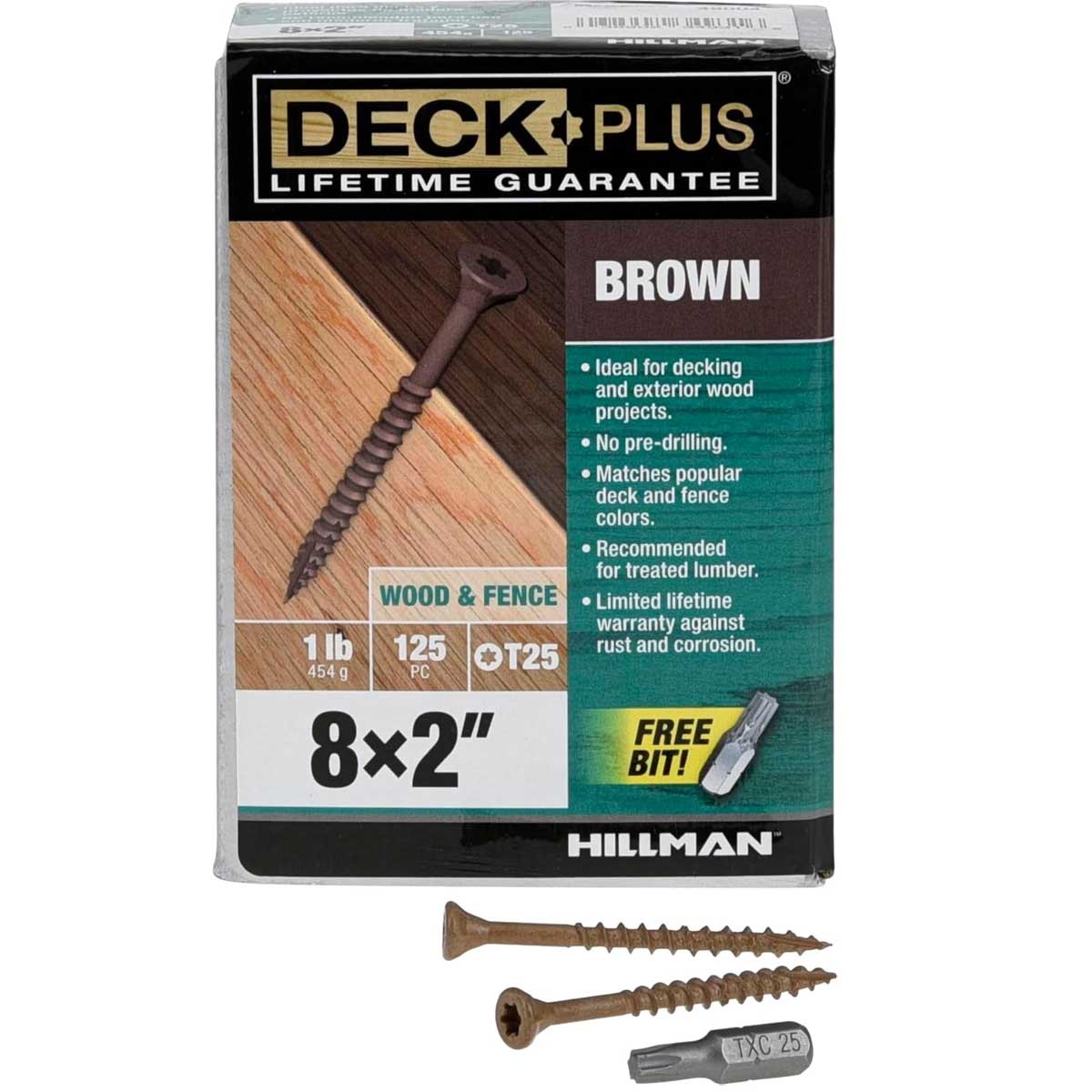
Deck Plus Epoxy Coated Exterior Wood Screws
Best Colored Deck Screws for Pressure-Treated Boards
These are purpose-built deck screws with the features you want outside: a Torx drive, a Type 17 point, and a multi-layer epoxy coating.
$10.98 at AmazonThe brown color helps them blend into many deck boards, especially once the surface weathers a bit. The kit includes a matching T25 bit, which saves a trip back to the toolbox. At #8 x 2″, they fit common deck framing and board fastening, depending on thickness. One limitation: the listing notes a “left hand” thread style, which is unusual for deck work, so check your first few drives to confirm it behaves as expected before you commit to a whole box.
Specifications
- Material: carbon steel
- Finish: 4-layer epoxy (brown)
- Size: #8 x 2″ (125 pcs)
- Head/drive: flat head, Torx (T-25 bit included)
- Point: Type 17
Pros
- Epoxy coating targets outdoor corrosion
- Torx drive reduces cam-out
- Type 17 point helps start clean
- Bit included for consistent driving
Cons
- Thread style note is unusual, so verify before large runs
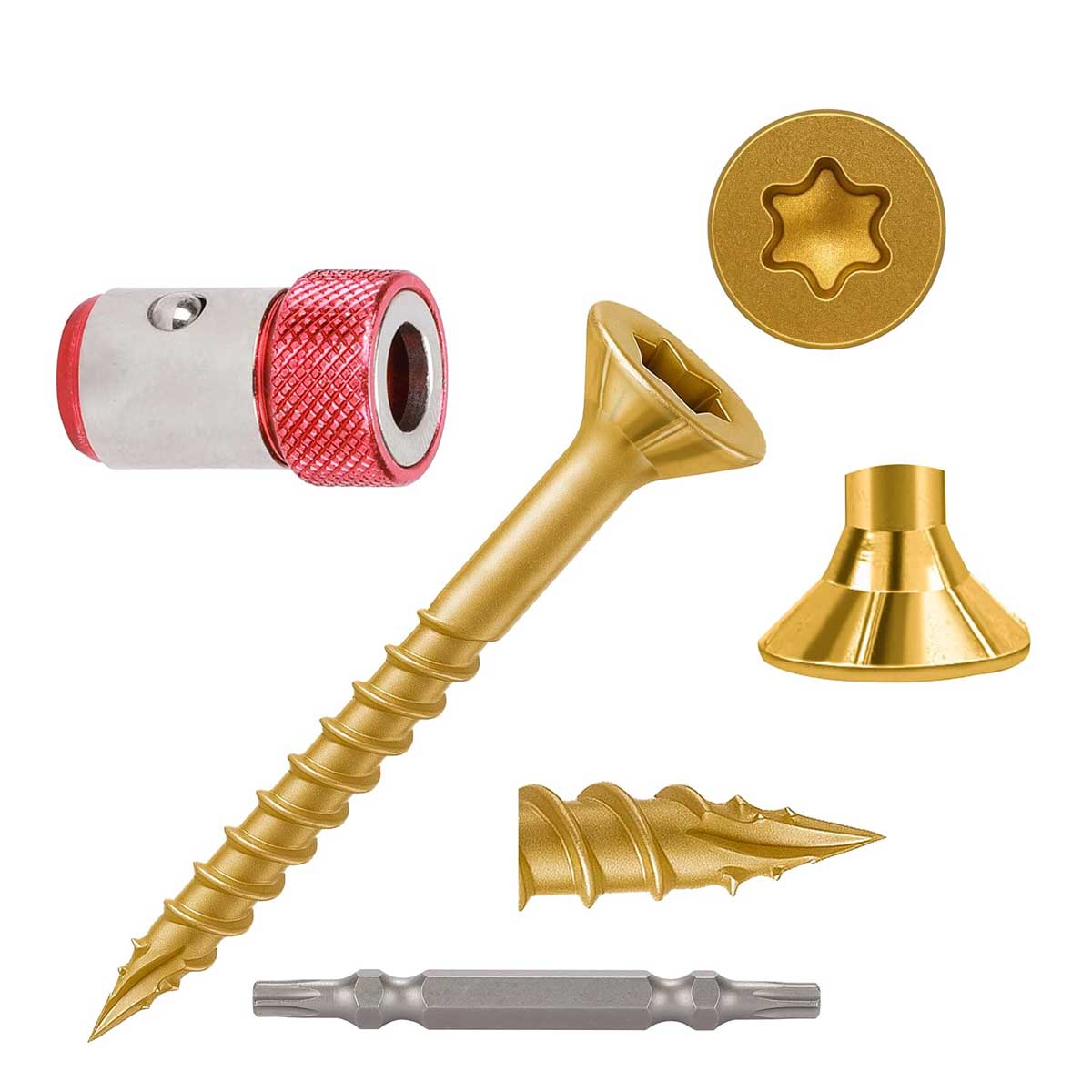
JOUGU Yellow Wood Screws
Best Colored Drywall-Style Small Fasteners for Mdf and Sheet Goods
These small yellow screws fit lighter work where you want color coding or a bright head for visibility in a jig, template, or shop fixture.
$7.99 at AmazonThey’re fully threaded, run with a Torx T10 bit, and the box includes a driver and a magnetic ring for steadier starts. The size is #6 x 1″ (listed as M3.5 x 25), which suits MDF, plastics, and thinner wood parts. One limitation: because they’re small, they’re easier to snap if you over-torque into dense hardwood or drive without a pilot in brittle material. Keep torque modest and let the threads do the work.
Specifications
- Material: galvanized carbon steel/steel
- Finish: zinc (yellow)
- Size: #6 x 1″ (200 pcs)
- Head/drive: flat head, Torx (T10; bit included)
- Thread: fully threaded; grade: 8.8
Pros
- Bright head helps with visibility
- Torx T10 drive holds well
- Includes bit and magnetic ring
- Good fit for MDF and sheet goods
Cons
- Small diameter limits high-torque hardwood use
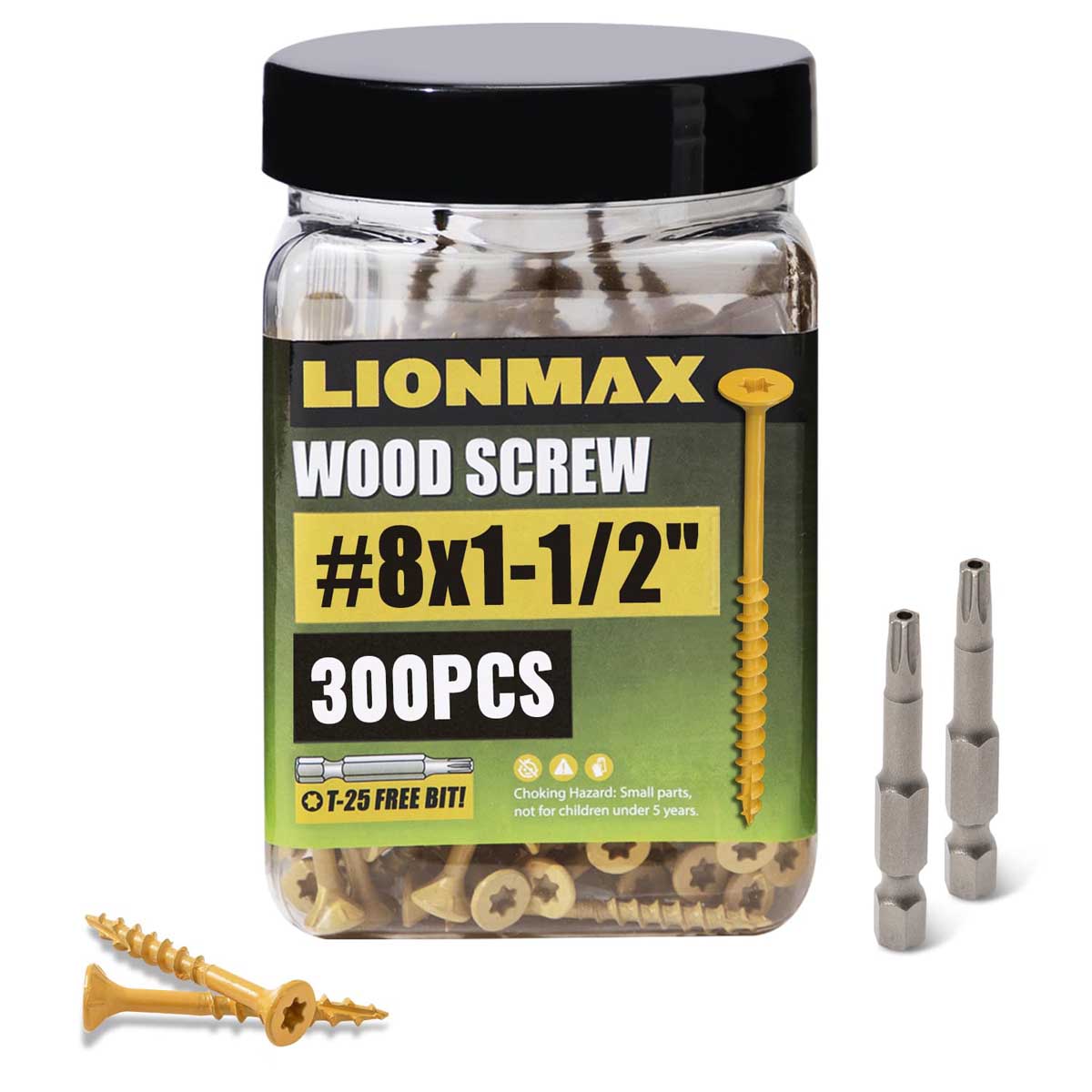
LIONMAX Epoxy Coated Exterior Wood Screw
Best Colored Wood Fasteners for Fences and Framing
These tan-coated screws aim at long-term outdoor use, with a Torx drive and a coating the brand claims passed a 1000-hour salt spray test.
$14.24 at AmazonThe #8 x 1-1/2″ size covers a lot of exterior tasks, from fence pickets to deck accessories, and the included T25 bit keeps install consistent. A nice touch is the smooth shank section, which makes handling easier and helps pull boards together when the thread engages properly. One limitation: partial thread means you want the thread to bite the second piece, not just spin in the top board, so pay attention to board thickness and where the thread starts.
Specifications
- Material: alloy steel (metal type listed as carbon steel)
- Finish: tan anti-rust coating
- Size: #8 x 1-1/2″ (300 pcs)
- Head/drive: Torx (T-25 bit included)
- Thread/point: coarse thread, self-tapping point; partially threaded
Pros
- Coating targets outdoor corrosion
- Torx reduces head stripping
- Included bit simplifies setup
- Good general-purpose exterior size
Cons
- Partial thread needs correct board thickness to clamp well
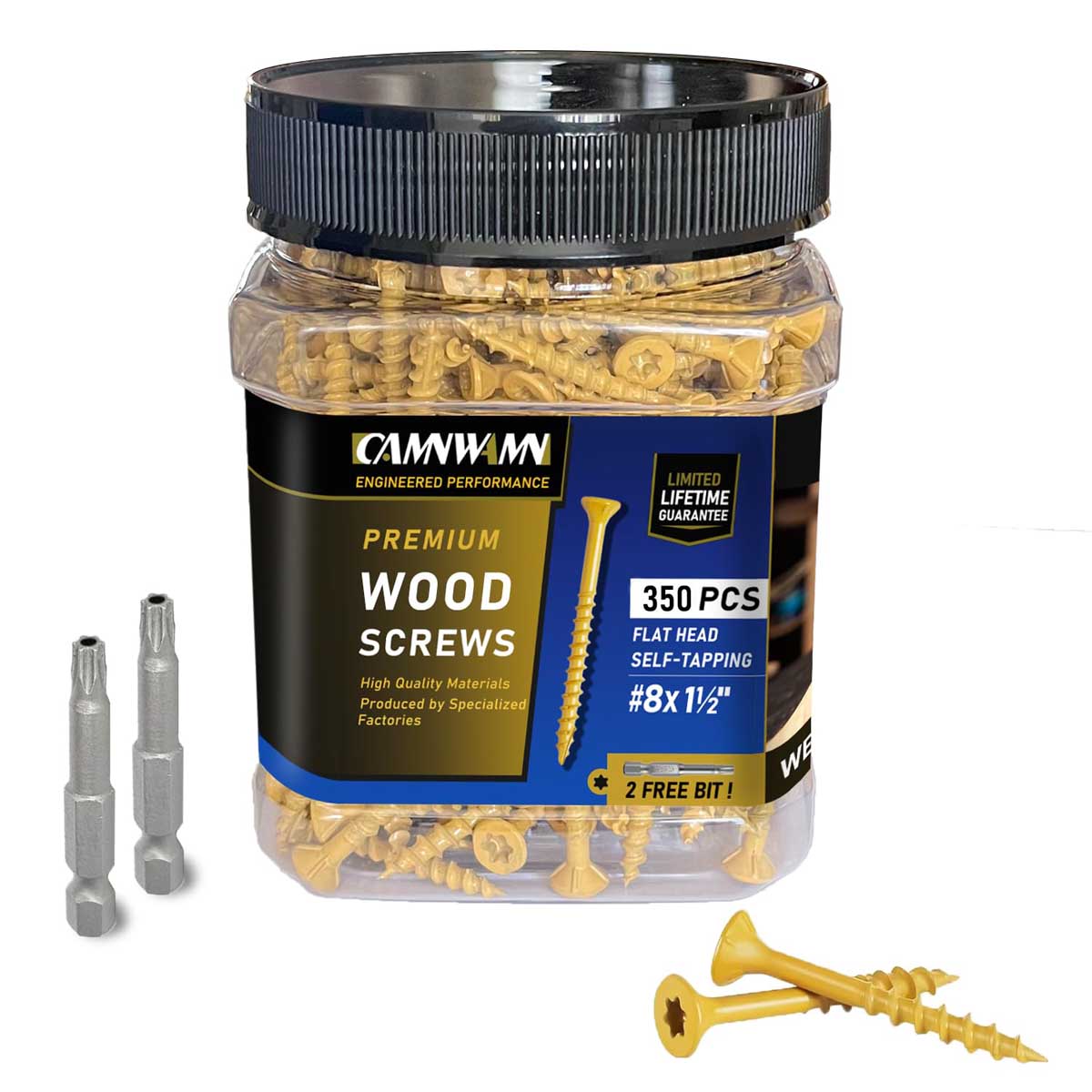
CAMNWAMN Epoxy Coated Exterior Screws
Best Powder-Coated Style Exterior Wood Screws for High Count Jobs
When you have a big exterior project, count matters as much as coating. This box gives 350 screws in a common #8 x 1-1/2″ size, with a tan epoxy finish and a Torx T25 drive.
$15.99 at AmazonThe brand frames the screw as self-tapping with aggressive threads, which helps starts in framing lumber and decking without constant pre-drilling. The included bit is a practical bonus. One limitation: fully threaded screws can sometimes reduce clamping action compared with partial thread when joining two boards, so for deck boards you may want to test on scrap and confirm the joint pulls tight the way you expect.
Specifications
- Material: alloy steel
- Finish: tan epoxy coated
- Size: #8 x 1-1/2″ (350 pcs)
- Head/drive: flat head, Torx (T-25 bit included)
- Thread/point: fully threaded; self-tapping point; UNC coarse
Pros
- High piece count for large builds
- Epoxy coating targets corrosion
- Torx drive keeps heads intact
- Included bit reduces setup friction
Cons
- Fully threaded design may clamp less tightly in some wood-to-wood joints
Choosing the right colored wood screw specs so the head stays clean
Head style and drive type
Trim heads reduce visibility and leave a smaller paint ring around the head. Bugle heads spread load and seat well in decking boards.
Drive style controls how often the bit slips. Star drives hold the bit tighter than common Phillips patterns. Less slip means fewer chipped edges around the colored head.
Length, diameter, and tip style
Screw length controls grip. A fastener that barely reaches framing loosens over time. A screw that runs long risks poking through.
Use a length that passes through the top piece and bites solid wood below. For quick sizing help, keep a wood screw size chart for common gauges and lengths nearby.
Some wood screws use cutting features to start faster. In hardwood and near edges, a pilot hole reduces splitting. This walkthrough on how to stop wood splitting when driving screws near an edge covers a clean approach.
Installation tips to avoid chipped heads, stripped drives, and halos
A clean install starts before the first screw goes in. Set up the driver, the bit, and the workpiece so the screw seats once, not three times.
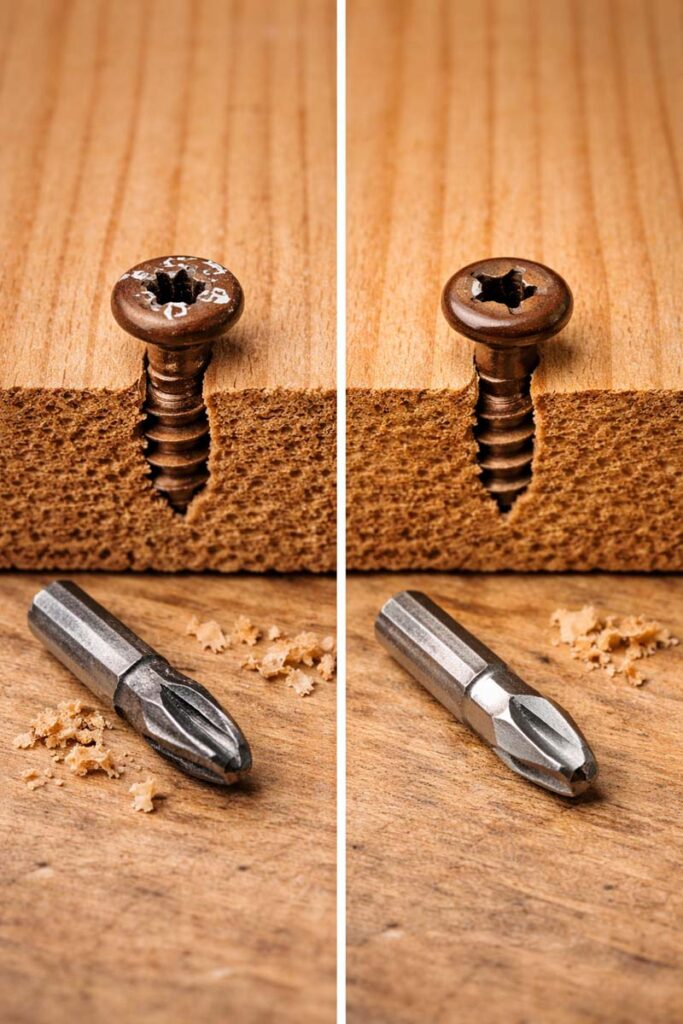
- Use the correct bit and replace worn tips. A loose bit rocks in the recess and scrapes paint.
- Set driver torque low and increase in small steps. High torque twists the bit out and scars the head.
- Keep the driver square to the surface. Angle changes bite depth and damages the coating at the rim.
- Predrill in hardwood, near ends, and in thin trim. A pilot hole reduces binding that strips the recess.
- Stop when the head seats. Overdriving crushes fibers and leaves a dark ring around the head.
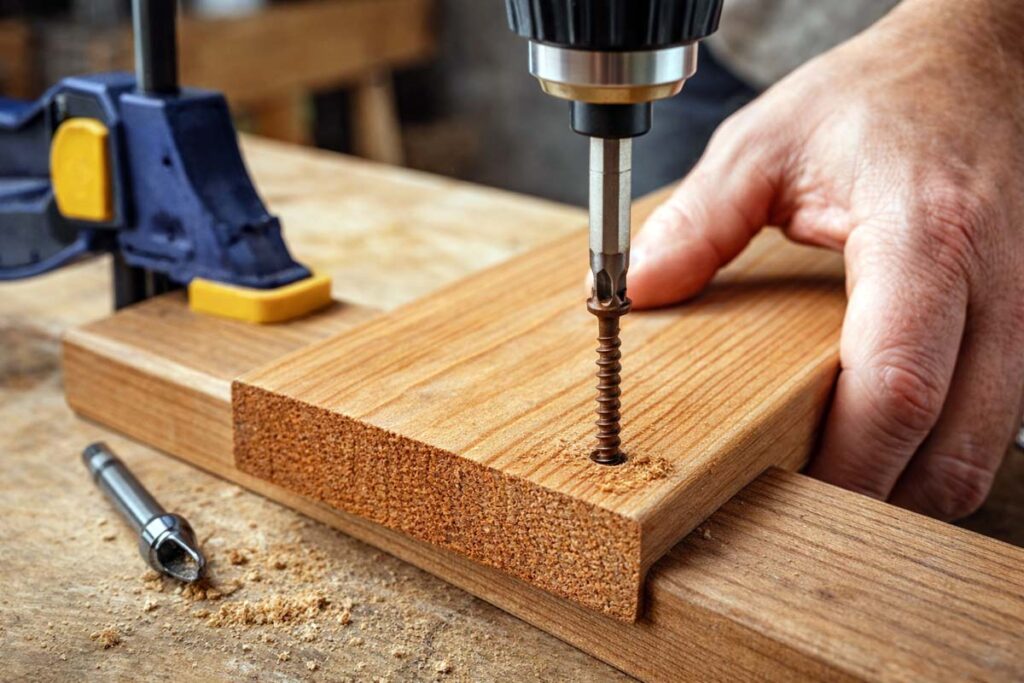
Wear eye protection when driving overhead or near brittle trim. Small chips from coatings travel farther than you expect.
Common problems and practical fixes
Paint chips around the recess. Bit slip causes most chips. Use a fresh bit, lower torque, and steady pressure. On trim, step to a trim head or predrill so the screw seats without extra force.
The head strips before it seats. The driver setting runs too high or the pilot hole runs too small. Back the screw out and restart. This guide on how to remove a stripped screw from wood without chewing up the surface helps when the head already rounds out.
The color looks off once installed. Color shifts under different light and when boards get wet. Test a small batch on an offcut, then adjust shade.
Rust stains appear under the head. The material choice does not match the exposure. Upgrade to exterior-rated coated screws or stainless, and replace stained fasteners early to limit spread.
Buying guide: what to check before you order
Colored wood screws vary more than the box suggests. Before you commit, compare these points.
- Environment rating: interior, exterior, treated lumber, coastal
- Base material: carbon steel with coating or stainless steel
- Head type: trim, bugle, flat, wafer
- Drive type: star, square, Phillips
- Color system: generic colors or brand cross references
- Batch consistency: buy enough from one lot for visible areas
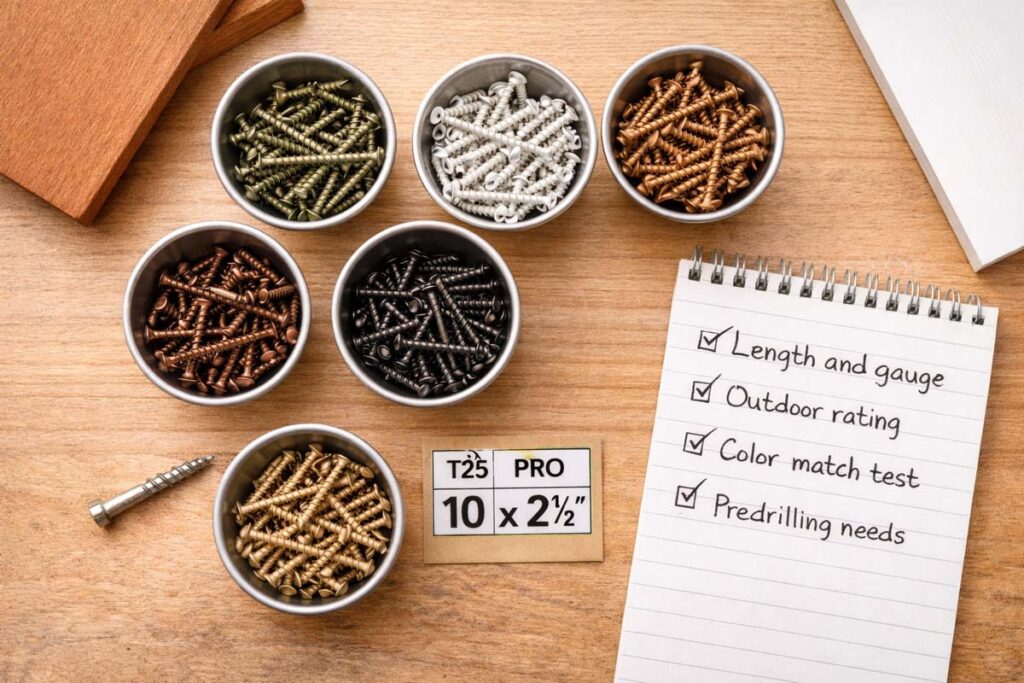
For decks and trim, buying one extra small box reduces mismatch when replacements come later.
FAQs about Colored Wood Screws
Bottom Line on Colored Wood Screws
Colored wood screws look right when color matching supports solid fastener selection. Choose the environment rating and base material first, then match the head color to the board or paint. Install with a fresh bit, controlled torque, and the right pilot hole, and the head seats clean without chips or rust halos.