
Introduction
Most drivers pay their auto insurance premium every month without fully understanding what they’re actually buying. Then an accident happens — and they discover their policy doesn’t cover what they assumed it did. That gap between expectation and reality can cost thousands of dollars.
This guide breaks down exactly what auto insurance covers, what it doesn’t, and how each coverage type works in a real claim scenario. By the end, you’ll know precisely what your policy does — and whether you need more.
What Auto Insurance Covers: The 6 Core Coverage Types
1. Liability Coverage
Liability is the foundation of every auto policy and is required by law in nearly every state. It covers damage and injuries you cause to other people — not damage to your own vehicle.
- Bodily Injury Liability: Pays for medical bills, lost wages, and pain and suffering for people you injure in an accident you caused.
- Property Damage Liability: Pays to repair or replace other people’s vehicles or property (fences, mailboxes, storefronts) that you damage.
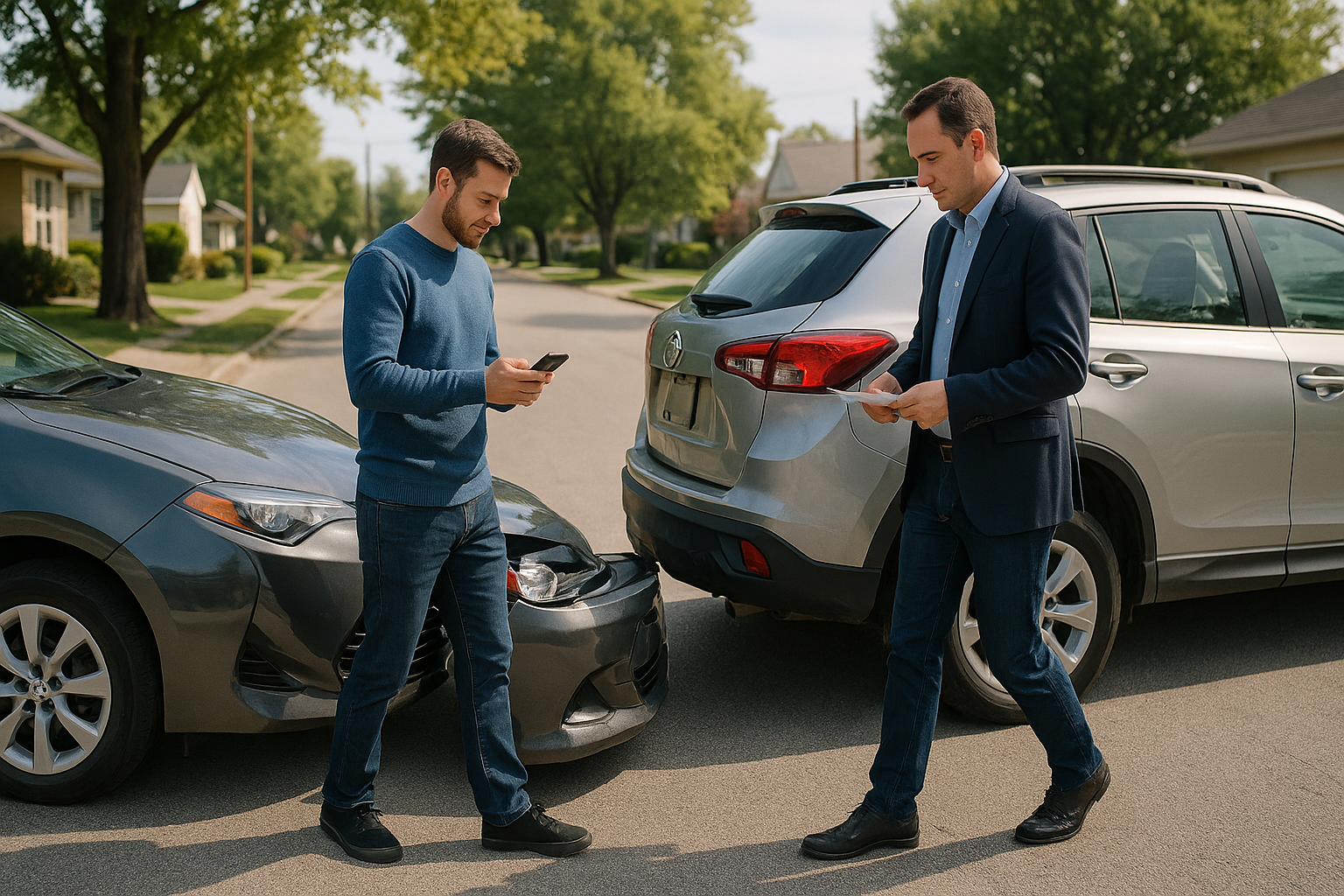
Example: You run a red light and hit another car. Your liability coverage pays for the other driver’s medical bills and car repairs. It does NOT pay for your own injuries or car damage.
2. Collision Coverage
Collision coverage pays to repair or replace your vehicle after an accident — regardless of who was at fault. It applies when you hit another car, a guardrail, a tree, or any other object.
Example: You back into a pole in a parking lot. Collision coverage pays for your bumper repair, minus your deductible. Your liability coverage doesn’t apply here because no other party was involved.
3. Comprehensive Coverage
Comprehensive covers damage to your vehicle from events that aren’t collisions — often called “acts of God” or “other than collision” events.
- Theft of your vehicle
- Vandalism
- Fire damage
- Hail, flood, or storm damage
- Hitting an animal (deer, etc.)
- Falling objects (tree branches, debris)
- Windshield cracks and chips
Example: A hailstorm dents your hood and cracks your windshield. Comprehensive pays for repairs minus your deductible.
4. Uninsured/Underinsured Motorist Coverage (UM/UIM)
About 1 in 8 US drivers has no insurance. UM/UIM coverage protects you when you’re hit by one of them — or by a driver whose coverage limits aren’t enough to pay your bills.
- Uninsured Motorist Bodily Injury (UMBI): Pays your medical bills if an uninsured driver hits you.
- Uninsured Motorist Property Damage (UMPD): Pays to repair your car if an uninsured driver hits it.
- Underinsured Motorist (UIM): Covers the gap when the at-fault driver’s limits are too low to cover your losses.
5. Medical Payments (MedPay) / Personal Injury Protection (PIP)
These coverages pay medical bills for you and your passengers after an accident — regardless of who caused it. PIP is broader than MedPay and is required in no-fault states.
- MedPay: Covers medical and funeral expenses for you and passengers. Available in most states.
- PIP: Covers medical bills, lost wages, childcare costs, and other expenses. Required in no-fault states (FL, NY, MI, NJ, PA, and others).
6. Optional Add-On Coverages
- Gap Insurance: Covers the difference between your car’s actual cash value and what you owe on your loan if the car is totaled.
- Rental Reimbursement: Pays for a rental car while your vehicle is being repaired after a covered claim.
- Roadside Assistance: Covers towing, flat tire changes, jump starts, and lockout service.
- New Car Replacement: Pays to replace your totaled car with a brand-new equivalent model (not just its depreciated value).
- Accident Forgiveness: Prevents your first at-fault accident from raising your premium.
- Rideshare Coverage: Fills the gap between your personal policy and your rideshare company’s coverage when driving for Uber or Lyft.
What Auto Insurance Does NOT Cover
- Mechanical breakdowns — wear and tear, engine failure, transmission problems (that’s what warranties and extended warranties are for).
- Custom parts and equipment — aftermarket stereos, custom rims, and modifications above factory specs need a separate endorsement.
- Personal belongings stolen from your car — your laptop or camera stolen from your vehicle is covered by renters/homeowners insurance, not auto.
- Intentional damage — if you deliberately damage your own car, no coverage applies.
- Using your car for business — standard personal policies exclude commercial use. Delivery drivers and rideshare drivers need additional coverage.
- Racing — any damage that occurs during a race or speed contest is excluded.
How Auto Insurance Claims Work
- Report the accident to your insurer as soon as possible — most policies require prompt notification.
- File a claim online, via app, or by phone. Provide photos, police report number, and other driver’s information.
- Claims adjuster assigned — they assess the damage and determine fault.
- Repair estimate — the insurer approves repairs at a certified shop or issues a payment.
- Deductible applied — you pay your deductible; the insurer covers the rest up to your policy limits.
- Subrogation — if another driver was at fault, your insurer may recover costs from their insurer.
7 Ways to Maximize Your Auto Insurance Coverage
- Choose replacement cost coverage over actual cash value for newer vehicles.
- Add UM/UIM coverage at limits matching your liability — it’s cheap and critical.
- Consider gap insurance if you owe more than your car is worth.
- Add rental reimbursement — it costs $3-5/month and saves you $50+/day after an accident.
- Review your policy annually — your coverage needs change as your car ages and your assets grow.
- Document your car’s condition with photos — makes claims faster and harder to dispute.
- Understand your deductibles before a claim — know exactly what you’ll owe out of pocket.
Frequently Asked Questions
Q: Does auto insurance cover a stolen car?
A: Yes — comprehensive coverage pays for vehicle theft. Liability-only policies do not cover theft of your own vehicle.
Q: Does auto insurance cover flood damage?
A: Yes, if you have comprehensive coverage. Flood damage to your vehicle is covered under comprehensive, not collision.
Q: Does auto insurance cover a hit-and-run?
A: Collision coverage pays for your car repairs. Uninsured motorist coverage pays for your medical bills if the hit-and-run driver can’t be identified.
Q: Does auto insurance cover rental cars?
A: Your collision and comprehensive coverage typically extends to rental cars. Check your policy — many drivers pay for rental car insurance at the counter unnecessarily.
Q: Does auto insurance cover a cracked windshield?
A: Yes — comprehensive coverage pays for windshield damage. Many insurers waive the deductible for glass claims.
Q: What happens if I’m in an accident and it’s not my fault?
A: The at-fault driver’s liability insurance pays your bills. If they’re uninsured or underinsured, your UM/UIM coverage steps in.
Q: Does auto insurance cover medical bills?
A: MedPay and PIP cover your medical bills regardless of fault. Liability covers the other party’s medical bills when you’re at fault.
Final Thoughts
Auto insurance is more nuanced than most people realize. Liability protects others from you. Collision and comprehensive protect your vehicle. UM/UIM protects you from others. MedPay/PIP covers medical bills regardless of fault.
Understanding exactly what each coverage does — and what it doesn’t — lets you build a policy that actually protects you when it matters. Review your current policy against this guide and make sure there are no dangerous gaps. For more insurance guides, visit the TrayEdit Insurance Hub.
Auto Insurance Coverage Comparison by Insurer (2026)
| Coverage Type | GEICO | State Farm | Progressive | Allstate |
|---|---|---|---|---|
| Liability limits available | Up to 500/500/500 | Up to 500/500/500 | Up to 500/500/500 | Up to 500/500/500 |
| Accident forgiveness | Yes (earned) | Yes (earned) | Yes (add-on) | Yes (add-on) |
| Rideshare coverage | Yes | Yes | Yes | Yes |
| New car replacement | No | No | Yes (add-on) | Yes (add-on) |
| Gap insurance | No | No | Yes (add-on) | Yes (add-on) |
What to Avoid: Common Auto Insurance Coverage Mistakes
- Assuming your personal auto policy covers business use. If you use your car for deliveries, rideshare, or regular business travel, you need a commercial endorsement or rideshare coverage. Personal policies typically exclude business use.
- Skipping rental reimbursement coverage. At $5-$10/month, rental reimbursement pays for a rental car while yours is being repaired after a covered claim. Without it, you pay out of pocket — often $40-$80/day.
- Not understanding what “full coverage” actually means. “Full coverage” is not a defined insurance term. It typically means liability + collision + comprehensive, but it does NOT include gap insurance, rental reimbursement, or roadside assistance unless you add them.
- Letting your policy lapse. Even a brief lapse in coverage flags you as high-risk and raises your rate when you reinstate. Set up autopay to prevent accidental lapses.
Expert Tips on Maximizing Your Coverage
- Add roadside assistance if you do not have AAA. At $5-$15/year as an add-on, it is far cheaper than a single tow truck call ($75-$150).
- Check if your credit card covers rental car insurance. Many premium credit cards provide collision damage waiver (CDW) for rental cars. If yours does, you can decline the rental company’s expensive coverage.
- Review your MedPay/PIP limits relative to your health insurance. If you have strong health insurance with a low deductible, you may not need high MedPay limits. If your health insurance has a high deductible, higher MedPay can fill the gap.