1/4 Baltic Birch Plywood: 6 Must-Know Thickness Facts
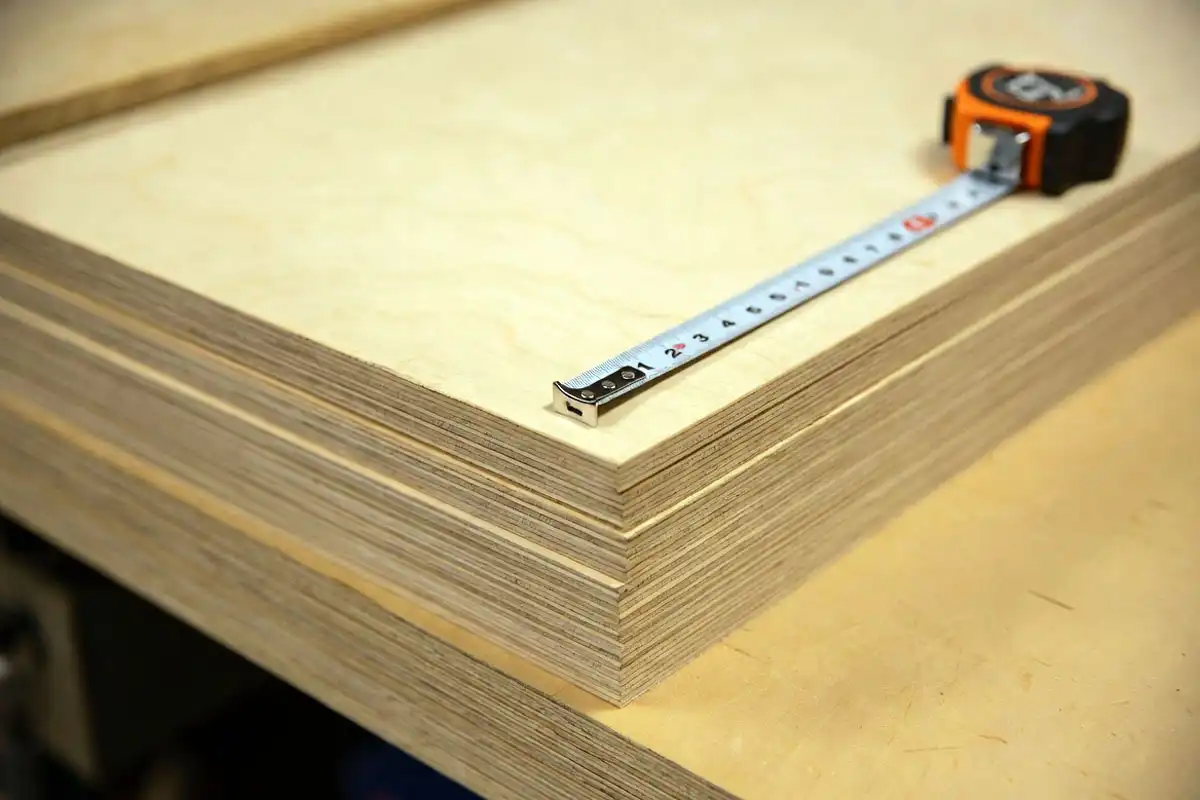
1/4 Baltic birch plywood serves as a flat, stable panel for drawer bottoms, cabinet backs, tray bottoms, and small box parts. It uses thin birch veneers pressed into a tight core, so edges look cleaner than typical softwood plywood. The catch is thickness. Most “1/4” Baltic birch sells in metric, so joinery that fits regular 1/4-inch plywood often needs a tweak. This guide covers what it is, how to buy it, how to cut it, how to join it, and how to finish it without sanding through the face.
1/4 Baltic birch plywood usually measures about 6 mm, not a full 0.250 inch. Use it for bottoms, backs, skins, and templates where flatness matters. Cut it with a sharp, fine-tooth blade and a zero-clearance insert. Join it with grooves, rabbets, or glue blocks instead of screws through the face.
What is 1/4 Baltic birch plywood?
1/4 Baltic birch plywood is a thin birch-veneered panel that uses multiple thin plies to form a stiff, uniform core. Manufacturers press birch veneers with glue under heat and pressure, which produces flatter sheets and cleaner edges than many construction panels.
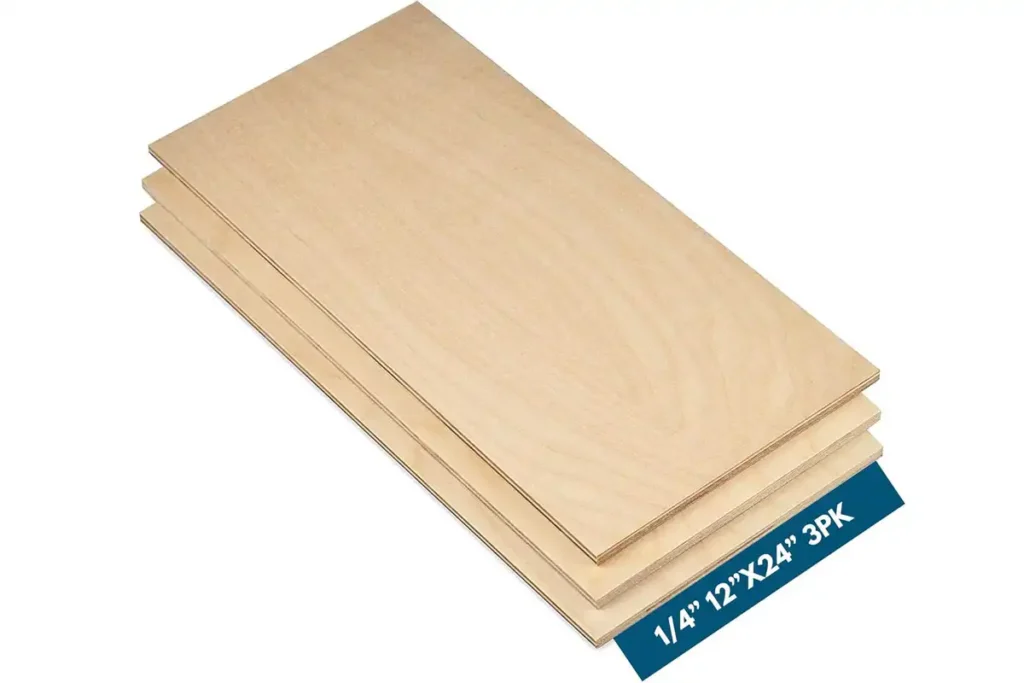
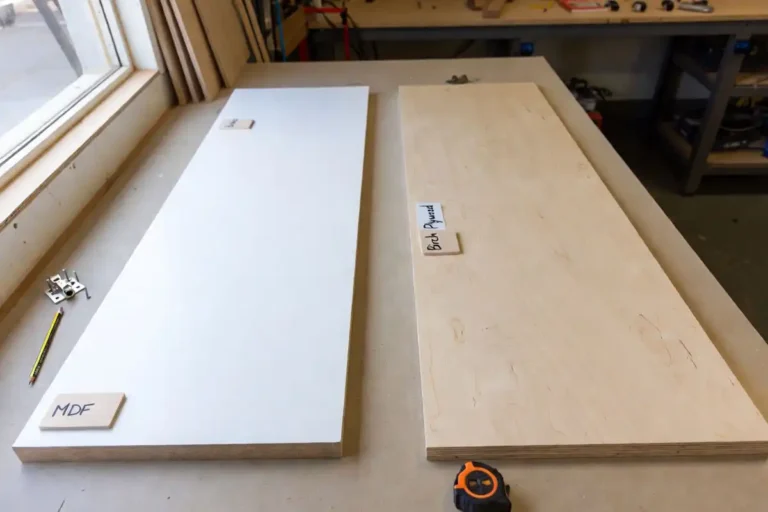
Most Baltic birch enters shops as 5 ft x 5 ft sheets, although some suppliers stock larger formats. Face grades vary, so one sheet may suit a painted project while another fits clear finish work.
Also see: 3/4 Baltic Birch Plywood Guide
What thickness is “1/4” Baltic birch?
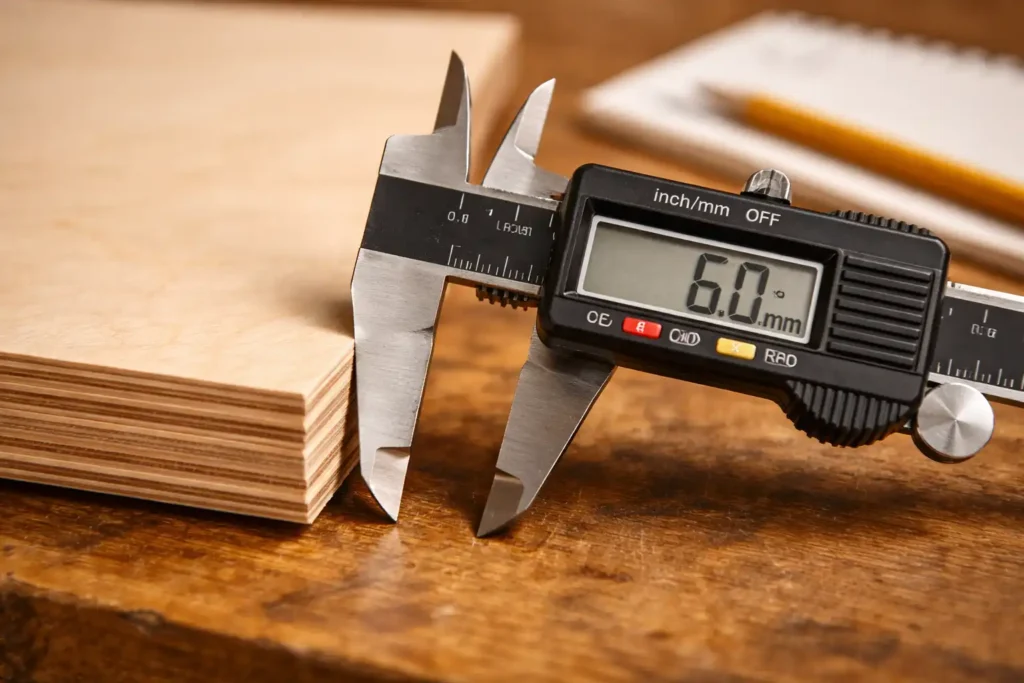
“1/4” Baltic birch usually lands near 6 mm (about 0.236 inch), and some panels run slightly thinner or thicker. Measure with calipers before cutting dados or setting a drawer-bottom groove.
A groove that fits true 1/4-inch material often pinches 6 mm panels. A groove sized for 6 mm often feels loose on a full 0.250-inch panel. The measurement drives the joinery setup.
When does 1/4 Baltic birch plywood make sense?
1/4 Baltic birch plywood fits projects that need a flat panel with clean edges and predictable machining. It works well when the panel sits in a groove, rabbet, or frame.
Common uses include:
- Drawer bottoms captured in grooves
- Cabinet backs set in rabbets
- Tray bottoms and box bottoms
- Jigs, templates, and patterns
- Lightweight panels for small doors or inserts
Thickness drives the decision. My guide on choosing plywood thickness for a project helps match panel thickness to span, load, and joinery.
Where do woodworkers buy it and what do you ask for?
Suppliers sell Baltic birch through hardwood dealers, cabinet shops, maker suppliers, and some home centers as project panels. Ask for details that affect your cut quality and finish results.
Ask the yard for:
- Sheet size (often 5×5)
- Stated thickness in millimeters
- Face grade (clean face vs utility face)
- Flatness (sight down the sheet)
- Intended use (interior vs exterior-rated glue)
If hauling full sheets feels like a fight, some shops offer panel saw cuts. This guide on getting plywood cut to size helps you plan cut lists that fit your vehicle and reduce waste.
How do you select a good sheet at the rack?
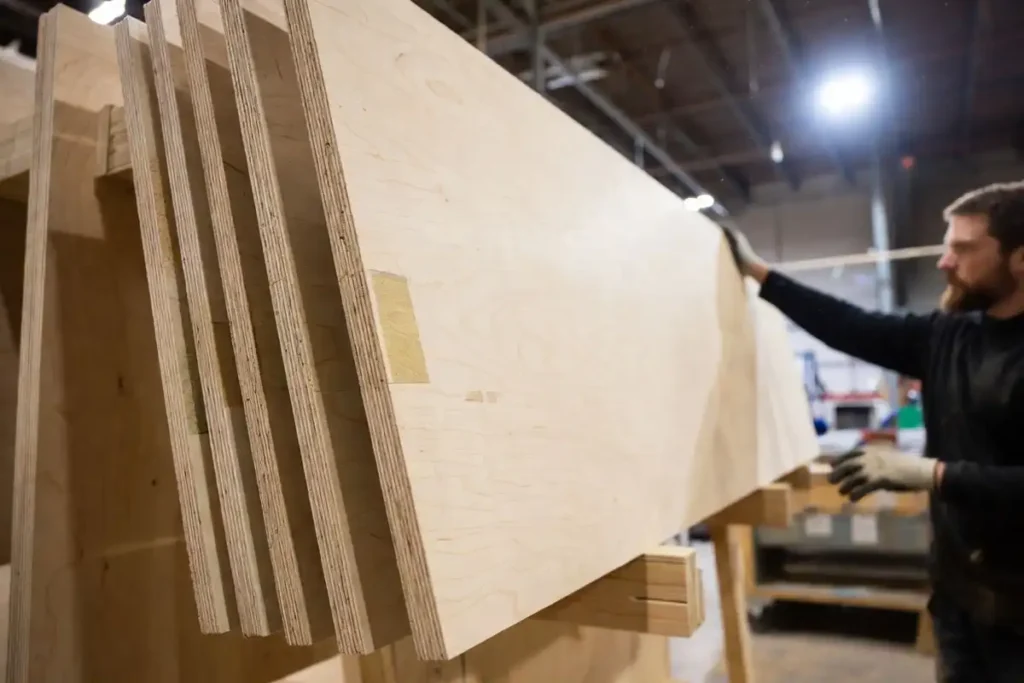
A good sheet starts with flatness and face quality. Check the sheet like a cabinetmaker, not like someone buying subfloor.
Use this rack check:
- Sight both faces for cup, bow, and twist.
- Check corners for crushed edges from handling.
- Scan the face for patches, football plugs, and open defects.
- Inspect the edge for voids and gaps in the core.
- Look for consistent veneer color if the project gets clear finish.
- Buy extra material if the project needs perfect color match.
Thin panels move faster with humidity swings. Store sheets flat with support across the full width.
How do you cut and machine 1/4 Baltic birch cleanly?
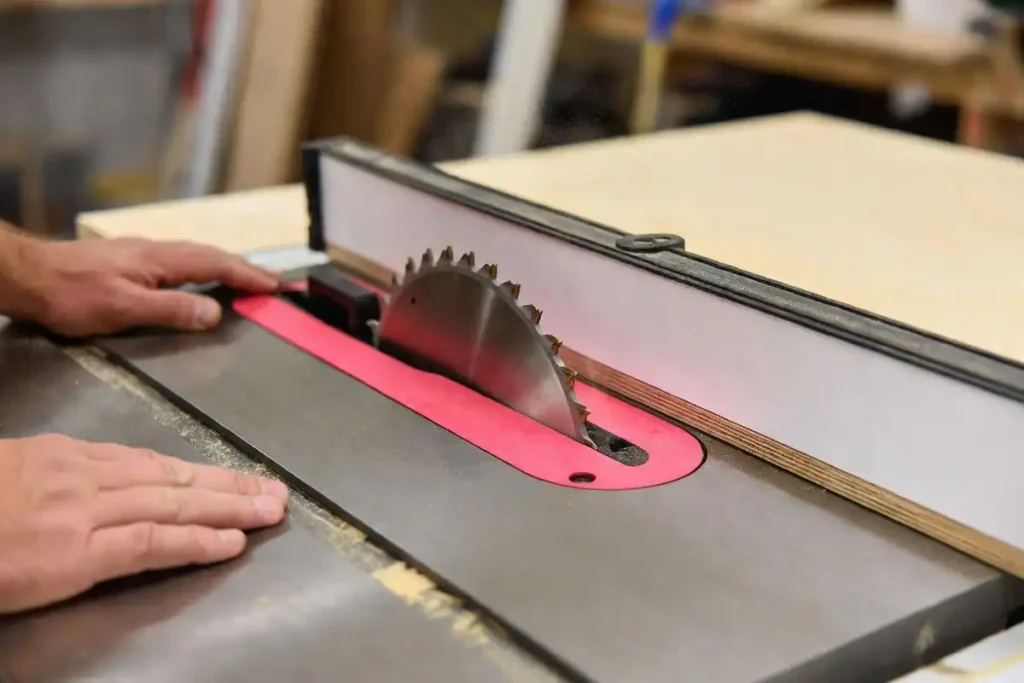
Clean cuts come from full support, sharp teeth, and controlled exit fibers. Thin plywood flexes, so it needs a stable setup.
- Support the sheet. Break down on a track saw with a foam backer, or use a table saw with an outfeed.
- Use a fine-tooth blade. A plywood or laminate blade reduces splintering on the top face.
- Add zero-clearance. A zero-clearance insert supports fibers at the cut line.
- Control the face. Put the best face down on a table saw and up on a circular saw.
- Prevent chip-out on crosscuts. Use a sharp miter gauge cut, a sled, or a scoring pass.
- Route with a backer. Clamp a sacrificial board behind the exit edge when routing profiles.
Small parts cut safer with a sled, a carrier board, or double-sided tape on a larger blank. Thin panels grab and chatter when hands get close to the blade.
How do you join and fasten 1/4 Baltic birch?
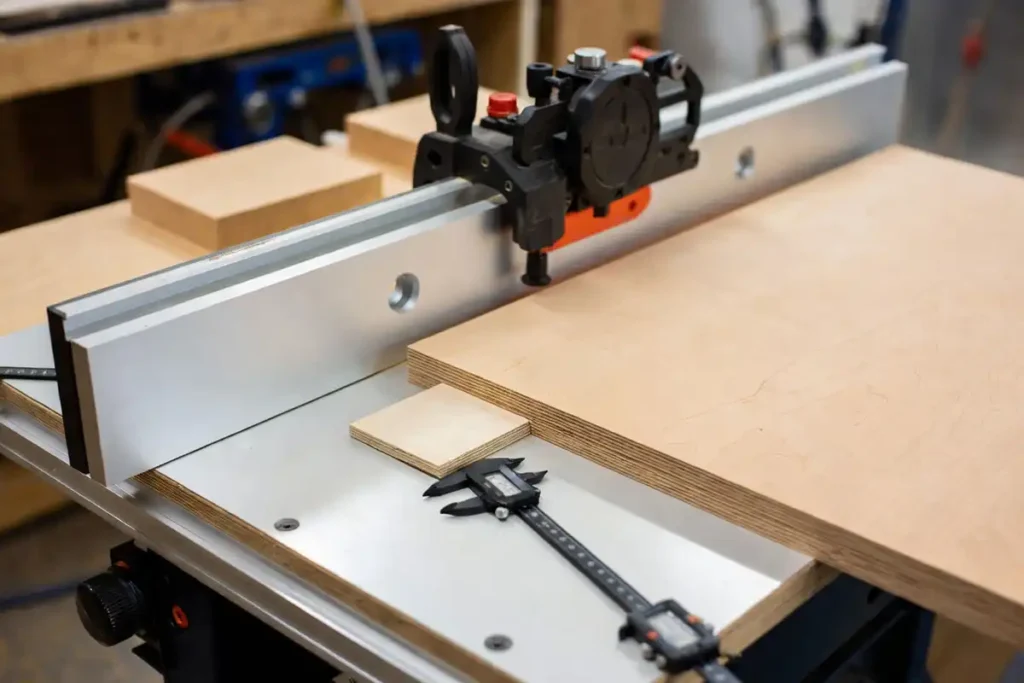
Joinery for 1/4 panels works best when the panel sits in a captured joint. Screws through the face strip fast because there is not much thickness for threads.
Reliable joinery options:
- Grooves and dados: Cut to the measured thickness for a snug slip fit.
- Rabbets: Use a rabbet for backs and bottoms, then pin or staple.
- Glue blocks: Glue corner blocks to give brads and screws more bite.
- Staples and brads: Pin panels while glue cures, then let the joinery carry the load.
Adhesive matters on plywood because glue bonds to veneer and end-grain layers at the same time. This guide on picking wood glue for plywood breaks down glue types for flat panels, edge lamination, and mixed materials.
How do you sand and finish it without sanding through the veneer?
Baltic birch uses a thin face veneer. Sanding through that veneer exposes the next ply and leaves a permanent light patch.
A safe finishing workflow:
- Scrape glue first. Dried squeeze-out blocks stain and finish. Use a chisel or card scraper before sanding.
- Sand lightly. Start around 120 to 150 grit, then stop around 180 to 220 grit for clear finishes.
- Treat the edges. Edges absorb finish fast. Seal edges with a thin coat of finish or a sanding sealer, then sand smooth.
- Control blotching. Birch stains unevenly. Use a conditioner or a washcoat when the project needs stain.
- Topcoat for the use case. Water-based poly keeps birch light. Oil-based finishes warm the color.
If stain is part of the plan, this walkthrough on staining Baltic birch without blotches covers prep, conditioner timing, and topcoat choices.
Solutions for common builds with 1/4 Baltic birch
1/4 Baltic birch shines in a few repeatable shop jobs. These setups reduce rework.
Drawer bottoms
A drawer bottom works best when the bottom floats in a groove on all four sides. Cut the groove to the measured panel thickness and leave a small expansion gap in at least one direction.
Cabinet backs
A back panel stays flatter when it sits in a rabbet. Run a bead of glue in short sections or use screws into a solid-wood frame to keep the case square.
Trays and boxes
A tray bottom stays quiet when it sits in a dado or rabbet and gets finish on both faces. Finishing both faces reduces curl in thin panels.
Templates and jigs
1/4 Baltic birch makes clean templates because the edge stays crisp. Seal the template with shellac or poly so the router bearing rolls smoothly.
Troubleshooting: common problems and fixes
The cut edge splinters
Splintering comes from unsupported fibers at the exit. Add zero-clearance, use a sharp blade, and slow the feed rate. Tape the cut line on delicate veneers.
The panel bows after cutting
Bow comes from stress release and uneven moisture. Store sheets flat, sticker both faces, and finish both sides of parts. Cut parts oversized, let them rest, then trim to final size.
The stain looks blotchy
Blotch comes from uneven absorption. Sand evenly, remove glue, apply conditioner or a washcoat, then stain. Switch to dye or a toned topcoat when color uniformity matters.
The face looks fuzzy after water-based finish
Fuzz comes from raised grain. Wipe the surface with water, let it dry, then sand lightly at 220 grit before the first coat of finish.
Fasteners pull through
Pull-through comes from thin material and localized load. Use washers, add glue blocks, or switch to a captured joint that spreads the load.
Mistakes to avoid with 1/4 Baltic birch plywood
- Assuming “1/4” equals 0.250 inch instead of measuring the sheet.
- Cutting small parts freehand near a table saw blade.
- Sanding aggressively at edges and corners where veneer disappears first.
- Driving screws into the edge and expecting strong holding power.
- Finishing one face and leaving the other raw on thin parts.
- Buying a utility face grade for a clear-finished project.
Safety notes for working with thin plywood
Thin sheet goods act differently than thick lumber. They flex, lift, and chatter.
Safety practices that reduce risk:
- Use push blocks and a sled for narrow rips.
- Keep an outfeed support in place so the sheet stays flat.
- Control dust with extraction and a respirator rated for fine wood dust.
- Keep blades and bits sharp to reduce kickback and burning.
- Handle full sheets with help to avoid edge drops and back strain.
FAQs on the 1/4 Baltic Birch Plywood

How thick is 1/4 baltic birch plywood?
Most “1/4” Baltic birch is actually about 6 mm (roughly 0.236 inch). Measure your sheet before cutting grooves or dados, because mills vary and fit changes fast.
How much weight can 1 4 baltic birch plywood hold?
It depends on span and support. Captured in a frame or drawer groove on all four sides, it handles normal drawer and tray loads. On wide, unsupported spans, use thicker material.
Does 1 4 baltic birch plywood warp?
Baltic birch resists warping better than cheap plywood, but 1/4 panels can still cup if one face sees more moisture. Store it flat and finish both sides to balance.
Who sells true 1/4 inch baltic birch plywood?
True 1/4 inch (about 6.35 mm) birch multiply is less common than 6 mm. Try hardwood plywood distributors, cabinet-supply houses, and reputable online plywood shops, and request the measured thickness before buying.
Last Words
1/4 Baltic birch plywood delivers flat panels, clean edges, and consistent machining when the shop treats it like a precision material. Measure the real thickness, size joinery to that measurement, and cut with sharp tooling and full support. Capture the panel in grooves or rabbets, avoid face screws, and sand lightly to protect the veneer. Finish both faces on thin parts to reduce curl, and the sheet stays stable from build to install.